Blockchain Gaming US: Unlocking 5% Market Potential by 2026
The gaming landscape is in a constant state of evolution, driven by technological advancements and shifting player expectations. Among the most disruptive forces currently reshaping this industry is blockchain technology. While still in its nascent stages, blockchain gaming US is poised for significant growth, with projections indicating a potential 5% niche market expansion by 2026. This article delves into the intricate dynamics of this emerging sector, exploring the opportunities, challenges, and the innovative spirit driving its development within the United States.
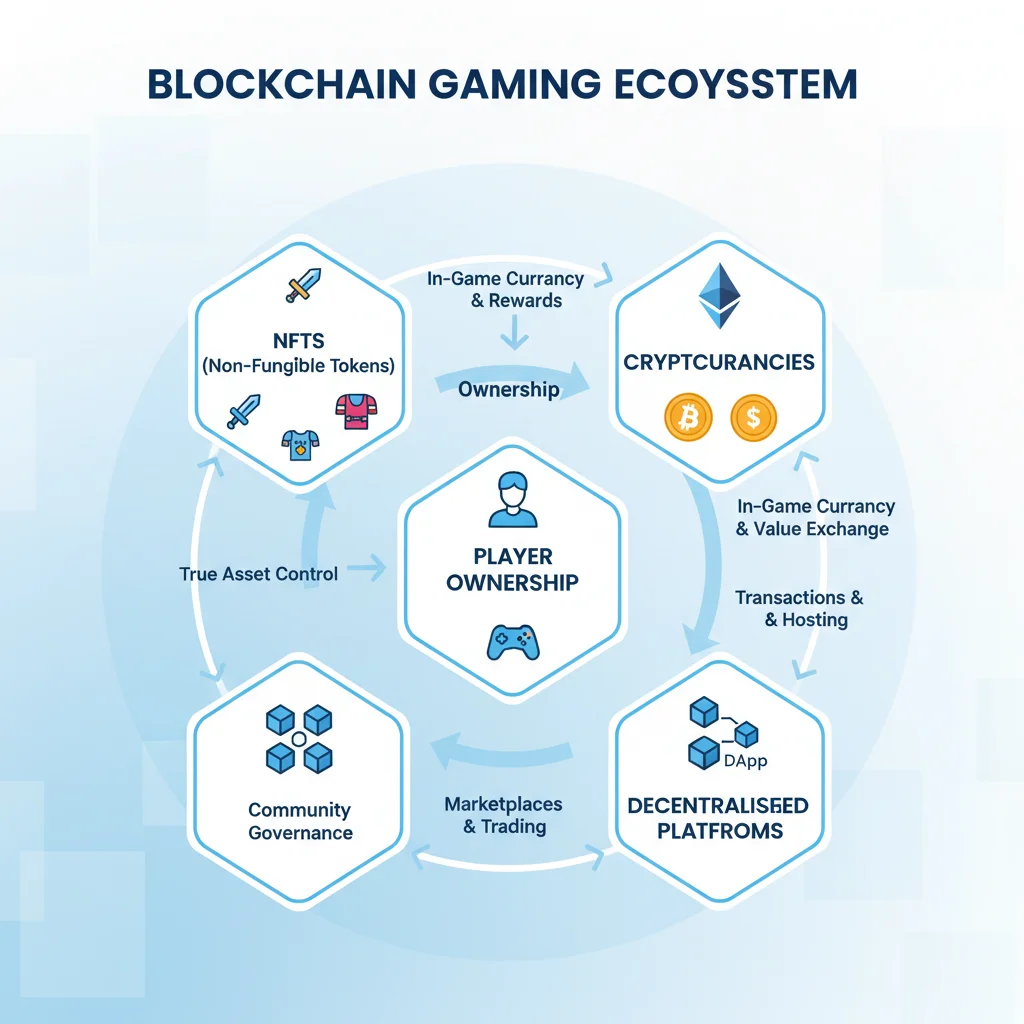
The concept of digital ownership, once a theoretical ideal, is now a tangible reality thanks to blockchain. Non-Fungible Tokens (NFTs) allow players to truly own in-game assets, from unique characters and skins to virtual land and rare items. This fundamental shift from a rental model to true ownership is a powerful draw for many, fostering a deeper sense of investment and engagement in games. Furthermore, the integration of cryptocurrency into game economies introduces new ‘play-to-earn’ models, where players can earn real-world value through their in-game activities.
In the US, a country renowned for its technological innovation and robust gaming market, the potential for blockchain gaming is particularly compelling. The regulatory environment, while still developing, offers a unique set of challenges and opportunities. Understanding the interplay of these factors is crucial for developers, investors, and players alike as we navigate this exciting new frontier.
The Genesis of Blockchain Gaming: A New Paradigm for Play
To fully appreciate the future trajectory of blockchain gaming in the US, it’s essential to understand its origins and the core principles that differentiate it from traditional gaming. At its heart, blockchain gaming leverages decentralised ledger technology to create transparent, secure, and verifiable ecosystems. This technology underpins the creation of NFTs, which are unique digital identifiers recorded on a blockchain, used to certify ownership and authenticity.
Traditional gaming often operates on a centralised model, where game developers maintain ultimate control over all in-game assets and economies. Players typically purchase licenses to use digital items, but they don’t truly own them. If a game shuts down, or a player’s account is banned, their investment in digital assets can be lost instantly. Blockchain gaming fundamentally challenges this model by giving players immutable ownership of their digital possessions.
The concept of ‘play-to-earn’ (P2E) is another cornerstone of blockchain gaming. Unlike conventional games where players spend money for entertainment, P2E games allow players to earn cryptocurrency or NFTs through gameplay, which can then be traded or sold on secondary markets. This economic incentive has attracted a new demographic of players, particularly in regions where these earnings can significantly supplement income.
Early examples of blockchain games, such as CryptoKitties, demonstrated the power of NFTs and digital scarcity, albeit with scalability issues. These early experiments paved the way for more sophisticated titles that integrate complex game mechanics with robust blockchain infrastructure. The evolution has been rapid, moving from simple collectible games to intricate virtual worlds, role-playing games, and strategy titles that promise a richer, more immersive experience. The continuous innovation in this space is a key driver for the projected expansion of the blockchain gaming US market.
Key Drivers for Blockchain Gaming US Market Expansion
Several factors are converging to propel the growth of blockchain gaming in the United States. Understanding these drivers is critical to assessing the viability of the projected 5% niche market expansion by 2026.
Enhanced Player Ownership and Control
The most significant allure of blockchain gaming is the promise of true digital ownership. Players are no longer merely consumers but become stakeholders in the game’s ecosystem. This ownership extends beyond cosmetic items to potentially influencing game development decisions through decentralised autonomous organisations (DAOs). This sense of agency and investment fosters a more loyal and engaged player base, a powerful differentiator in a crowded gaming market.
The Rise of Play-to-Earn (P2E) Models
P2E models transform gaming from a purely recreational activity into a potential source of income. While the sustainability and ethical implications of some P2E models are still being debated, the fundamental concept of earning tangible value from gameplay is revolutionary. In the US, where disposable income is higher, P2E might appeal more as a supplementary income or a novel investment opportunity rather than a primary livelihood, but its potential to attract new players and investors is undeniable.
Technological Advancements and Infrastructure
The underlying blockchain technology is constantly improving. Scalability solutions like Layer 2 networks, sidechains, and new consensus mechanisms are addressing earlier bottlenecks that hindered widespread adoption. Faster transaction speeds, lower gas fees, and improved user interfaces are making blockchain games more accessible and enjoyable. Furthermore, the increasing sophistication of game development tools and engines that integrate blockchain functionalities is lowering the barrier to entry for developers.
Growing Mainstream Awareness and Adoption of Web3
The broader Web3 movement, encompassing cryptocurrencies, NFTs, and decentralised applications, is gaining traction. As more people become familiar with these concepts, the transition to blockchain gaming becomes less daunting. Major companies entering the Web3 space are legitimising the technology, and celebrity endorsements, though sometimes controversial, also contribute to increased public awareness and curiosity. This growing familiarity is crucial for the blockchain gaming US market to expand beyond early adopters.
Investment and Development Capital
The blockchain gaming sector has attracted substantial investment capital from venture capitalists and established gaming companies. This influx of funds is fuelling innovation, enabling developers to build higher-quality games with better graphics, more complex mechanics, and engaging narratives. This investment validates the long-term potential of the sector and ensures a pipeline of new and improved gaming experiences.
Challenges and Hurdles for Blockchain Gaming in the US
Despite the immense potential, the path to a 5% niche market expansion for blockchain gaming in the US is not without its obstacles. Addressing these challenges will be paramount for sustained growth.
Regulatory Uncertainty and Compliance
One of the most significant hurdles is the evolving and often ambiguous regulatory landscape in the United States. The classification of NFTs and in-game tokens as securities, commodities, or other assets has profound implications for developers and platforms. Different states may also adopt varying regulations, creating a complex patchwork of compliance requirements. Clarity from regulatory bodies like the SEC and CFTC is desperately needed to foster a stable environment for innovation and investment.
Scalability Issues and User Experience
While advancements are being made, scalability remains a concern for some blockchain networks. High transaction fees (gas fees) and slow transaction times can detract from the gaming experience, especially in fast-paced or highly interactive games. Furthermore, the technical complexity of setting up crypto wallets, managing seed phrases, and understanding blockchain concepts can be a barrier for mainstream gamers accustomed to seamless traditional gaming experiences. Improving user interfaces and abstracting away blockchain complexities are crucial for broader adoption.
Market Volatility and Speculation
The value of cryptocurrencies and NFTs can be highly volatile. This speculative nature can deter players who are wary of investing time and money into assets that might rapidly depreciate. While some embrace the speculative aspect, it can also create an unstable economic environment within games, making it difficult for developers to balance economies and for players to feel secure in their investments. The perception of blockchain gaming being primarily driven by speculation rather than genuine gameplay can also hinder its appeal to traditional gamers.
Security Concerns and Fraud
The decentralised nature of blockchain, while offering security benefits, also presents new vectors for fraud and scams. Phishing attacks, smart contract vulnerabilities, and rug pulls are unfortunate realities in the crypto space. Ensuring robust security measures, educating users, and developing transparent platforms are essential to build trust and protect players’ assets. High-profile security breaches can severely damage the reputation of the entire sector.
Quality of Games and Engagement
Many early blockchain games have been criticised for prioritising tokenomics over compelling gameplay. For blockchain gaming to truly compete with established AAA titles, it needs to offer equally engaging, high-quality experiences. Developers must focus on creating fun, immersive games first, with blockchain elements enhancing, rather than defining, the core gameplay. The ‘game first’ approach is gaining traction and is vital for attracting and retaining a broad audience.
The Path to 5% Niche Market Expansion by 2026
Achieving a 5% niche market expansion for blockchain gaming in the US by 2026 is ambitious but attainable, provided key strategies are implemented and challenges are effectively addressed. This expansion will likely be driven by a combination of technological maturity, strategic partnerships, and a shift in developer and player perception.
Focus on Quality and User Experience
Developers must prioritise creating high-quality, fun, and accessible games. This means investing in compelling narratives, polished graphics, intuitive interfaces, and robust gameplay mechanics. Abstracting away the complexities of blockchain from the end-user experience will be critical. Wallets should be easier to manage, transactions faster and cheaper, and the integration of NFTs should feel natural within the game’s ecosystem, not an afterthought. The success of any blockchain gaming US title will ultimately hinge on its ability to entertain.
Strategic Partnerships and Mainstream Integration
Collaborations between established gaming studios, blockchain technology providers, and even traditional entertainment companies will accelerate adoption. When well-known brands and franchises integrate blockchain elements, it lends credibility and exposes the technology to a wider audience. Partnerships with major distribution platforms and marketplaces could also streamline the discovery and accessibility of blockchain games.
Regulatory Clarity and Advocacy
The blockchain gaming industry needs to actively engage with regulators to help shape a clear and favourable regulatory framework. This involves educating policymakers about the unique aspects of blockchain gaming and advocating for policies that protect consumers while fostering innovation. A predictable legal environment will attract more investment and encourage larger companies to enter the space with confidence.
Education and Community Building
Demystifying blockchain technology for the average gamer is crucial. Educational initiatives, clear communication from developers, and strong community building efforts can help overcome skepticism and technical barriers. Showcasing the tangible benefits of digital ownership and P2E models in an understandable way will encourage more players to explore this new gaming paradigm.
Innovation in Game Design and Monetisation
The industry needs to move beyond simple P2E models and explore diverse ways blockchain can enhance gameplay. This includes dynamic NFTs that evolve with player actions, interoperable assets across different games, and novel governance structures that empower player communities. Experimentation with different monetisation models that balance player earnings with game sustainability will also be vital for long-term success.
The projected 5% niche market expansion by 2026 suggests that while blockchain gaming won’t immediately overtake traditional gaming, it will carve out a significant and growing segment. This growth will likely be concentrated among early adopters, tech-savvy gamers, and those who value digital ownership and economic participation.
The Impact of Blockchain Gaming on the Wider US Gaming Industry
Even as a niche, the expansion of blockchain gaming in the US will have ripple effects across the entire gaming industry. Its influence will extend beyond just the direct players and developers, touching on business models, intellectual property, and even the very definition of what a game can be.
Rethinking Business Models and Monetisation
Blockchain gaming forces traditional developers to reconsider their existing business models. The shift towards player ownership and P2E mechanics introduces new ways for games to generate revenue and sustain their economies. While not every game will adopt full blockchain integration, elements like limited edition NFTs or player-owned content could become more common in traditional titles. This competitive pressure will likely drive innovation in monetisation strategies across the board.
Decentralisation of Development and Governance
The concept of DAOs and community-driven development in blockchain gaming could inspire more decentralised approaches in traditional game studios. Giving players a voice in game design, balancing, and future content roadmaps can foster greater loyalty and engagement. This shift could lead to more transparent development processes and a greater sense of shared ownership, even in non-blockchain games.
New Avenues for Intellectual Property (IP) Management
NFTs provide a novel framework for managing and licensing intellectual property within games. Artists, designers, and even players who create in-game content can have verifiable ownership of their creations, potentially earning royalties from secondary market sales. This could unlock new creative economies and empower a broader range of creators within the gaming ecosystem. The blockchain gaming US market could lead the way in establishing best practices for digital IP rights.
Increased Focus on Interoperability
A core promise of Web3 is interoperability – the ability for digital assets to be used across different platforms and games. While still largely aspirational, the pursuit of interoperability in blockchain gaming will push the entire industry towards more open standards and protocols. This could break down walled gardens and create a more interconnected digital world, where a player’s character or item might transcend the boundaries of a single game.
Attracting New Talent and Investment
The excitement and innovation surrounding blockchain gaming are attracting a new generation of developers, designers, and entrepreneurs to the gaming industry. This influx of talent, combined with significant investment capital, will accelerate technological progress and foster a competitive environment that benefits all gamers. Universities and educational institutions are also beginning to offer courses in blockchain development, preparing the next wave of innovators.
Ultimately, the impact of blockchain gaming will be to challenge the status quo, pushing the entire gaming industry towards greater transparency, player empowerment, and innovative economic models. Even if only a niche, its influence will be profound and far-reaching, shaping the future of interactive entertainment in the US and globally.
The Future Outlook: Beyond 2026 for Blockchain Gaming in the US
Looking beyond the projected 5% niche market expansion by 2026, the long-term outlook for blockchain gaming in the US is one of continuous evolution and increasing integration. While the exact trajectory remains uncertain, several trends suggest a future where blockchain elements become a more commonplace, albeit perhaps invisible, part of the gaming experience.
Maturation of the Technology
Blockchain technology itself will continue to mature. We can expect even more efficient, scalable, and user-friendly networks. Abstraction layers will make interacting with blockchain seamless, potentially to the point where players won’t even realise they are using blockchain technology. This ‘invisible blockchain’ will remove significant barriers to entry and allow the focus to shift entirely to gameplay and entertainment.
Evolution of Play-to-Earn and Player Ownership
The P2E model will likely evolve, moving away from purely speculative earning to more sustainable and engaging forms of value creation. This could involve skill-based earnings, competitive esports prize pools funded by decentralised treasuries, or contributions to game development and lore. Player ownership will deepen, with communities having more direct control over game assets, development, and even intellectual property.
Regulatory Harmonisation and Clarity
As the market matures, there will be increasing pressure for regulatory bodies to provide clearer guidelines. This harmonisation, ideally at a federal level, will provide the necessary legal certainty for larger gaming companies to fully embrace blockchain. This clarity will also protect consumers and foster a safer environment for digital asset transactions. The blockchain gaming US market will benefit immensely from a stable regulatory framework.
Convergence with the Metaverse
Blockchain gaming is intrinsically linked to the development of the metaverse. As virtual worlds become more interconnected and persistent, blockchain will serve as the backbone for digital identity, asset ownership, and economic transactions within these metaversal experiences. The interoperability promised by blockchain will be crucial for a truly open and expansive metaverse, where assets and identities can move freely between different virtual environments.
Increased Competition and Innovation
As the market grows, competition will intensify, leading to an even greater focus on innovation. Developers will constantly push the boundaries of what’s possible, integrating AI, VR/AR, and other emerging technologies with blockchain to create truly groundbreaking experiences. This competitive environment will ultimately benefit players, offering a wider array of high-quality, engaging, and economically empowering games.
The journey of blockchain gaming in the US is just beginning. The projected 5% niche market expansion by 2026 is a significant milestone, representing a foundational step towards a future where digital ownership, player empowerment, and decentralised economies are integral to the gaming experience. While challenges remain, the innovative spirit of the industry and the growing appetite for new forms of interactive entertainment suggest a vibrant and transformative future for blockchain gaming in the United States.
