Civilization New Era Review: Strategy Game Deep Dive
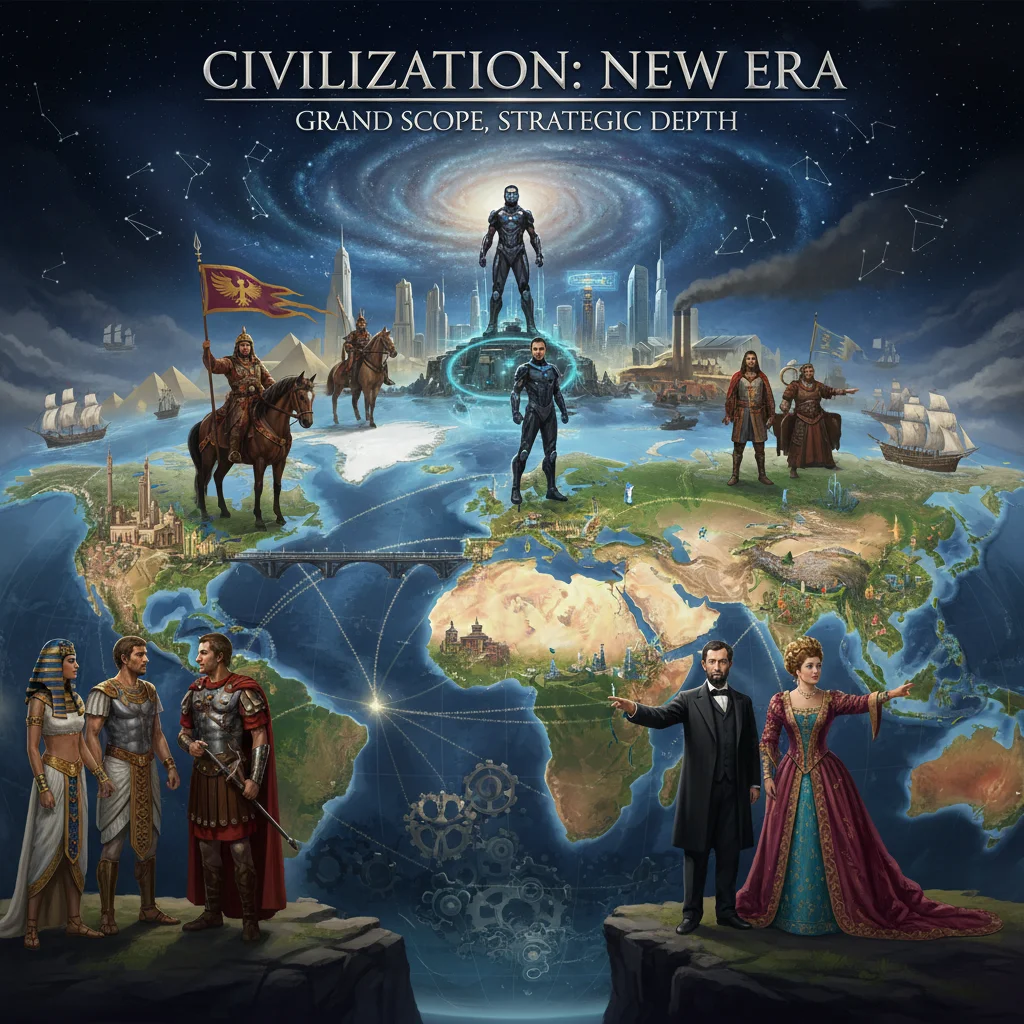
Civilization New Era Review: Strategy Game Deep Dive
In the vast and ever-evolving landscape of strategy games, few franchises command as much respect and dedication as the Civilization series. For decades, players have embarked on epic journeys, guiding their chosen civilizations from humble beginnings in the Stone Age to technological marvels in the distant future. The latest iteration, Civilization New Era, promised to redefine the genre, offering fresh perspectives, innovative mechanics, and an even deeper level of strategic immersion. This comprehensive review delves into every facet of Civilization New Era, exploring what makes it a standout title for strategy enthusiasts, particularly those in the US market.
The Legacy and Evolution of Civilization
Before we dive into the specifics of Civilization New Era, it’s essential to understand the monumental legacy it builds upon. Sid Meier’s Civilization series has consistently set the gold standard for 4X (eXplore, eXpand, eXploit, eXterminate) strategy games. Each new title has introduced refinements, expanded features, and challenged players to master new systems. Civilization New Era is no exception, pushing the boundaries of what a turn-based strategy game can be while retaining the core DNA that fans adore.
The development team behind Civilization New Era faced the daunting task of innovating without alienating a fiercely loyal fanbase. This balancing act is crucial for any long-standing franchise. The game introduces several key changes that aim to enhance replayability, strategic depth, and player engagement. From revamped diplomacy to a more dynamic technology tree, every aspect has been scrutinised and often reimagined to provide a fresh, yet familiar, experience.
Core Gameplay Mechanics: What’s New in Civilization New Era?
At its heart, Civilization New Era maintains the familiar loop of exploration, expansion, and development. Players choose a historical leader, each with unique abilities and starting bonuses, and embark on a quest to establish a dominant civilization. However, the ‘New Era’ in its title isn’t just for show. Several core mechanics have received significant overhauls.
Dynamic Diplomacy and Alliances
One of the most noticeable improvements in Civilization New Era is its vastly improved diplomacy system. Gone are the days of predictable AI interactions. Leaders now possess more nuanced personalities and respond to player actions with greater realism. The introduction of ‘Influence Networks’ means that your diplomatic standing with one civilization can subtly affect your relationships with others. Forming alliances is more complex and rewarding, often requiring careful negotiation and strategic resource allocation. The AI is smarter, more cunning, and less prone to sudden, inexplicable declarations of war, making diplomatic victories feel genuinely earned.
Expanded Technology and Civics Trees
The technology tree, a cornerstone of the Civilization series, has been expanded and made more flexible in Civilization New Era. Players now have more choices in how they research advancements, with branching paths that allow for greater specialization. Complementing this is the ‘Civics Tree,’ which represents social and governmental progress. This separation allows players to pursue cultural and political developments independently of scientific breakthroughs, leading to highly diverse civilization builds. For instance, you could be a technologically advanced society with a primitive government, or a culturally rich empire still relying on older military tech. This dual progression system significantly enhances strategic choice and replayability.
Resource Management and Trade Routes
Resource management in Civilization New Era feels more impactful than ever. Strategic resources are not just prerequisites for units; they can be leveraged for powerful bonuses through trade routes and district specializations. The trade route system has been refined, offering more control over economic expansion and allowing players to establish lucrative networks that can be protected or plundered. Understanding the global supply and demand of key resources becomes a vital strategic layer, influencing both economic and military decisions.
Building an Empire: City Planning and District Specialization
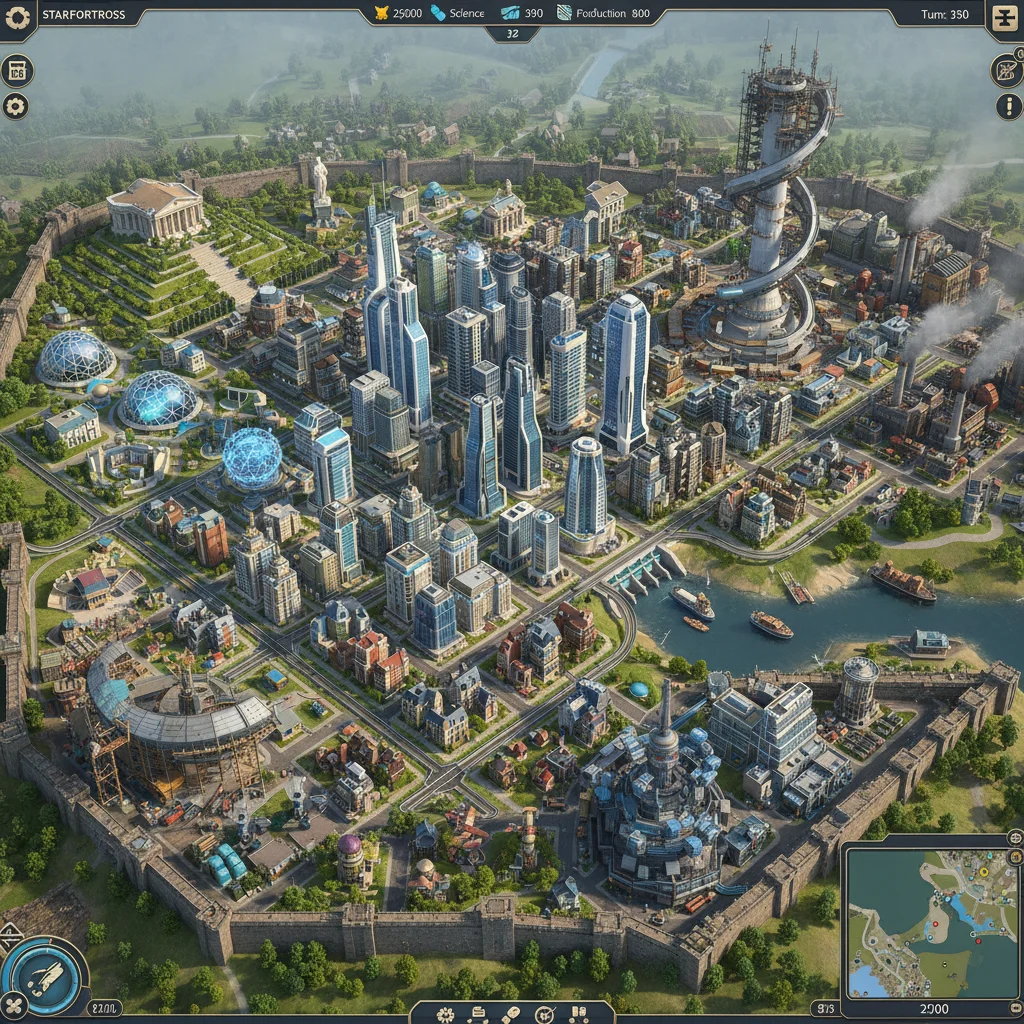
City management in Civilization New Era has always been a deep and engaging aspect, and this latest installment elevates it further. The district system, introduced in previous titles, has been refined and expanded. Players must carefully consider the placement of each district, as adjacency bonuses and environmental factors play a crucial role in a city’s efficiency and output. Building a sprawling, efficient metropolis requires foresight and strategic planning.
Wonders and Unique Buildings
World Wonders remain a coveted prize in Civilization New Era, offering powerful, game-changing bonuses. Their construction is often a race against other civilizations, demanding significant production investment. The game also introduces a wider array of unique buildings and improvements tied to specific civilizations, further enhancing their distinct playstyles. Deciding which wonders to pursue and where to build them is a critical strategic decision that can shape the course of your empire.
Population Growth and Amenities
Maintaining a happy and productive populace is paramount. Civilization New Era places a greater emphasis on ‘Amenities,’ which represent the happiness and well-being of your citizens. Insufficient amenities can lead to unrest, reduced production, and even rebellions. This forces players to balance growth with citizen satisfaction, making decisions about luxury resources, entertainment districts, and cultural policies more critical. It adds a layer of internal management that prevents mere unchecked expansion.
Warfare and Combat: A Tactical Evolution
While diplomacy and culture can lead to victory, the ability to wage effective war remains a core component of any Civilization game. Civilization New Era refines its combat system, making tactical decisions on the battlefield more impactful.
Unit Diversity and Promotions
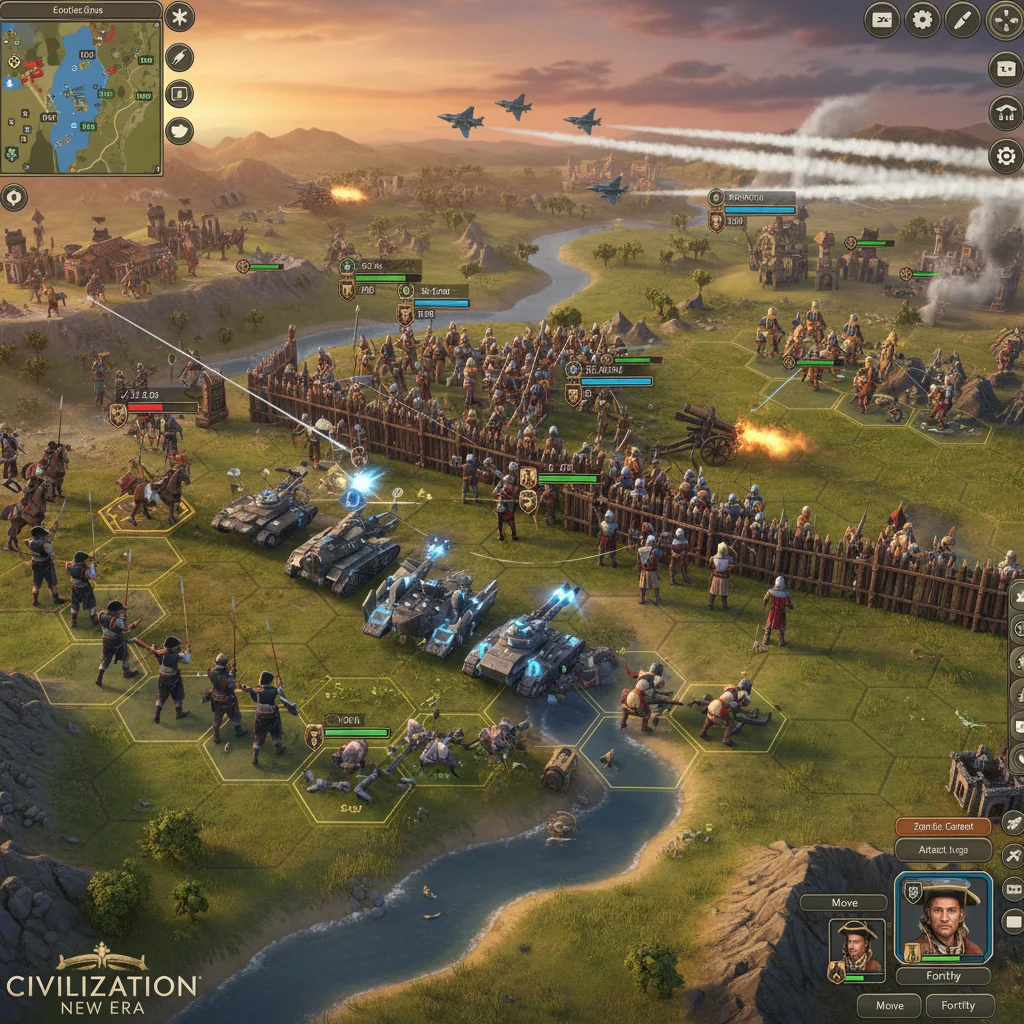
The game boasts an impressive array of military units, spanning from ancient warriors to futuristic mechs. Each unit type has specific strengths and weaknesses, encouraging players to build diverse armies. The promotion system allows units to gain new abilities and become more powerful over time, fostering a sense of attachment to veteran forces. Strategic positioning, combined arms tactics, and leveraging terrain advantages are key to success in combat.
Siege Mechanics and Naval Warfare
Sieging enemy cities feels more dynamic in Civilization New Era. Dedicated siege units and district defenses mean that simply rushing a city is often a recipe for disaster. Naval warfare has also seen improvements, with more distinct ship types and a greater emphasis on controlling sea lanes for both trade and military projection. The strategic importance of coastal cities and naval power is more pronounced than ever.
Victory Conditions: Multiple Paths to Glory
Civilization New Era offers multiple paths to victory, ensuring that players can tailor their strategy to their preferred playstyle or the strengths of their chosen civilization. Whether you prefer peaceful expansion or global domination, there’s a victory condition for you.
- Science Victory: Be the first to launch a colonization mission to another star system. This requires immense technological prowess and production capacity.
- Culture Victory: Become the dominant cultural influence in the world, attracting tourists from all other civilizations. This involves building wonders, generating great works, and spreading your cultural values.
- Domination Victory: Conquer the capital cities of all other major civilizations. A straightforward, yet challenging, path for those who prefer military might.
- Religious Victory: Convert all other major civilizations to your religion. This requires careful missionary work and defending your faith.
- Diplomatic Victory: Achieve a sufficient number of diplomatic points through the World Congress and various diplomatic actions. This path emphasizes negotiation, influence, and strategic voting.
The beauty of Civilization New Era lies in its ability to allow players to pivot between these victory conditions, adapting to the game’s unfolding narrative and the actions of rival civilizations. This flexibility adds significant strategic depth and makes each playthrough unique.
Graphics, Sound, and User Interface
Visually, Civilization New Era is stunning. The game boasts a vibrant art style that brings historical periods to life, from the intricate details of ancient architecture to the sleek designs of future cities. Unit models are well-rendered, and environmental effects add to the immersion. The user interface is clean, intuitive, and provides a wealth of information without feeling overwhelming, a crucial aspect for a game of this complexity. The orchestral soundtrack is epic and dynamic, evolving with the progression of your civilization and the intensity of in-game events, further enhancing the overall experience.
Replayability and Longevity
One of the hallmarks of a great strategy game is its replayability, and Civilization New Era excels in this regard. With a diverse roster of civilizations, each with unique abilities and leaders, combined with randomized maps, variable difficulty settings, and multiple victory conditions, no two playthroughs are ever truly alike. The game offers hundreds, if not thousands, of hours of engaging gameplay. Furthermore, the robust modding community and potential for future expansions promise to keep the game fresh and exciting for years to come. For strategy game fans in the US looking for a long-term investment, Civilization New Era offers unparalleled value.
Challenges and Areas for Improvement
While Civilization New Era is undoubtedly a triumph, no game is without its imperfections. Some players might find the initial learning curve steep, especially those new to the 4X genre. The sheer number of systems and mechanics can be daunting, though a comprehensive tutorial system does help. Additionally, while the AI is generally improved, there are still occasional instances where its decision-making can seem questionable, particularly in the late game or during complex diplomatic negotiations. Balance adjustments for certain civilizations or units might also be welcomed in future patches to ensure a perfectly level playing field across all playstyles.
Comparing Civilization New Era to Previous Titles
For long-time fans of the series, the natural question arises: how does Civilization New Era stack up against its predecessors? It successfully builds upon the foundations laid by titles like Civilization V and VI, taking the best elements and refining them. The diplomacy system is arguably the most significant improvement over previous iterations, offering a much more engaging and less frustrating experience. The expanded tech and civics trees provide greater strategic agency, moving away from more linear progressions. While some might miss specific features from older games, Civilization New Era generally feels like a natural and progressive evolution, not a radical departure. It manages to capture the essence of what makes Civilization great while introducing enough fresh content to feel genuinely new.
The US Market Perspective: Why Civilization New Era Resonates
For strategy game enthusiasts in the US, Civilization New Era offers a particularly compelling experience. The game’s emphasis on historical progression, nation-building, and strategic competition aligns well with the interests of a broad gaming audience. The ability to choose iconic American leaders, such as Abraham Lincoln or Theodore Roosevelt (depending on chosen expansions or base game civs), and guide the United States through various historical periods, resonates deeply. Furthermore, the game’s deep strategic elements and high replayability appeal to a demographic that appreciates complex, thought-provoking gameplay. The robust online multiplayer options also cater to a competitive US player base, allowing friends to test their strategic prowess against one another.
Conclusion: A New Benchmark for 4X Strategy
Civilization New Era stands as a monumental achievement in the 4X strategy genre. It successfully innovates upon a beloved formula, delivering a game that is both deeply familiar and refreshingly new. With its dynamic diplomacy, expanded tech and civics trees, refined city planning, and engaging combat, it offers an unparalleled strategic experience. The stunning visuals, immersive sound design, and near-infinite replayability solidify its position as a must-have title for any strategy game aficionado. While a few minor rough edges exist, they are easily overshadowed by the sheer depth and quality of the overall package.
Whether you are a seasoned veteran of the Civilization series or a newcomer eager to embark on your first epic journey through history, Civilization New Era provides an incredibly rewarding and endlessly engaging experience. It is not just a game; it is a grand narrative engine, allowing players to rewrite history, forge new empires, and leave their indelible mark on the world. Prepare to lose countless hours to its captivating gameplay – it’s an investment well worth making for anyone seeking the pinnacle of turn-based strategy.