Cloud Gaming Platforms 2026: Latency & Game Library Comparison
The landscape of video games is in a constant state of evolution, and few innovations have reshaped it as profoundly as cloud gaming. Gone are the days when high-end gaming was solely the domain of expensive PCs and consoles. In 2026, cloud gaming platforms have matured significantly, offering an increasingly viable alternative for enthusiasts and casual players alike. This comprehensive guide delves into the leading cloud gaming platforms, comparing their crucial aspects: latency and game libraries. Understanding these elements is paramount for anyone looking to dive into the future of interactive entertainment without the upfront hardware investment.
Cloud gaming, also known as game streaming, allows users to play video games remotely from cloud servers. The game processing occurs on powerful servers, and the video output is streamed to the user’s device, while their input commands are sent back to the server. This technology promises accessibility, eliminating the need for downloads, installations, or powerful local hardware. However, the success of this model hinges on two critical factors: the responsiveness of the service (latency) and the breadth of content available (game library). As we stand in 2026, several major players have emerged, each with its unique strengths and weaknesses. This article aims to provide a detailed comparison of these cloud gaming platforms, helping you make an informed decision.
The Core Pillars of Cloud Gaming: Latency and Game Libraries
Understanding Latency in Cloud Gaming
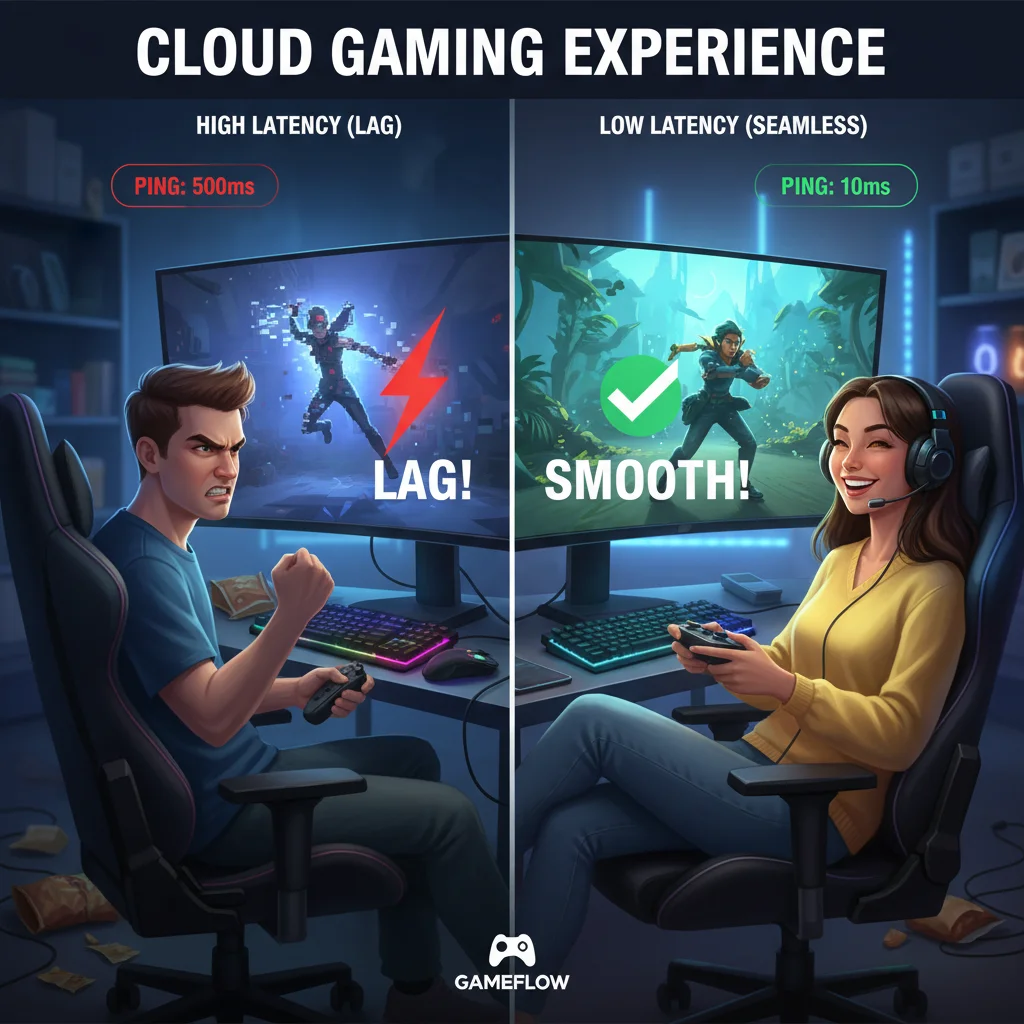
Latency, in the context of cloud gaming, refers to the delay between a player’s input (e.g., pressing a button) and the corresponding action being displayed on their screen. It’s a critical metric because even a few milliseconds of delay can significantly impact the gaming experience, especially in fast-paced genres like first-person shooters or fighting games. High latency can lead to a feeling of ‘lag,’ making games feel unresponsive and frustrating.
Several factors contribute to latency in cloud gaming platforms:
- Internet Connection Speed and Stability: A fast and stable internet connection is fundamental. While bandwidth is often highlighted, consistent low ping is arguably more important.
- Distance to Server: The physical distance between the user and the cloud gaming server directly affects the travel time of data packets. Closer servers generally mean lower latency.
- Network Infrastructure: The quality of the network path, including routers, switches, and internet service provider (ISP) peering agreements, plays a role.
- Encoding and Decoding: The time it takes for the server to encode the video stream and the user’s device to decode it adds to the overall latency.
- Device Processing Power: While cloud gaming offloads much of the processing, the user’s device still needs enough power to efficiently decode the video stream.
In 2026, advancements in network technology (like widespread 5G and fibre optics) and more efficient video codecs have significantly reduced average latency across most cloud gaming platforms. However, noticeable differences still exist between services and geographical regions.
The Importance of a Robust Game Library
A cloud gaming platform is only as good as the games it offers. A diverse and extensive game library is crucial for attracting and retaining subscribers. There are generally two models for game libraries:
- Subscription-Based Access: Users pay a monthly fee for access to a curated catalogue of games, similar to Netflix for movies. This model often includes first-party titles and a rotating selection of third-party games.
- Bring Your Own Games (BYOG): Users connect their existing game libraries (e.g., from Steam, Epic Games Store) to the cloud service and stream games they already own. This model offers flexibility but requires prior game purchases.
The ideal cloud gaming platform in 2026 often combines elements of both, offering a compelling subscription library while also allowing users to stream their owned titles. Exclusivity deals and partnerships with major publishers also significantly influence the perceived value of a platform’s game library. For any cloud gaming platforms to thrive, a rich and varied game library is non-negotiable.
Leading Cloud Gaming Platforms in 2026: A Detailed Comparison
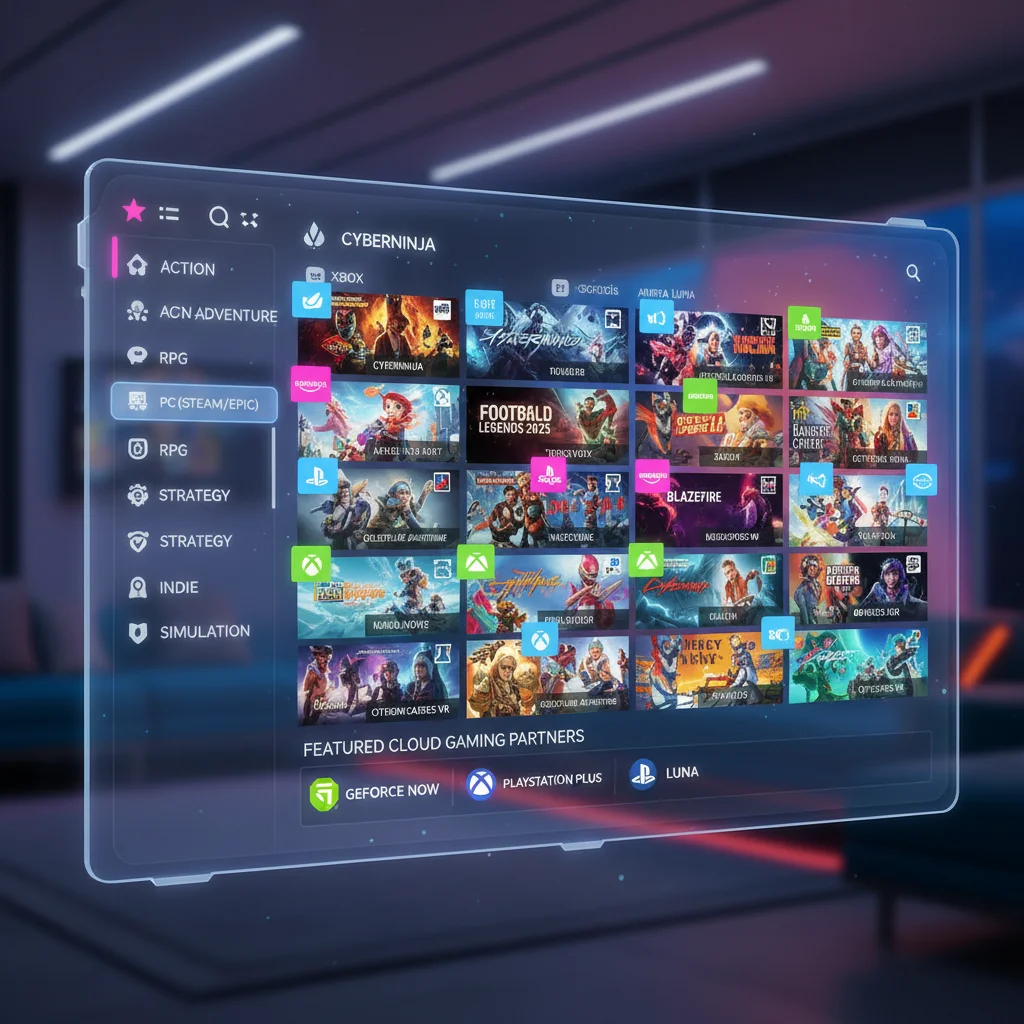
Let’s delve into the specifics of four major cloud gaming platforms that have solidified their positions in 2026: NVIDIA GeForce NOW, Xbox Cloud Gaming (part of Game Pass Ultimate), PlayStation Plus Premium, and Amazon Luna.
1. NVIDIA GeForce NOW
Overview: NVIDIA GeForce NOW has carved out a unique niche by focusing on the ‘Bring Your Own Game’ (BYOG) model. It essentially provides access to a powerful virtual gaming PC in the cloud, allowing users to stream games they already own on popular PC storefronts like Steam, Epic Games Store, GOG, and Ubisoft Connect. NVIDIA’s deep expertise in GPU technology is a significant advantage, as it leverages its state-of-the-art data centres equipped with high-performance GPUs.
Latency Performance:
GeForce NOW consistently ranks among the top performers in terms of latency. This is largely due to NVIDIA’s optimised streaming technology, extensive network of data centres, and continuous investment in low-latency encoding and decoding solutions. Users with good internet connections and geographically close to NVIDIA’s servers often report an experience that feels remarkably close to local play. The service offers various tiers, with higher-end subscriptions providing access to more powerful hardware and lower latency due to dedicated resources. In 2026, NVIDIA has further refined its infrastructure, implementing AI-driven network optimisation to predict and mitigate potential latency spikes, making it a gold standard for responsiveness among cloud gaming platforms.
Game Library:
The game library for GeForce NOW is vast, limited only by the user’s existing PC game purchases and the titles supported by NVIDIA. Unlike other platforms that offer a curated catalogue, GeForce NOW’s strength lies in its compatibility with thousands of PC games. However, it’s not every PC game; publishers must opt-in to have their titles supported, which occasionally leads to popular games being absent. Nevertheless, the sheer volume of supported titles from major publishers and indie developers makes it incredibly appealing for PC gamers who want to extend their library to other devices without repurchasing games. In 2026, NVIDIA has expanded its partnerships, bringing even more major releases to its supported list on day one. The BYOG model is a distinct advantage for those who already have a substantial PC game collection.
2. Xbox Cloud Gaming (part of Game Pass Ultimate)
Overview: Xbox Cloud Gaming, formerly known as xCloud, is an integral part of Microsoft’s hugely successful Xbox Game Pass Ultimate subscription. This service allows subscribers to stream a rotating catalogue of Xbox games to various devices, including phones, tablets, PCs, and smart TVs, without needing an Xbox console. It leverages Microsoft’s extensive Azure data centre infrastructure.
Latency Performance:
Xbox Cloud Gaming has made significant strides in latency reduction since its inception. In 2026, Microsoft’s continuous investment in Azure’s global network and dedicated server blades (often using Xbox Series X hardware) has resulted in a much smoother experience. While it might not always match the absolute lowest latency of GeForce NOW in competitive titles, it provides a very playable experience for the vast majority of games. Latency can vary more significantly depending on server load and geographical distance, but overall, it’s highly competent for a subscription-based service. The integration of custom hardware in their data centres has been a key factor in improving responsiveness for this cloud gaming platform.
Game Library:
The game library is arguably Xbox Cloud Gaming’s strongest selling point. As part of Xbox Game Pass Ultimate, subscribers gain access to a constantly updated library of hundreds of high-quality games, including all first-party Xbox titles on day one of release. This includes blockbuster franchises like Halo, Forza, and Gears of War, alongside a diverse selection of third-party AAA titles and acclaimed indie games. The value proposition is immense, as users can stream these games without purchasing them individually. The rotating nature means games can leave the service, but new ones are added regularly, ensuring a fresh and exciting selection. In 2026, this library continues to grow, bolstered by Microsoft’s acquisitions and strategic partnerships, making it one of the most compelling offerings among cloud gaming platforms for sheer content volume and quality.
3. PlayStation Plus Premium (Cloud Streaming)
Overview: PlayStation Plus Premium is Sony’s top-tier subscription offering, which includes cloud streaming capabilities for a selection of PlayStation games. This service primarily focuses on providing access to a back catalogue of PS4, PS3, and some PS2/PS1 titles, alongside a limited selection of PS5 games, streamed directly from Sony’s servers.
Latency Performance:
Historically, PlayStation’s cloud streaming (formerly PlayStation Now) has faced criticism for higher latency compared to competitors. While Sony has invested in improving its infrastructure, especially with the rebranding to PlayStation Plus Premium, it still often trails behind GeForce NOW and Xbox Cloud Gaming in terms of raw responsiveness. This is particularly noticeable with PS3 games, which are streamed in their entirety, and older titles that were not originally designed with streaming in mind. For PS4 and PS5 titles, the experience is generally better, but competitive gamers might still perceive a slight input delay. In 2026, Sony has focused on regional server expansions and optimising its streaming codecs, leading to a more consistent but not always industry-leading latency profile for this cloud gaming platform.
Game Library:
The game library for PlayStation Plus Premium is extensive, boasting hundreds of titles across multiple PlayStation generations. Its major draw is the inclusion of classic PlayStation games, offering a nostalgic trip for many players. However, the selection of current-gen (PS5) games available for streaming is often more limited than what’s available for download through the subscription. While it includes many first-party PlayStation hits from previous generations, new first-party PS5 releases are typically not available for streaming on day one, unlike Xbox Cloud Gaming. The emphasis is more on legacy content and a broad back catalogue. In 2026, Sony has been gradually adding more PS5 titles to the streaming library, but its primary strength remains its vast collection of older PlayStation gems, which is a unique selling point among cloud gaming platforms.
4. Amazon Luna
Overview: Amazon Luna entered the cloud gaming arena leveraging Amazon’s immense AWS cloud infrastructure. It operates on a channel-based subscription model, where users subscribe to different ‘channels’ (e.g., Luna+, Ubisoft+ Channel, Jackbox Games Channel) to access their respective game libraries. This modular approach allows users to customise their experience.
Latency Performance:
Amazon’s vast AWS network gives Luna a strong foundation for low latency. Being able to tap into a globally distributed cloud infrastructure means that many users are geographically close to a server. Luna generally offers a very respectable latency performance, often comparable to Xbox Cloud Gaming. Amazon has also developed its own custom controller, the Luna Controller, which connects directly to the cloud via Wi-Fi, bypassing the user’s device and theoretically reducing input lag. While the practical difference is often marginal, it signifies Amazon’s commitment to minimising latency. In 2026, Luna continues to refine its streaming algorithms and expand its server footprint, ensuring a smooth and responsive experience for most users, making it a strong contender among cloud gaming platforms in terms of performance.
Game Library:
Amazon Luna’s game library is structured differently due to its channel-based model. The core Luna+ channel offers a rotating selection of games, including some newer titles and a good mix of genres. The Ubisoft+ Channel is a significant draw, providing access to a large collection of Ubisoft’s premium titles, often including new releases. Other channels cater to specific genres or publishers. This model offers flexibility but can also lead to higher costs if users subscribe to multiple channels. While not as universally vast as GeForce NOW’s BYOG model or as comprehensive for new releases as Xbox Game Pass Ultimate’s first-party offerings, Luna’s curated channels provide targeted content. In 2026, Amazon has been working to expand its channel offerings and integrate more third-party publishers, aiming to broaden its appeal and strengthen its position as a versatile cloud gaming platform.
Comparative Analysis: Latency & Game Libraries in 2026
To summarise the comparison of these cloud gaming platforms in 2026:
Latency King: NVIDIA GeForce NOW
For players where every millisecond counts, especially in competitive multiplayer games, NVIDIA GeForce NOW generally holds the edge. Its dedicated focus on high-performance streaming and the use of cutting-edge NVIDIA hardware in its data centres provide a consistently low-latency experience. If you already own a substantial PC game library and prioritise responsiveness above all else, GeForce NOW is likely your best bet among cloud gaming platforms.
Content King: Xbox Cloud Gaming (Game Pass Ultimate)
When it comes to the sheer volume and quality of games available on a subscription basis, Xbox Cloud Gaming, as part of Game Pass Ultimate, is unmatched. The day-one access to new Xbox first-party titles, combined with a constantly refreshed library of hundreds of games, offers incredible value. While its latency is excellent, it might not always be the absolute lowest, but the expansive game library more than compensates for most users. It’s the go-to for those seeking a vast, evolving catalogue of games on a single subscription for cloud gaming platforms.
Nostalgia & PlayStation Ecosystem: PlayStation Plus Premium
PlayStation Plus Premium excels in its offering of a deep back catalogue of PlayStation classics. For fans of older PlayStation titles and those deeply embedded in the PlayStation ecosystem, it provides a unique way to revisit cherished memories. However, its latency can be slightly higher, and its current-gen streaming library is less comprehensive compared to its competitors. It’s a niche but valuable offering among cloud gaming platforms for specific demographics.
Flexible & Modular: Amazon Luna
Amazon Luna’s channel-based approach offers flexibility, allowing users to pay only for the content they want. Its latency performance is strong, benefiting from Amazon’s robust AWS infrastructure. While its core library might not be as universally appealing as Game Pass, its specific channels, especially the Ubisoft+ integration, make it a compelling choice for certain types of gamers. It’s a versatile option among cloud gaming platforms for those who prefer a tailored gaming experience.
The Future of Cloud Gaming Platforms Beyond 2026
As we look beyond 2026, the trajectory for cloud gaming platforms is undoubtedly upward. Several trends are expected to shape their evolution:
- Further Latency Reduction: Continued advancements in 5G, Wi-Fi 7, and fibre optic networks, coupled with more efficient streaming codecs and AI-powered prediction algorithms, will push latency down to near-unperceivable levels for the average user.
- Expansion of Game Libraries: Expect more publishers to embrace cloud streaming, leading to even larger and more diverse game libraries across all platforms. Exclusive content and day-one releases will become even more critical competitive differentiators.
- Device Agnosticism: Cloud gaming will become truly ubiquitous, playable seamlessly on virtually any internet-connected screen – from smart TVs and cars to augmented reality (AR) and virtual reality (VR) headsets.
- Hybrid Models: The lines between local and cloud gaming may blur, with hybrid models emerging where parts of a game run locally and others are streamed, optimising performance and reducing bandwidth.
- Subscription Innovation: Expect more flexible and personalised subscription models, potentially including micro-subscriptions for specific games or time-based access.
Conclusion: Choosing Your Ideal Cloud Gaming Platform in 2026
In 2026, the choice of cloud gaming platforms is more diverse and compelling than ever. There isn’t a single ‘best’ platform; rather, the ideal choice depends on your priorities:
- If you prioritise the absolute lowest latency and already own a substantial PC game library, NVIDIA GeForce NOW is your champion.
- If you seek the broadest and most current subscription-based game library, especially with new first-party titles, Xbox Cloud Gaming (via Game Pass Ultimate) offers unparalleled value.
- For a trip down memory lane with classic PlayStation titles and integration into the PlayStation ecosystem, PlayStation Plus Premium is the dedicated choice.
- If you appreciate a modular approach to content and have a strong preference for specific publisher libraries (like Ubisoft), Amazon Luna provides excellent flexibility and performance.
Regardless of your choice, the future of gaming is undoubtedly in the cloud. These cloud gaming platforms are not just an alternative; they represent a fundamental shift in how we access and experience video games, promising greater accessibility and immersion for gamers worldwide. The advancements seen by 2026 are just the beginning, and the coming years promise even more exciting developments for cloud gaming platforms.
