Dreadwood Asylum 2026: A Deep Dive into the Survival Horror Sensation and Its Impact on US Genre Fans
The year is 2026, and the survival horror genre continues its relentless evolution, pushing boundaries of fear and immersion. Amidst a landscape filled with promising titles, one game has unequivocally seized the spotlight: Dreadwood Asylum. Developed by the enigmatic studio ‘Shadowbound Games’, this title has not only garnered critical acclaim but has also profoundly resonated with US genre fans, cementing its place as a benchmark for future horror experiences. This comprehensive Dreadwood Asylum Review aims to dissect every chilling facet of the game, exploring its narrative depth, innovative gameplay, psychological terror, and its significant cultural footprint across the United States.
From the moment the initial trailers dropped, a palpable buzz surrounded Dreadwood Asylum. Whispers of a return to true psychological horror, coupled with next-generation graphics and sound design, set expectations sky-high. Upon its release, the game not only met these expectations but, for many, surpassed them, delivering an experience that is as unsettling as it is unforgettable. For US horror enthusiasts, who have a long-standing appreciation for the genre’s nuances, ‘Dreadwood Asylum’ offered a fresh yet familiar descent into madness.
The Genesis of Fear: Story and Setting of Dreadwood Asylum
At the heart of any compelling survival horror game lies a potent narrative, and Dreadwood Asylum is no exception. The game plunges players into the dilapidated, forgotten corridors of the infamous Dreadwood Asylum, a facility with a dark past shrouded in medical malpractice, unethical experiments, and unexplained disappearances. Set in the desolate countryside of an unnamed US state, the asylum’s history is meticulously woven into the environment, with every creaking floorboard and peeling wallpaper telling a tale of suffering and despair.
Players assume the role of Dr. Eleanor Vance, a psychiatrist haunted by her own past, who ventures into the abandoned asylum seeking answers related to her missing sister, a former patient. What begins as a desperate search quickly devolves into a nightmarish struggle for survival against the asylum’s tormented former inhabitants and something far more sinister that lurks within its decaying walls. The narrative expertly blends elements of psychological thriller, supernatural horror, and a deeply personal quest for redemption, making Dr. Vance’s journey incredibly relatable and her fears palpable.
A Masterclass in Environmental Storytelling
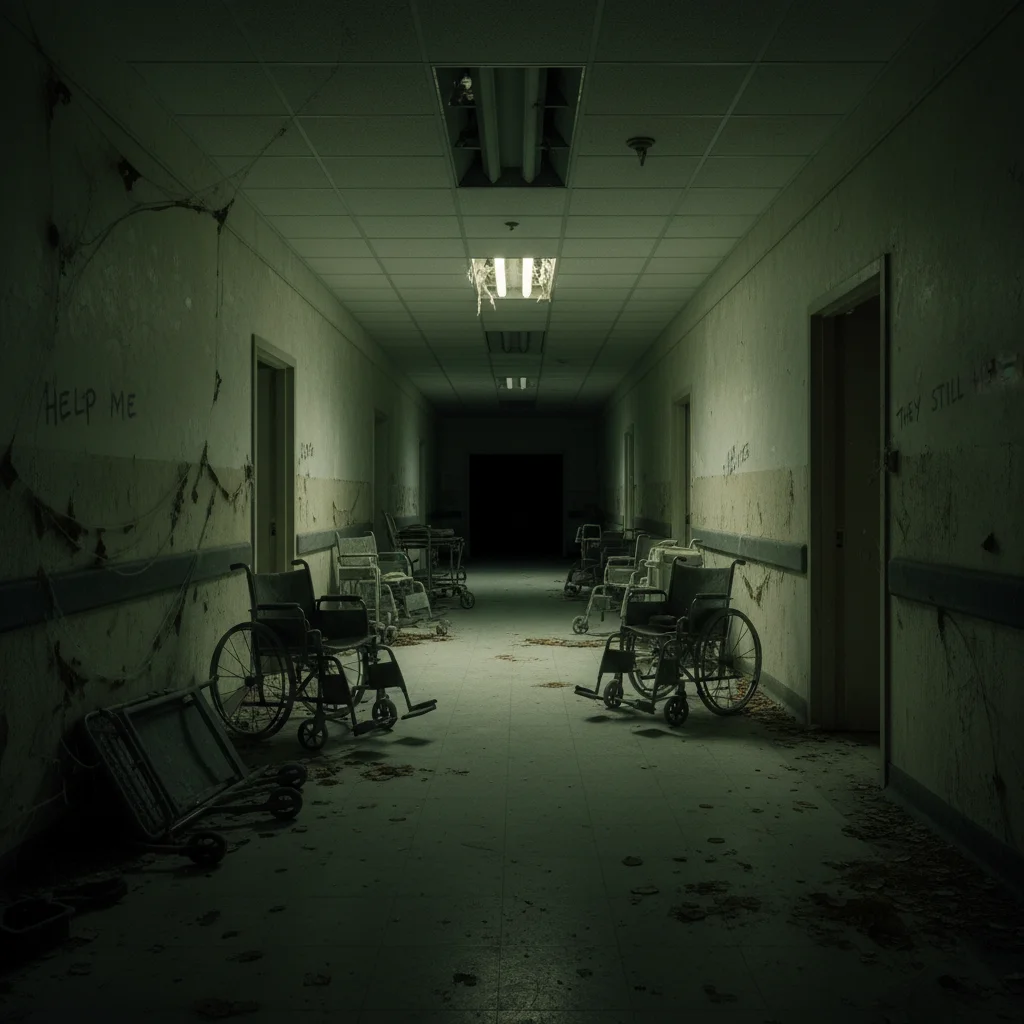
One of the standout features highlighted in every Dreadwood Asylum Review is its unparalleled environmental storytelling. Shadowbound Games has crafted an environment that feels alive with history and dread. Graffiti scrawled on walls, forgotten patient files, unsettling medical records, and cryptic audio logs piece together the asylum’s horrifying past, allowing players to gradually uncover the truth at their own pace. This non-linear approach to exposition not only enhances replayability but also deepens the sense of immersion, as players actively participate in uncovering the lore rather than passively receiving it.
The architecture itself is a character. The labyrinthine layout of Dreadwood Asylum, with its locked wards, hidden passages, and disturbing patient rooms, contributes significantly to the feeling of being trapped and vulnerable. The level design encourages exploration while simultaneously instilling a constant fear of the unknown, a delicate balance that few horror games achieve with such proficiency. This attention to detail has particularly resonated with US players who appreciate narratives that are both complex and emotionally resonant, often drawing parallels to classic American horror literature and cinema.
Gameplay Mechanics: Innovation Meets Classic Survival Horror
Dreadwood Asylum doesn’t just rely on its story to deliver scares; its gameplay mechanics are a brilliant fusion of traditional survival horror elements and innovative new features. Resource management is paramount. Ammunition is scarce, healing items are rare, and light sources are fleeting, forcing players to make critical decisions about when to fight, when to flee, and when to conserve precious resources. This scarcity elevates the tension, making every encounter a high-stakes ordeal.
The combat system, while intentionally clunky to emphasize vulnerability, is surprisingly nuanced. Melee attacks feel desperate, and firearm encounters are brief, brutal affairs. The game encourages stealth and evasion over direct confrontation, often presenting situations where fighting is simply not an option. This design choice reinforces the core tenets of survival horror, where the player is not a super-soldier but a fragile individual desperately trying to survive against overwhelming odds.
The ‘Sanity System’ and Its Impact
Perhaps the most innovative gameplay mechanic in Dreadwood Asylum is its dynamic ‘Sanity System’. Unlike traditional health bars, Dr. Vance’s mental state directly influences gameplay. Prolonged exposure to darkness, disturbing imagery, jump scares, or the presence of hostile entities slowly erodes her sanity. As sanity dwindles, players experience visual and auditory hallucinations, distorted perceptions, and even temporary loss of control, making navigation and combat increasingly challenging.
This system is not merely a gimmick; it’s a fundamental pillar of the game’s psychological horror. It blurs the line between reality and illusion, making players question what they see and hear, mirroring Dr. Vance’s own deteriorating mental state. Managing sanity becomes as crucial as managing physical health, adding an extra layer of strategic depth and constant dread. Many US gaming critics have lauded this system as a groundbreaking approach to player immersion and fear generation, setting a new standard for how psychological elements can be integrated into gameplay.
The Art of Fright: Sound Design, Visuals, and Atmosphere
No Dreadwood Asylum Review would be complete without a deep dive into its immaculate technical execution, particularly its sound design, visuals, and the resulting atmosphere. Shadowbound Games has leveraged the power of next-generation hardware to create an experience that is both stunningly beautiful and utterly terrifying.
Audiovisual Terror: A Symphony of Screams and Shadows
The sound design in Dreadwood Asylum is nothing short of masterful. Every creak, groan, distant whisper, and sudden shriek is meticulously crafted to maximize tension and dread. The spatial audio is particularly effective, allowing players to pinpoint the approximate location of unseen threats, creating a constant state of paranoia. The ambient score, a haunting blend of discordant melodies and unsettling drones, perfectly complements the visual terror, rising and falling with the narrative’s intensity. For players using headphones, the experience is profoundly immersive, turning every dark corner into a potential heart attack.
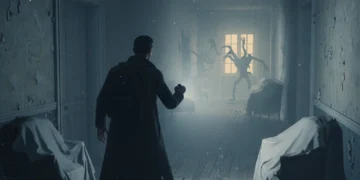
Visually, the game is a feast for horror aficionados. The asylum’s decaying grandeur is rendered with breathtaking detail, from the intricate textures of peeling paint and rusted metal to the realistic volumetric lighting that casts long, dancing shadows. Character models, especially those of the game’s antagonists, are grotesque and disturbing, designed to elicit a primal sense of revulsion. The use of darkness is particularly effective, not merely as an aesthetic choice but as a gameplay mechanic, forcing players to rely on a flickering flashlight that often reveals more horror than it illuminates. The game’s art direction is a testament to the developers’ understanding of horror, creating an environment that feels oppressive and alive.
The Scares: Jump Scares vs. Psychological Horror
In the ongoing debate within the horror community about the efficacy of jump scares versus psychological horror, Dreadwood Asylum manages to strike a near-perfect balance. While there are certainly moments designed to make players leap from their seats, these are sparingly used and strategically placed to maximize impact. Crucially, they are almost always earned, often serving as a culmination of prolonged tension rather than cheap frights.
The true terror of Dreadwood Asylum lies in its relentless psychological assault. The game excels at building an oppressive atmosphere of dread, slowly chipping away at the player’s sense of security. The constant feeling of being watched, the subtle shifts in the environment, the distorted echoes of past events, and the pervasive sense of helplessness contribute to a deeply unsettling experience that lingers long after the game is turned off. This nuanced approach to fear has been particularly praised by US fans who appreciate horror that engages the mind as much as it startles the senses.
Impact on US Genre Fans and the Broader Gaming Landscape
The release of Dreadwood Asylum in 2026 has had a significant and undeniable impact on US genre fans and the broader gaming landscape. It has sparked countless discussions on forums, streaming platforms, and social media, with players sharing their terrifying experiences and theories about the asylum’s lore. Its critical and commercial success has demonstrated a clear demand for high-quality, narrative-driven survival horror that prioritizes atmosphere and psychological depth over action.
A New Benchmark for Horror
Many critics and players alike are hailing Dreadwood Asylum as a new benchmark for the survival horror genre. It successfully combines modern graphical fidelity and innovative gameplay mechanics with a deep understanding of what makes horror truly effective. Its influence is already being felt, with other developers undoubtedly taking notes on its sanity system, environmental storytelling, and masterful sound design.
For US fans, who grew up with iconic horror franchises like ‘Resident Evil’, ‘Silent Hill’, and ‘Outlast’, ‘Dreadwood Asylum’ feels like a spiritual successor, a game that respects the genre’s roots while boldly venturing into new territory. It has reignited passion for survival horror, attracting both seasoned veterans and newcomers to the genre. The game’s themes of mental illness, trauma, and institutional corruption resonate deeply, adding a layer of social commentary that elevates it beyond mere entertainment.
Accessibility and Inclusivity in Horror
Another area where Dreadwood Asylum has made strides, often overlooked in a typical Dreadwood Asylum Review, is its approach to accessibility. While inherently a challenging and intense experience, Shadowbound Games has included a suite of options to make the game more approachable for a wider audience without compromising its core vision. Adjustable difficulty settings, remappable controls, and options for visual and auditory cues (for players with sensory impairments) demonstrate a commitment to inclusivity, an increasingly important aspect of modern game development.
This thoughtful design ensures that more players can engage with its terrifying narrative and innovative gameplay, broadening its appeal and solidifying its position as a culturally significant title. The conversation around accessibility in horror games is growing, and ‘Dreadwood Asylum’ provides a strong example of how developers can implement features that enhance the experience for all, rather than dilute it.
Replayability and Post-Launch Content
Beyond its initial chilling playthrough, Dreadwood Asylum offers substantial replayability. The branching narrative elements, subtle environmental clues that might be missed on a first run, and the sheer desire to uncover every last secret of the asylum encourage multiple playthroughs. Furthermore, Shadowbound Games has outlined plans for post-launch content, including additional chapters, new game modes, and expanded lore, promising to keep players immersed in its terrifying world for years to come.
The community engagement around ‘Dreadwood Asylum’ is also a testament to its lasting appeal. Players are actively dissecting its complex lore, sharing theories about its ambiguous ending, and creating fan content, all of which contribute to the game’s longevity and cultural impact. This vibrant community, particularly strong among US horror gaming circles, ensures that the conversation around ‘Dreadwood Asylum’ will continue to evolve.
Criticisms and Areas for Improvement
While overwhelmingly positive, no Dreadwood Asylum Review would be complete without addressing some minor criticisms. A few players have reported occasional frame rate drops in particularly dense areas, though these are rare and often patched quickly. Some have also found the combat system to be overly clunky, wishing for slightly more responsiveness, even within the context of emphasizing vulnerability.
Additionally, while the ambiguity of the ending is a deliberate artistic choice and largely praised for its psychological impact, a small segment of the player base expressed a desire for more definitive closure. These are, however, minor quibbles in an otherwise polished and profoundly impactful experience, reflecting more on personal preference than fundamental flaws in design.
The Future of Survival Horror: What Dreadwood Asylum Teaches Us
Dreadwood Asylum serves as a powerful testament to the enduring appeal and evolutionary potential of the survival horror genre. It demonstrates that true fear doesn’t always come from gore or jump scares, but from a meticulously crafted atmosphere, deeply unsettling psychological themes, and innovative gameplay that constantly keeps players on edge. It’s a game that respects its audience, trusting them to piece together its intricate narrative and confront their own anxieties.
For US genre fans, ‘Dreadwood Asylum’ is more than just a game; it’s an experience that validates their love for horror, offering a sophisticated and deeply disturbing journey into the darkest corners of the human psyche. It sets a new standard for what survival horror can achieve, inspiring future developers to push creative boundaries and reminding us why we love to be scared.
Conclusion: Why Dreadwood Asylum is a Must-Play Horror Masterpiece
In conclusion, Dreadwood Asylum stands as a towering achievement in the survival horror genre. Its compelling narrative, innovative sanity system, masterful sound design, and truly terrifying atmosphere combine to create an unforgettable experience. For US genre fans, it delivers on every promise, offering a sophisticated and deeply unsettling journey into madness that redefines what a horror game can be.
If you are a fan of psychological terror, intricate lore, and gameplay that truly makes you feel vulnerable, then ‘Dreadwood Asylum’ is an absolute must-play. It is not just a game; it is a meticulously crafted nightmare that you will willingly return to, time and time again, if only to confront the lingering echoes of its profound dread. Shadowbound Games has not just created a game; they have crafted a legacy, and the future of survival horror looks terrifyingly bright because of it.