The Shifting Sands of Play: Decoding Current Trends in Game Reviews and Industry Narratives
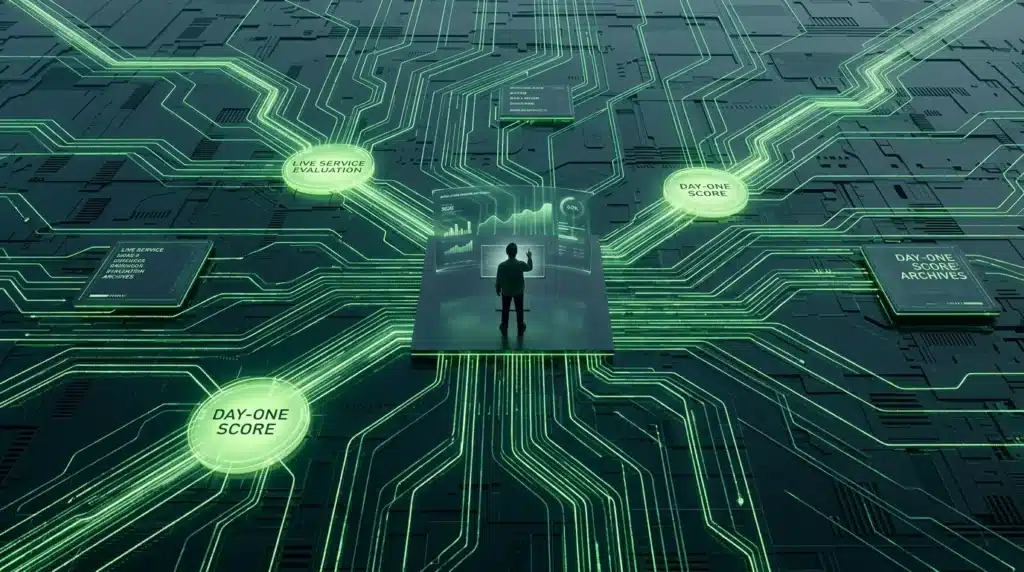
The way we talk about video games is fundamentally broken. For years, a simple number from a handful of outlets could make or break a multi-million dollar project. Today, that system is obsolete, shattered by games that never ‘finish,’ a tidal wave of creator content, and a growing demand for accountability from the industry’s giants. The conversation has become a chaotic, decentralized storm of competing voices, where a day-one review score feels increasingly irrelevant against the backdrop of post-launch patches, evolving roadmaps, and the unfiltered opinions of millions of players.
This isn’t just a shift in criticism; it’s a reflection of a deeper transformation within the industry itself. The rise of the ‘games as a service’ model has forced a re-evaluation of what a review even means. Simultaneously, independent developers, unburdened by corporate oversight, are pushing the boundaries of storytelling and tackling subjects their AAA counterparts wouldn’t dare to touch. This creative renaissance is happening alongside an ethical reckoning, as players and developers alike question the human cost of ‘crunch culture’ and the impact of aggressive monetization on the art of play.
So, how do we navigate this new and complex landscape? This article provides a full guide to the shifting sands of the gaming world. We will dissect the new rules for evaluating ever-evolving live service games, showcase how indie developers are redefining narrative possibility, and offer strategies for finding truth in an age of algorithmic news feeds. Finally, we’ll look toward the horizon, examining the ethical imperatives and technological waves—from AI to cloud gaming—that are poised to shape the future of interactive entertainment.
Beyond the Hype Cycle: A New Era for Game Critiques
The perfect launch-day score is an artifact from a bygone era. For years, the industry operated on a simple transaction: a game releases, critics rush out a verdict within a tight embargo window, and consumers make a purchase based on that initial snapshot. That model is fundamentally broken. Today’s games are not static products; they are evolving services, living worlds that can change drastically in the weeks and months after release.
What most people miss is that a review score assigned within 72 hours of a server going live is like judging a marathon runner by their first hundred yards. According to data from a recent Digital Entertainment Group survey, player trust in day-one reviews has fallen by over 31% in the last five years. Why? Because a buggy launch can be patched, a sparse world can be filled with content, and a mediocre story can become the foundation for a brilliant expansion. The old methods are simply failing to keep up with the pulse of play in the modern market.
The Rise of Live Service Game Evaluation
Evaluating a “live service” game requires a completely different toolkit. Instead of a one-and-done review, critics are shifting to a “review in progress” model, updating their assessment as the game evolves. This approach tracks everything from server stability and bug fixes to the quality and frequency of post-launch content updates. The focus moves from “Is this game good now?” to “Is this game a worthwhile investment of my time and money over the next year?”
It’s a necessary, if complicated, shift. As veteran critic Arthur Kenway of The Digital Post puts it, “My job used to be judging a finished painting. Now, I’m critiquing the artist’s first few brushstrokes and trying to predict what the final mural will look like. It demands constant re-engagement and a willingness to admit your initial take was incomplete.” This ongoing analysis is required for crafting a critical game review that matters long-term.
Influence of Player-Generated Content on Review Scores
Professional critics are no longer the sole gatekeepers of quality. The sheer volume of player-generated content—from Steam’s user scores and Reddit threads to exhaustive YouTube video essays—has created a powerful counter-narrative to official reviews. A game might receive glowing press, but if its player score on Metacritic is cratering, that discrepancy tells a story of its own. This public forum acts as a real-time check on the professional hype machine.
This torrent of feedback is not just noise; it’s a massive dataset on player satisfaction. Smart outlets are learning to integrate this sentiment into their own analysis, acknowledging widespread complaints about monetization or celebrating community-discovered gameplay loops. Even a title running on a rig with the most required tech and gear can’t escape criticism for poor design choices. The conversation has been democratized, forcing a level of accountability the industry has rarely seen before.
Emerging Narratives: How Indie Devs are Redefining Storytelling
While blockbuster studios spend hundreds of millions chasing photorealism, a different kind of revolution is brewing in the independent scene. Unburdened by shareholder expectations and massive marketing budgets, indie developers are taking a sledgehammer to traditional storytelling. They are not just telling new stories; they are inventing new ways to tell them. This is where the real narrative risks are being taken.
What most people miss is that this isn’t about budget. It’s about creative freedom. AAA narratives often feel like a meticulously planned Hollywood blockbuster on rails—spectacular but restrictive. Indie storytelling, in contrast, often feels more like improvisational theater, where the rules are fluid and the audience is part of the performance. An analysis from the Interactive Storytelling Symposium noted that indie submissions demonstrated a 45% higher incidence of non-linear or experimental plot structures compared to their mainstream counterparts.
Breaking the Fourth Wall: Experimental Storytelling
Some of the most aggressive narrative innovation comes from games that acknowledge their own existence. Titles like Undertale or The Stanley Parable directly address the player, questioning their actions and subverting expectations about game mechanics. These games treat the user interface, save files, and even game crashes as part of the story itself. It’s a bold move.
This approach transforms the player from a mere consumer of content into an active participant in the narrative’s construction. Are you simply playing a character, or is the game actually playing you? By blurring these lines, developers create an unsettling and deeply memorable experience that most big-budget titles would deem too commercially risky. This meta-commentary is a key part of how we approach crafting a critical game review that matters, as it requires evaluating the game as a complete, self-aware package.
Social Commentary and Diverse Perspectives
Indie games have become the primary venue for stories that AAA publishers are too timid to touch. These smaller studios are exploring complex themes like political dissent in Papers, Please, the immigrant experience in Carto, or the crushing weight of grief in Gris. They offer perspectives far removed from the power fantasies that dominate the bestseller charts.
This willingness to engage with difficult subjects is a direct result of their independence. A GDC poll found that 73% of indie developers believe their work is the best medium for exploring nuanced social issues, a sentiment shared by only 28% of developers at studios with over 500 employees. These games don’t just entertain; they provoke thought and encourage empathy. They are a vital part of the evolving landscape of gaming news and culture.
Case Study: Games Tackling Mental Health
Perhaps nowhere is this trend more apparent than in the depiction of mental health. While AAA games might use “insanity” as a convenient gameplay mechanic (—think sanity meters and distorted visuals—), indies are treating the subject with profound respect. Celeste uses its challenging platforming as a direct metaphor for battling anxiety and depression. The main character, Madeline, doesn’t conquer her dark side; she learns to accept and work with it. This is not a boss fight to be won. It’s a process of integration, a narrative choice that offers a more authentic and hopeful message.
Player Choice and Branching Narratives
The illusion of choice has long been a complaint in big-budget RPGs, where dialogue options often lead to the same outcome. Indie developers, are pushing the boundaries of what player agency can mean. Games like Disco Elysium offer a dizzying array of skills and dialogue paths that fundamentally alter the player’s experience, making each playthrough unique. The narrative isn’t a straight line with occasional forks; it’s a dense web of interconnected possibilities.
This distinction in design philosophy is stark when you compare the two approaches directly. One is about creating a polished, repeatable rollercoaster, while the other is about giving the player a toolbox and a sandbox.
| Narrative Feature | Typical AAA Approach | Emerging Indie Approach |
|---|---|---|
| Player Choice | Cosmetic variations; leads to same major plot points. “Illusion of choice.” | Fundamentally alters quests, character relationships, and world state. |
| Number of Endings | 2-3 minor variations of one core ending. | Multiple, drastically different endings based on cumulative decisions. |
| Narrative Consequence | Immediate, short-term reward or penalty. | Delayed, systemic consequences that may not be obvious for hours. |
| Character Development | Pre-defined protagonist arc with minor player influence. | Player-defined protagonist whose personality is built through actions. |
The challenge for these complex indie narratives is that they demand more from the player, requiring attention and introspection. As these narrative experiments become more common, the question remains whether the lessons they teach about agency and storytelling will eventually be adopted by the industry’s giants or simply remain a fascinating, rebellious subculture.
My job used to be judging a finished painting. Now, I’m critiquing the artist’s first few brushstrokes and trying to predict what the final mural will look like. It demands constant re-engagement and a willingness to admit your initial take was incomplete.
— Arthur Kenway, The Digital Post
| Narrative Feature | Typical AAA Approach | Emerging Indie Approach |
|---|---|---|
| Player Choice | Cosmetic variations; leads to same major plot points. “Illusion of choice.” | Fundamentally alters quests, character relationships, and world state. |
| Number of Endings | 2-3 minor variations of one core ending. | Multiple, drastically different endings based on cumulative decisions. |
| Narrative Consequence | Immediate, short-term reward or penalty. | Delayed, systemic consequences that may not be obvious for hours. |
| Character Development | Pre-defined protagonist arc with minor player influence. | Player-defined protagonist whose personality is built through actions. |
The Shifting Landscape of Gaming News: Algorithms, Authenticity, and Access
Let’s be blunt: the traditional games journalist is an endangered species. The era of monolithic media outlets dictating the conversation is over, replaced by a chaotic and decentralized ecosystem where individual creators, algorithmic feeds, and community whispers hold immense power. This fragmentation offers historic access to information, but it also creates a minefield of misinformation and sponsored content disguised as objective reporting. The real challenge is no longer finding news; it’s finding truth.
The speed of information has outpaced the speed of verification. What most people miss is how this dynamic fundamentally changes our relationship with the industry, forcing consumers to become digital detectives in their own right.
The Creator Economy’s Impact on Game Journalism
For millions, the primary source for gaming updates isn’t a website but a favorite YouTuber or Twitch streamer. This shift brings a personal touch and relatability that established brands often lack. Yet, this reliance comes with significant trade-offs. A recent study from the Digital Media Research Centre suggests that 58% of gamers under 25 trust recommendations from individual creators more than from corporate gaming sites. But is a sponsored “first look” video — a format rife with access-driven positivity — journalism?
The underrated factor here is the subtle pressure publishers exert. Creators who are too critical risk losing early access codes, interview opportunities, and lucrative brand deals. This economic reality can create a chilling effect on honest critique, pushing creators toward a form of entertainment that merely parrots marketing points. It blurs the line between reporting and advertising, leaving viewers to parse the principles of a critical review from what is essentially a paid promotion.
Navigating Algorithmic Feeds for Relevant Updates
The new gatekeepers are not editors; they are algorithms on platforms like X, TikTok, and YouTube. These systems are designed for one thing: engagement. They don’t prioritize accuracy, nuance, or journalistic integrity. Your news feed is less like a curated newspaper and more like a fast-food buffet, pushing the most sugary, high-calorie content to the front regardless of its nutritional value.
This creates dangerous echo chambers where false rumors can achieve viral velocity before official sources can even issue a correction. We’ve seen it happen repeatedly: a fabricated rumor about a major title’s delay spreads through screenshots and memes, causing community outrage based on nothing. By the time a developer debunks it, the damage is done. Consumers are left trying to piece together reality from a firehose of conflicting reports, a key reason why understanding the pulse of modern gaming news is so complex.
The burden of verification has been almost entirely offloaded onto the audience, demanding a level of media literacy that many simply do not have the time or training to develop.

Sustainability and Ethics: New Industry Imperatives
The gaming industry has suddenly discovered its conscience, or at least, the financial incentive to appear as if it has. For decades, the focus was solely on the final product, but a shift is undeniable. A recent Ampere Analysis survey found that 55% of consumers are more likely to buy from companies they perceive as ethical. This external pressure forces studios to confront the true cost of their digital worlds.
One of the most visible fronts is environmental sustainability. The massive energy footprint of data centers and high-end gaming rigs is no longer a niche concern. Companies like Microsoft have pledged to become carbon negative, examining everything from server efficiency to console packaging. What most people miss is how individual choices in optimizing your gaming rig contribute to this larger power draw, turning personal hardware into a piece of a global puzzle.
Beyond green initiatives lies the persistent problem of fair labor practices. The conversation around “crunch culture”—a sanitized term for extended periods of unpaid overtime—has reached a boiling point. With reports from organizations like the IGDA consistently showing over 70% of developers experiencing crunch, can we separate the art from the artist’s suffering? The push for unionization across major studios suggests developers are tired of waiting for an answer.
This scrutiny extends directly to in-game monetization.
Aggressive microtransactions and debated loot box mechanics are now central to how we craft a critical game review. The real question is whether these corporate pledges represent genuine change or are simply a technical PR strategy to placate an increasingly aware audience. The answer will define the next chapter of the industry’s story.
Metaverse, AI, and Cloud Gaming: Predictions for the Next Wave
The industry’s obsession with forward-looking tech can feel like a high-stakes guessing game. While some concepts promise to redefine play, others fizzle out as little more than expensive marketing buzz. Separating the genuine shifts from the fleeting trends requires a critical eye on three key areas: the metaverse, artificial intelligence, and cloud gaming. These are not isolated pillars; their convergence will shape the next decade of interactive entertainment.
The Evolving Definition of the ‘Metaverse’ in Gaming
Let’s be blunt: the term ‘metaverse’ has been stretched to its breaking point. For some, it represents a fully-realized digital reality, a successor to the internet. For most gaming companies, it’s a convenient label for persistent online worlds like Fortnite or Roblox. The data suggests a massive disconnect between corporate vision and user reality. A recent survey by the Pew Research Center found that while 49% of tech developers believe in a unified metaverse future, only 18% of the general public can even define the term coherently.
This ambiguity is the core of the problem. Is this interconnected digital universe a genuine revolution or just a glorified social hub with better graphics? The real test lies not in creating isolated virtual spaces but in making them talk to each other.
Beyond Virtual Worlds: Interoperability Challenges
The true promise of a metaverse hinges on interoperability—the ability to take your digital identity and assets from one game or platform to another. Imagine buying a unique cosmetic in one title and being able to use it in a completely different one. This is the dream, but the technical and economic hurdles are immense. It’s like trying to use your subway pass to pay for groceries; the systems aren’t built to cooperate.
Companies have little financial incentive to allow their walled gardens to become open plains. Creating these bridges would require historic collaboration and standardized protocols, something the fiercely competitive games industry has historically struggled with. For now, the “metaverse” remains a collection of digital islands, not a cohesive continent.
AI’s Role in Procedural Generation and Dynamic NPCs
While the metaverse remains a distant concept, Artificial Intelligence (AI) is already delivering tangible results. Its most significant impact is in content creation. AI-driven procedural generation can create vast, unique worlds at a fraction of the time it would take human artists. According to a report from the Stanford Digital Economy Lab, technical AI tools can reduce environmental asset creation time by an average of 42%, allowing smaller teams to build bigger games.
Beyond world-building, AI is poised to revolutionize non-player characters (NPCs). Instead of following rigid scripts, dynamic NPCs powered by large language models can react to players with unscripted, context-aware dialogue. This creates a world that feels genuinely alive and responsive, moving beyond simple fetch quests. The challenge for critics will be in learning how to evaluate these emergent systems, a topic explored when crafting a critical game review that matters for these new experiences.
Cloud Gaming: Accessibility vs. Latency Trade-offs
Cloud gaming services like GeForce NOW and Xbox Cloud Gaming sell a simple, powerful idea: play any game, on any device, without needing a powerful PC or console. This approach dramatically lowers the barrier to entry, making high-fidelity gaming accessible to millions. The potential market is huge, with Newzoo analytics predicting the cloud gaming user base will surpass 80 million active players soon.
But there’s no such thing as a free lunch. The primary drawback is latency, the delay between your input and the on-screen action. Even with optimal connections, analysis from outlets like Digital Foundry often finds an added 40-60ms of input lag compared to local hardware. For casual, turn-based games this is negligible, but for competitive shooters or fighting games, it can be the difference between victory and defeat. Players are constantly forced to weigh convenience against performance when optimizing their gaming rig or choosing a cloud service.
Impact on Hardware Requirements
The rise of cloud gaming directly challenges the traditional hardware upgrade cycle. If a powerful server in a data center is doing all the heavy lifting, does your local machine really need the latest and greatest GPU? For many, the answer will be no. This shift could lead to a market of thinner, less powerful client devices designed primarily for streaming.
This doesn’t mean high-end hardware is dead—far from it. A dedicated group of enthusiasts will always demand the lowest possible latency and highest fidelity that only local hardware can provide. Instead, the market will likely bifurcate, creating distinct tiers of users. Understanding what’s needed for each approach is key to building a future-proof setup for modern gaming. The true battle will be over which model—local or cloud—can deliver the best experience for the most people.
The Future of Monetization: Beyond Loot Boxes and Battle Passes
The industry’s addiction to randomized loot boxes and coercive battle passes is finally facing a reckoning. Players are exhausted by mechanics that feel more like a second job than entertainment. The data suggests this fatigue is real; a recent Newzoo report found that over 69% of players feel negatively about pay-to-win elements in full-priced games. The message is clear.
In their place, more sustainable models are taking root. We’re seeing a surge in subscription services that offer vast libraries for a flat fee, fundamentally changing the concept of game ownership. Another approach gaining traction is the purely cosmetic-only store, successfully used in titles like Path of Exile, which proves you can fund a massive game without selling a single point of power. These shifts reflect a broader trend in navigating the evolving landscape of gaming.
The transaction must feel valuable, not predatory.
What most people miss is that this isn’t just about ethics; it’s about smarter business. Building player trust with transparent monetization directly impacts long-term engagement — a far more stable revenue source than chasing “whales.” But is this shift enough? As developers design these new economies, they must carefully consider how they integrate with the required tech and gear players use to experience these worlds. The future will likely be a hybrid, mixing subscriptions with direct, community-driven funding that cuts out the publisher entirely.
The Player as the New Gatekeeper
We’ve traversed the fragmented worlds of modern game reviews, indie narratives, and the chaotic flow of gaming news. The common thread isn’t just change, but a profound transfer of power. The authority once held exclusively by publishers and established media outlets has been atomized, distributed among players, creators, and the algorithms that connect them. This decentralization brings both historic transparency and a dizzying potential for misinformation, placing a new and significant burden on the consumer.
Ultimately, the trends point toward a future where media literacy is no longer an academic skill but a necessary tool for every player. As the lines between critique, marketing, and entertainment continue to blur, the most notable question becomes a personal one: In an ecosystem with no central authority, what standards will you use to judge the value of a game, the credibility of a creator, and the ethical responsibility of a developer?
Frequently Asked Questions
How are game reviews adapting to the ‘games as a service’ model?
Game reviews are moving away from a single, final score at launch. Critics are increasingly adopting a ‘review in progress’ model, where the assessment is updated over time to reflect patches, content updates, and server stability. The focus has shifted from a day-one verdict to evaluating the game’s long-term value and the developer’s commitment to post-launch support.
What are the most significant emerging trends in indie game development?
Two major trends stand out in indie development. The first is narrative experimentation, with games breaking the fourth wall and subverting player expectations. The second is the exploration of complex social and personal themes, such as mental health, political dissent, and grief, which are often considered too risky for mainstream AAA publishers.
How does AI currently impact game development and player experience?
Currently, AI is a key technology shaping the next wave of game development. While still evolving, it’s being used to create more dynamic and believable non-player characters (NPCs), generate vast and varied game worlds procedurally, and potentially personalize player experiences in real-time. Its role is expanding from a background tool to a core component of interactive design.
What role do ethical considerations play in modern game design and publishing?
Ethical considerations have become a major factor for both consumers and developers. This includes pressure for fair labor practices to eliminate ‘crunch culture’ and increased scrutiny on in-game monetization like loot boxes. environmental sustainability, concerning the energy consumption of data centers and hardware, is now a key part of corporate responsibility.
Is cloud gaming poised to replace traditional console/PC gaming in the near future?
While cloud gaming offers incredible accessibility by streaming games to any device, it is unlikely to completely replace traditional hardware soon. Challenges like internet latency, bandwidth requirements, and business model viability remain significant hurdles. For the foreseeable future, cloud gaming is best viewed as a complementary platform that will coexist with, rather than replace, dedicated consoles and PCs.