PC Gaming Hardware Trends 2026: Top 3 GPU Upgrades for 30% Performance Boosts
PC Gaming Hardware Trends for 2026: The Top 3 GPU Upgrades Delivering 30% Performance Boosts
The landscape of PC gaming is in a constant state of flux, driven by relentless innovation in hardware. As we hurtle towards 2026, gamers and enthusiasts alike are eagerly anticipating the next significant leap in performance. The evolution of PC gaming hardware trends dictates not just how games look, but how they feel, how immersive they are, and the very limits of what developers can achieve. This article delves deep into the expected PC gaming hardware trends for 2026, with a particular focus on the graphics processing unit (GPU) – the beating heart of any serious gaming rig. We’ll explore the top three GPU upgrades poised to deliver an astonishing 30% or more performance boost, ensuring your gaming experience remains cutting-edge.
Understanding these PC gaming hardware trends is crucial for anyone looking to future-proof their system or simply stay ahead of the curve. The rapid advancements in GPU architecture, memory technologies, and AI integration are set to redefine what’s possible in gaming. From ray tracing becoming a standard rather than a luxury to unprecedented levels of graphical fidelity and computational power, 2026 promises to be a landmark year for PC gaming. Let’s unpack what these trends mean for you and your gaming setup.
The Shifting Sands of GPU Architecture: What to Expect
The foundation of any significant performance leap in GPUs lies in their underlying architecture. By 2026, we anticipate major overhauls from the leading manufacturers, NVIDIA, AMD, and potentially Intel. These architectural shifts are not just about adding more cores; they’re about rethinking how these cores interact, how data is processed, and how efficiently power is consumed. The focus will be on hybrid architectures combining traditional rasterization units with advanced AI accelerators and dedicated ray tracing cores.
One of the primary PC gaming hardware trends we’ll observe is the further integration of chiplet designs. While already present in some CPUs, GPUs are increasingly adopting this modular approach. This allows manufacturers greater flexibility in scaling performance, integrating different types of processing units, and improving manufacturing yields. Imagine a GPU where the graphics rendering cores, AI processing units, and memory controllers are all on separate, interconnected dies, optimizing each for its specific task. This modularity will be a cornerstone of the next generation of GPUs, enabling unprecedented levels of performance scaling and customization. This approach is key to achieving the targeted 30% performance boost, as it allows for specialized components to work in concert more efficiently than monolithic designs.
Moreover, expect significant advancements in process nodes. The move to smaller nanometer processes will enable more transistors to be packed into the same area, leading to higher clock speeds, better power efficiency, and ultimately, more raw computational power. This miniaturization is a continuous driver of PC gaming hardware trends, pushing the boundaries of what’s physically possible within silicon. The synergy of refined architectures and cutting-edge manufacturing processes will lay the groundwork for the powerful GPU upgrades discussed below.
Memory Breakthroughs: HBM and GDDR7 Reign Supreme
While the GPU core itself is vital, its performance is heavily reliant on the speed and capacity of its memory. By 2026, High Bandwidth Memory (HBM) and the next iteration of GDDR memory, likely GDDR7, will be pivotal in driving PC gaming hardware trends. GDDR7, with its expected significant increase in bandwidth over GDDR6X, will become the standard for mainstream to high-end GPUs, providing the necessary data throughput for uncompressed 4K and even 8K textures, complex shaders, and real-time ray tracing calculations.
HBM, on the other hand, will continue to dominate the ultra-high-end and professional segments. Its stacked die design offers unparalleled bandwidth and efficiency, making it ideal for scenarios where massive amounts of data need to be accessed almost instantaneously. The challenge with HBM has always been its cost and complexity, but as manufacturing processes mature, we might see it trickle down to more consumer-oriented flagship GPUs, albeit in limited capacities. The combination of faster, more efficient memory solutions is critical for alleviating data bottlenecks, allowing the powerful GPU cores to operate at their full potential and contributing significantly to the 30% performance uplift we are anticipating.
These memory advancements are not just about speed; they also contribute to improved power efficiency. Faster memory means less time spent waiting for data, which in turn reduces the overall power consumption for a given workload. This is a crucial aspect of sustainable PC gaming hardware trends, as performance increases often come with higher power demands. Innovations in memory technology aim to balance raw power with environmental considerations, a growing concern for both manufacturers and consumers.
The AI Revolution: DLSS, FSR, and Beyond
Perhaps one of the most transformative PC gaming hardware trends for 2026 will be the even deeper integration of Artificial Intelligence (AI) into graphics rendering. Technologies like NVIDIA’s DLSS (Deep Learning Super Sampling) and AMD’s FSR (FidelityFX Super Resolution) have already demonstrated the power of AI in delivering higher frame rates without a noticeable loss in visual quality. By 2026, these technologies will be significantly more advanced, capable of reconstructing images with even greater fidelity and efficiency.
We can expect dedicated AI accelerators on future GPUs to be far more powerful and versatile. These units won’t just be used for upscaling; they’ll be integral to various aspects of game rendering, from real-time global illumination and complex physics simulations to intelligent character AI and procedural content generation. Imagine a game world where environmental elements react dynamically and intelligently based on your actions, all powered by on-GPU AI. This level of AI integration is not just a performance booster; it’s a game-changer for immersive experiences, truly pushing the boundaries of PC gaming hardware trends.
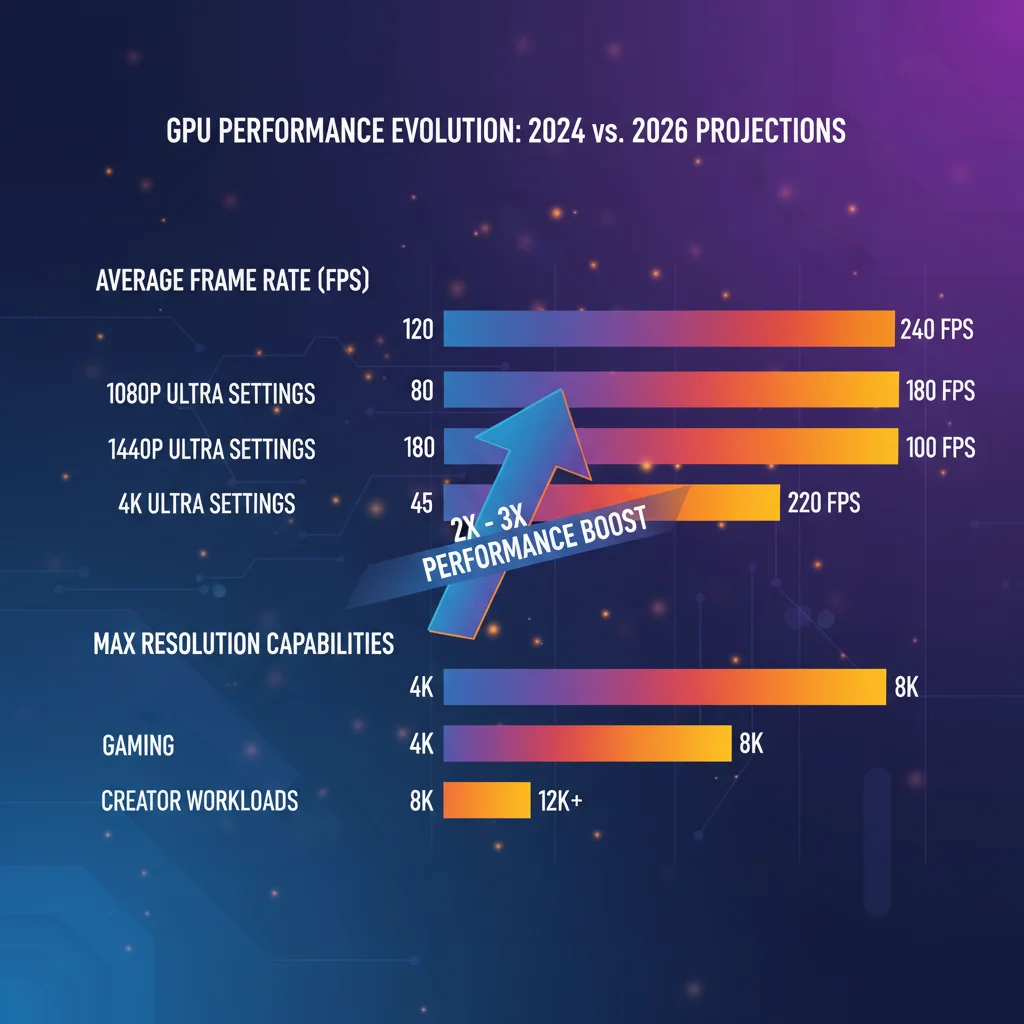
The evolution of AI in graphics will allow developers to achieve photorealistic visuals at playable frame rates, even at resolutions like 4K and 8K. This is where a significant portion of the 30% performance boost will come from – not just raw rendering power, but intelligent rendering that makes the most of every pixel. These AI-driven enhancements will make previously unachievable graphical feats a reality, making 2026 a truly exciting year for visual fidelity in gaming.
Ray Tracing: From Novelty to Standard
When ray tracing first emerged, it was a demanding technology, often requiring significant performance sacrifices. However, as one of the key PC gaming hardware trends, by 2026, ray tracing will have matured considerably, becoming a standard feature in most AAA titles rather than an optional graphical flourish. Dedicated ray tracing cores on future GPUs will be significantly more powerful and efficient, capable of handling complex lighting, reflections, and shadows with minimal impact on frame rates.
The integration of AI upscaling techniques with advanced ray tracing will be crucial. DLSS and FSR will work hand-in-hand with ray tracing cores to deliver stunning, realistic lighting effects without crippling performance. This synergy will enable developers to create truly immersive and visually breathtaking environments that were previously impossible to render in real-time. The goal is to make ray tracing an always-on feature, enhancing every game with realistic light physics, a testament to the rapid progression of PC gaming hardware trends.
Furthermore, expect to see advancements in ‘path tracing,’ a more computationally intensive form of ray tracing that simulates light paths even more accurately. While still likely reserved for the highest-end GPUs and specific scenarios, its increased viability will push the visual boundaries even further. The journey from a niche, performance-heavy feature to a widely adopted, efficient standard highlights the incredible pace of innovation in PC gaming hardware trends.
Top 3 GPU Upgrades Delivering 30% Performance Boosts by 2026
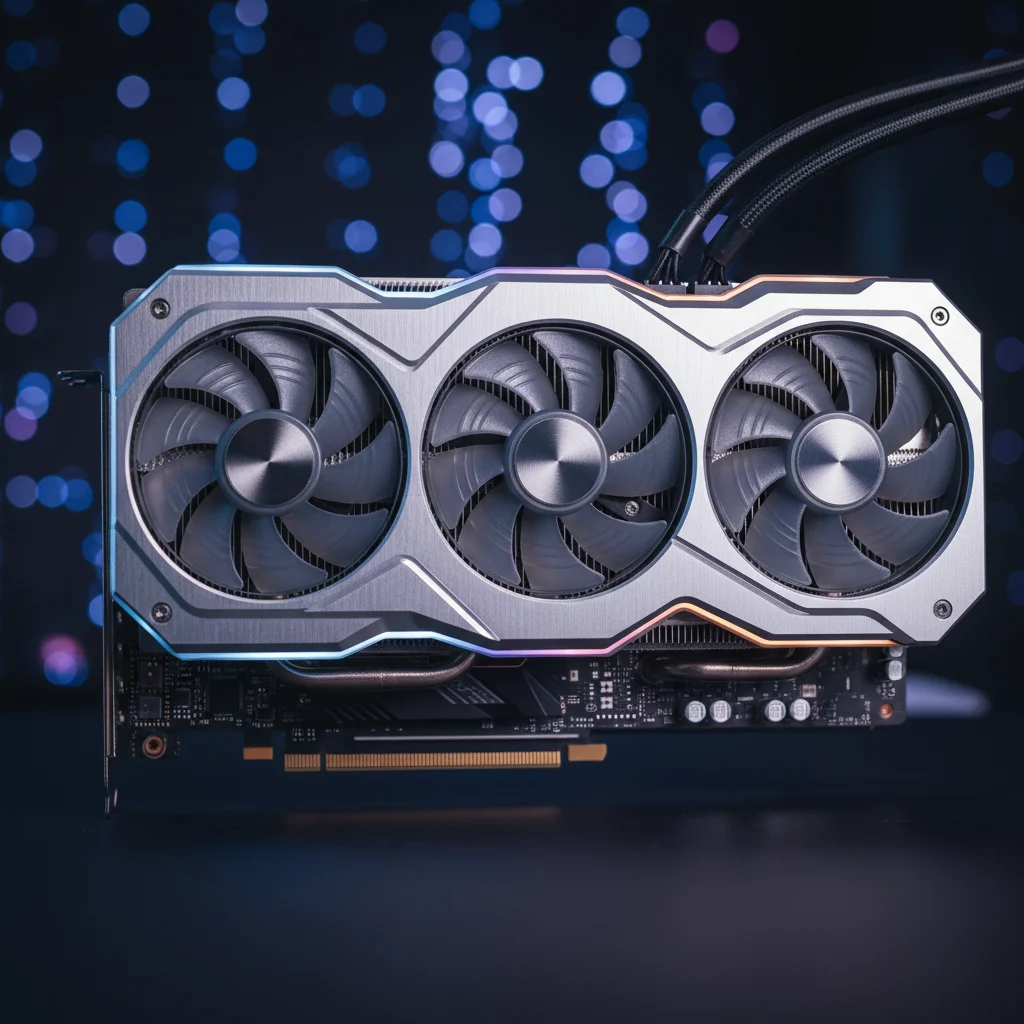
Now, let’s get to the exciting part: the specific GPU upgrades that are expected to deliver a significant performance leap by 2026. While specific product names are speculative at this stage, we can infer the capabilities and positioning of these future powerhouses based on current PC gaming hardware trends and technological roadmaps.
1. The Flagship Beast: Next-Gen NVIDIA ‘Ada Lovelace’ Successor (e.g., RTX 6090/7090 equivalent)
NVIDIA has consistently pushed the boundaries of GPU performance, and their next-generation flagship, succeeding the ‘Ada Lovelace’ architecture (e.g., what might be called the RTX 6090 or RTX 7090), is poised to be an absolute monster. This card will embody the pinnacle of PC gaming hardware trends, integrating all the advancements discussed. Expect a highly refined chiplet design, leveraging a cutting-edge process node (likely 2nm or 3nm), and featuring a vastly increased number of CUDA cores, Tensor Cores, and RT Cores.
The performance boost from this card will stem from several factors: a significantly larger die size with more processing units, higher clock speeds due to process node improvements, and a revolutionary advancement in AI acceleration. The next iteration of DLSS (perhaps DLSS 4.0 or 5.0) will be even more efficient and visually indistinguishable from native resolution, delivering massive frame rate gains, especially at 4K and 8K resolutions with full ray tracing enabled. Paired with a substantial amount of GDDR7 memory (e.g., 32GB+), this GPU will effortlessly handle the most demanding titles, offering a raw performance increase of well over 30% compared to today’s top-tier cards. This will be the ultimate upgrade for enthusiasts who demand the absolute best in PC gaming hardware trends.
Thermals and power consumption will likely remain a challenge for such a powerful card, but advancements in cooling solutions and power delivery systems will aim to keep these in check. This flagship GPU will set the benchmark for all other PC gaming hardware trends, dictating the ultimate visual fidelity and performance targets for years to come.
2. The High-End Contender: AMD’s ‘RDNA 5’ Architecture (e.g., Radeon RX 9900 XT equivalent)
AMD has been a formidable competitor in the GPU space, and their ‘RDNA 5’ architecture, expected by 2026, will be a major leap forward. AMD’s strategy often focuses on excellent price-to-performance ratios, and their high-end offering (e.g., a Radeon RX 9900 XT equivalent) will be designed to compete fiercely with NVIDIA’s mainstream flagship. This card will also likely benefit from a chiplet design, allowing AMD to scale performance effectively and integrate specialized processing units.
Key to AMD’s performance boost will be a significantly improved ray tracing implementation, bringing it closer to parity with NVIDIA, along with a more advanced version of FSR. FSR will leverage more sophisticated AI algorithms, potentially integrating dedicated AI hardware, to deliver superior image reconstruction and frame generation. This will be crucial for achieving the 30% performance boost, making high-fidelity gaming accessible to a broader range of users.
Expect a substantial increase in stream processors, higher clock speeds enabled by advanced process nodes, and ample GDDR7 memory (e.g., 24GB). AMD’s focus on open standards and broad compatibility will continue to be a strong selling point. This high-end GPU will offer an excellent balance of raw power and features, making it a highly attractive upgrade for serious gamers looking to embrace the latest PC gaming hardware trends without breaking the bank. The efficiency of the RDNA 5 architecture will be a key differentiator, appealing to users conscious of power consumption.
3. The Innovative Challenger: Intel’s Next-Gen ‘Battlemage’ Successor (e.g., Arc A900 Series equivalent)
Intel’s entry into the discrete GPU market has been a fascinating development, and by 2026, their third or fourth generation of Arc GPUs (succeeding ‘Battlemage’, potentially an ‘A900 series’ equivalent) will have matured significantly. Intel has the resources and expertise to become a major player, and their next-gen offerings will be designed to disrupt the duopoly.
Intel’s performance boost will come from a combination of refined architecture, improved drivers, and strong AI integration. Their Xe Matrix Extensions (XMX) cores, designed for AI acceleration, will be significantly more powerful, enabling highly efficient XeSS (Xe Super Sampling) and potentially other AI-driven rendering techniques. This focus on AI will be a core part of their strategy to achieve competitive performance, contributing a substantial portion of the 30% performance increase.
Expect Intel’s next-gen GPUs to leverage their vast manufacturing capabilities and potentially innovative packaging technologies. They might also focus on specific optimizations for modern APIs like DirectX 12 Ultimate and Vulkan, ensuring strong performance in the latest titles. While perhaps not directly competing with the absolute top-tier flagships from NVIDIA and AMD in raw rasterization, Intel’s value proposition will lie in its strong AI capabilities, competitive pricing, and potential ecosystem advantages for users with Intel CPUs. This makes it an incredibly interesting player in the PC gaming hardware trends landscape, offering a compelling alternative for an upgrade.
Beyond GPUs: Other Key PC Gaming Hardware Trends for 2026
While GPUs are undoubtedly the stars of the show when it comes to performance boosts, other PC gaming hardware trends will also play a crucial role in shaping the 2026 gaming experience. These advancements will work in concert with powerful GPUs to create a truly next-generation platform.
CPUs: More Cores, Higher IPC, and Integrated AI
Processors will continue their evolution, with both Intel and AMD pushing for more cores, higher Instructions Per Cycle (IPC), and deeper integration of AI acceleration. CPUs will feature dedicated AI engines (like Intel’s NPU or AMD’s XDNA) that can offload certain tasks from the GPU, improving overall system responsiveness and enabling more complex game logic and AI. This symbiotic relationship between CPU and GPU will be vital for maximizing the performance of future games, ensuring that CPU bottlenecks don’t hinder the powerful new GPUs.
Storage: PCIe Gen 5 and Beyond
NVMe SSDs leveraging PCIe Gen 5 will become standard, offering unprecedented read and write speeds. This ultra-fast storage is crucial for DirectStorage-like technologies, which allow games to load assets directly to the GPU, bypassing the CPU and significantly reducing loading times. Faster storage not only improves user experience but also enables more expansive and detailed game worlds, as assets can be streamed in almost instantaneously. This is a subtle but impactful PC gaming hardware trend that enhances the overall gaming flow.
Monitors: High Refresh Rate 4K/8K and OLED Dominance
The display technology will continue its rapid advancement. High refresh rate 4K monitors (144Hz+) will be mainstream, with 8K gaming becoming more viable thanks to powerful GPUs and advanced upscaling. OLED technology will also become more prevalent, offering unparalleled contrast, true blacks, and incredibly fast response times, making for a truly immersive visual experience. Ultrawide and curved displays will also see increased adoption, catering to different player preferences and enhancing immersion.
The Impact of PC Gaming Hardware Trends on Game Development
These anticipated PC gaming hardware trends for 2026 will have a profound impact on game development. Developers will be empowered to create games with unprecedented levels of detail, realism, and complexity. We can expect:
- Hyper-realistic Graphics: With advanced ray tracing, powerful AI upscaling, and faster memory, games will push closer to photorealism, blurring the lines between virtual and reality.
- More Immersive Worlds: Faster storage and more powerful CPUs will enable larger, more dynamic, and more interactive open worlds with less noticeable loading screens.
- Advanced AI and Physics: Dedicated AI hardware on both CPUs and GPUs will allow for more sophisticated in-game AI, more realistic physics simulations, and more dynamic environments.
- New Gameplay Possibilities: The sheer computational power will open up new avenues for game design, potentially leading to genres and experiences that are currently impossible.
The continuous evolution of PC gaming hardware trends ensures that the gaming industry remains vibrant and innovative, always pushing the boundaries of what’s possible.
Preparing Your Rig for 2026: A Strategic Approach
Given these exciting PC gaming hardware trends, how can you best prepare your current rig for the demands of 2026? While a full system overhaul might be necessary for some, strategic upgrades can make a significant difference. Prioritizing a GPU upgrade is paramount, as it offers the most direct impact on gaming performance. However, ensuring your CPU is relatively modern (within the last 2-3 generations) and that you have a fast NVMe SSD are also crucial.
Consider your power supply unit (PSU). As GPUs become more powerful, their power requirements often increase. A robust PSU with sufficient wattage and efficiency will be essential to support these next-gen components. Finally, good cooling is always important, but with more powerful hardware generating more heat, investing in an efficient air cooler or an AIO liquid cooler will be a wise decision to maintain optimal performance and longevity.
Staying informed about PC gaming hardware trends and carefully planning your upgrades will ensure you can enjoy the bleeding edge of gaming for years to come. The goal is to create a balanced system where no single component bottlenecks the others, allowing your powerful new GPU to truly shine.
Conclusion: A Bright Future for PC Gaming
The future of PC gaming is incredibly bright, with 2026 shaping up to be a pivotal year for hardware innovation. The anticipated 30% performance boosts from the next generation of GPUs, driven by architectural breakthroughs, memory advancements, and pervasive AI integration, will redefine our expectations for visual fidelity and immersive experiences. These PC gaming hardware trends are not just about raw power; they represent a holistic evolution of the gaming platform, enabling developers to craft worlds and narratives that are more captivating and realistic than ever before.
Whether you’re an NVIDIA loyalist, an AMD enthusiast, or intrigued by Intel’s growing presence, the competition among these giants will ultimately benefit consumers, driving innovation and making powerful hardware more accessible. As we look towards 2026, one thing is clear: the PC will remain at the forefront of gaming, offering an unparalleled experience that continues to push the boundaries of technology and creativity. Get ready for an era of gaming where the impossible becomes possible, fueled by the incredible advancements in PC gaming hardware trends.