Cloud Gaming’s 2026 Surge: Evaluating 10% US Market Share Growth

The landscape of interactive entertainment is in a constant state of flux, driven by relentless innovation and evolving consumer demands. Among the most transformative phenomena emerging in recent years, cloud gaming stands out as a disruptive force, promising to redefine how we access and experience video games. As we cast our gaze towards 2026, industry analysts and market researchers are projecting a significant milestone: a 10% market share increase for cloud gaming in the United States. This isn’t merely a statistical uptick; it represents a profound shift in consumer behaviour, technological capability, and the strategic positioning of major players within the gaming ecosystem. Understanding the nuances of this anticipated surge requires a deep dive into the underlying factors, the challenges that must be overcome, and the opportunities it presents for both gamers and industry stakeholders.
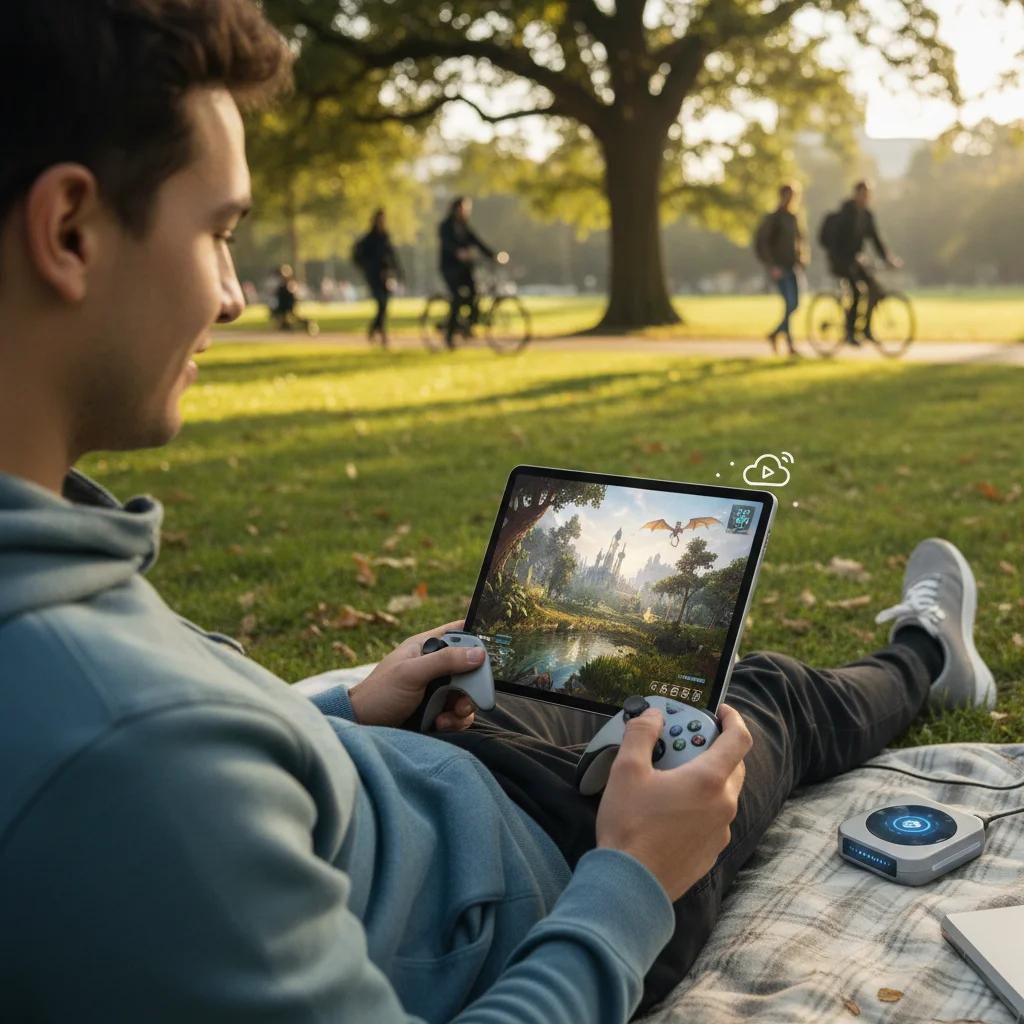
At its core, cloud gaming, often referred to as gaming-on-demand or game streaming, liberates players from the constraints of high-end hardware. Instead of running games locally on a console or PC, the processing power is offloaded to remote servers in data centres. The game is rendered there, and the video stream is sent to the user’s device, while their inputs are transmitted back to the server. This elegant solution promises unparalleled accessibility, allowing users to play graphically intensive games on a wide array of devices, from smart TVs and smartphones to low-spec laptops, as long as they have a stable internet connection. The allure is undeniable: no downloads, no installations, no expensive hardware upgrades, and the freedom to play anywhere, anytime.
The journey of cloud gaming has been marked by both ambitious promises and significant hurdles. Early attempts faced challenges related to latency, bandwidth, and the sheer cost of infrastructure. However, rapid advancements in network technology, particularly the rollout of 5G, coupled with more efficient streaming algorithms and the proliferation of powerful data centres, have brought cloud gaming to a tipping point. The next few years are critical, and the projected 10% market share increase in the US by 2026 is a testament to the industry’s growing maturity and the increasing readiness of the market to embrace this paradigm shift. This article will explore the technological enablers, the economic implications, the competitive landscape, and the consumer trends that are collectively paving the way for cloud gaming’s ascendancy.
The Technological Backbone: Powering the Cloud Gaming Market Surge
The ambitious projection for cloud gaming’s market share growth is inextricably linked to ongoing technological evolution. Several key areas are converging to make seamless game streaming a reality for a broader audience, directly impacting the expansion of the cloud gaming market.
5G Networks and Low Latency
Perhaps the most critical enabler for cloud gaming is the continuous improvement in internet infrastructure. The widespread deployment of 5G networks is a game-changer. 5G offers significantly faster speeds and, crucially, dramatically lower latency compared to its predecessors. Latency, the delay between a player’s input and the game’s reaction, is the Achilles’ heel of game streaming. Even milliseconds of delay can ruin the experience, especially in fast-paced action or competitive multiplayer games. 5G’s ability to reduce this lag to imperceptible levels for most users will eliminate a major barrier to widespread adoption, making the cloud gaming experience virtually indistinguishable from local play for a growing segment of the population.
Edge Computing and Distributed Servers
Beyond raw speed, the architecture of cloud infrastructure is also evolving. Edge computing, which involves processing data closer to the source (i.e., closer to the player), is becoming increasingly vital. Instead of routing all game data to a distant central data centre, edge servers can be strategically placed in metropolitan areas, further reducing latency and improving responsiveness. This distributed server model minimizes the geographical distance data needs to travel, ensuring a smoother and more reliable gaming experience for users across the US. The investment by major cloud providers and telecommunication companies in expanding their edge computing capabilities is a strong indicator of their commitment to facilitating the growth of the cloud gaming market.
Advanced Compression Algorithms and Streaming Technologies
The efficiency with which game data is compressed and streamed is another pivotal technological factor. Developers and platform providers are continuously refining video compression algorithms (e.g., AV1 codec) to deliver high-quality visuals at lower bandwidth requirements. This means that even players with moderate internet speeds can enjoy a decent cloud gaming experience. Furthermore, adaptive bitrate streaming dynamically adjusts the video quality based on the user’s current network conditions, preventing interruptions and maintaining playability. These advancements make cloud gaming more resilient to varying network environments, broadening its appeal and reach within the US market.
GPU Virtualization and Scalable Infrastructure
On the server side, advancements in GPU virtualization allow multiple users to share the computational power of high-end graphics cards efficiently. This not only reduces operational costs for cloud gaming providers but also enables them to scale their services rapidly to meet fluctuating demand. The ability to dynamically allocate resources ensures that players always have access to the necessary processing power, even during peak usage times. This scalable and flexible infrastructure is fundamental to supporting a substantial increase in the user base and solidifying the position of cloud gaming within the broader gaming industry.
Economic Drivers: Unlocking Growth in the Cloud Gaming Market
The anticipated 10% market share growth for cloud gaming in the US by 2026 is not solely a technological marvel; it’s also underpinned by compelling economic drivers that make it an attractive proposition for both consumers and businesses within the cloud gaming market.
Reduced Entry Barriers for Consumers
One of the most significant economic advantages of cloud gaming is its ability to democratize access to high-fidelity gaming. Traditional gaming often requires substantial upfront investment in expensive consoles or powerful gaming PCs, which can cost hundreds, if not thousands, of dollars. Cloud gaming eliminates this barrier. For a relatively low monthly subscription fee, consumers can access a vast library of games, often including AAA titles, on devices they already own. This shift from an ownership model to a subscription-based access model makes premium gaming experiences accessible to a much wider demographic, including casual gamers, budget-conscious individuals, and those who prefer not to invest in dedicated gaming hardware. This expansion of the potential player base is a primary catalyst for market growth.
Subscription Models and Recurring Revenue
From a business perspective, subscription models are incredibly appealing. They provide a stable, predictable stream of recurring revenue, which is highly valued by investors and allows companies to plan for long-term growth and investment in infrastructure and content. Unlike the cyclical nature of console sales, cloud gaming subscriptions offer a more consistent revenue stream. This financial stability encourages more companies to enter the cloud gaming market and invest heavily in content acquisition, platform development, and marketing, further accelerating its expansion.
Lower Content Distribution Costs
For game publishers and developers, cloud gaming platforms can significantly reduce content distribution costs. There’s no need to manufacture physical discs, manage inventory, or deal with retail distribution logistics. Digital delivery is inherent to the cloud model, streamlining the supply chain and potentially increasing profit margins. Moreover, the ability to instantly push updates and patches to the server ensures that all players are always on the latest version of a game, simplifying maintenance and support. These efficiencies contribute to the overall economic viability and attractiveness of cloud gaming as a distribution channel.
New Revenue Streams and Monetization Opportunities
Cloud gaming opens up new avenues for monetization beyond traditional game sales and subscriptions. For instance, platforms can offer tiered subscriptions with varying levels of access, resolution, or features. There’s also potential for in-game purchases, advertising, and even partnerships with hardware manufacturers or internet service providers. The flexibility of the cloud model allows for creative business strategies that can capture value from different segments of the market, thereby contributing to the overall growth of the cloud gaming market.

The Competitive Landscape: Who’s Leading the Cloud Gaming Market Charge?
The race to dominate the cloud gaming market is intense, with several tech giants and established gaming companies vying for market share. Understanding the key players and their strategies is crucial to appreciating how cloud gaming is set to capture a significant portion of the US gaming landscape by 2026.
Microsoft’s Xbox Cloud Gaming (xCloud)
Microsoft has emerged as a formidable contender with Xbox Cloud Gaming, integrated seamlessly into its Xbox Game Pass Ultimate subscription. Leveraging its extensive Azure cloud infrastructure and a vast library of first-party and third-party games, Microsoft offers a compelling value proposition. The ability to stream games directly from the cloud to mobile devices, PCs, and even Xbox consoles (for testing games before download) positions xCloud as a leading service. Microsoft’s strategy of bundling cloud gaming with Game Pass, a highly successful subscription service, reduces friction for existing subscribers and attracts new ones, making it a major driver in expanding the cloud gaming market.
NVIDIA GeForce NOW
NVIDIA’s GeForce NOW operates on a different model, allowing users to stream games they already own on platforms like Steam, Epic Games Store, and GOG. This ‘bring your own games’ approach resonates with PC gamers who have invested heavily in their digital libraries. GeForce NOW leverages NVIDIA’s powerful GPU technology in its data centres, providing a high-performance streaming experience. Its tiered subscription model, including a free tier with limited session lengths, makes it accessible and attractive to a wide audience. NVIDIA’s focus on performance and compatibility with existing game libraries gives it a unique edge in the cloud gaming market.
Amazon Luna
Amazon, with its vast cloud infrastructure (AWS) and extensive reach into consumer households, is another significant player with Amazon Luna. Luna offers channel-based subscriptions, allowing users to subscribe to specific publishers’ game libraries. It also integrates with Amazon Prime, offering a rotating selection of free games to Prime members. This strategy leverages Amazon’s ecosystem and introduces cloud gaming to a massive existing customer base, potentially converting them into dedicated cloud gamers. Amazon’s deep pockets and platform integration capabilities make Luna a strong contender for future growth in the cloud gaming market.
Sony PlayStation Plus Premium (formerly PlayStation Now)
Sony, a pioneer in console gaming, has also been in the cloud gaming space for some time with PlayStation Now, now integrated into the PlayStation Plus Premium tier. This service primarily offers a streaming library of PS4, PS3, and PS2 games, alongside downloadable PS4 and PS5 titles. While historically focused on its own ecosystem, Sony’s continued investment in cloud streaming is vital, especially as cross-platform play and broader accessibility become more important. Sony’s strong brand loyalty and exclusive content library are key assets in its efforts to capture a share of the evolving cloud gaming market.
Other Emerging Players and Niche Services
Beyond these giants, several other companies are exploring or establishing their presence in the cloud gaming market. Google Stadia, despite its closure, indicated the potential and challenges of the sector. Newer entrants or niche services may focus on specific genres, demographics, or geographic regions. The competitive landscape is dynamic, with mergers, acquisitions, and strategic partnerships constantly reshaping the market. The intense competition drives innovation, pushing providers to improve service quality, expand game libraries, and offer more compelling pricing models, all of which contribute to the projected increase in market share.
Consumer Adoption: Why Gamers Are Embracing Cloud Gaming
The projected 10% market share increase for cloud gaming in the US by 2026 hinges significantly on consumer adoption. A confluence of factors is making cloud gaming an increasingly attractive option for a diverse range of gamers, driving the expansion of the cloud gaming market.
Accessibility and Device Agnosticism
Perhaps the most compelling reason for consumer embrace is the unparalleled accessibility cloud gaming offers. No longer are players tethered to expensive, high-spec hardware. Cloud gaming allows them to play demanding titles on devices they already own: smartphones, tablets, smart TVs, and basic laptops. This device agnosticism removes a significant financial barrier to entry, enabling more people to experience modern gaming without the need for a console or a gaming PC. For families, this means multiple members can access games on various devices, and for casual gamers, it means trying out new titles without a hefty investment. This broadens the appeal of gaming beyond traditional demographics, significantly expanding the potential user base for the cloud gaming market.
Instant Play and Convenience
The ‘instant play’ aspect of cloud gaming is a major draw. The frustration of lengthy downloads, installations, and updates is eliminated. Gamers can jump straight into a game with minimal waiting, a convenience that resonates strongly in today’s fast-paced digital world. This instant gratification is particularly appealing for those with limited time for gaming or those who want to quickly sample a new title before committing. The sheer convenience offered by cloud gaming is a powerful motivator for adoption.
Cost-Effectiveness and Game Libraries
For many, cloud gaming presents a more cost-effective way to access a wide variety of games. Instead of purchasing individual titles at full price (which can easily amount to hundreds of dollars per year), a single monthly subscription often grants access to a vast library of games. This ‘Netflix for games’ model provides incredible value, allowing players to explore different genres and titles without the financial commitment of buying each game separately. The ability to try out new games without buyer’s remorse significantly enhances the perceived value of cloud gaming services, bolstering its position in the cloud gaming market.
Multiplayer and Social Experiences
While often associated with single-player experiences, cloud gaming also facilitates multiplayer and social interactions. The ability to quickly join friends in a game, regardless of their local hardware, fosters a more connected gaming community. As cloud platforms mature, they are integrating more social features, voice chat, and seamless party creation, enhancing the collaborative and competitive aspects of gaming. This social dimension is crucial for long-term engagement and drives continued adoption.
Evolving Expectations of Digital Consumers
Modern consumers are increasingly accustomed to on-demand, subscription-based services for entertainment, from video streaming to music. Cloud gaming aligns perfectly with these evolving digital consumption habits. The expectation of instant access to content, personalized experiences, and flexible payment models makes cloud gaming a natural progression for many. As these expectations become the norm, the shift towards cloud-based gaming will only accelerate, solidifying its projected market share growth.
Challenges and Headwinds: Navigating the Path to 10% Market Share
While the trajectory for the cloud gaming market appears promising, achieving a 10% market share in the US by 2026 is not without its challenges. Addressing these hurdles will be crucial for sustained growth and widespread adoption.
Internet Infrastructure and Digital Divide
Despite advancements, ubiquitous high-speed, low-latency internet access remains a significant challenge, particularly in rural and underserved areas of the US. Cloud gaming is highly dependent on a stable and robust internet connection. If a significant portion of the population lacks access to the necessary bandwidth or experiences inconsistent service, it creates a ‘digital divide’ that can hinder market penetration. While 5G deployment is expanding, ensuring equitable access across the entire country is a monumental task that requires ongoing investment and policy initiatives. Without consistent, high-quality internet, the promise of cloud gaming remains out of reach for many, limiting the overall growth of the cloud gaming market.
Latency and Input Lag Perception
Even with 5G and edge computing, latency will always be a factor, even if it’s minimal. For highly competitive or rhythm-based games, even a few milliseconds of input lag can be detrimental to the player experience. While most casual gamers might not notice, hardcore gamers, who often drive trends and influence purchasing decisions, are highly sensitive to performance. Cloud gaming providers must continue to innovate in reducing latency to near-imperceptible levels to fully win over this critical segment of the gaming population. Perception of lag, even if exaggerated, can also deter potential users, requiring effective communication and demonstration of service quality.
Content Licensing and Game Libraries
A rich and up-to-date game library is paramount to attracting and retaining subscribers. Securing licensing agreements with game publishers and developers can be complex and costly. Cloud gaming platforms need to offer a compelling selection of both new AAA titles and popular back-catalogue games to compete effectively with traditional console and PC gaming. The absence of certain highly anticipated titles or a perceived lack of breadth in the library can be a significant deterrent. Furthermore, ensuring that newer releases are available on cloud platforms concurrently with their traditional launches is crucial for staying competitive and driving growth in the cloud gaming market.
Consumer Trust and Data Security
As with any cloud-based service, consumer trust in data security and privacy is paramount. Gamers are entrusting their game saves, personal information, and payment details to cloud providers. Any significant data breach or security lapse could severely erode consumer confidence and set back the adoption of cloud gaming. Providers must invest heavily in robust cybersecurity measures and transparent communication to build and maintain this trust. Furthermore, the longevity and stability of cloud gaming services themselves are a concern for some users, especially after the shutdown of services like Google Stadia. Assuring consumers of long-term commitment is vital.
Pricing Models and Value Proposition
Finding the optimal pricing model that balances profitability with consumer value is a continuous challenge. While subscription models are popular, consumers are increasingly facing ‘subscription fatigue’ across various digital services. Cloud gaming providers must clearly articulate the value proposition of their services, differentiating themselves from traditional gaming and other entertainment subscriptions. This could involve tiered pricing, bundled services, or unique content offerings. An overly expensive or confusing pricing structure could hinder adoption despite the technological advantages, thus impacting the growth of the cloud gaming market.
The Future Beyond 2026: What’s Next for Cloud Gaming?
The projected 10% market share increase for cloud gaming in the US by 2026 is a significant milestone, but it’s by no means the culmination of its journey. This growth sets the stage for an even more transformative future for the cloud gaming market, with several exciting developments on the horizon.
Deeper Integration with Other Technologies
Beyond 2026, we can expect cloud gaming to become even more deeply integrated with other emerging technologies. Virtual Reality (VR) and Augmented Reality (AR) stand to benefit immensely from cloud processing. Running high-fidelity VR/AR experiences locally requires incredibly powerful and expensive hardware, which limits mainstream adoption. Offloading this rendering to the cloud could make immersive VR/AR gaming accessible on lighter, more affordable headsets, potentially unlocking a new era of interactive entertainment. Similarly, AI and machine learning could be leveraged to create more dynamic game worlds, intelligent NPCs, and personalized gaming experiences, all powered by the scalable resources of the cloud.
Ubiquitous Access and Device Evolution
The dream of truly ubiquitous gaming – playing any game on any screen, anywhere – will move closer to reality. Devices themselves may evolve to be even more ‘dumb’ terminals, relying almost entirely on cloud processing. Smart TVs could come with built-in cloud gaming clients, requiring no external hardware. Dedicated cloud gaming handhelds, essentially screen-and-controller combos with minimal internal processing, could become commonplace. This further democratizes access and expands the addressable market for cloud gaming exponentially.
New Game Design Paradigms
The liberation from local hardware constraints could inspire entirely new genres and game design paradigms. Developers will no longer be limited by the computational power of a single console or PC. This could lead to games with unprecedented scale, persistent worlds with millions of concurrent players, hyper-realistic physics simulations, or AI-driven narratives that adapt in real-time. Cloud-native games, designed from the ground up to leverage distributed computing, could emerge, offering experiences impossible on traditional platforms. This innovation in content will be a powerful driver for continued growth in the cloud gaming market.
Hybrid Models and Interoperability
While pure cloud gaming will grow, hybrid models are also likely to become more prevalent. Players might download a portion of a game locally for quick access but stream the most graphically intensive segments or multiplayer components from the cloud. Cross-platform play and even cross-platform progression will become standard, breaking down ecosystem barriers and fostering a more unified gaming community. The focus will shift from where a game is played to simply the ability to play it, seamlessly, across all owned devices. Interoperability between different cloud gaming services, though challenging, could also emerge as a long-term goal, benefiting consumers.
Increased Competition and Consolidation
As the cloud gaming market matures, competition will intensify, potentially leading to further consolidation. Smaller players might be acquired by larger tech companies seeking to expand their cloud gaming offerings. This competition will drive down prices, increase service quality, and accelerate innovation, ultimately benefiting consumers. The battle for content exclusivity and technological superiority will continue to shape the landscape, but the overall trend will be towards greater accessibility and a richer array of gaming options for players worldwide.
Conclusion: Cloud Gaming’s Ascendance in the US Market
The anticipated 10% market share increase for cloud gaming in the United States by 2026 is far more than a mere statistical projection; it signals a pivotal moment in the evolution of the gaming industry. This significant growth is the culmination of years of technological advancements, strategic investments, and a fundamental shift in consumer expectations. The convergence of robust 5G networks, sophisticated edge computing infrastructure, and increasingly efficient streaming algorithms has finally propelled cloud gaming from a niche concept to a mainstream reality, making it a powerful force within the broader cloud gaming market.
Economically, cloud gaming offers an attractive proposition by lowering the barrier to entry for consumers, enabling access to high-fidelity games without the need for expensive hardware. This democratizes gaming, reaching new demographics and expanding the overall player base. For businesses, the shift to subscription-based models provides stable, recurring revenue streams, fostering long-term investment in content and infrastructure. The fierce competition among tech giants like Microsoft, NVIDIA, Amazon, and Sony is further accelerating innovation, driving down costs, and enhancing the quality of services available to the end-user.
However, the path to widespread adoption is not devoid of challenges. The persistent digital divide in internet access, the continuous battle against latency perception, the complexities of content licensing, and the critical need to maintain consumer trust in data security are all hurdles that must be effectively navigated. Cloud gaming providers must remain vigilant in addressing these issues to ensure that the projected growth is not only achieved but sustained.
Looking beyond 2026, the future of the cloud gaming market appears even more transformative. Deeper integration with VR/AR, the emergence of truly cloud-native game designs, and the continued evolution towards ubiquitous device-agnostic access promise to unlock entirely new dimensions of interactive entertainment. The gaming landscape is being fundamentally reshaped, moving towards a future where the power of the cloud makes gaming more accessible, convenient, and immersive for everyone.
In essence, cloud gaming is not just an alternative way to play games; it is a catalyst for change, redefining the very nature of gaming consumption and creation. The 10% market share increase in the US by 2026 is a strong indicator that this revolution is well underway, setting the stage for an exciting and dynamic era in the world of video games.