GPU Market Trends 2026: NVIDIA 50 Series and AMD RDNA 4 Forecast
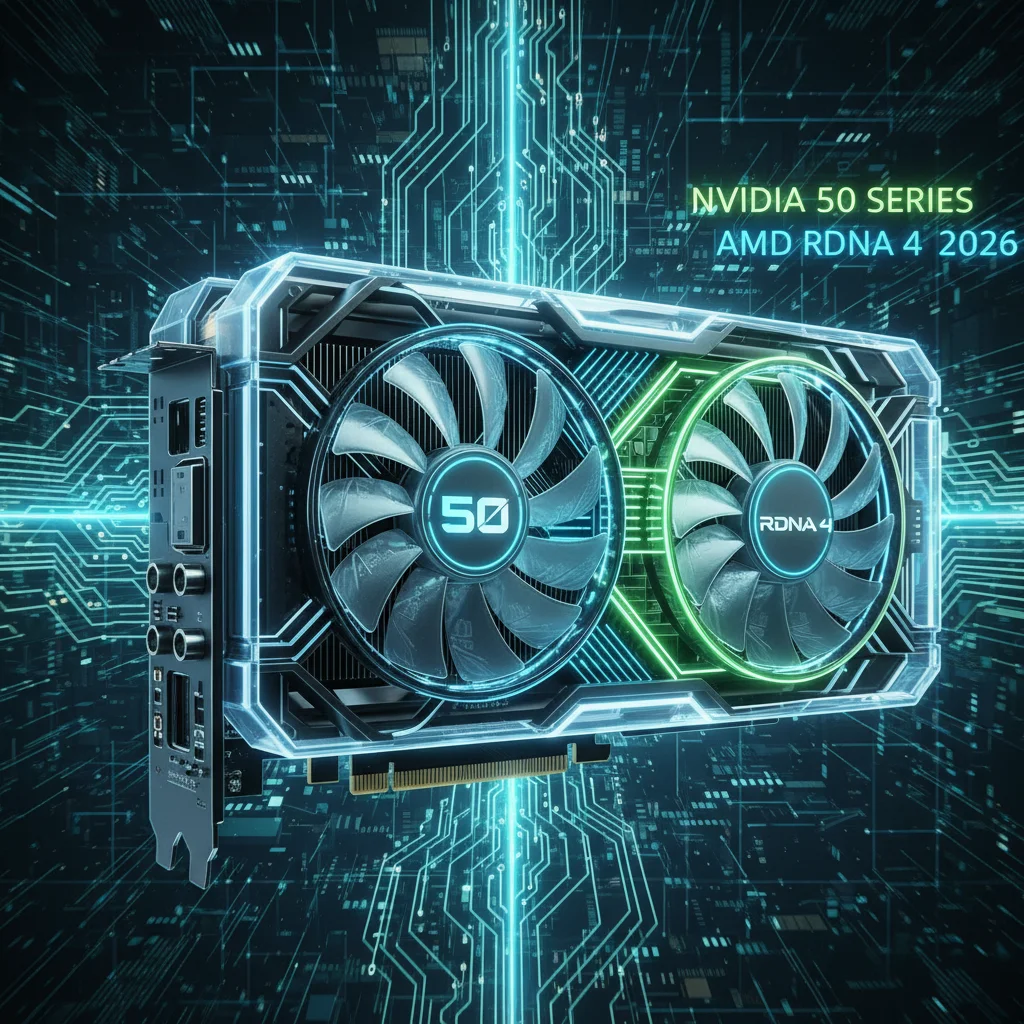
GPU Market Trends 2026: What to Expect from NVIDIA’s 50 Series and AMD’s RDNA 4
The year 2026 looms large on the horizon for technology enthusiasts, particularly those keenly observing the Graphics Processing Unit (GPU) market. As the digital landscape evolves at an unprecedented pace, driven by advancements in artificial intelligence, virtual reality, and increasingly complex gaming experiences, the demand for more powerful and efficient GPUs continues to skyrocket. This article delves deep into the expected GPU Market 2026, offering a comprehensive forecast of what consumers, gamers, and professionals can anticipate from the next generation of graphics powerhouses, specifically NVIDIA’s much-anticipated 50 Series and AMD’s innovative RDNA 4 architecture. We will explore the technological leaps, competitive dynamics, pricing strategies, and the broader impact these new releases will have on the industry.
Understanding the trajectory of the GPU market requires a look back at recent history, where both NVIDIA and AMD have consistently pushed the boundaries of what’s possible. From the introduction of ray tracing to significant improvements in upscaling technologies like DLSS and FSR, each generation brings forth not just raw performance boosts but also groundbreaking features that redefine visual fidelity and computational efficiency. As we approach 2026, the stakes are higher than ever, with increasing competition and a global demand for processing power that extends far beyond traditional gaming.
The forecast for the GPU Market 2026 is shaped by several key factors: ongoing advancements in semiconductor manufacturing processes, the relentless pursuit of energy efficiency, the integration of AI at a fundamental level within GPU architectures, and the ever-present tug-of-war between performance and price. Both NVIDIA and AMD are poised to leverage these trends, each with their distinct philosophies and technological strengths, to capture a larger share of this lucrative and strategically vital market.
NVIDIA’s 50 Series: Pushing the Boundaries of Performance and AI
NVIDIA has long been a dominant force in the GPU market, consistently setting benchmarks for performance and innovation. Their upcoming 50 Series, expected to launch sometime before or during 2026, is anticipated to be a monumental leap forward, building upon the successes of their previous architectures. Speculation suggests that the 50 Series, likely based on a new architecture succeeding Blackwell, will incorporate significant advancements in several critical areas.
One of the most talked-about aspects of NVIDIA’s future GPUs is their continued emphasis on AI acceleration. With the burgeoning demand for AI in everything from data centres to consumer applications, the 50 Series is expected to feature even more powerful Tensor Cores, designed to handle complex AI workloads with unparalleled efficiency. This isn’t just about professional applications; enhanced AI capabilities will also benefit gamers through more sophisticated DLSS iterations, potentially leading to even greater performance gains and visual quality at higher resolutions.
Performance-wise, the 50 Series is projected to offer substantial generational improvements. This will likely be achieved through a combination of factors: a more advanced manufacturing process (potentially 2nm or an optimised 3nm node), architectural refinements that enhance instruction per clock (IPC), and increased core counts. Such advancements are crucial for handling the graphical demands of future gaming titles, which are increasingly leveraging technologies like path tracing and highly detailed virtual worlds. The goal for NVIDIA will be to deliver a significant uplift in raw rasterisation performance, alongside improvements in ray tracing capabilities, solidifying their position as a leader in high-fidelity graphics.
Memory bandwidth is another area where the 50 Series is expected to see considerable upgrades. With games and applications requiring larger and faster textures and data sets, higher VRAM capacities and faster memory interfaces (e.g., GDDR7) will be essential. This will not only cater to 4K and 8K gaming but also to professional workloads such as 3D rendering, video editing, and scientific simulations, where memory performance is a critical bottleneck. The move to GDDR7 would represent a significant jump from current GDDR6X speeds, offering a substantial boost to overall system throughput.
Key Innovations Expected from NVIDIA’s 50 Series:
- Advanced AI Cores: Further improved Tensor Cores for enhanced AI inference and training, impacting DLSS, content creation, and professional AI applications.
- Next-Generation Ray Tracing: Dedicated RT Cores with architectural enhancements to deliver more realistic lighting, reflections, and shadows with less performance overhead.
- Manufacturing Process Node Shrink: Adoption of cutting-edge fabrication processes (e.g., 2nm or advanced 3nm) for higher transistor density, improved power efficiency, and increased performance.
- GDDR7 Memory: Transition to faster memory standards to provide significantly greater bandwidth, crucial for high-resolution textures and complex scene rendering.
- Power Efficiency: Despite performance increases, NVIDIA will likely focus on improving power efficiency, a critical factor for both consumer and data centre markets, addressing concerns around energy consumption and heat dissipation.
- New Interconnect Technologies: Potential advancements in interconnects for multi-GPU setups or communication within the GPU itself, though traditional multi-GPU for gaming remains unlikely.
The pricing strategy for the 50 Series will be a crucial aspect of its market reception. NVIDIA has historically positioned its flagship cards at a premium, and with ongoing inflation and supply chain considerations, it’s reasonable to expect prices to remain high for top-tier models. However, competitive pressure from AMD and potentially Intel could lead to more aggressive pricing in the mid-range and entry-level segments, making the GPU Market 2026 an interesting battleground for consumer wallets.
AMD’s RDNA 4: Challenging the Status Quo with Innovation
AMD, with its RDNA architecture, has consistently proven to be a formidable competitor in the GPU space. The RDNA 4 architecture, expected to be the foundation for their 2026 GPU offerings, is poised to continue this trajectory, potentially offering a compelling alternative to NVIDIA’s dominance. AMD’s strategy often focuses on delivering strong performance per dollar, and RDNA 4 is likely to uphold this philosophy while introducing significant technological advancements.
One of the core areas where RDNA 4 is expected to shine is in its raw rasterisation performance. AMD has made significant strides in this domain with previous RDNA generations, and RDNA 4 will likely build upon this, aiming for a substantial leap. This will be critical for maintaining competitiveness, especially in the vast mid-range market where performance-per-cost is a key deciding factor for many consumers. The architecture will likely feature a higher number of compute units, improved clock speeds, and further refinements to its cache hierarchy to reduce latency and improve data throughput.
Ray tracing performance has been an area where AMD has historically lagged behind NVIDIA. However, with RDNA 3, they made significant improvements, and RDNA 4 is expected to close this gap even further. Dedicated ray tracing accelerators within the compute units will likely see architectural enhancements, leading to more efficient ray-box and ray-triangle intersection tests. This focus on improving ray tracing will be crucial for AMD to appeal to high-end gamers and content creators who increasingly demand realistic lighting and visual effects.
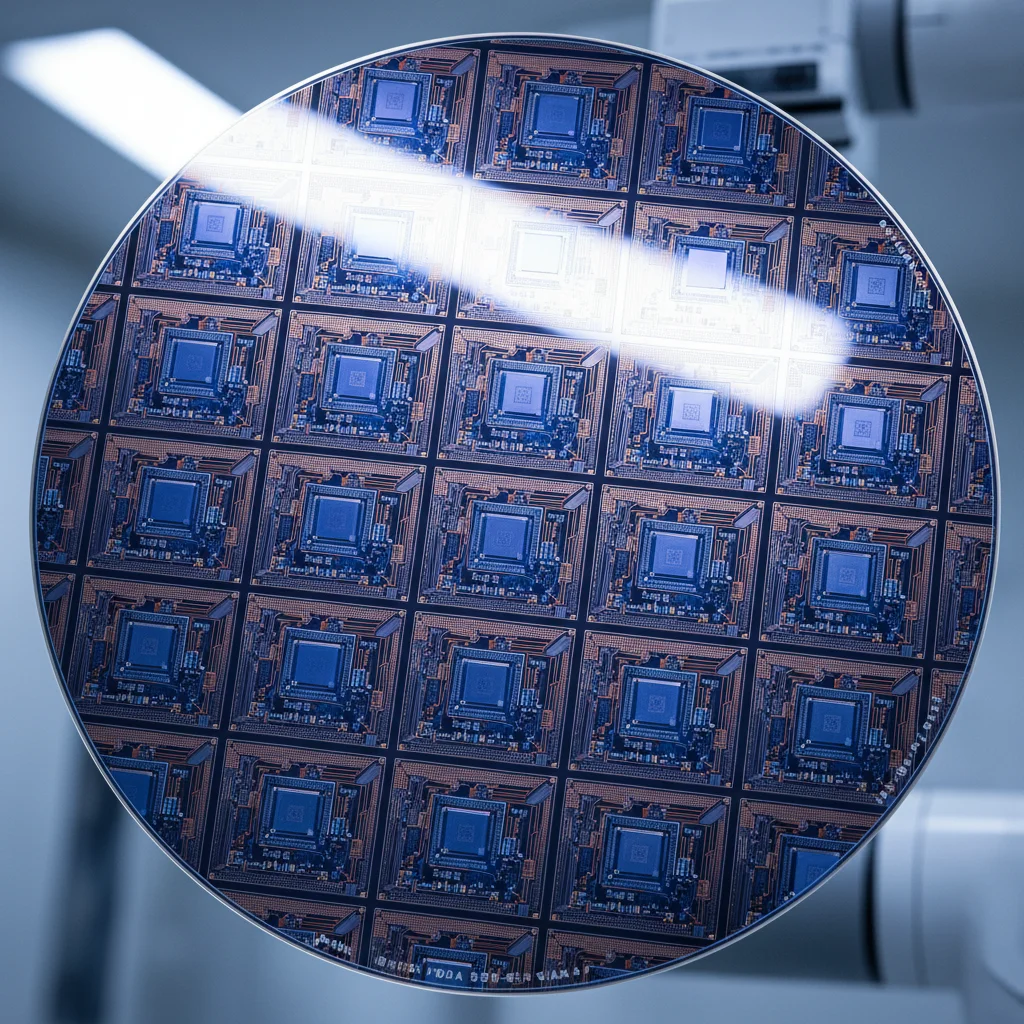
AMD’s FSR (FidelityFX Super Resolution) technology will also be a major focus for RDNA 4. As an open-source upscaling solution, FSR has gained considerable traction, and future iterations are expected to offer even better image quality and performance, potentially rivaling NVIDIA’s DLSS. The integration of more advanced machine learning capabilities within the RDNA 4 architecture could lead to hardware-accelerated FSR, providing a significant boost to its effectiveness and appeal across a wider range of hardware.
Expected Enhancements in AMD’s RDNA 4:
- Optimised Rasterisation: Further improvements to the core rasterisation engine for higher frame rates in traditional gaming scenarios.
- Enhanced Ray Tracing Units: Dedicated hardware accelerators for ray tracing with architectural refinements for better performance and efficiency compared to RDNA 3.
- Advanced FSR Integration: Potential for hardware-accelerated FSR, leading to superior upscaling quality and performance across all RDNA 4 GPUs.
- Power Efficiency Gains: A focus on improving watts-per-performance, leveraging advanced manufacturing nodes (e.g., TSMC N4P or N3E) to deliver more power-efficient GPUs.
- Chiplet Design Evolution: AMD’s expertise in chiplet design could see further refinement in RDNA 4, allowing for greater scalability and potentially more cost-effective high-performance GPUs.
- Memory Subsystem Improvements: Utilisation of faster memory standards like GDDR7 and optimisations to the cache hierarchy for improved data access and bandwidth.
AMD’s competitive advantage often lies in its ability to offer compelling performance at a more accessible price point. While RDNA 4 will undoubtedly feature high-end offerings, AMD is likely to target the broader market with strong mid-range and upper-mid-range cards that deliver excellent value. This strategy could significantly influence the overall dynamics of the GPU Market 2026, forcing NVIDIA to respond with competitive pricing or feature sets.
The Broader GPU Market Landscape in 2026
Beyond the direct competition between NVIDIA and AMD, several other factors will shape the GPU Market 2026. The role of AI, the evolution of gaming, the expansion of the metaverse, and the continued growth of professional visualisation and data centres will all play significant roles.
Artificial Intelligence and Machine Learning
The influence of AI on GPU development cannot be overstated. GPUs are inherently suited for parallel processing, making them ideal for accelerating AI workloads. Both NVIDIA and AMD are investing heavily in this area, not just for their consumer cards but especially for their data centre and professional lines. The features developed for AI acceleration in consumer GPUs will inevitably trickle down, enhancing capabilities like intelligent upscaling, content creation tools, and even in-game AI behaviours. The demand for GPUs in AI training and inference will continue to drive innovation and potentially impact supply and pricing for consumer cards.
Gaming Evolution: Path Tracing and Beyond
Gaming remains a primary driver for consumer GPU sales. By 2026, path tracing, a more advanced and computationally intensive form of ray tracing, is expected to become more prevalent in high-end titles. This will necessitate even greater GPU power, making the performance capabilities of the 50 Series and RDNA 4 crucial for delivering truly immersive and realistic gaming experiences. Virtual reality (VR) and augmented reality (AR) are also expected to mature further, requiring high frame rates and low latency, which next-gen GPUs will be designed to provide.
The rise of cloud gaming services will also influence the market. While these services offload rendering to remote servers, they still rely on powerful GPUs in data centres. This could indirectly affect the consumer market by impacting the availability and pricing of high-end GPUs, as data centre demand competes with consumer demand.
The Metaverse and Professional Workloads
The concept of the metaverse, a persistent and interconnected virtual world, is another long-term driver for GPU innovation. Building and interacting within these complex virtual environments will require immense graphical processing power, not just for rendering but also for physics simulations, real-time lighting, and user interaction. Both NVIDIA and AMD are actively developing technologies that will be foundational for the metaverse, and their 2026 offerings will be instrumental in shaping its early stages.
Professional workloads, including 3D rendering, scientific computing, video editing, and CAD/CAM, will continue to demand the most powerful GPUs. The architectural advancements in the 50 Series and RDNA 4 will translate directly into significant productivity gains for professionals, enabling faster render times, more complex simulations, and real-time feedback in demanding applications. The professional segment often acts as a proving ground for new technologies before they become mainstream in consumer products.
Pricing, Availability, and Market Dynamics
The GPU Market 2026 will undoubtedly be influenced by pricing and availability. The semiconductor industry has faced significant challenges in recent years, from supply chain disruptions to geopolitical tensions. While some of these issues may have stabilised by 2026, the underlying cost of manufacturing advanced silicon continues to rise. This will likely mean that flagship GPUs from both NVIDIA and AMD will remain premium products, potentially pushing the boundaries of what consumers are willing to pay.
However, the competitive landscape will play a critical role in tempering prices, especially in the mid-range. If AMD can deliver strong performance with RDNA 4 at competitive price points, it could force NVIDIA to adjust its strategy for its non-flagship 50 Series cards. Intel, while still a newer entrant, could also exert some pressure, especially in the mainstream segment, further diversifying the options available to consumers.
Availability will also be key. Both companies will need to ensure sufficient supply to meet global demand, avoiding the stock shortages that plagued previous generations. This involves securing foundry capacity well in advance and managing logistics effectively. A stable supply chain is crucial for a healthy and predictable GPU Market 2026.

The Role of Software and Ecosystem
Beyond raw hardware specifications, the software ecosystem and driver support will be crucial for the success of NVIDIA’s 50 Series and AMD’s RDNA 4. Both companies invest heavily in optimising their drivers for new game releases and professional applications, ensuring that their hardware performs at its best. Features like NVIDIA’s Reflex for low-latency gaming and AMD’s Anti-Lag will continue to evolve, offering tangible benefits to users.
The development of developer tools and SDKs will also be vital. NVIDIA’s CUDA platform remains a cornerstone for AI and scientific computing, providing a robust ecosystem for developers. AMD’s ROCm platform is its answer to CUDA, and its continued maturation will be important for attracting more developers to its hardware for compute-intensive tasks. The ease with which developers can leverage the unique features of the 50 Series and RDNA 4 will significantly influence their adoption in professional and enthusiast segments.
Conclusion: A Dynamic and Exciting Future for the GPU Market 2026
The GPU Market 2026 promises to be an exciting and dynamic period, marked by significant technological advancements from both NVIDIA and AMD. NVIDIA’s 50 Series is expected to push the absolute boundaries of performance, particularly in AI acceleration and ray tracing, leveraging cutting-edge manufacturing processes and innovative architectural designs. AMD’s RDNA 4, on the other hand, is poised to offer a compelling blend of strong rasterisation performance, improved ray tracing capabilities, and potentially aggressive pricing, challenging NVIDIA’s market dominance and providing excellent value.
The broader market will be shaped by the relentless march of artificial intelligence, the ever-increasing demands of gaming, the nascent stages of the metaverse, and the critical needs of professional workloads. Pricing, availability, and the strength of each company’s software ecosystem will also play pivotal roles in determining market share and consumer satisfaction. For consumers and professionals alike, 2026 is set to deliver a new generation of graphics cards that will redefine what’s possible in visual computing, opening up new frontiers in gaming, creativity, and scientific discovery. The competition between these two titans will ultimately benefit the end-user, driving innovation and pushing the limits of graphical fidelity and computational power.
As we move closer to 2026, the anticipation for NVIDIA’s 50 Series and AMD’s RDNA 4 will only grow, fueled by leaks, rumours, and official announcements. One thing is certain: the future of GPUs is bright, and the innovations on the horizon promise to deliver a truly transformative experience for anyone who relies on powerful graphics processing.