Mastering Chronos: In-Depth Review & Player Reception
Mastering Chronos: An In-Depth Review of Complex Mechanics and US Player Reception
In the vast and ever-evolving landscape of video games, certain titles emerge that challenge conventions, push boundaries, and demand a level of intellectual engagement rarely seen. ‘Chronos’ is undoubtedly one such game. Far from being a casual diversion, ‘Chronos’ presents players with a meticulously crafted universe governed by intricate rules and demanding a profound understanding of its core systems. This article delves into the complex Chronos game mechanics, dissecting what makes them so compelling, often frustrating, yet ultimately rewarding. We will also explore the nuanced reception of ‘Chronos’ among US players, examining how its unique design philosophy has resonated with a diverse gaming audience.
The Genesis of Complexity: Understanding Core Chronos Game Mechanics
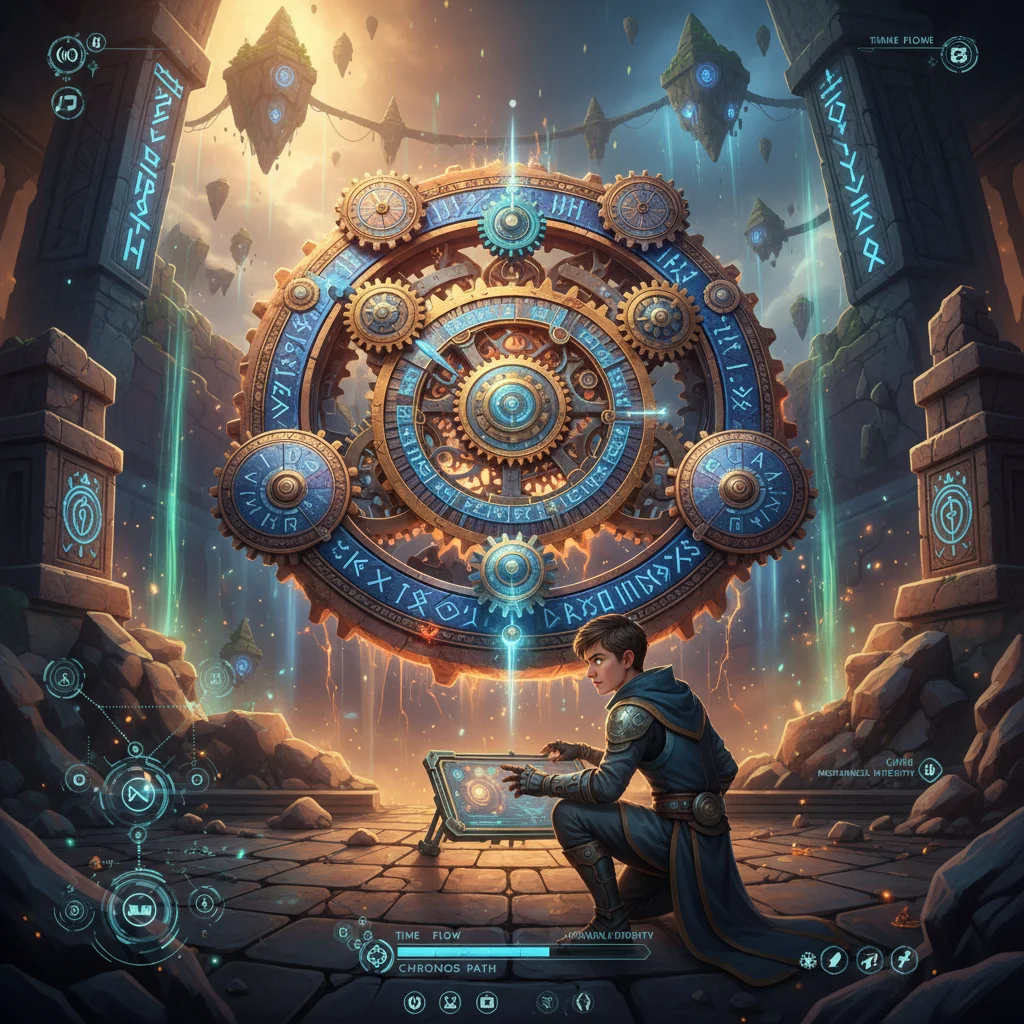
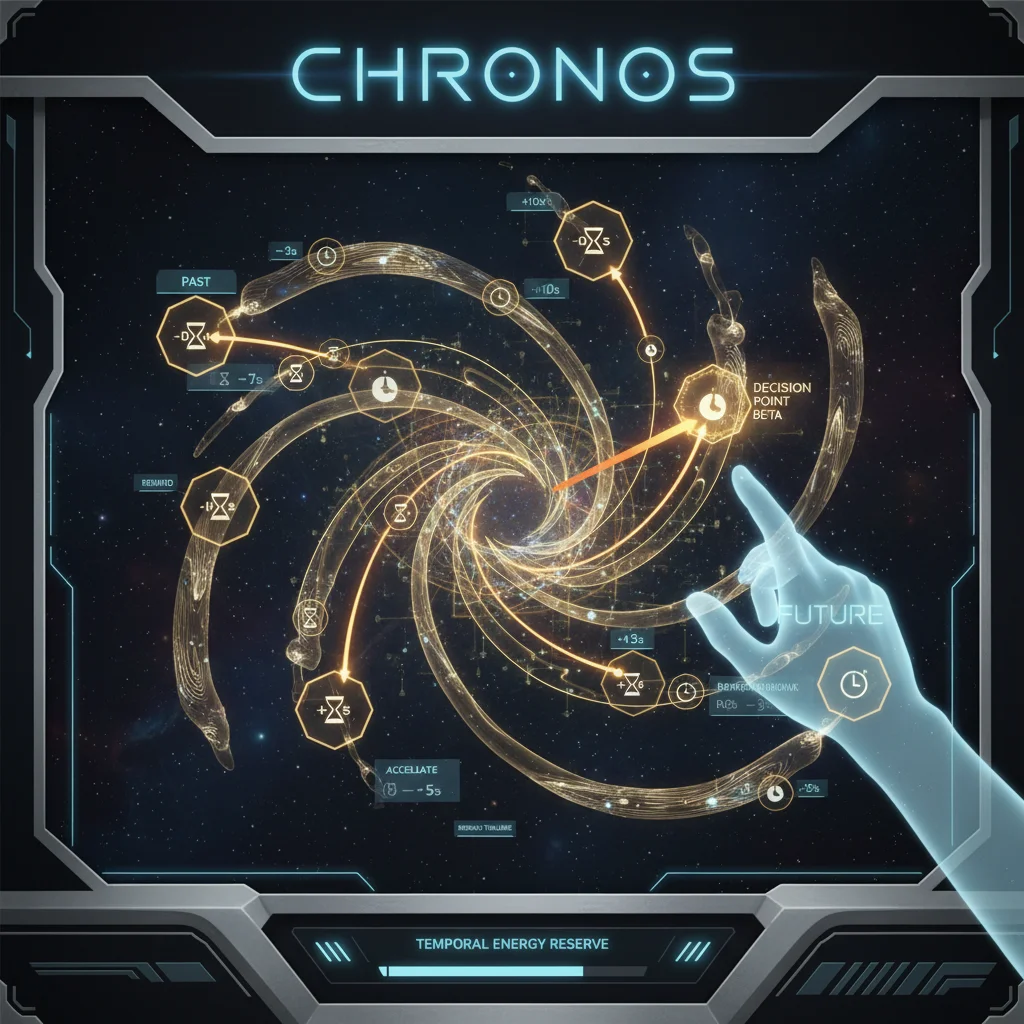
At its heart, ‘Chronos’ is a puzzle game, but to label it merely as such would be a disservice to its depth. The game’s design philosophy revolves around a series of interconnected systems that require players to think several steps ahead, anticipate consequences, and adapt their strategies on the fly. The primary hook, and arguably the most defining of the Chronos game mechanics, is its innovative approach to time manipulation. Unlike many games where time travel is a simple rewind button, ‘Chronos’ integrates it as a fundamental layer of its puzzle design, affecting environmental states, enemy patterns, and even the player character’s abilities.
Temporal Shifting and Its Strategic Implications
The temporal shifting mechanic is where ‘Chronos’ truly distinguishes itself. Players aren’t just moving through time; they are altering the very fabric of the game world. This isn’t a linear progression; rather, it introduces parallel timelines and causality loops that demand careful consideration. For instance, an action performed in the past might open a path in the present, but it could also inadvertently seal off another. This non-linear causality is a cornerstone of the Chronos game mechanics, forcing players to experiment, observe, and deduce the long-term effects of their decisions. The strategic implications are immense, transforming seemingly simple tasks into multi-layered puzzles that span across different temporal states.
Consider a scenario where a door is locked in the present. The solution might not be to find a key in the present, but to travel to the past, manipulate an ancient mechanism that affects the door’s locking system, and then return to the present to find it open. However, what if manipulating that mechanism in the past also awakens a dormant guardian that now patrols the path you need to take? These are the kinds of intricate choices players face constantly, making every temporal shift a calculated risk and a potential game-changer. The game doesn’t hold your hand; it expects you to learn its language of time through trial and error, making each successful puzzle resolution a deeply satisfying intellectual victory.
Environmental Interaction and Physics-Based Puzzles
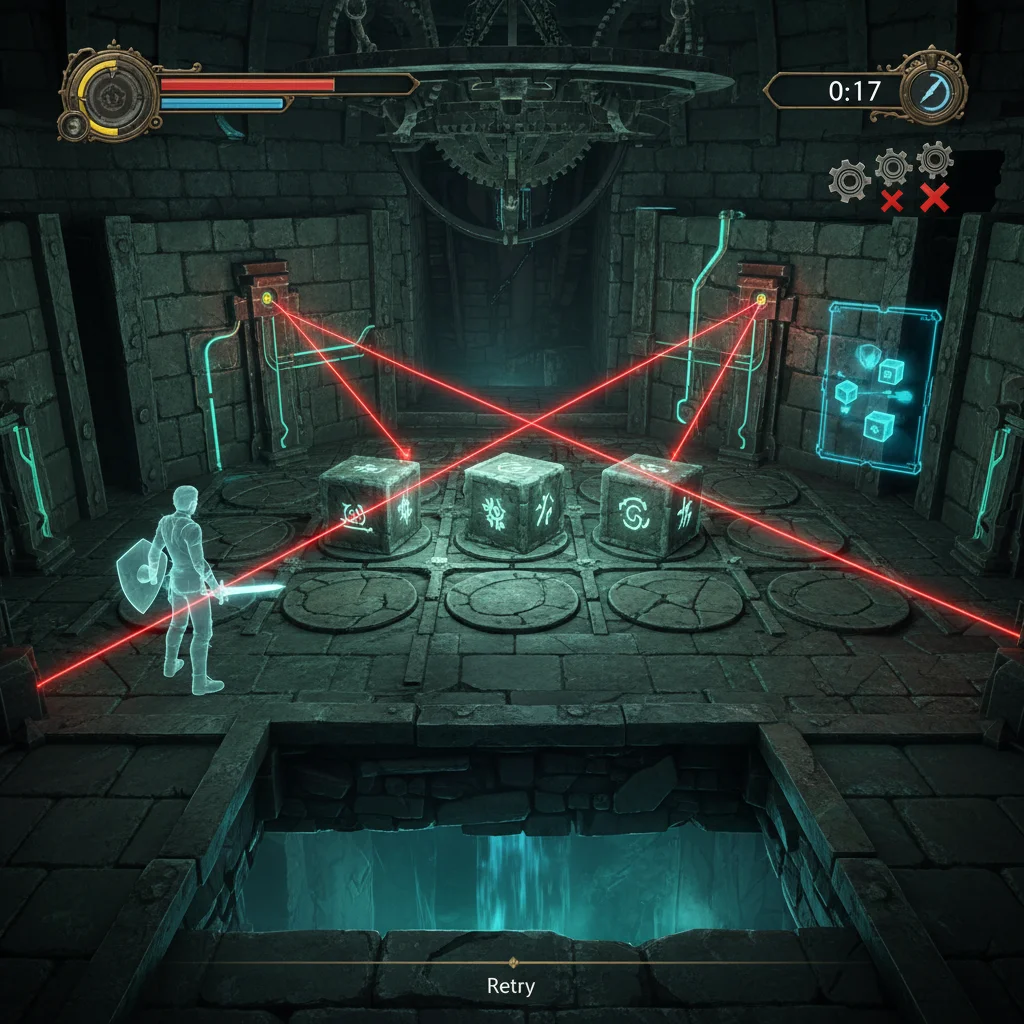
Beyond temporal mechanics, ‘Chronos’ heavily relies on sophisticated environmental interaction and physics-based puzzles. The game world is not static; objects can be moved, manipulated, and often used in unexpected ways to solve problems. This aspect of the Chronos game mechanics adds another layer of complexity, demanding spatial reasoning and an understanding of rudimentary physics. Levers, gears, pressure plates, and movable platforms are commonplace, but their integration with the temporal shifting mechanic elevates them beyond typical puzzle game tropes.
For example, a heavy object might need to be placed on a pressure plate to activate a mechanism, but the object itself might only exist in a specific time period, or its weight might vary depending on the temporal state. Players often find themselves manipulating objects in one era to affect their position or state in another, creating elaborate Rube Goldberg-esque solutions. The precision required for these puzzles can be daunting, but the game’s consistent internal logic ensures that every solution, no matter how convoluted, feels earned and logical within the game’s universe. This consistency is crucial for player engagement, as it fosters trust in the game’s design and encourages persistent problem-solving.
The Strategic Depth of Combat and Character Progression
While puzzles form the core, ‘Chronos’ also incorporates elements of action and RPG-lite character progression, which further intertwine with its complex Chronos game mechanics. Combat encounters are not mere button-mashing exercises; they are strategic engagements that often require the same level of foresight and planning as the environmental puzzles. Enemies often have patterns that can be exploited by temporal shifts, or their weaknesses might only be apparent in a specific time period.
Combat as a Puzzle: Exploiting Temporal Weaknesses
Each enemy in ‘Chronos’ feels like a mini-puzzle. Their attack patterns, resistances, and vulnerabilities are often tied to the game’s temporal mechanics. A foe might be invincible in the present but vulnerable to a specific attack if you can lure it into a past version of the environment where a trap lies in wait. This integration of combat into the overarching puzzle design is a brilliant aspect of the Chronos game mechanics. It prevents combat from feeling like an interruption to the puzzle-solving flow and instead makes it an extension of the intellectual challenge.
Furthermore, the game’s combat system emphasizes careful dodging, parrying, and strategic use of a limited ability set. Resource management, particularly of health and temporal energy, becomes critical. Players cannot simply brute-force their way through encounters; they must analyze the situation, identify temporal opportunities, and execute their plans with precision. This blend of action and cerebral strategy is a hallmark of the game’s design, appealing to players who seek more than just reflex-based combat.
Character Progression and the Aging Mechanic
The character progression in ‘Chronos’ is perhaps one of its most unique and subtle Chronos game mechanics. Instead of gaining traditional levels and skill points, the player character literally ages with each death. This ‘aging mechanic’ is not merely cosmetic; it significantly alters gameplay. As the character ages, their physical prowess might diminish, but their magical abilities and wisdom might increase. This creates a fascinating trade-off and forces players to adapt their playstyle over the course of the game.
For instance, a younger character might excel in melee combat, with higher strength and agility, making them ideal for aggressive play. However, repeated deaths will age them, reducing their physical stats but granting access to more potent magical skills. This encourages players to consider their deaths not as failures, but as evolutionary steps that reshape their character and open up new strategic avenues. This dynamic progression system adds immense replayability and personalizes each player’s journey, as their character’s age and associated abilities will dictate their preferred approaches to puzzles and combat.
US Player Reception: A Divided Yet Dedicated Audience
The intricate and often unforgiving nature of ‘Chronos’ has led to a fascinating and somewhat divided reception among US players. On one hand, the game has garnered immense praise from critics and a dedicated segment of the gaming community who appreciate its intellectual rigor and innovative design. On the other hand, its steep learning curve and challenging difficulty have proven to be a barrier for some, leading to mixed opinions among a broader audience.
Praise for Innovation and Intellectual Challenge
Many US players laud ‘Chronos’ for its bold approach to game design. Reviewers frequently highlight the originality of its Chronos game mechanics, particularly the temporal shifting and aging systems, as refreshing departures from conventional gaming tropes. Players who enjoy complex puzzles and strategic thinking find the game deeply satisfying. The sense of accomplishment after solving a particularly difficult temporal puzzle or overcoming a seemingly impossible combat encounter is often cited as a major draw.
The game’s narrative, though often subtle and conveyed through environmental storytelling, also receives commendation. It weaves a mysterious and atmospheric tale that complements the complex gameplay, encouraging players to delve deeper into the lore of the world. For players seeking a game that respects their intelligence and offers a genuine challenge, ‘Chronos’ is often heralded as a masterpiece. Its unique blend of genres – puzzle, action, and light RPG – is seen as a testament to creative game development, setting it apart in a market often saturated with more formulaic titles.
Challenges and Points of Frustration
However, the very complexity that attracts some players can alienate others. The steep learning curve associated with mastering the Chronos game mechanics is a frequent point of contention. Some players find the initial hours overwhelming, struggling to grasp the non-linear causality of temporal shifts or the nuances of combat. The game’s often minimalist approach to tutorials means players are largely left to discover its systems through experimentation, which can be frustrating for those accustomed to more guided experiences.
The difficulty level, while praised by hardcore players, has also been a source of frustration. Certain puzzles require pixel-perfect precision or an exact sequence of events that can be hard to deduce, leading to repeated failures. The aging mechanic, while innovative, can also be a double-edged sword. While it encourages adaptation, some players find the irreversible nature of aging after death to be punishing, especially if they prefer a specific character build that becomes less viable with age. This can lead to a feeling of being ‘locked in’ to a certain playstyle rather than offering true flexibility.
Furthermore, the game’s deliberate pacing, while contributing to its atmospheric quality, can sometimes be perceived as slow. Players accustomed to fast-paced action or instant gratification might find the methodical approach of ‘Chronos’ less engaging, particularly during prolonged periods of puzzle-solving or exploration.
The Art of Interconnectedness: How Mechanics Form a Cohesive Whole
What truly elevates ‘Chronos’ beyond a collection of clever ideas is how seamlessly its various Chronos game mechanics are integrated. The temporal shifts aren’t just for puzzles; they influence combat strategies. The aging mechanic isn’t just a gimmick; it directly impacts how players approach both exploration and confrontation. Environmental storytelling isn’t just flavor text; it often provides crucial clues for temporal puzzles. This interconnectedness creates a cohesive, believable, and deeply immersive game world.
Narrative and Mechanics: A Symbiotic Relationship
The narrative of ‘Chronos’ is intrinsically linked to its mechanics. The very act of manipulating time and witnessing the consequences across eras reinforces the game’s themes of causality, destiny, and the weight of decisions. The aging mechanic reflects the journey of a hero who gains wisdom at the cost of youth, a classic narrative arc given a tangible gameplay representation. This symbiotic relationship ensures that every action a player takes, every puzzle solved, and every death experienced contributes to both their understanding of the game’s systems and their immersion in its story.
The environmental design also plays a crucial role in this interconnectedness. Every ancient ruin, futuristic laboratory, or mystical forest is not just a backdrop; it’s a part of the puzzle. The architecture, the placement of objects, and even the subtle changes in the environment across different time periods provide visual cues and challenges that are integral to solving the game’s mysteries. This thoughtful design ensures that players are constantly engaged with the world, not just as a space to traverse, but as a dynamic entity to be understood and manipulated.
Replayability and Long-Term Engagement
The depth of the Chronos game mechanics significantly contributes to its replayability. Given the multiple ways to approach puzzles and combat, influenced by the aging mechanic and player choices, subsequent playthroughs can feel remarkably different. Players might intentionally die to age their character faster and explore a magic-focused build, or they might strive for a ‘no-death’ run to maintain physical prowess. This encourages experimentation and allows players to discover new facets of the game long after their initial completion.
Furthermore, the subtle lore and hidden secrets embedded within the game’s intricate design invite players to revisit the world, piecing together narrative fragments and uncovering deeper meanings. The intellectual challenge remains even on subsequent playthroughs, as players can refine their strategies, discover more efficient solutions, and truly master the complex interplay of time, environment, and character progression. This long-term engagement is a testament to the game’s brilliant design and its ability to consistently offer new challenges and insights.
Strategies for Mastering Chronos Game Mechanics
For those looking to dive into ‘Chronos’ or improve their gameplay, understanding key strategies is crucial. The game rewards patience, observation, and a willingness to learn from mistakes. Here are some tips for mastering the complex Chronos game mechanics:
Embrace Experimentation and Observation
Do not be afraid to experiment with temporal shifts and environmental interactions. The game often requires trial and error to understand the causality of actions across different timelines. Pay close attention to subtle environmental clues – a flickering light, a faint sound, or a slight alteration in an object’s appearance can be a hint for a temporal puzzle. Observe enemy patterns meticulously; their weaknesses are often tied to specific temporal states or environmental conditions.
Strategic Use of the Aging Mechanic
Instead of fearing death, view the aging mechanic as a strategic tool. If you find yourself struggling with a combat heavy section as a younger, physically strong character, a few strategic deaths might age you into a more magically adept state, opening up new combat solutions. Conversely, if precise physical actions are required, try to minimize deaths to maintain your agility. Plan your character’s progression based on the challenges ahead.
Patience and Persistence are Key
‘Chronos’ is not a game to be rushed. Many puzzles require careful thought and methodical execution. If you’re stuck, take a break and return with a fresh perspective. Sometimes, the solution is simpler than it appears, or it requires a connection between two seemingly unrelated elements across different time periods. Persistence in analyzing the game’s logic will eventually lead to breakthroughs.
Mastering Combat Fundamentals
While combat is part of the puzzle, mastering the basic action mechanics is still vital. Learn to effectively dodge, parry, and utilize your limited special abilities. Conserve your temporal energy for critical moments, such as exploiting an enemy’s temporal weakness or escaping a dangerous situation. Understanding the rhythm of combat will make it less of a hurdle and more of an integrated part of the overall challenge.
Conclusion: The Enduring Appeal of Chronos’ Complex Mechanics
‘Chronos’ stands as a testament to innovative game design, offering a rich tapestry of complex Chronos game mechanics that challenge, engage, and ultimately reward players. Its unique temporal shifting, intricate environmental puzzles, strategic combat, and dynamic aging mechanic create a gaming experience unlike any other. While its difficulty and steep learning curve may not appeal to everyone, the game has carved out a dedicated niche among US players who crave intellectual stimulation and a truly original adventure.
The game’s ability to seamlessly weave its narrative with its gameplay systems, creating a cohesive and immersive world, is a remarkable achievement. ‘Chronos’ is more than just a game; it’s an interactive thought experiment, a journey through time and consequence that leaves a lasting impression. For those willing to invest the time and effort to unravel its mysteries, ‘Chronos’ offers a profoundly satisfying and unforgettable gaming experience, solidifying its place as a benchmark for complex and intelligent puzzle-action games.