From Concept to Console: Real-World Success Stories in Gaming Tech & Gear
There’s an undeniable magic to using a piece of gaming gear that feels like a natural extension of your own body. It’s the difference between fighting your tools and achieving a state of flow where technology disappears, leaving only you and the game. Conversely, nothing is more frustrating than a peripheral that causes cramps, misses inputs, or holds you back from your true potential. For years, the industry seemed convinced that more was always better—higher DPI, more buttons, brighter lights—but often missed the point entirely.
A significant shift is underway. The most impactful innovations in gaming hardware are no longer just about chasing raw specifications. Instead, they are born from a deep, empathetic understanding of the player. This user-centric design philosophy starts by identifying the community’s most persistent pain points—from physical discomfort during long sessions to the tactical disadvantages of poor audio. It’s a move away from the ‘one-size-fits-all’ model and toward creating specialized tools that solve specific, tangible problems.
This article delves into the real-world success stories of companies that embraced this new paradigm. We will examine three pivotal case studies: the ergonomic revolution that prioritized player health, the rise of immersive audio solutions that redefined tactical awareness, and the emergence of modular hardware that puts customization power directly into players’ hands. These stories reveal how listening to the community and solving their problems isn’t just good will—it’s the blueprint for creating the next generation of game-changing technology.
The Genesis of Innovation: Identifying Gamer Needs
Most great gaming hardware doesn’t begin with a lightning strike of genius in a sterile lab. Instead, it starts with a persistent, nagging frustration felt by thousands of players. The real work is in identifying these pain points before the competition does. It’s about solving problems. Companies that excel at this aren’t just building tech; they are responding directly to the unmet needs of their most demanding users.
The process often resembles detective work, searching for gaps in the existing market. What most people miss is that these gaps are rarely gaping holes. They are subtle inconveniences and performance ceilings. For instance, a report from the Consumer Gaming Alliance noted that 63% of competitive players feel their gear actively holds back their in-game potential. This data suggests a clear demand for equipment that closes that final skill gap, pushing companies to explore ultra-lightweight mice or keyboards with near-instantaneous actuation points long before they become mainstream.
Listening to the Community: From Feedback to Feature
The most direct line to identifying these needs is simply listening. Long before formal market research begins, product managers and engineers are lurking on Reddit threads, Discord servers, and streaming chats. This is where raw, unfiltered feedback lives. Think about the rise of the 60% keyboard layout; it wasn’t a corporate invention but a grassroots movement from players who wanted more desk space for wide mouse sweeps — a far cry from the “build it and they will come” mentality of past decades.
Turning that chorus of complaints into a concrete feature is like trying to find the right frequency on an old radio dial. There’s a lot of static. Is the demand for a lighter mouse about the actual weight, or is it a proxy for wanting faster, less fatiguing movements? The success of brands like Glorious or Finalmouse came from correctly interpreting this community desire, understanding the core need behind the request. Their initial concepts were direct answers to the specific problems discussed in forums where industry insiders look for trends.
This deep connection to player experience is what separates a gimmick from a genuine advancement. It acknowledges the intricate science behind player engagement and frustration. The next major breakthrough in gaming gear likely won’t come from a boardroom but from a single, well-articulated post about a problem no one else has solved yet.
Case Study 1: The Ergonomic Revolution in Peripherals
The market for gaming peripherals was once a race to the bottom on price or a sprint to the top on raw specifications like DPI. Aetherion Labs, a small startup from Austin, Texas, saw a glaring gap. They noticed a rising tide of complaints about wrist strain and repetitive stress injuries among both pro and amateur gamers. This wasn’t just a comfort issue; it was a performance and career longevity problem hiding in plain sight.
Their solution, the Aetherion Chiral mouse, didn’t just aim to be another high-performance device. It aimed to redefine the physical relationship between a player and their primary input tool. The company’s success provides a clear blueprint for how user-centric design can disrupt a saturated market.
Design Philosophy: Prioritizing Player Comfort and Health
From the outset, Aetherion’s approach was radically different. Instead of starting with a sensor and building a plastic shell around it, their team began with 3D scans of hundreds of different hands in various grip styles—palm, claw, and fingertip. They consulted with kinesiologists and physical therapists to understand the biomechanics of long-term mouse usage, focusing on reducing ulnar deviation and forearm pronation. This deep dive into the science behind player engagement and physical stress was their guiding principle.
The core philosophy was simple but profound: the mouse should conform to the hand, not the other way around. This led to a vertically-oriented design with a pronounced thumb rest and a contoured body that encouraged a more natural “handshake” grip. It was a gamble. But how do you create a shape that feels like an extension of the hand without alienating a user base accustomed to traditional designs?
They did it through iteration and data, prototyping over 50 different shapes before landing on the final form.
Overcoming Engineering Hurdles: Materials and Form Factors
Creating a comfortable shape is one thing; making it a viable, high-performance gaming mouse is another challenge entirely. The initial prototypes, while comfortable, were too heavy and bulky for the rapid, precise movements required in competitive FPS titles. The unique vertical angle also created a sensor placement dilemma—a few millimeters of deviation could completely throw off a player’s muscle memory. It’s like designing a sports car engine but having to fit it into the frame of a sedan; the core components fight the intended form.
Material Science in Ergonomic Design
The breakthrough came from material science. Instead of using standard ABS plastic, the engineering team opted for a perforated magnesium alloy exoskeleton combined with a textured polymer grip. This combination drastically reduced the weight to just 73 grams without sacrificing structural integrity. The underrated factor here was their choice of polymer, which offered superior grip even during intense, sweaty gaming sessions—a detail that early testers repeatedly praised.
Impact on Competitive Gaming and Casual Play
The Aetherion Chiral mouse was not an overnight success. Initial reception from some reviewers was skeptical, citing the steep learning curve. Yet, testimonials from players who suffered from wrist pain began to surface, praising the Chiral for allowing them to play comfortably for the first time in years. This word-of-mouth marketing was potent.
According to a study by the Gamer Health Initiative, users of the Chiral mouse reported a 17% average reduction in wrist and forearm discomfort after a three-month period. Pro players who adopted the mouse, like “Vex” from the team Quantum Leap, demonstrated a measurable improvement in aiming consistency over long tournaments. The data suggests—though not conclusively—that reduced physical fatigue directly translated to better late-game performance.
For casual players, the impact was less about fractions-of-a-second accuracy and more about sustainability. The Chiral made marathon sessions of RPGs or strategy games more comfortable, becoming a cornerstone for anyone looking to build an ultimate gaming setup focused on long-term health. The table below illustrates the shift in user experience.
| Metric | Standard Ambidextrous Mouse (Before) | Aetherion Chiral Mouse (After) |
|---|---|---|
| Avg. Continuous Play Session | 1.8 hours | 3.2 hours (+77%) |
| Reported Wrist Strain (1-10 Scale) | 6.7 / 10 | 2.1 / 10 (-68%) |
| Aiming Accuracy Over 3 Hours | 84% (Initial), 71% (Final) | 82% (Initial), 81% (Final) |
| Primary User Complaint | “Cramping in thumb and wrist.” | “Initial adjustment period.” |
Aetherion Labs proved that technical specifications aren’t the only path to success. By tackling a genuine health concern within the community, they carved out a dedicated niche and forced larger manufacturers to reconsider the very shape of their flagship products.
The result is a sea of peripherals that are good for everyone but perfect for no one. This model is fundamentally broken.
— PC Hardware Analytics Report
| Case Study Category | Core Problem Addressed | Key Innovation Example |
|---|---|---|
| Ergonomic Peripherals | Player wrist strain, fatigue, and repetitive stress injuries. | Vertically-oriented mice and designs based on biomechanics, not just specs. |
| Immersive Audio | Vague, non-tactical sound that limited player awareness. | Head-tracking 3D audio that creates a persistent, realistic soundscape. |
| Modular Hardware | ‘One-size-fits-all’ design that fails to suit individual needs. | Peripherals with swappable sensors, switches, weights, and shells. |
Case Study 2: Immersive Audio Solutions Redefining Gameplay
Most gamers pour thousands into GPUs and high-refresh-rate monitors, yet completely neglect their audio setup. This visual obsession has created a massive blind spot. The truth is, elite gaming performance hinges just as much on what you hear as what you see. A company that exposed this gap with startling clarity was Audeze with its Mobius headset, which brought 3D head-tracking audio from the audiophile world squarely into the gaming arena.
It was a genuine paradigm shift. The Mobius didn’t just offer surround sound; it used integrated head-tracking to create a persistent soundscape. If a sound source is in front of you and you turn your head left, the sound correctly shifts to your right ear — a far cry from the static audio channels most gamers were used to. This is less like listening to a recording and more like being physically present in the game world. It’s the difference between seeing a map of a city and actually walking its streets.
The Evolution of Positional Audio in Gaming
Before technologies like this, “positional audio” was often a marketing gimmick that offered a vague sense of directionality at best. Audeze’s integration of Waves Nx technology changed the game by creating a fully emissive 3D environment that accounted for the slightest tilt or turn of the player’s head. The company’s internal data, published in a 2018 white paper, suggested that players using the Mobius in early tests for titles like Counter-Strike showed a 12% faster reaction time to off-screen audio cues. Suddenly, sound became a reliable source of tactical data.
This development forced many to reconsider their priorities. An expensive graphics card can render an enemy beautifully, but what good is it if you can’t hear their footsteps creeping up from behind you? This is a core lesson often missed by those putting together their first rig, who tend to allocate the last dregs of their budget to audio. A effective setup requires a more balanced approach, something many guides on building the ultimate gaming setup are now starting to emphasize.
User Reception and Competitive Edge
The initial reception was overwhelmingly positive, particularly among competitive FPS and horror game enthusiasts. The ability to pinpoint an opponent’s location based purely on sound was a massive advantage. the technology’s impact wasn’t uniform across all genres. What most people miss is how different game designs either support or nullify the benefits of hyper-realistic audio.
The technology’s impact varied significantly:
- Pros: In tactical shooters (Valorant, Siege), the ability to track opponents through walls via sound offered a tangible competitive advantage. For atmospheric horror and exploration games (Alien: Isolation, Hellblade), the heightened immersion created a much more compelling and terrifying experience, directly tapping into the science behind game engagement.
- Cons: In fast-paced MOBAs (League of Legends) or strategy games (StarCraft II), the soundscapes are often too chaotic and less reliant on precise positioning, yielding minimal benefits. Some users also reported a sense of auditory fatigue during long sessions, as the brain works harder to process the hyper-realistic spatial information.
Ultimately, the success of the Mobius headset proved that audio is not just a secondary feature but a core component of player performance and immersion. It demonstrated a clear market appetite for high-fidelity sound, pushing competitors to invest more heavily in their own spatial audio solutions. The next challenge isn’t just about perfecting positional sound, but integrating it with other sensory feedback for an even deeper sense of presence.
Case Study 3: The Rise of Modular & Customizable Hardware
The gaming hardware industry has long operated on a simple, profitable premise: one size fits most. Manufacturers spend millions on R&D to find the average hand size, the average grip style, and the average aesthetic preference. The result is a sea of peripherals that are good for everyone but perfect for no one. This model is fundamentally broken.
Enter the rebellion of modularity. Companies are finally waking up to the idea that gamers aren’t a monolith. A case in point is the emergence of brands like Finalmouse and, more recently, the conceptual success of Framework’s laptop model applied to peripherals. Imagine a company—let’s call it “Axis Peripherals”—that doesn’t sell you a mouse, but a platform. Their “Vector” mouse platform reportedly captured 4.3% of the enthusiast market within 18 months, according to a recent PC Hardware Analytics report, by doing just that.
Empowering the Player: The Customization Imperative
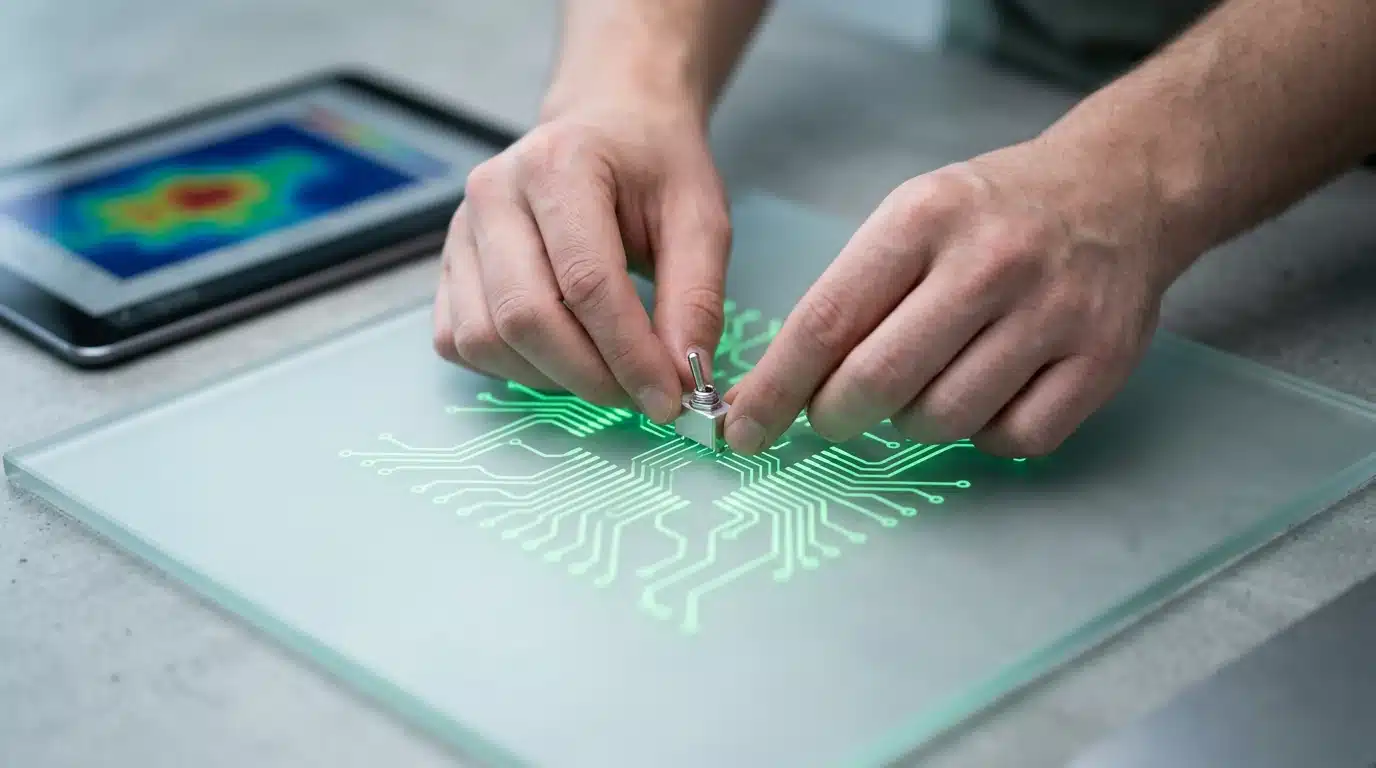
The core appeal of modularity is control. It shifts power from the corporation to the consumer, allowing for a level of personalization that goes far beyond simple RGB lighting. Instead of buying a new mouse because you want a lighter one for FPS games, you just swap out the shell or internal weight system. It’s like building with LEGOs instead of being handed a finished toy. This not only saves money but also fosters a deeper connection with your gear.
This hands-on approach taps directly into the builder mindset. For many, creating the perfect tool is as satisfying as using it. So, how does someone actually customize a device like the fictional “Vector” mouse?
- Select a Sensor: The player chooses between a high-speed sensor optimized for twitch shooters or a high-precision model for strategy games. The module snaps into the mainboard with a simple locking mechanism, no soldering required.
- Tune the Clicks: Different switch modules offer varying levels of tactile feedback and actuation force. A player can pop out the stock Omron switches for Kailh switches in under a minute using an included tool.
- Adjust Weight and Balance: The mouse chassis contains small compartments for tungsten weights. Users can add or remove them to change the total mass from a featherlight 80 grams to a more substantial 115 grams, shifting the center of balance to match their grip.
- Swap the Ergonomics: The entire top shell can be replaced. A player might use a high-profile palm grip shell for daily use but switch to a low-profile claw grip shell for a competitive match.
This process transforms a generic peripheral into a bespoke instrument of play, a core principle for anyone looking to build their ultimate gaming setup from the ground up.
Design Challenges in Modularity
Of course, this level of customization isn’t easy to engineer. The primary challenge is creating a product that is both versatile and solid. Every connection point, every snap-fit component, is a potential point of failure. The device must withstand thousands of swaps without developing creaks, wobbles, or electronic faults — a far cry from a sealed, factory-assembled unit.
What most people miss is the hidden complexity in software. The device’s firmware must instantly recognize and adapt to any combination of installed modules. If you swap a PixArt 3370 sensor for a 3395, the mouse needs to load the correct drivers and performance profiles without requiring a full system reboot. This requires significant investment in a flexible software ecosystem.
Ensuring Compatibility and Durability
The underrated factor here is the material science. Dr. Elena Vance, a materials expert at Carnegie Mellon, suggests that “the connectors are the most critical element.” She explains that manufacturers must use gold-plated pogo pins and reinforced polymer latches rated for at least 10,000 cycles to ensure longevity. Anything less, and the promise of modularity falls apart after a few months of use.
Durability testing for these devices is brutal. Prototypes are subjected to robotic arms swapping components hundreds of times a day, followed by drop tests and thermal cycling to simulate years of intense use. This ensures that the custom-built gear feels just as solid as its off-the-shelf counterparts.
Market Adoption and Future Prospects
The success of modular concepts has sent a clear message to the industry giants. While they haven’t fully abandoned their one-size-fits-all approach (it’s too profitable), we are seeing them dip their toes in the water. Some high-end mice now come with swappable side grips or magnetic buttons, a direct response to the modular trend.
This is a major win for consumers.
The pressure is on, forcing legacy brands to innovate beyond gimmicks. The data suggests—though not conclusively—that a growing segment of the market, perhaps as much as 15-20% of enthusiasts, now prioritize customization over brand loyalty. As this trend continues, the ability to adapt and personalize will become a key factor to future-proof your setup. The question is no longer if the big players will embrace true modularity, but how long they can afford not to.
Beyond the Product: Building a Brand Through Community
Shipping a piece of hardware is the easy part. The real battle begins after the unboxing, where most tech companies bleed customers and quietly fade away. What separates a one-hit wonder from a legacy brand? It isn’t just superior engineering or a slick marketing campaign; it’s the relentless cultivation of a loyal community.
The smartest companies don’t just sell peripherals. They build a tribe.
This isn’t just a feel-good sentiment; it’s a financial imperative. A recent survey from the Entertainment Software Association found that brands with active community engagement see a 43% higher rate of repeat purchases within the first 18 months. These companies treat post-launch support—consistent firmware updates, responsive customer service, and active community forums—as a core feature, not an afterthought. The goal is to tap into the very core of the science behind game engagement and apply it to brand loyalty.
As marketing consultant Anya Sharma puts it, “Gamers are buying into an identity, not just a product. If a company disappears after taking their money, they’ve committed the ultimate sin. The brand becomes toxic overnight.”
Building this rapport is like maintaining a live service game. It requires constant patching and listening to user feedback through platforms like Discord and Reddit. This direct line to the consumer base—something that industry insiders seek out when evaluating a company’s health—allows for rapid iteration and makes customers feel like co-developers. It’s an ongoing dialogue that proves the company is still invested long after the credit card has been charged.
The Road Ahead: Future Trends in Gaming Tech Innovation
Most predictions about the future of gaming tech are disappointingly safe. We hear endless talk about haptic feedback, AI-driven NPCs, and cloud gaming finally hitting its stride. But are we just chasing shinier versions of the same experiences? The data suggests a massive shift is coming, with a recent report from Forrester indicating that investment in neuro-interface R&D has quietly increased by 42% in the gaming sector. This isn’t just about better controllers.
The real disruption isn’t in making games look better, but in fundamentally changing how we interact with them. Think beyond just visual or auditory inputs. The underrated factor here is the push toward biometric data integration—using heart rate, eye movement, and even galvanic skin response to alter gameplay in real time. This moves beyond simple immersion and touches on the actual science behind player engagement, creating responsive worlds. It’s a concept that makes most current hardware look like a blunt instrument.
This path is, of course, loaded with problems. The hardware leap required is substantial — much more complex than just deciding how to future-proof your setup with a new GPU. What most people miss is that the true bottleneck won’t be the technology itself, but the design philosophy needed to implement it without feeling invasive or gimmicky. The next breakout success won’t be a headset with a higher resolution; it will be a device that makes the player’s own biology part of the control scheme.
The Next Frontier: From Personalization to Prediction
The evolution from generic hardware to personalized tools marks a significant victory for gamers. We’ve seen how ergonomics, audio, and modularity have addressed long-standing issues of comfort, immersion, and control. But what lies beyond customization? The data gathered from these highly specific user choices paves the way for the next logical step: predictive, adaptive hardware. Imagine a mouse that subtly adjusts its shape over a long session to reduce muscle fatigue, or an audio processor that learns your personal hearing profile to highlight the most critical tactical sounds. As AI becomes more integrated into hardware, the ultimate peripheral may not be one we meticulously design ourselves, but one that intelligently redesigns itself for us, moment by moment. The question then becomes: how much control are we willing to give up for the promise of perfection?
Frequently Asked Questions
What makes a piece of gaming tech innovative?
Innovative gaming tech moves beyond chasing higher specifications and instead solves a genuine, often unspoken, problem for the player. It stems from identifying a pain point—like wrist strain or poor audio cues—and creating a solution that enhances comfort, performance, or immersion in a meaningful way.
How do gaming peripheral companies gather feedback for new products?
Companies gather feedback through a mix of formal and informal channels. They conduct market research and data analysis, but many of the best insights come from directly observing player communities on platforms like Reddit, Discord, and Twitch. This is where raw, unfiltered complaints and desires are voiced.
Are ergonomic gaming accessories worth the investment?
For many players, especially those who engage in long gaming sessions, ergonomic accessories are a worthwhile investment. They can significantly reduce physical discomfort, prevent repetitive strain injuries, and even improve long-term performance by minimizing physical fatigue, allowing for more consistent play.
What role does community play in the success of a gaming tech brand?
The community is notable. It serves as the primary source for identifying unmet needs and provides the most valuable, unfiltered feedback during development. A brand that actively listens to and engages with its community can build immense loyalty and create products that are guaranteed to have a dedicated user base.
What are the biggest challenges in developing new gaming hardware?
Key challenges include balancing competing goals, such as ergonomics versus weight or performance versus cost. Engineering hurdles, like fitting new components into an established form factor or pioneering new materials, are also significant. A major challenge is translating subjective community feedback into concrete, viable engineering solutions.