Portable Gaming Devices 2026: Steam Deck 2 and Handheld Innovators
The world of gaming is in a constant state of flux, with innovation driving new experiences and pushing the boundaries of what’s possible. Among the most exciting sectors is portable gaming, a segment that has seen a phenomenal resurgence in recent years. As we look ahead to 2026, the anticipation for what comes next is palpable, particularly with the expected arrival of the Steam Deck 2 and a host of other potential handheld innovators. This article will delve deep into the future of Portable Gaming 2026, exploring the technological leaps, market trends, and the devices that are set to redefine how and where we play.
The Evolving Landscape of Portable Gaming 2026
The original Steam Deck, launched by Valve, truly democratized PC gaming on the go, offering a console-like experience with the vast library of Steam. Its success has not only paved the way for a successor but has also inspired numerous competitors to enter the arena. By 2026, we anticipate a vastly more competitive and sophisticated market for Portable Gaming 2026 devices. The focus will shift from merely playing games to delivering premium, immersive experiences that rival traditional console and PC setups.
Key drivers of this evolution include advancements in semiconductor technology, particularly in custom APUs (Accelerated Processing Units) that combine powerful CPUs and GPUs into a single, efficient chip. Furthermore, improvements in battery technology, display panels, and wireless connectivity will play crucial roles. The convergence of these technologies promises a future where compromises in performance or visual fidelity become a thing of the past for portable devices.
Steam Deck 2: What to Expect from the Next Iteration
The Steam Deck 2 is undoubtedly the most anticipated device in the Portable Gaming 2026 landscape. While Valve has been tight-lipped about specific details, industry analysts and enthusiasts have a clear vision of what improvements are necessary and likely. Building on the foundation of the original, the Steam Deck 2 is expected to address its predecessor’s limitations while enhancing its strengths.
Performance and Processing Power
At the heart of the Steam Deck 2 will be a new, more powerful custom APU. We can expect a significant leap in both CPU and GPU performance, potentially leveraging AMD’s RDNA 3 or even RDNA 4 architecture for graphics, paired with Zen 4 or Zen 5 CPU cores. This would translate into higher frame rates, improved graphical settings, and the ability to run more demanding AAA titles natively at comfortable resolutions. The current Steam Deck, while impressive, sometimes struggles with newer titles or requires significant graphical compromises. The Steam Deck 2 aims to eliminate these bottlenecks, ensuring a smoother, more visually stunning experience across the board. This enhanced processing power is crucial for defining the next generation of Portable Gaming 2026.
Display Enhancements
One of the most requested upgrades for the Steam Deck 2 is an improved display. The original’s 7-inch LCD, while functional, lacked the vibrancy and contrast of modern OLED panels. It’s highly probable that the Steam Deck 2 will feature an OLED screen, offering deeper blacks, richer colors, and better power efficiency. Furthermore, an increase in resolution, perhaps to 1080p or even 1440p, along with a higher refresh rate (90Hz or 120Hz), would provide a much sharper and more fluid visual experience, making games look and feel significantly better. This display upgrade will be a key differentiator in the Portable Gaming 2026 market.
Battery Life and Efficiency
For any portable device, battery life is paramount. While increased performance typically demands more power, advancements in chip efficiency and battery technology could lead to a Steam Deck 2 that offers both greater power and extended playtime. We might see larger battery capacities, more efficient components, and optimized software that intelligently manages power consumption. This balance between power and endurance is a critical challenge and opportunity for Portable Gaming 2026 devices.
Ergonomics and Design Refinements
The original Steam Deck is known for its comfortable ergonomics, but there’s always room for improvement. The Steam Deck 2 could feature a lighter chassis, refined button layouts, improved haptic feedback, and potentially even swappable components or modular designs. A sleeker profile and reduced weight would enhance portability and allow for longer, more comfortable gaming sessions. These design considerations are vital for user satisfaction in Portable Gaming 2026.
The Rise of Handheld Innovators: Beyond the Steam Deck 2
While the Steam Deck 2 will undoubtedly capture significant attention, it won’t be alone in the Portable Gaming 2026 market. Several other manufacturers are already making waves, and their future iterations promise even more fierce competition and innovation.
ASUS ROG Ally and Legion Go: PC Gaming Competitors
ASUS and Lenovo have successfully entered the handheld PC gaming space with the ROG Ally and Legion Go, respectively. These devices offer Windows-based operating systems, providing access to a broader range of game launchers beyond Steam. By 2026, we can expect their successors to feature even more powerful AMD or Intel APUs, further refined cooling systems, and potentially more ergonomic designs. The Legion Go’s large screen and detachable controllers offer a unique approach that could be further developed, blurring the lines between handheld and tablet gaming. These devices are pushing the boundaries of what is possible within Portable Gaming 2026.
Nintendo Switch Successor: The Hybrid King’s Evolution
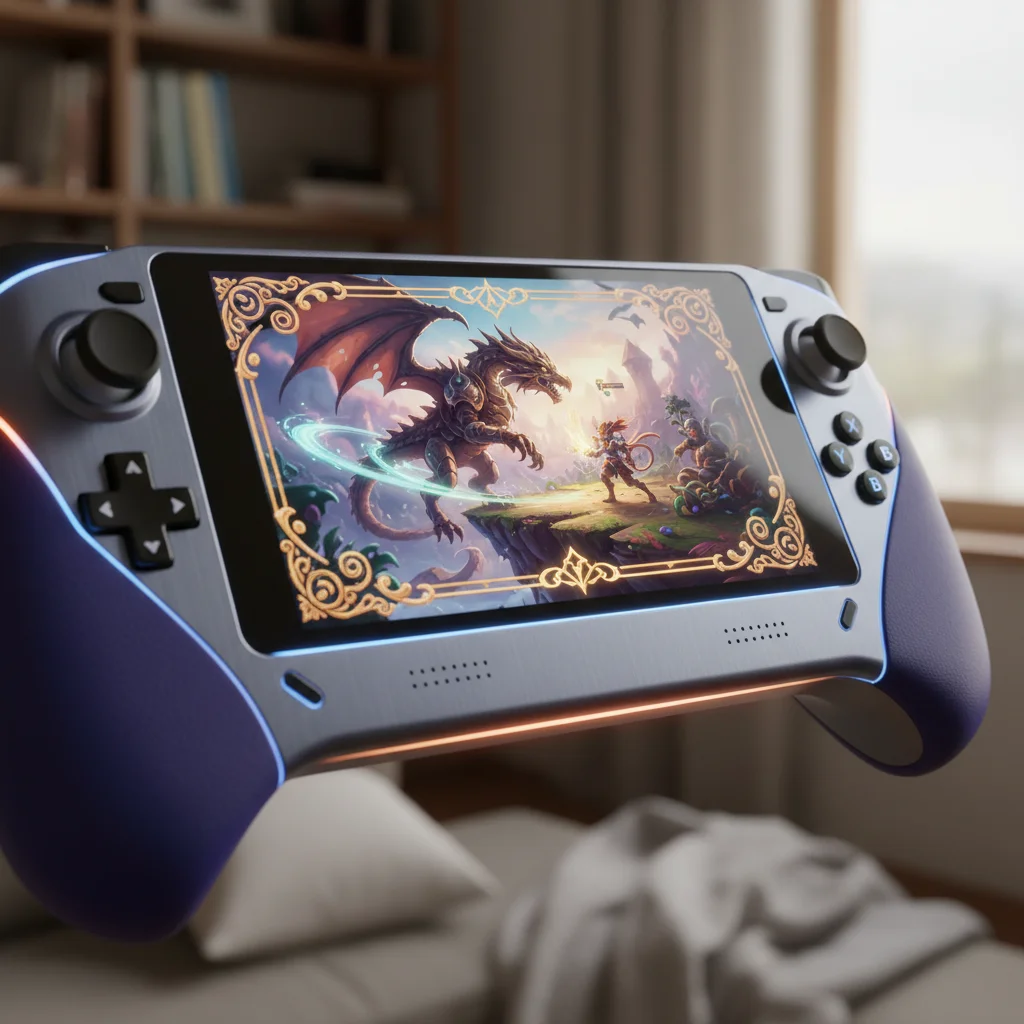
Nintendo’s next-generation console, often dubbed the ‘Switch 2’ or ‘Switch Pro,’ will undoubtedly be a major player in the Portable Gaming 2026 market. While Nintendo typically focuses less on raw power and more on innovative gameplay and unique hardware features, a significant performance bump is expected. This could include a more capable NVIDIA SoC (System-on-a-Chip), potentially supporting DLSS (Deep Learning Super Sampling) for enhanced visuals and frame rates, along with a higher-resolution OLED screen. The hybrid nature of the Switch, allowing seamless transitions between handheld and TV modes, remains its core strength and will likely be further refined. Nintendo’s entry will continue to shape the diverse offerings in Portable Gaming 2026.
Emerging Players and Niche Devices
Beyond the established giants, the Portable Gaming 2026 landscape will also be populated by niche players and innovative startups. Companies like AYANEO, GPD, and OneXPlayer are continually pushing boundaries with unique form factors, powerful specifications, and specialized features. We might see devices with integrated keyboards, dual screens, or even experimental control schemes. These smaller players often serve as incubators for new ideas that eventually influence the broader market. Their contributions are essential for the overall dynamism of Portable Gaming 2026.
Key Technologies Shaping Portable Gaming 2026
The future of Portable Gaming 2026 isn’t just about the devices themselves, but also the underlying technologies that power them and enhance the user experience.
Cloud Gaming Integration
While local processing will remain king for many, cloud gaming will become an increasingly viable and integral part of the Portable Gaming 2026 ecosystem. Services like Xbox Game Pass Ultimate, GeForce NOW, and PlayStation Plus Premium will continue to mature, offering access to vast libraries of games without the need for powerful local hardware. Portable devices will increasingly be designed with robust Wi-Fi 6E/7 and 5G connectivity to leverage these services, allowing for high-fidelity gaming streamed directly to the handheld, even for titles that would be impossible to run natively. This hybrid approach offers flexibility and expands the accessible game library significantly.

AI Upscaling and Frame Generation
Technologies like NVIDIA’s DLSS, AMD’s FSR (FidelityFX Super Resolution), and Intel’s XeSS (Xe Super Sampling) are already revolutionizing gaming performance. By 2026, these AI-powered upscaling and frame generation techniques will be even more advanced and ubiquitous in Portable Gaming 2026 devices. They will allow games to run at higher frame rates and resolutions than native rendering would permit, extending the lifespan of hardware and providing a smoother experience without sacrificing visual quality. This is particularly crucial for portable devices where power and thermal constraints are significant.
Haptic Feedback and Immersion
Beyond visual and auditory fidelity, tactile feedback plays a huge role in immersion. The haptic systems in devices like the PlayStation DualSense controller have set a new standard. We can expect Portable Gaming 2026 devices to incorporate more sophisticated haptic feedback, providing a wider range of sensations that enhance gameplay, from the subtle rumble of an engine to the distinct feel of different weapon impacts. This attention to detail will elevate the overall gaming experience.
Advanced Connectivity and Ecosystems
Wi-Fi 7 and advanced 5G modems will be standard, ensuring ultra-low latency and high-bandwidth connections, crucial for both cloud gaming and multiplayer experiences. Furthermore, the integration of these devices into broader ecosystems will deepen. Imagine seamless handoffs between your portable device, home console, and PC, or enhanced integration with smart home devices for ambient lighting that reacts to your game. The ecosystem play will become increasingly important for Portable Gaming 2026.
Challenges and Opportunities for Portable Gaming 2026
While the future of Portable Gaming 2026 looks bright, several challenges and opportunities will shape its trajectory.
Battery Technology Limitations
Despite advancements, battery technology remains a significant hurdle. More powerful components demand more energy, making extended playtimes a constant battle. Breakthroughs in solid-state batteries or other novel power sources could fundamentally change the game, but incremental improvements are more likely in the near term. Manufacturers will need to continue optimizing power consumption at every level.
Thermal Management
Cramming high-performance components into a small, handheld form factor generates considerable heat. Effective thermal management is crucial to prevent throttling and ensure consistent performance. Innovative cooling solutions, such as advanced vapor chambers, liquid cooling, or even active external cooling accessories, will be key to unlocking the full potential of Portable Gaming 2026 devices.
Software Optimization and OS Diversity
The operating system and software layer are just as important as the hardware. Valve’s SteamOS, a Linux-based system, has proven highly capable, but Windows-based handhelds offer broader compatibility. The challenge lies in optimizing these operating systems for the unique demands of a handheld form factor, ensuring smooth performance, intuitive user interfaces, and robust game compatibility. The fragmentation of operating systems could also present challenges for developers. A unified or highly compatible software ecosystem would greatly benefit Portable Gaming 2026.
Price Point and Accessibility
As technology advances, so too can costs. Manufacturers will need to balance cutting-edge features with accessible price points to ensure these devices reach a broad audience. The original Steam Deck’s compelling price-to-performance ratio was a major factor in its success. Maintaining this balance will be crucial for the continued growth of Portable Gaming 2026.
Content Availability and Optimization
The best hardware is useless without great games. Ensuring a steady stream of new titles, optimized for portable play, will be vital. This includes both AAA titles that can scale down effectively and indie games designed with handheld experiences in mind. Developers will need to consider the unique aspects of Portable Gaming 2026, such as smaller screens and different control schemes.
The User Experience in Portable Gaming 2026
Ultimately, the success of Portable Gaming 2026 will hinge on the user experience. This encompasses not just raw performance but also ease of use, comfort, and the overall joy of playing.
Seamless Transitions and Multi-Platform Play
The ability to pick up a game on your handheld, continue it on your PC, and then finish it on your TV will become increasingly standard. Cloud saves, cross-play, and robust account integration will make these transitions seamless, blurring the lines between different gaming platforms. This flexibility will be a hallmark of Portable Gaming 2026.
Personalization and Customization
Users will expect greater personalization options, from customizable interfaces and control mapping to swappable hardware components like joysticks or faceplates. The ability to tailor the device to individual preferences will enhance the sense of ownership and improve the gaming experience. This level of customization will be a key feature for Portable Gaming 2026.
Enhanced Accessibility Features
Accessibility will continue to be a major focus, with features like advanced remapping options, text-to-speech, speech-to-text, and various visual aids becoming standard. Ensuring that portable gaming is inclusive for all players will be a priority for Portable Gaming 2026.
Conclusion: A Bright Future for Portable Gaming
As we cast our gaze towards Portable Gaming 2026, the picture is one of exciting innovation and fierce competition. The Steam Deck 2 is poised to lead the charge, building on the revolutionary groundwork laid by its predecessor. However, it will be joined by a strong contingent of other handheld innovators, each bringing its unique strengths and approaches to the market. From enhanced displays and processing power to advanced AI upscaling and deeper cloud integration, the technologies shaping this sector promise unprecedented levels of performance and immersion.
The challenges of battery life, thermal management, and software optimization will continue to drive innovation, pushing manufacturers to find ingenious solutions. Ultimately, the winners in the Portable Gaming 2026 race will be those who can best balance cutting-edge technology with user-centric design, delivering powerful, comfortable, and accessible gaming experiences that truly resonate with players. The era of compromise in portable gaming is rapidly drawing to a close, ushering in a golden age where high-fidelity gaming is truly at our fingertips, wherever we go.