US Game Development Costs Soar: A Deep Dive into 2026 Production Budgets
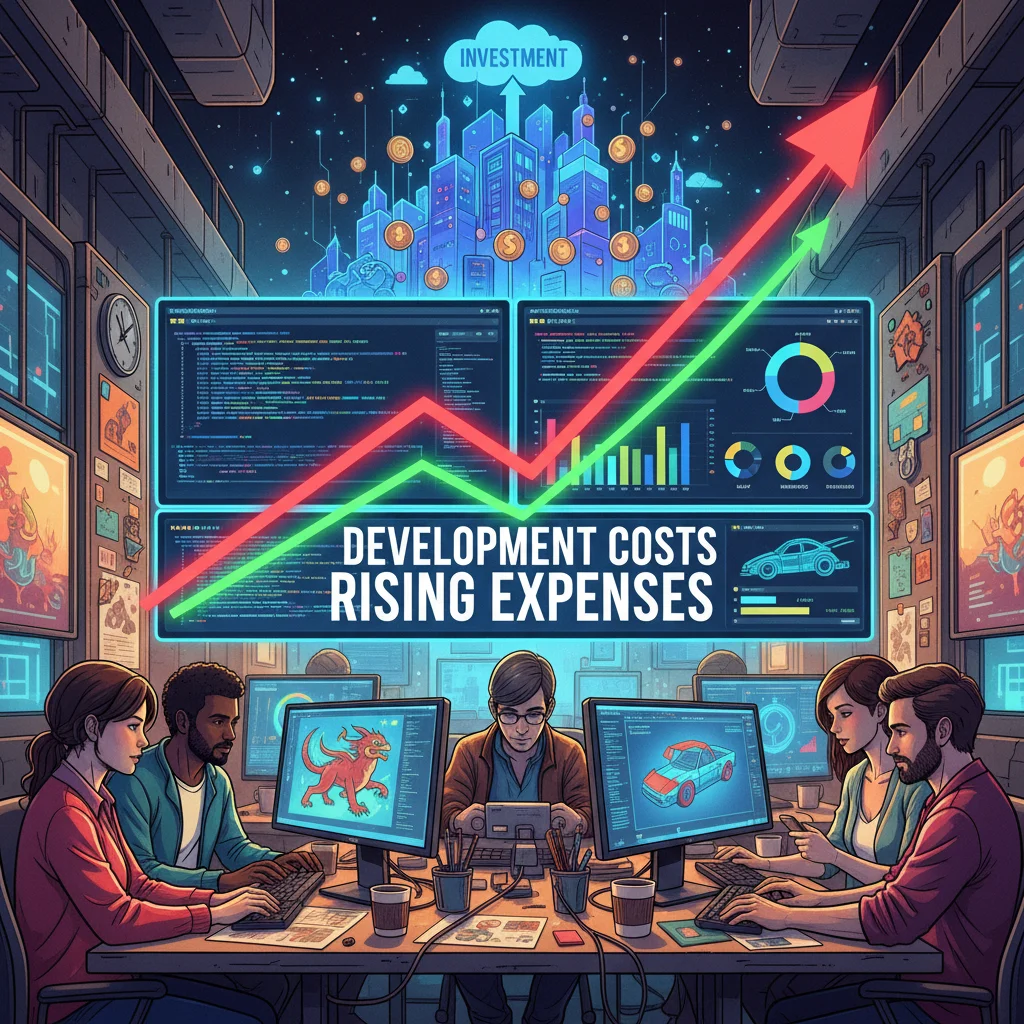
The United States game development industry is a powerhouse of innovation, creativity, and economic activity. However, recent projections indicate a significant and somewhat alarming trend: a projected 12% increase in production budgets for games slated for release in 2026. This substantial rise in US Game Development Costs is not merely a statistical blip; it represents a fundamental shift in the economic realities faced by studios, from indie developers to AAA behemoths. Understanding the multifaceted reasons behind this surge, its potential ramifications, and the strategies for mitigation is crucial for anyone involved in or invested in the future of gaming.
For years, the trajectory of game development budgets has generally trended upwards, driven by technological advancements, increasing player expectations, and the sheer scale of modern interactive experiences. However, a 12% jump within a relatively short timeframe signals a more acute set of pressures. This article will meticulously dissect the various factors contributing to these escalating costs, offering a comprehensive analysis that aims to provide clarity and foresight into the challenges and opportunities ahead for US Game Development Costs.
The Anatomy of Rising US Game Development Costs: Key Drivers
Several interconnected factors are converging to push US Game Development Costs skyward. These aren’t isolated incidents but rather a complex interplay of technological, economic, and market-driven forces.
Technological Advancements and Graphical Fidelity
The relentless pursuit of hyper-realistic graphics and immersive experiences is a primary driver. As hardware capabilities advance with new console generations and powerful PC components, player expectations for visual fidelity and environmental detail skyrocket. Creating these highly detailed assets, complex shaders, and sophisticated lighting systems demands more skilled artists, longer production cycles, and more powerful tools. The transition to engines like Unreal Engine 5 with its Lumen and Nanite technologies, while offering incredible visual potential, also necessitates significant investment in training, pipeline adjustments, and the sheer volume of high-polygon assets.
Escalating Talent Acquisition and Retention Costs
The demand for highly specialized talent in the gaming industry continues to outpace supply. Experts in areas like AI programming, advanced animation, VFX, network architecture, and intricate game design command premium salaries. The competitive landscape, particularly in hubs like California, Texas, and Washington, means studios must offer increasingly attractive compensation packages, benefits, and work environments to attract and retain top-tier professionals. The global shift towards remote work has also intensified competition, as developers are no longer geographically limited, leading to a worldwide bidding war for skilled individuals. This directly impacts US Game Development Costs, as personnel expenses often constitute the largest portion of a game’s budget.
Inflationary Pressures and Supply Chain Disruptions
Beyond talent, broader macroeconomic factors are playing a significant role. Global inflation has led to increased costs for everything from office space and utilities to hardware and software licenses. Supply chain disruptions, while perhaps more pronounced in other industries, can still affect the availability and cost of specialized equipment, development kits, and even energy, indirectly contributing to higher operational expenses for studios. These underlying economic shifts amplify the overall US Game Development Costs.
The Ever-Expanding Scope of Modern Games
Today’s blockbuster titles are not just games; they are expansive, living worlds. Open-world environments, intricate narratives with branching storylines, extensive voice acting, sophisticated multiplayer components, and ongoing live-service elements all contribute to a dramatically expanded scope compared to games of previous generations. Each additional feature, every new system, and every extra hour of gameplay translates directly into more development time, more personnel, and thus, higher budgets. The expectation for games to offer hundreds of hours of content, often with post-launch updates and expansions, further inflates initial development and ongoing operational costs.
Marketing and Distribution Expenses
While not strictly ‘development’ costs, marketing and distribution are integral to a game’s success and often represent a substantial portion of the overall investment. With a crowded market, cutting through the noise requires increasingly sophisticated and expensive marketing campaigns. This includes everything from high-budget trailers and celebrity endorsements to extensive social media outreach, influencer partnerships, and global advertising buys. Digital distribution platforms take a cut, and physical distribution, where still relevant, involves manufacturing, logistics, and retail partnerships. These costs, while separate from the direct creation of the game, are inextricably linked to the total investment required to bring a title to market and recoup the rising US Game Development Costs.
Increased Quality Assurance and Compliance
As games become more complex, the demands on quality assurance (QA) grow exponentially. Identifying and fixing bugs across multiple platforms, configurations, and network conditions requires larger, more skilled QA teams and longer testing phases. Furthermore, compliance with platform holders (Sony, Microsoft, Nintendo) and adherence to various regional regulations (e.g., data privacy, accessibility standards) add layers of complexity and cost. Ensuring a polished, bug-free, and compliant product before launch is paramount to avoiding negative press and consumer backlash, but it comes at a significant price.
Impact on Studios and the Industry Landscape
The 12% increase in US Game Development Costs for 2026 titles will have profound implications across the entire industry ecosystem. This isn’t just a challenge for large publishers; it reshapes the playing field for everyone.
For AAA Studios and Publishers
For the industry’s giants, higher costs translate to even greater financial risk. The pressure to deliver blockbusters that generate billions in revenue intensifies. This could lead to a more conservative approach to innovation, as studios might lean towards proven franchises and gameplay loops rather than investing in entirely new, untested IPs. It could also encourage more aggressive monetization strategies post-launch, such as battle passes, extensive microtransactions, and premium DLC, to ensure profitability. The stakes become higher with every project, potentially leading to more studio closures or significant layoffs if a major title underperforms.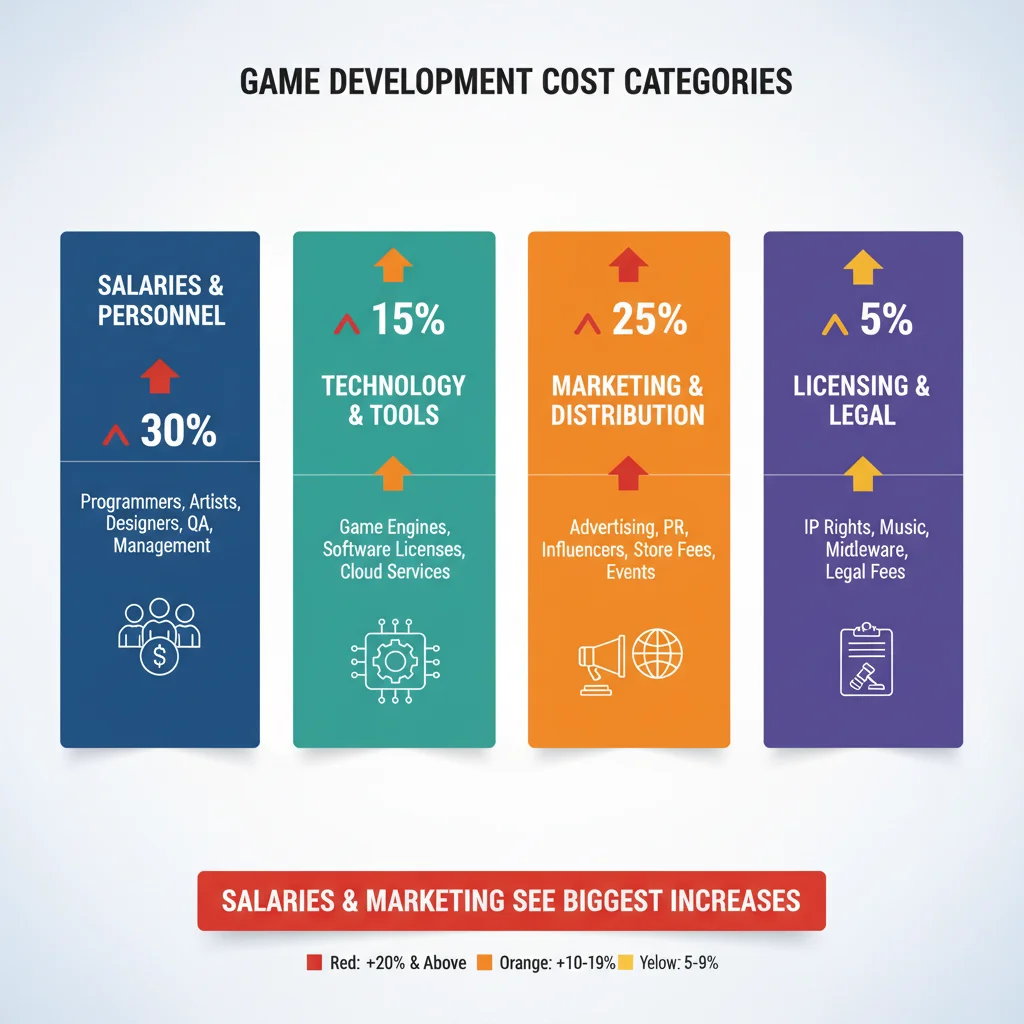
For Mid-Sized and Independent Developers
The impact on mid-sized and independent studios could be even more severe. With smaller budgets and less access to capital, a 12% increase can be prohibitive. It might force them to scale back ambitions, reduce the scope of their projects, or delay releases. Many might find it harder to secure funding from investors or publishers who are increasingly risk-averse in the face of escalating costs. This could lead to a consolidation within the industry, with smaller studios being acquired by larger entities, or a decline in the diversity of innovative, experimental titles. The barrier to entry for new studios also becomes significantly higher, stifling emergent talent and fresh ideas within the US Game Development Costs landscape.
Talent Migration and Industry Health
The rising cost of talent, while beneficial for individual developers, can also create an imbalance. Smaller studios might struggle to compete with the compensation offered by larger companies, potentially leading to a brain drain. This could concentrate talent in a few major studios, making it harder for the broader industry to thrive and innovate. Furthermore, increased pressure for higher returns on investment could lead to more crunch culture, impacting developer well-being and potentially leading to burnout and a less sustainable industry in the long run.
Innovation vs. Risk Aversion
One of the most significant long-term impacts could be a shift towards risk aversion. When US Game Development Costs are astronomical, studios are less likely to fund projects that are highly experimental or niche. The focus will naturally gravitate towards titles with a broader appeal and a higher probability of commercial success. While this ensures a steady stream of high-quality, polished experiences, it might also mean fewer truly groundbreaking or artistically daring games make it to market, potentially limiting the creative evolution of the medium.
Strategies for Mitigating Rising US Game Development Costs
Navigating this challenging financial landscape requires strategic planning, innovative approaches, and a willingness to adapt. Studios are already exploring various methods to manage and mitigate the impact of these rising costs.
Optimizing Development Pipelines and Tools
Investing in more efficient development tools and optimizing existing pipelines can yield significant savings. This includes leveraging procedural generation for environmental assets, utilizing AI-assisted art creation tools, and adopting robust project management software to streamline workflows. Automation of repetitive tasks can free up highly paid developers to focus on more complex, creative challenges. Furthermore, adopting agile methodologies can help studios adapt to changes more quickly, reducing wasted effort and resources.
Smart Talent Management and Remote Work
While talent costs are high, strategic talent management can help. This includes fostering internal growth through training programs, offering competitive but sustainable compensation, and building strong company cultures to improve retention. Embracing remote and hybrid work models can also open up access to a wider talent pool, potentially allowing studios to hire skilled individuals from regions with a lower cost of living, thereby indirectly reducing overall personnel expenses without compromising quality. Outsourcing specific tasks, such as QA, porting, or certain art assets, to specialized external teams can also be a cost-effective solution.
Leveraging Existing IP and Iterative Development
Developing sequels, remakes, or spin-offs of established intellectual properties (IPs) can be less risky than launching entirely new franchises. Existing IP comes with a built-in audience and often reusable assets, lore, and even codebases, which can help reduce initial development costs and marketing hurdles. Similarly, adopting an iterative development approach, where a core game is released and then expanded upon with live-service updates and expansions, can spread costs over a longer period and generate revenue sooner, offsetting the initial investment.
Strategic Partnerships and Co-Development
Collaborating with other studios or publishers through co-development agreements can help share the financial burden and leverage complementary expertise. This is particularly beneficial for larger, more ambitious projects where a single studio might struggle with the immense budget. Partnerships can also extend to technology sharing or joint marketing efforts, further optimizing expenditures related to US Game Development Costs.
Focusing on Core Gameplay and Scope Management
One of the most effective ways to manage costs is through disciplined scope management. Studios need to make tough decisions early on about what features are truly essential to the game’s core experience and what can be cut or deferred to post-launch updates. Prioritizing innovative gameplay mechanics over purely graphical extravagance can lead to critically acclaimed and commercially successful titles without necessarily breaking the bank. A well-defined minimum viable product (MVP) strategy can help control initial spending and allow for iterative expansion based on player feedback and revenue generation.
Alternative Funding Models
Beyond traditional publishing deals, studios are increasingly exploring alternative funding models. This includes crowdfunding (e.g., Kickstarter, Fig), early access programs, and even government grants or tax incentives specifically designed to support the creative industries. For smaller studios, securing angel investors or venture capital that specializes in gaming can provide necessary capital without the stringent requirements of larger publishers. These diversified funding streams can offer greater creative control and help manage the financial pressures associated with rising US Game Development Costs.
The Role of Technology in Cost Management
Technology, while a driver of increased costs due to its advancements, also offers potent solutions for managing them. The paradox lies in leveraging new tech intelligently to optimize workflows and reduce manual labor.
AI and Machine Learning in Development
Artificial intelligence and machine learning are rapidly becoming indispensable tools. AI can assist in procedural content generation, from creating vast landscapes and cityscapes to generating textures and even basic character models. This significantly reduces the manual effort required from artists and designers. AI can also be used for automated testing, identifying bugs more efficiently than human testers and speeding up the QA process. Furthermore, AI-driven analytics can provide deeper insights into player behavior, allowing developers to make data-driven decisions that optimize game design and monetization strategies, thereby maximizing return on investment.
Cloud Computing and Scalable Infrastructure
The adoption of cloud computing platforms (like AWS, Azure, Google Cloud) offers studios scalable infrastructure solutions. Instead of investing heavily in on-premise servers and hardware that might be underutilized during off-peak periods, studios can pay for computing resources as needed. This applies to everything from build farms and rendering servers to game hosting and data storage. Cloud collaboration tools also facilitate remote work, allowing distributed teams to work seamlessly, further reducing operational overheads associated with physical office spaces and dedicated IT infrastructure. This flexibility is crucial in managing unpredictable US Game Development Costs.
Virtual Production and Real-time Rendering
Techniques borrowed from film, such as virtual production, are finding their way into game development. Using real-time rendering engines for cinematic sequences and even pre-visualization allows for rapid iteration and creative flexibility. Directors and artists can see changes instantly, reducing the need for costly reshoots or re-renders. This iterative process, often integrated with motion capture and LED walls, can significantly cut down on post-production time and associated costs, while still achieving high-fidelity results. The ability to make decisions on the fly and see immediate visual feedback is a powerful cost-saving mechanism.
Looking Ahead: The Future of US Game Development Costs
The 12% increase in US Game Development Costs for 2026 titles is a clear indicator that the industry is at an inflection point. The trajectory of game development is one of increasing complexity, ambition, and financial investment. However, it’s also an industry characterized by incredible innovation and adaptability.
As studios grapple with these rising costs, we can expect to see several trends solidify. There will likely be a greater emphasis on efficiency, automation, and smart resource allocation. The integration of AI and cloud technologies will become more pervasive, not just as features within games, but as fundamental tools in the development process itself. Collaboration, both within studios and across the industry, will become even more critical.
The creative spirit of game development will undoubtedly continue to thrive, but the business models supporting it will need to evolve. This might mean a greater focus on games as long-term services, more diversified revenue streams, and a conscious effort to balance creative ambition with financial prudence. The challenge of managing US Game Development Costs is significant, but it also presents an opportunity for the industry to innovate in its processes, leading to a more sustainable and creatively vibrant future.
Ultimately, the resilience and ingenuity of game developers will be key. By embracing new technologies, optimizing workflows, and making strategic choices about scope and talent, the US game development industry can continue to push boundaries, deliver unparalleled interactive experiences, and navigate the complex economic tides of the coming years. The journey to 2026 will be defined by how effectively studios can adapt to these escalating costs, ensuring that the magic of game creation remains both viable and vibrant.