Navigating US Gaming Data Privacy: 2026 Compliance Challenges

Navigating US Gaming Data Privacy: 2026 Compliance Challenges for Developers
The digital realm is constantly evolving, and with it, the landscape of data privacy. For US gaming developers, the year 2026 looms large as a critical juncture, bringing with it an intricate web of compliance challenges related to gaming data privacy. The exponential growth of the gaming industry, coupled with an increasing focus on consumer rights and data protection, means that developers must proactively adapt to a stricter regulatory environment. This comprehensive guide will delve into the multifaceted aspects of data privacy in gaming, exploring the current and anticipated legal frameworks, the operational hurdles developers face, and the strategic solutions required to ensure robust compliance and maintain player trust.
The Evolving Landscape of Gaming Data Privacy in the US
For years, the gaming industry operated with a degree of leniency when it came to data collection and usage, often leveraging player data for personalization, monetization, and analytics. However, this era is rapidly drawing to a close. The United States, while lacking a single, overarching federal data privacy law akin to Europe’s GDPR, has seen a proliferation of state-level legislation that collectively creates a complex and often contradictory regulatory environment. Understanding these evolving laws is the first step towards achieving compliance in 2026 and beyond.
A Patchwork of State Regulations
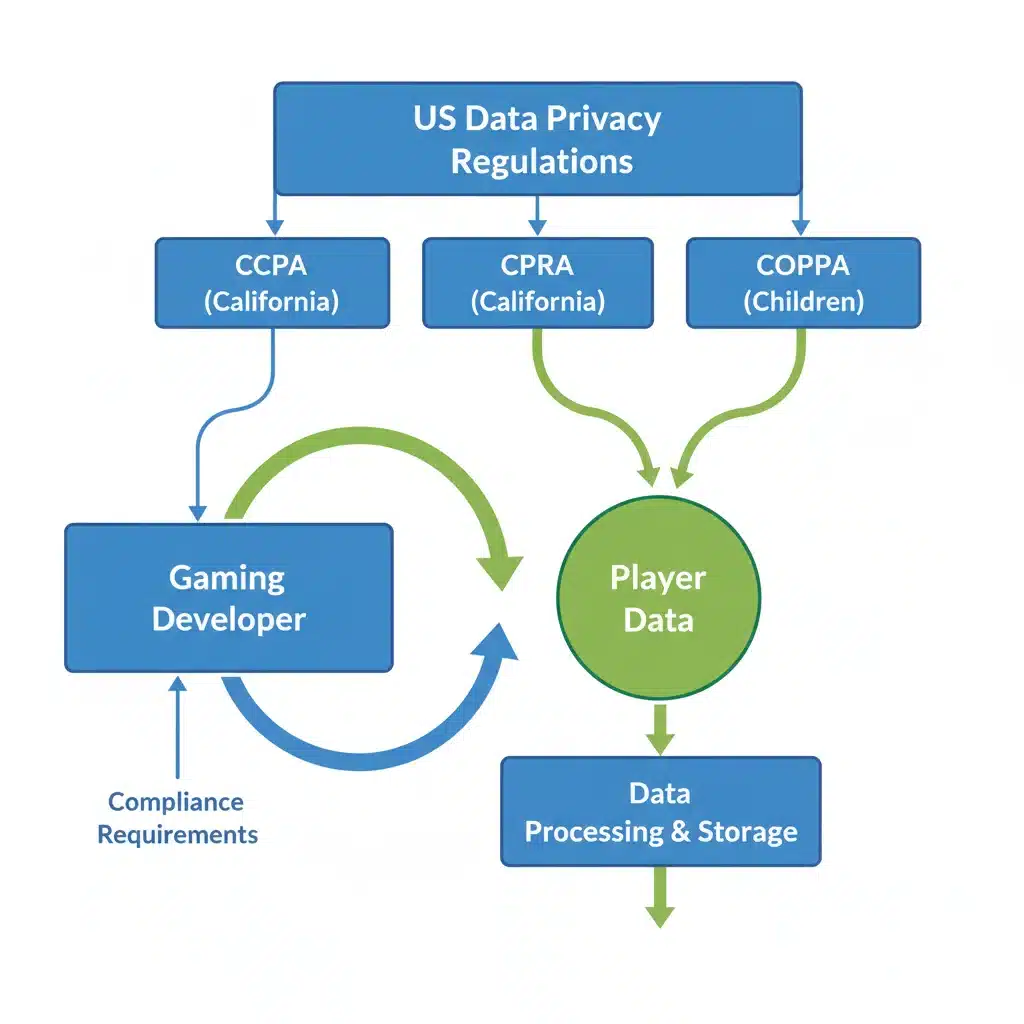
The absence of a federal data privacy law has led to a ‘patchwork’ approach, with states like California (CCPA/CPRA), Virginia (VCDPA), Colorado (CPA), Utah (UCPA), and Connecticut (CTDPA) leading the charge. Each of these laws, while sharing common principles, also possesses unique requirements regarding data collection, processing, storage, and deletion. For gaming developers operating across state lines, this means navigating a labyrinth of differing consent requirements, data subject access rights, and enforcement mechanisms. The challenge is not merely to comply with one set of rules but to develop a comprehensive framework that can accommodate the strictest interpretation across all relevant jurisdictions. This complexity is a significant hurdle for ensuring robust gaming data privacy.
Anticipated Federal Developments
While a comprehensive federal data privacy law has yet to materialize, discussions and proposals are ongoing. The American Data Privacy and Protection Act (ADPPA), though stalled, represents a significant effort to create a unified national standard. Even if a federal law isn’t enacted by 2026, the increasing pressure from consumer advocacy groups and the growing number of state laws suggest that federal intervention is increasingly likely in the near future. Developers must remain vigilant and anticipate potential shifts, as a federal law could drastically alter the compliance landscape, potentially streamlining some aspects while introducing new obligations.
Key Compliance Challenges for US Gaming Developers by 2026
The road to 2026 is paved with several critical compliance challenges that US gaming developers must address. These challenges extend beyond simply understanding the law; they require fundamental shifts in data governance, technological infrastructure, and operational practices to safeguard gaming data privacy.
1. Data Mapping and Inventory
Before any compliance efforts can begin, developers must have a clear understanding of the data they collect. This involves comprehensive data mapping and inventory – identifying what personal data is collected, where it is stored, how it is processed, who has access to it, and for what purpose. Given the dynamic nature of game development, with frequent updates, new features, and third-party integrations, maintaining an accurate and up-to-date data inventory is a continuous and resource-intensive task. Many gaming platforms collect a vast array of data, from player demographics and in-game behavior to payment information and communication logs, all of which fall under the purview of privacy regulations.
2. Consent Management
Obtaining and managing player consent is becoming increasingly stringent. Most privacy laws require explicit, informed consent for the collection and processing of personal data, especially for sensitive categories or for data sharing with third parties. This means moving beyond vague terms of service and implementing granular consent mechanisms that allow players to understand and control how their data is used. Developers must also consider the complexities of withdrawing consent and ensuring that such requests are honored promptly and effectively. The age of players also introduces additional layers of complexity, with laws like COPPA (Children’s Online Privacy Protection Act) requiring verifiable parental consent for children under 13, and some state laws extending parental consent requirements for minors up to 16 years old.
3. Data Subject Access Rights (DSARs)
Players are increasingly empowered with various data subject rights, including the right to access their data, rectify inaccuracies, request deletion (the ‘right to be forgotten’), and opt-out of certain data processing activities, particularly for targeted advertising or data sales. Fulfilling these DSARs efficiently and securely presents a significant operational challenge. Developers need robust systems and processes in place to verify requester identities, locate and retrieve all relevant data, and execute requests within specified timeframes, often 30-45 days. Failure to comply can result in substantial fines and reputational damage.
4. Third-Party Data Sharing and Vendor Management
Modern gaming often relies heavily on third-party services for analytics, advertising, customer support, and cloud infrastructure. Each of these third parties may process player data, creating a complex chain of data responsibility. Gaming developers are not only responsible for their own compliance but also for ensuring that their vendors and partners adhere to the same privacy standards. This necessitates thorough due diligence, robust data processing agreements (DPAs), and continuous monitoring of third-party practices. Any breach or non-compliance by a third party can have direct repercussions for the primary developer, highlighting the importance of stringent vendor management for gaming data privacy.
5. Data Security and Breach Notification
At the core of data privacy is data security. Developers must implement appropriate technical and organizational measures to protect player data from unauthorized access, loss, or disclosure. This includes encryption, access controls, regular security audits, and employee training. Despite best efforts, data breaches can occur. When they do, privacy laws mandate strict breach notification protocols, often requiring developers to notify affected individuals and regulatory authorities within specific timeframes. Preparing for and effectively responding to a data breach is a critical, though often overlooked, aspect of privacy compliance.
6. Cross-Border Data Transfers
While the focus here is on US regulations, many US gaming developers operate globally or have players from outside the US. This introduces the complexity of cross-border data transfers, particularly when dealing with players from regions with strong privacy laws like the GDPR. Ensuring that data transfers are lawful and adequately protected adds another layer of complexity to the overall gaming data privacy strategy.
Strategic Solutions for Proactive Compliance
Addressing these challenges requires a proactive and strategic approach. Developers cannot afford to view privacy compliance as a one-time project; it must be an ongoing commitment integrated into the very fabric of their operations and game development lifecycle.
1. Appoint a Dedicated Privacy Officer or Team
Given the complexity, it is highly advisable for gaming companies, especially those of significant size, to appoint a dedicated Privacy Officer or establish a cross-functional privacy team. This individual or team would be responsible for overseeing compliance efforts, staying abreast of regulatory changes, conducting privacy impact assessments, and serving as the primary point of contact for privacy-related inquiries and concerns. Their expertise is invaluable in navigating the nuances of gaming data privacy.
2. Implement Privacy-by-Design and Default
The principle of ‘Privacy-by-Design’ (PbD) advocates for embedding privacy considerations into the design and architecture of systems, products, and services from the outset, rather than as an afterthought. This means designing games and platforms with data minimization in mind, collecting only the data necessary for the intended purpose, and ensuring that privacy-enhancing technologies are integrated from day one. ‘Privacy by Default’ means that the strictest privacy settings should be the default for players, requiring them to actively opt-in to broader data collection or sharing.
3. Develop Robust Data Governance Policies and Procedures
Clear, well-documented data governance policies are essential. These should cover every aspect of data handling, from collection and storage to processing and deletion. Procedures for responding to DSARs, managing consent, conducting data protection impact assessments (DPIAs), and handling data breaches must be clearly defined and regularly reviewed. These policies should also be communicated effectively to all employees involved in data processing.
4. Invest in Technology and Automation
Manual compliance processes are unsustainable for large-scale operations. Investing in privacy-enhancing technologies (PETs) and automation tools can significantly streamline compliance efforts. This includes consent management platforms (CMPs), data discovery and mapping tools, and automated DSAR fulfillment solutions. These technologies can help ensure consistency, reduce human error, and free up resources for more strategic privacy initiatives, enhancing overall gaming data privacy.
5. Prioritize Employee Training and Awareness
Even the most sophisticated privacy technologies are only as effective as the people using them. Regular and comprehensive employee training on data privacy principles, company policies, and regulatory requirements is crucial. Every employee who handles personal data must understand their responsibilities and the potential consequences of non-compliance. A culture of privacy within the organization is paramount.
6. Conduct Regular Privacy Audits and Assessments
The regulatory landscape is dynamic, and internal systems can change. Regular privacy audits and assessments (e.g., DPIAs, vendor risk assessments) are necessary to identify potential vulnerabilities, assess the effectiveness of existing controls, and ensure ongoing compliance. These audits should be conducted by independent third parties or an internal team with sufficient expertise and objectivity.

The Impact of Non-Compliance: Risks and Consequences
The stakes for gaming data privacy compliance are exceptionally high. Non-compliance can lead to a cascade of negative consequences that can severely impact a developer’s financial stability, reputation, and relationship with its player base.
Financial Penalties and Fines
State data privacy laws often carry significant financial penalties. For instance, the CCPA/CPRA can impose fines of up to $2,500 per violation and $7,500 for intentional violations, with increased penalties for violations involving minors. These fines can quickly accumulate, especially for large-scale data breaches or systemic non-compliance, potentially leading to millions of dollars in penalties. These financial burdens can be crippling for smaller studios and a major setback for larger ones.
Reputational Damage and Loss of Player Trust
In the digital age, a company’s reputation is one of its most valuable assets. Data breaches or privacy violations can erode player trust overnight. Gamers, especially those who invest significant time and money into their digital personas, are increasingly aware of their data rights. A loss of trust can lead to a mass exodus of players, negative press, and a significant drop in engagement and revenue. Rebuilding a damaged reputation is a long and arduous process, often more costly than proactive compliance measures.
Legal Action and Class-Action Lawsuits
Beyond regulatory fines, non-compliance can expose developers to legal action, including individual lawsuits and class-action lawsuits brought by affected players. Several state laws, such as the CCPA, grant consumers a private right of action in the event of certain data breaches, allowing them to sue for damages. The cost of defending against such lawsuits, combined with potential settlement payouts, can be immense.
Operational Disruptions and Remediation Costs
Responding to a data breach or a significant privacy violation often involves extensive operational disruptions. This includes forensic investigations, system overhauls, enhanced security measures, and public relations efforts. The costs associated with these remediation efforts can be substantial and divert critical resources away from game development and innovation.
The Future of Gaming Data Privacy: A Call to Action
As we look towards 2026, it’s clear that gaming data privacy is no longer an optional consideration but a fundamental pillar of responsible game development. The industry’s rapid innovation must be matched by an equally robust commitment to protecting player data. Developers who embrace privacy as a core value, rather than a mere compliance burden, will be better positioned to build stronger relationships with their player base, foster loyalty, and navigate the evolving regulatory landscape with confidence.
The journey to 2026 demands a multi-faceted approach: a deep understanding of current and emerging regulations, a commitment to implementing privacy-by-design principles, robust data governance, strategic technological investments, and a culture of privacy awareness throughout the organization. By taking these steps, US gaming developers can not only avoid the pitfalls of non-compliance but also build a more secure, trustworthy, and sustainable future for the gaming industry.
Embracing Transparency and Player Empowerment
A key element of future gaming data privacy strategies will be an unwavering commitment to transparency. Developers should strive to communicate their data practices in clear, concise, and accessible language, avoiding legal jargon. Empowering players with easy-to-use tools to manage their consent, exercise their data rights, and understand how their data is used will foster trust and demonstrate a genuine respect for their privacy. This transparency can transform a compliance obligation into a competitive advantage, attracting and retaining privacy-conscious players.
Collaboration and Industry Standards
Given the unique challenges of the gaming industry, collaboration among developers, platform holders, and industry associations will be crucial. Sharing best practices, developing industry-specific privacy guidelines, and advocating for sensible and harmonized regulations can help create a more consistent and manageable compliance environment. Collective action can also help address common challenges, such as age verification and cross-platform data management, which are critical for robust gaming data privacy.
Continuous Adaptation and Monitoring
The digital landscape is in a constant state of flux, and so too are privacy regulations and technological threats. Therefore, compliance with gaming data privacy cannot be a static achievement. Developers must establish mechanisms for continuous monitoring of regulatory developments, regular review of their data practices, and ongoing adaptation of their privacy frameworks. This agile approach ensures that they remain resilient in the face of new challenges and maintain a high standard of data protection.
In conclusion, 2026 represents a significant milestone for US gaming developers in the realm of data privacy. While the challenges are substantial, the opportunities to build more secure, transparent, and player-centric gaming experiences are even greater. By prioritizing data privacy now, developers can not only safeguard against legal and financial repercussions but also cultivate a loyal player base and contribute to a more ethical and responsible gaming ecosystem. The time for proactive engagement with gaming data privacy is not tomorrow, but today.