Decoding the Latest US Gaming Regulations: What Every Gamer Needs to Know by March 2026
The world of gaming is an ever-evolving digital frontier, constantly pushing boundaries in technology, entertainment, and community building. As this industry blossoms, so too does the need for robust regulatory frameworks. For gamers across the United States, understanding these changes is not just about compliance; it’s about protecting your interests, ensuring fair play, and navigating the digital landscape responsibly. By March 2026, significant shifts in US Gaming Regulations are anticipated to come into full effect, promising to reshape various aspects of the gaming experience. This comprehensive guide aims to arm you with all the essential information, ensuring you’re not caught off guard.
Why Are US Gaming Regulations Changing Now?
The gaming industry has witnessed exponential growth over the past decade, far outstripping the pace at which regulations traditionally evolve. This rapid expansion, coupled with the increasing complexity of gaming ecosystems – from massively multiplayer online (MMO) games to esports, virtual reality (VR), and blockchain-based gaming – has created a pressing need for updated legal frameworks. The current regulatory landscape is often fragmented, with different states and federal agencies having varying degrees of oversight. This patchwork approach has led to inconsistencies and gaps, which new US Gaming Regulations aim to address.
Key drivers behind these impending changes include:
- Technological Advancements: New technologies like AI, VR, and blockchain introduce novel challenges related to data privacy, intellectual property, and fair competition.
- Consumer Protection: Concerns over loot boxes, in-game purchases, and addictive game design necessitate stronger consumer safeguards, especially for minors.
- Esports Growth: The professionalisation of esports demands regulations around integrity, anti-doping, gambling, and player welfare.
- Data Privacy: The sheer volume of personal data collected by gaming platforms requires more stringent protection measures, aligning with broader privacy trends.
- Cross-State and International Harmonisation: Efforts to create a more consistent regulatory environment across states and potentially align with international standards.
These factors collectively underscore the urgency and necessity of the regulatory overhaul, making understanding these US Gaming Regulations crucial for every participant in the gaming community.
The Core Pillars of New US Gaming Regulations by March 2026
While the specifics are still being finalised in some areas, several core pillars are emerging as central to the new US Gaming Regulations. These pillars reflect a multi-faceted approach to governing the industry, addressing various concerns from consumer rights to market integrity.
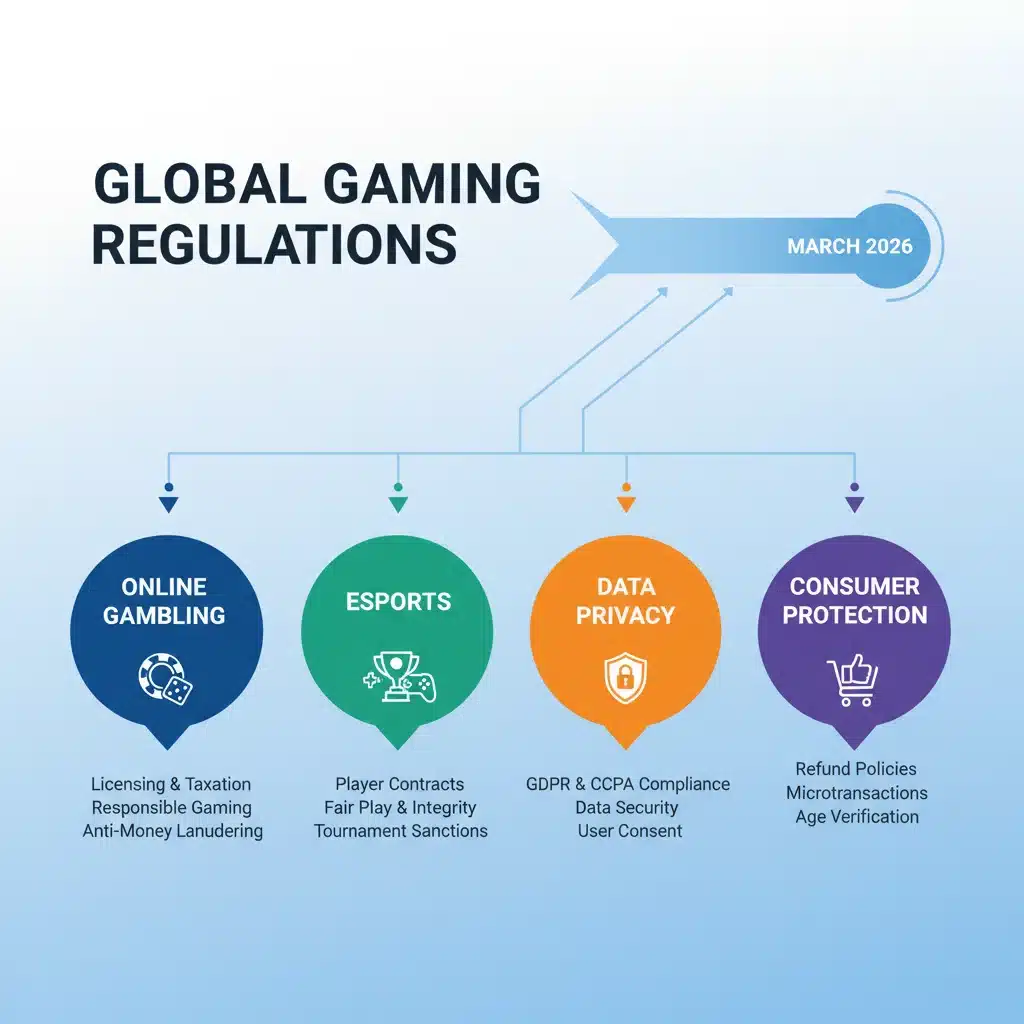
1. Enhanced Consumer Protection and Transparency
One of the most significant areas of focus is consumer protection. This includes measures aimed at increasing transparency around in-game purchases, particularly loot boxes, and addressing concerns about predatory monetisation practices. Expect stricter guidelines on:
- Loot Box Disclosures: Games featuring loot boxes will likely be required to clearly disclose the odds of receiving specific items. This move is inspired by similar regulations in other countries and aims to mitigate concerns about gambling-like mechanics.
- Age Verification and Parental Controls: Enhanced systems for age verification will be implemented, making it harder for minors to access age-restricted content or make significant in-game purchases without parental consent. Parental control options are also expected to become more robust and user-friendly.
- Refund Policies: Standardised and clearer refund policies for digital games and in-game purchases are anticipated, offering gamers better recourse in cases of faulty products or misleading advertising.
- Addiction Mitigation: Some regulations may include provisions for promoting responsible gaming habits, such as offering play-time tracking, spending limits, or self-exclusion options, particularly in games with strong monetisation features.
These changes reflect a growing recognition of the economic and psychological impact of gaming on consumers. Gamers should pay close attention to these updates, as they directly affect how you spend your money and time within digital worlds.
2. Data Privacy and Security in Gaming
In an age where data is paramount, the gaming industry handles vast amounts of personal information, from player demographics to behavioural patterns and financial details. The new US Gaming Regulations will undoubtedly strengthen data privacy and security protocols, building upon existing frameworks like the California Consumer Privacy Act (CCPA) and potentially mirroring aspects of the European Union’s General Data Protection Regulation (GDPR).
- Expanded Data Rights: Gamers can expect more explicit rights regarding their personal data, including the right to access, rectify, and delete their data held by gaming companies.
- Consent Requirements: Stricter consent mechanisms for data collection and usage will likely be introduced, requiring clear, unambiguous consent before personal data can be processed.
- Data Breach Notification: Enhanced requirements for gaming companies to notify users promptly and transparently in the event of a data breach.
- Security Standards: Mandated implementation of robust cybersecurity measures to protect player data from unauthorised access, loss, or theft.
Understanding these data privacy changes is crucial for protecting your digital identity and ensuring that your personal information is handled responsibly by game developers and publishers. Always review privacy policies and exercise your rights when available.
3. Esports Integrity and Fair Play
Esports has transformed from a niche hobby into a global phenomenon, attracting millions of viewers and significant investments. With this growth comes the need for regulations to ensure fairness, prevent fraud, and protect the integrity of competitions. The upcoming US Gaming Regulations will likely include specific provisions for esports:
- Anti-Doping Policies: Standardised drug testing protocols and penalties for performance-enhancing substance use, similar to traditional sports.
- Match-Fixing Prevention: Stricter measures to detect and prevent match-fixing, including enhanced monitoring of betting markets and severe penalties for participants involved in such activities.
- Player Welfare and Rights: Regulations addressing player contracts, working conditions, minimum age requirements for professional play, and dispute resolution mechanisms to protect esports athletes.
- Transparency in Tournament Operations: Requirements for clear rules, prize pool disclosures, and fair arbitration processes in esports tournaments.
These regulations are vital for legitimising esports as a professional sport and ensuring a level playing field for all competitors. For aspiring and professional esports players, being aware of these rules will be paramount for a successful career.
4. Regulation of Online Gambling and Real-Money Gaming
The landscape of online gambling and real-money gaming in the US is complex, with legality varying significantly by state. While federal oversight often touches on interstate commerce and financial transactions, individual states largely dictate whether online casinos, sports betting, and poker are permitted. The upcoming US Gaming Regulations by March 2026 are expected to bring greater clarity and potentially more harmonisation to this sector.
- State-Level Standardisation: While a federal blanket law is unlikely, there may be increased pressure for states to adopt more uniform regulatory practices for online gambling, particularly concerning licensing, taxation, and responsible gaming initiatives.
- Expanded Legalisation: More states might move towards legalising and regulating various forms of online gambling, driven by potential tax revenues and a desire to control an activity that often occurs illegally.
- Player Verification and Anti-Money Laundering (AML): Stricter requirements for player identity verification and robust AML protocols will be enforced to prevent fraud and illegal financial activities.
- Responsible Gaming Measures: Enhanced tools and resources for players to manage their gambling habits, including self-exclusion programs, deposit limits, and access to support services for problem gambling.
For gamers who participate in or are considering online gambling, staying informed about these state-specific and federal developments in US Gaming Regulations is absolutely essential to ensure you are playing legally and responsibly.
Impact on Game Developers and Publishers
These new US Gaming Regulations won’t just affect players; they will have a profound impact on game developers and publishers. Companies will need to adapt their development processes, business models, and operational procedures to comply with the new rules. This could involve significant investments in:
- Compliance Departments: Expanding legal and compliance teams to navigate the complex regulatory environment.
- Technology Upgrades: Implementing new age verification systems, data protection tools, and transparency features.
- Game Design Adjustments: Revisiting monetisation mechanics, especially those involving loot boxes, to align with new disclosure requirements.
- Marketing and Advertising: Adjusting promotional strategies to ensure they are compliant with new consumer protection guidelines and do not target minors inappropriately.
Ultimately, these changes aim to foster a healthier and more sustainable gaming ecosystem, but the transition period will require careful navigation from industry stakeholders.
What Gamers Can Do to Prepare for the New Regulations
As a gamer, you have a role to play in adapting to and even influencing these new US Gaming Regulations. Here’s how you can prepare:
- Stay Informed: Regularly check official sources, gaming news outlets, and legal summaries for updates. Follow reputable organisations that track gaming law and policy.
- Read Terms of Service and Privacy Policies: While often lengthy, these documents will be updated to reflect new regulations. Understanding them is key to knowing your rights and obligations.
- Utilise Available Tools: Familiarise yourself with and actively use parental controls, spending limits, and other responsible gaming features offered by platforms and games.
- Advocate for Your Interests: If you have strong opinions on certain aspects of gaming regulation, consider contacting your elected officials or joining advocacy groups that represent gamer interests.
- Practice Responsible Gaming: Regardless of regulations, always game responsibly. Be mindful of your time and spending, and seek help if you feel gaming is negatively impacting your life.
Your awareness and proactive engagement can contribute to a better, safer, and more enjoyable gaming environment for everyone.
Challenges and Opportunities Ahead
The implementation of new US Gaming Regulations by March 2026 presents both challenges and opportunities. Challenges include the potential for increased costs for developers, the complexity of enforcing regulations across state lines, and the risk of stifling innovation if rules are too restrictive. However, there are also significant opportunities:
- Increased Player Trust: Stronger regulations can build greater trust between players and the industry, leading to a more stable and engaged community.
- Market Legitimacy: For sectors like esports and online gambling, clear regulations can enhance legitimacy, attracting more mainstream investment and viewership.
- Innovation in Responsible Gaming: The push for responsible gaming can spur innovation in game design that prioritises player well-being.
- Fairer Competition: Regulations promoting fair play and transparency can create a more equitable competitive environment for all participants.
Navigating these complexities will require ongoing dialogue and collaboration between regulators, industry, and the gaming community to ensure the regulations achieve their intended goals without hindering the growth and creativity that defines the gaming world.
Looking Beyond March 2026: The Future of Gaming Regulation
The March 2026 deadline for these new US Gaming Regulations is not an endpoint, but rather a significant milestone in an ongoing process. The gaming industry will continue to innovate, and regulators will need to remain agile and responsive to new challenges and technologies. Future regulatory discussions might focus on:
- Metaverse and Web3 Gaming: As immersive virtual worlds and blockchain-based games become more prevalent, new legal questions surrounding digital ownership, virtual economies, and user-generated content will arise.
- Artificial Intelligence (AI) in Gaming: The increasing use of AI in game development, player behaviour analysis, and even in-game characters will necessitate rules around algorithmic bias, ethical AI usage, and potential impacts on fair play.
- Global Harmonisation: With gaming being a global phenomenon, there will be continued efforts to harmonise regulations internationally, making it easier for developers to launch games worldwide and for players to participate in global communities.
- Mental Health and Well-being: Further research and policy development regarding the psychological impacts of gaming, including potential benefits and risks, will likely lead to evolving recommendations and regulations.
The journey of gaming regulation is dynamic, reflecting the fast-paced nature of the industry itself. Staying informed and engaged will ensure that you, as a gamer, are an active participant in shaping the future of this incredible medium.
Conclusion: Empowering Gamers Through Knowledge
The upcoming changes in US Gaming Regulations by March 2026 represent a critical juncture for the industry. From enhanced consumer protections and stringent data privacy measures to robust esports integrity frameworks and clearer online gambling guidelines, these regulations are designed to create a more secure, fair, and transparent gaming environment for everyone. While the specifics may seem daunting, understanding these shifts is empowering. It allows you to protect your interests, make informed decisions, and contribute to a healthier gaming community.
By staying informed, exercising your rights, and advocating for responsible practices, you can help shape a future where gaming continues to thrive as a source of entertainment, competition, and community, all while operating within a clear and equitable legal framework. Don’t wait until March 2026; start preparing and understanding these vital regulations today.