
Navigating the Labyrinth: How US Data Privacy Laws in 2026 Will Reshape the Game Publishing Landscape
The digital realm is constantly evolving, and with it, the intricate web of regulations governing how personal data is collected, processed, and shared. For the vibrant and ever-innovating game publishing industry, this evolution is not merely a background hum but a critical factor shaping future strategies and operations. As we look towards 2026, the landscape of US data privacy laws is poised to undergo significant transformations, presenting both formidable challenges and unique opportunities for game publishers.
Understanding and adapting to these impending changes is not just about avoiding penalties; it’s about building trust with players, fostering innovation responsibly, and securing a sustainable future in a privacy-conscious world. This comprehensive guide will delve into the anticipated shifts in US data privacy laws, dissect their potential impact on game publishers, and offer strategic insights for navigating this complex regulatory environment effectively.
The Evolving Regulatory Horizon: A Look at US Data Privacy Laws in 2026
While the European Union’s General Data Protection Regulation (GDPR) set a global benchmark for data privacy, the United States has adopted a more fragmented, state-by-state approach. However, this fragmented landscape is rapidly consolidating and maturing. By 2026, we anticipate several key developments:
- Expansion of State-Level Laws: Beyond the pioneering California Consumer Privacy Act (CCPA) and its successor, the California Privacy Rights Act (CPRA), a growing number of states have enacted or are in the process of enacting their own comprehensive data privacy laws. States like Virginia (VCDPA), Colorado (CPA), Utah (UCPA), and Connecticut (CTDPA) have already laid the groundwork, and this trend is expected to continue, leading to a patchwork of regulations that game publishers must meticulously navigate.
- Increased Enforcement and Fines: As these laws mature, so too will their enforcement mechanisms. State attorneys general and dedicated privacy enforcement agencies are likely to become more proactive, leading to increased scrutiny and potentially significant fines for non-compliance. The penalties associated with breaching these US data privacy laws can be substantial, impacting a publisher’s financial health and reputation.
- Focus on Specific Data Types: There will likely be a heightened focus on sensitive personal data, including biometric data, precise geolocation data, and health information, even if indirectly collected through gaming activities (e.g., fitness-tracking games). Children’s online privacy will also remain a critical area, building upon existing frameworks like COPPA (Children’s Online Privacy Protection Act).
- Emergence of Federal Privacy Legislation (Potential): While a comprehensive federal privacy law has remained elusive, the increasing complexity of state-level regulations might spur renewed efforts for a unified national standard. Even if a full federal law isn’t enacted by 2026, discussions and proposed frameworks will heavily influence the state-level legislative agenda and the broader regulatory discourse around US data privacy laws.
- Interoperability and Cross-Border Data Flows: With a global player base, game publishers often deal with cross-border data transfers. The interplay between US state laws, potential federal laws, and international regulations (like GDPR) will become more complex, requiring robust data transfer agreements and compliance strategies.
Direct Impact on Game Publishers: Key Areas of Concern
The evolving US data privacy laws will touch virtually every aspect of a game publisher’s operations. Here are the key areas where the impact will be most keenly felt:
1. Data Collection and Consent Mechanisms
Publishers will need to re-evaluate their data collection practices. The era of implicit consent is fading. Players will demand more transparency and granular control over their data. This means:
- Clearer Privacy Policies: Privacy policies must be easy to understand, accessible, and explicitly state what data is collected, why it’s collected, how it’s used, and with whom it’s shared. Jargon-filled legalise will no longer suffice.
- Opt-in vs. Opt-out: For certain types of data processing, particularly for targeted advertising or sharing with third parties, opt-in consent will become the standard, moving away from pre-checked boxes or difficult-to-find opt-out options.
- Age Verification and COPPA Compliance: For games popular with minors, robust age verification mechanisms and strict adherence to COPPA (and potentially new state-level children’s privacy laws) will be paramount. This impacts everything from account creation to in-game chat and social features.
- Granular Consent: Players may need to consent to different types of data processing separately. For example, consenting to gameplay data collection might be separate from consenting to data sharing for personalized ads.
2. Player Rights and Data Access
New US data privacy laws empower individuals with specific rights concerning their personal data. Game publishers must be equipped to handle these requests efficiently:
- Right to Know: Players can request to know what personal data a publisher holds about them, the categories of sources from which it was collected, the business purpose for collecting it, and the categories of third parties with whom it has been shared.
- Right to Delete: Players can request the deletion of their personal data. This can be particularly challenging for game publishers, as player data is often intertwined with game progression, achievements, and social interactions. Careful consideration will be needed to balance deletion requests with gameplay integrity and other legal obligations.
- Right to Correct/Rectify: Players can request corrections to inaccurate personal data.
- Right to Opt-Out of Sale/Sharing: Many US data privacy laws grant consumers the right to opt out of the sale or sharing of their personal information for cross-context behavioral advertising. This will directly impact revenue models relying heavily on targeted advertising.
- Non-Discrimination: Publishers cannot discriminate against players who exercise their privacy rights (e.g., by offering different service levels or prices).
3. Data Security and Breach Notification
Robust data security measures are a cornerstone of data privacy laws. Publishers are expected to implement reasonable security practices to protect personal data from unauthorized access, use, disclosure, alteration, or destruction.
- Enhanced Security Protocols: This includes encryption, access controls, regular security audits, and employee training.
- Prompt Breach Notification: In the event of a data breach, publishers will face strict timelines and requirements for notifying affected players and regulatory authorities. The reputational damage and financial penalties from mishandling a breach can be severe.
4. Third-Party Data Sharing and Vendor Management
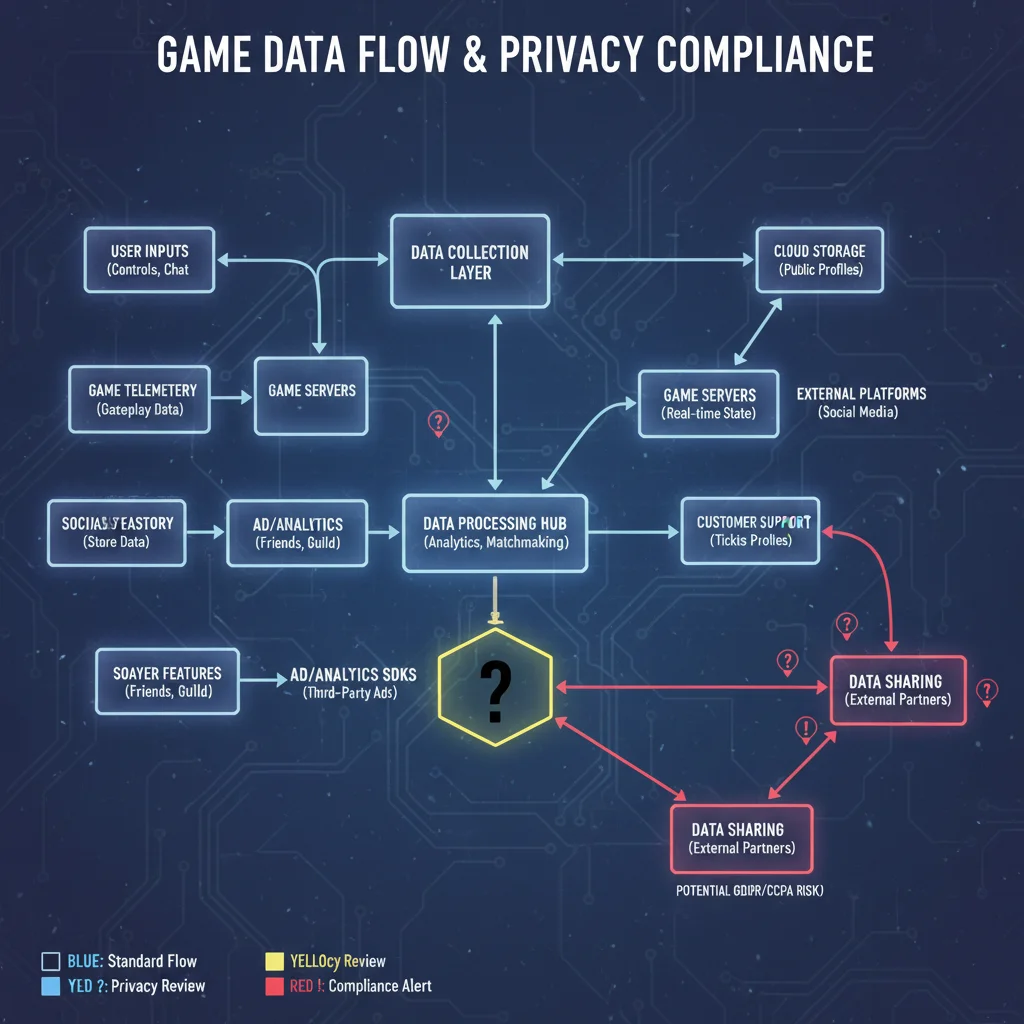
Game publishers rarely operate in a vacuum. They often rely on a network of third-party vendors for analytics, advertising, customer support, cloud hosting, and more. Each of these vendors represents a potential point of data vulnerability and regulatory non-compliance.
- Due Diligence: Publishers must conduct thorough due diligence on all third-party vendors to ensure they meet the required data privacy and security standards.
- Data Processing Agreements (DPAs): Robust DPAs will become indispensable, clearly outlining responsibilities, data handling practices, and liabilities between the publisher and its vendors.
- Flow-Down Clauses: Publishers may need to ensure that their third-party contracts include flow-down clauses, obligating vendors to comply with the same privacy standards as the publisher.
Strategic Adjustments for Game Publishers
To thrive amidst the evolving US data privacy laws, game publishers must adopt proactive and comprehensive strategies. This is not a one-time fix but an ongoing commitment to privacy-centric operations.
1. Implement Privacy by Design and by Default
Integrating privacy considerations into every stage of game development, from concept to launch and ongoing operations, is crucial. This means:
- Data Minimisation: Collect only the data that is absolutely necessary for the game’s functionality and stated purposes.
- Pseudonymisation/Anonymisation: Where possible, pseudonymise or anonymise data to reduce the risk associated with identifiable personal information.
- Default Privacy Settings: Design games and services with the highest privacy settings as the default, allowing players to opt-in to less private configurations if they choose.
- Regular Privacy Impact Assessments (PIAs): Conduct PIAs for new features, games, or data processing activities to identify and mitigate privacy risks.
2. Re-evaluate Monetization Strategies and Ad Tech
Many free-to-play and mobile games rely heavily on ad revenue generated from player data. The right to opt-out of data sale/sharing will necessitate a re-evaluation of these models:
- Contextual Advertising: Explore more privacy-friendly advertising models, such as contextual advertising, which relies on the content of the game rather than individual player profiles.
- Subscription Models and Premium Content: Diversify revenue streams by emphasizing subscription services, battle passes, and premium in-game content that are less reliant on granular player data.
- First-Party Data Focus: Leverage first-party data (data collected directly from players with their consent) more effectively for personalization and engagement, reducing reliance on third-party data brokers.
- Consent Management Platforms (CMPs): Implement robust CMPs to manage player consents and preferences efficiently, ensuring compliance with opt-out requests.
3. Invest in Data Governance and Internal Training
Compliance with US data privacy laws requires a holistic approach that extends beyond legal departments. It involves every employee who handles player data.
- Data Inventory and Mapping: Develop a comprehensive understanding of all personal data collected, where it’s stored, how it’s processed, and who has access to it.
- Designated Privacy Officer/Team: Consider appointing a dedicated privacy officer or establishing a privacy team to oversee compliance efforts.
- Employee Training: Provide regular, mandatory training for all employees on data privacy best practices, company policies, and the implications of US data privacy laws.
- Incident Response Plan: Develop and regularly test a robust data breach incident response plan.
4. Enhance Transparency and Player Communication
Open and honest communication with players about data practices builds trust and can mitigate potential issues.
- Simplified Privacy Notices: Alongside detailed privacy policies, offer simplified, layered privacy notices that quickly convey key information to players.
- In-Game Privacy Settings: Provide easily accessible and understandable in-game privacy dashboards where players can manage their preferences, review collected data, and exercise their rights.
- Proactive Communication: Inform players about changes to privacy policies or data practices in a timely and transparent manner.

Challenges and Opportunities Ahead
The road to full compliance with evolving US data privacy laws is not without its challenges:
- Complexity of State Laws: The sheer volume and variations across state laws create a compliance headache, often requiring publishers to adhere to the strictest common denominator or implement state-specific solutions.
- Cost of Compliance: Implementing new systems, hiring privacy experts, and conducting audits can be a significant financial burden, especially for smaller studios.
- Balancing Personalization with Privacy: Players often enjoy personalized experiences, but striking the right balance between customization and privacy protection will be an ongoing challenge.
- Technological Evolution: As new technologies emerge (e.g., VR/AR, metaverse platforms), they will introduce new data collection points and privacy considerations that regulators will eventually address.
However, these challenges also present significant opportunities:
- Building Player Trust: Publishers who prioritize privacy can differentiate themselves, building a stronger brand reputation and fostering deeper trust with their player base.
- Competitive Advantage: Early and effective compliance can become a competitive advantage, attracting privacy-conscious players and partners.
- Innovation in Monetization: The need to move beyond traditional ad-based models can spur innovation in how games are monetized, leading to more creative and player-friendly revenue streams.
- Streamlined Data Management: A robust data governance framework, while initially challenging, ultimately leads to more efficient and secure data management practices across the organization.
The Future of Gaming and Data Privacy
By 2026, US data privacy laws will have undeniably transformed the operational landscape for game publishers. The shift will be towards greater transparency, enhanced player control, and a more responsible approach to data handling. Publishers who embrace these changes not as burdens but as fundamental aspects of good business practice will be best positioned for long-term success.
This means fostering a culture of privacy throughout the organization, from developers designing new game features to marketing teams crafting campaigns. It involves continuous monitoring of legislative developments, adapting internal policies, and investing in the right technological solutions. The future of gaming is intertwined with the future of data privacy, and those who lead with privacy will lead the industry.
Preparing for 2026: A Checklist for Game Publishers
To ensure your studio is ready for the evolving US data privacy laws, consider the following action items:
- Conduct a Data Audit: Identify all personal data collected, processed, and stored. Understand its source, purpose, and retention period.
- Review and Update Privacy Policies: Ensure they are clear, comprehensive, and compliant with all applicable state laws. Make them easily accessible.
- Strengthen Consent Mechanisms: Implement granular, opt-in consent for non-essential data processing and advertising.
- Develop Player Rights Request Procedures: Establish clear, efficient processes for handling requests to know, delete, correct, and opt-out.
- Assess Third-Party Vendor Agreements: Review all contracts with data processors and ensure robust Data Processing Agreements (DPAs) are in place.
- Enhance Data Security: Implement and regularly review strong security measures, including encryption, access controls, and incident response plans.
- Provide Employee Training: Educate all relevant staff on data privacy principles and compliance requirements.
- Monitor Legislative Developments: Stay informed about new state laws and potential federal legislation.
- Implement Privacy by Design Principles: Integrate privacy considerations from the outset of game development and feature design.
- Explore Alternative Monetization: Diversify revenue streams to reduce reliance on data-intensive advertising models.
Conclusion: A Privacy-First Future for Gaming
The regulatory trajectory for US data privacy laws points towards a future where player data is handled with greater care, transparency, and respect. For game publishers, this isn’t just about compliance; it’s about embracing a privacy-first mindset that can differentiate their offerings, build enduring player relationships, and foster sustainable growth. By proactively addressing these changes, anticipating future trends, and integrating privacy into the core of their operations, game publishers can not only mitigate risks but also unlock new avenues for innovation and success in the dynamic world of interactive entertainment.
The journey to 2026 will undoubtedly present its challenges, but with strategic foresight and a commitment to ethical data practices, the game publishing industry can emerge stronger, more trustworthy, and more resilient than ever before.