The Future of Gaming Audio: Exploring 3D Sound Technologies in the US Market by 2026

The Future of Gaming Audio: Exploring 3D Sound Technologies in the US Market by 2026
The landscape of interactive entertainment is constantly evolving, and at the heart of this evolution lies an often-underestimated element: audio. While stunning graphics have long captivated gamers, the true immersion often hinges on what we hear. As we hurtle towards 2026, the US gaming market is poised for a revolution in sound, driven by sophisticated 3D gaming audio technologies. This comprehensive guide delves into the cutting-edge innovations, emerging trends, and anticipated impact of spatial sound on the gaming experience.
Gone are the days when simple stereo sound sufficed. Modern gamers demand more: the ability to pinpoint an enemy’s footsteps above them, distinguish the rustle of leaves from a distant gunshot, or feel the rumble of an explosion reverberating through their very core. This is where 3D gaming audio steps in, promising not just sound, but a truly three-dimensional auditory world. This article will explore the core concepts, current implementations, and the exciting future of this transformative technology.
What is 3D Gaming Audio and Why Does It Matter?
At its core, 3D gaming audio, often referred to as spatial audio or immersive audio, aims to replicate how we perceive sound in the real world. In reality, sound doesn’t just come from left or right; it comes from all directions – above, below, in front, and behind. Our brains constantly process subtle cues from our ears and head movements to construct a detailed mental map of our sonic environment. Traditional stereo audio, with its two channels, can only offer a limited left-right panorama. Surround sound systems, while an improvement, still rely on discrete speakers placed around the listener, often leading to ‘gaps’ in the soundfield.
3D gaming audio technologies, however, go beyond this. They use advanced algorithms to simulate how sound waves would interact with our head, ears, and torso before reaching our eardrums. This creates the illusion of sound originating from specific points in three-dimensional space, providing unparalleled positional accuracy and environmental realism. For gamers, this isn’t just a luxury; it’s a game-changer. Imagine playing a first-person shooter where you can accurately determine the direction and distance of an approaching opponent based solely on their footsteps, or experiencing the full atmospheric dread of a horror game with sounds creeping from every corner of the virtual world. This enhanced situational awareness and immersion directly translate into a more engaging, competitive, and believable gaming experience.
The Science Behind Spatial Sound: HRTF and Object-Based Audio
The magic of 3D gaming audio largely hinges on two primary concepts: Head-Related Transfer Functions (HRTF) and object-based audio. Understanding these is key to appreciating the depth of this technology.
Head-Related Transfer Functions (HRTF)
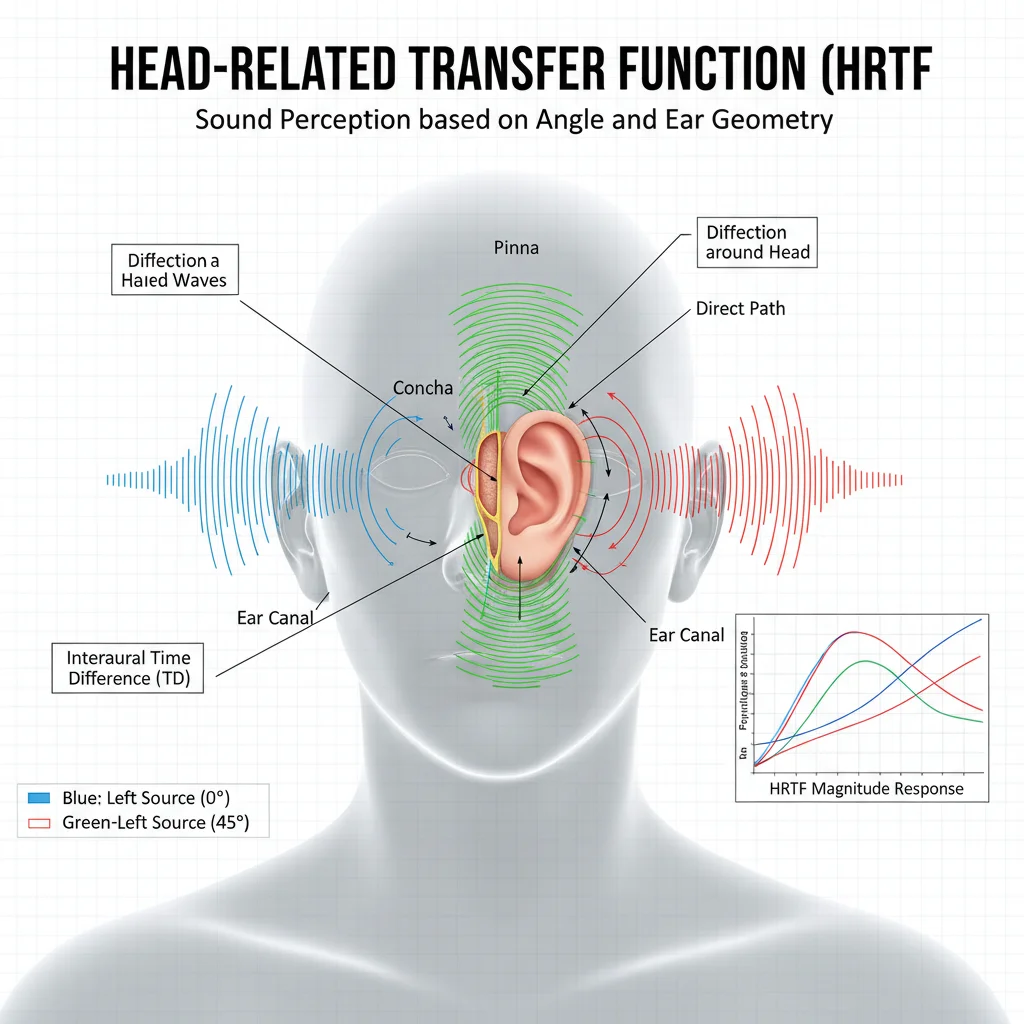
Our unique ear and head shapes subtly alter the sound waves that reach our eardrums. An HRTF is a mathematical representation of how an individual’s head and outer ear (pinna) filter sound from a point in space to the eardrum. Essentially, it’s a unique sonic fingerprint that allows our brain to localize sound sources. 3D gaming audio systems leverage generalized HRTFs (or sometimes personalized ones) to process audio signals, applying these filters to create the perception that sound is coming from a specific direction and distance, even when listening through just two headphones. This is particularly effective for headphone-based spatial audio, which is dominant in the gaming market due to its accessibility and personal nature.
Object-Based Audio
Traditional audio formats are channel-based; a sound is mixed into a specific channel (e.g., left front, right rear). Object-based audio, on the other hand, treats individual sounds (e.g., a gunshot, a character’s voice, a helicopter) as ‘objects’ with associated metadata, including their position in 3D space, their size, and their acoustic properties. The audio engine then renders these objects in real-time, taking into account the listener’s position and orientation within the virtual environment. This dynamic rendering allows for incredibly precise and fluid sound placement, adapting seamlessly as the player moves. Technologies like Dolby Atmos and DTS:X are prime examples of object-based audio in action, moving beyond fixed channels to create truly dynamic and immersive soundscapes in 3D gaming audio.
Current Implementations of 3D Gaming Audio in the US Market
The US market is already seeing a significant push towards better 3D gaming audio. Major players in both hardware and software are investing heavily in this area, recognizing its potential to elevate the gaming experience.
Console-Specific Solutions
- PlayStation 5 (Tempest 3D AudioTech): Sony has made 3D audio a cornerstone of the PS5 experience. Their custom-built Tempest 3D AudioTech engine is designed to process hundreds of sound sources simultaneously, delivering highly accurate positional audio through any stereo headphones. This proprietary solution aims to provide a consistent and high-quality 3D gaming audio experience across all PS5 titles that leverage it.
- Xbox Series X|S (Dolby Atmos & DTS:X for Headphones): Microsoft’s consoles support industry-standard spatial audio formats like Dolby Atmos for Headphones and DTS Headphone:X. These technologies allow developers to integrate object-based audio into their games, which is then rendered spatially through any compatible stereo headset. This open approach provides flexibility and broad compatibility for gamers.
PC Gaming: A Diverse Ecosystem
PC gaming has long been at the forefront of audio innovation, and 3D gaming audio is no exception. A variety of solutions are available:
- Software Solutions: Many third-party software applications, like Windows Sonic for Headphones (built into Windows 10/11), Dolby Atmos for Headphones, DTS Sound Unbound (DTS Headphone:X), and Razer THX Spatial Audio, offer virtual surround sound processing that can convert traditional multi-channel audio into a 3D soundscape for stereo headphones. While not always as precise as native object-based audio, these solutions offer an accessible entry point into immersive sound.
- Gaming Headsets with Built-in DSP: Numerous gaming headsets now come with their own dedicated Digital Signal Processors (DSPs) and software suites that provide virtual 3D gaming audio. Brands like SteelSeries, Astro, HyperX, and Sennheiser (now EPOS) offer products designed to enhance spatial awareness.
- Dedicated Sound Cards: While less common than in the past, high-end sound cards from companies like Creative Labs still offer advanced audio processing, including spatial audio algorithms, which can benefit discerning PC gamers.
Virtual Reality (VR) and Augmented Reality (AR)
For VR and AR, 3D gaming audio is not just an enhancement; it’s fundamental. The visual immersion of VR is incomplete without equally convincing spatial audio. Accurately localized sound cues are crucial for presence, navigation, and even preventing motion sickness in virtual environments. As VR and AR continue to grow in the US market, the demand for sophisticated, low-latency spatial audio solutions will only intensify.
Emerging Trends and Technologies by 2026
The rapid pace of technological advancement means that by 2026, 3D gaming audio will have evolved even further. Several key trends are expected to dominate the US market.
Personalized HRTFs
As mentioned, HRTFs are unique to each individual. While generalized HRTFs work well, personalized HRTFs promise an even more accurate and convincing spatial audio experience. By 2026, we can expect more accessible methods for generating personalized HRTFs, perhaps through smartphone apps that scan ear shapes or through AI-driven calibration processes. This will lead to a truly bespoke 3D gaming audio experience for every player.
Ray Tracing for Audio (Acoustic Ray Tracing)
Just as ray tracing has revolutionized graphics by simulating light, acoustic ray tracing is set to do the same for audio. This technology simulates how sound waves bounce, absorb, and diffract off surfaces in a virtual environment in real-time. Imagine hearing an enemy’s footsteps echo differently in a cavernous hall compared to a cramped corridor, or sound being muffled as it passes through a thin wall. This level of environmental realism will add an unprecedented layer of authenticity to 3D gaming audio, making virtual worlds feel even more alive.
Haptics and Multimodal Immersion
Beyond just sound, the future of immersion lies in multimodal experiences. Haptic feedback, which provides tactile sensations, is becoming increasingly sophisticated. By 2026, integrated systems that combine advanced 3D gaming audio with precise haptic feedback (e.g., a controller vibrating in sync with an in-game explosion’s direction and intensity) will create truly visceral experiences. This synergy will blur the lines between the digital and physical worlds.

Advanced Headset Technology
Gaming headsets will continue to evolve. We can expect:
- Integrated Processing: More headsets will feature powerful on-board DSPs capable of handling complex spatial audio algorithms independently of the console or PC, reducing latency and offloading processing power.
- Open-Back Designs for Spatial Audio: While closed-back headphones offer isolation, open-back designs can sometimes provide a more natural soundstage, which can be beneficial for spatial audio. We might see innovations that combine the best of both worlds.
- Wireless Fidelity: Improvements in wireless transmission technologies will ensure that high-fidelity, low-latency 3D gaming audio can be delivered wirelessly without compromise.
- Bone Conduction and Directional Audio: While niche, technologies like bone conduction could see further integration, offering alternative ways to deliver audio cues, potentially enhancing awareness without blocking external sounds entirely. Directional audio, which can beam sound to specific points in space, could also find applications in future gaming setups.
Challenges and Opportunities in the US Market
While the future of 3D gaming audio is bright, several challenges and opportunities exist in the US market.
Content Adoption
The most significant challenge is ensuring widespread adoption by game developers. While console manufacturers are pushing their proprietary solutions, PC developers have a more fragmented landscape. The industry needs standardized tools and middleware that make it easier for developers to implement high-quality spatial audio without significant overhead. By 2026, we should see more games natively supporting advanced 3D gaming audio formats, rather than relying solely on virtualisation software.
Consumer Education
Many gamers are still unaware of the transformative potential of 3D gaming audio. Educating consumers about the benefits, how to set it up, and what hardware to look for will be crucial for market growth. Demonstrations at gaming conventions and clear marketing from hardware manufacturers will play a vital role.
Affordability and Accessibility
While high-end spatial audio solutions can be expensive, the market needs to offer more affordable options to drive mass adoption. Built-in solutions like Windows Sonic and console-specific technologies are steps in the right direction. By 2026, we can expect a broader range of price points for quality 3D gaming audio hardware and software.
Competitive Advantage
For competitive gamers, 3D gaming audio offers a distinct advantage. The ability to precisely locate enemies can mean the difference between victory and defeat. This ‘pay-to-win’ perception can be a double-edged sword, driving adoption among serious players but potentially creating a barrier for casual gamers if not implemented equitably. The opportunity lies in making these advantages accessible to all, through well-optimised audio design in games and affordable, effective hardware.
The Impact on Game Design
The advancements in 3D gaming audio will profoundly impact game design. Developers will have a richer palette to work with, allowing for:
- Enhanced Storytelling: Audio cues can be used to subtly guide players, build tension, or reveal hidden lore in more sophisticated ways.
- More Realistic Environments: The sound of rain hitting different surfaces, the distant calls of wildlife, or the specific acoustics of a room can make virtual worlds feel incredibly real and immersive.
- Improved Gameplay Mechanics: Sound can become a core gameplay mechanic, where listening carefully is as important as visual input for puzzle-solving, stealth, or combat.
- Accessibility: For players with visual impairments, sophisticated 3D gaming audio can provide crucial navigational and informational cues, making games more accessible.
Conclusion: A Sonic Revolution Awaits
The future of gaming audio in the US market by 2026 is undoubtedly 3D. From personalized HRTFs and acoustic ray tracing to advanced haptics and ever-improving headset technology, the trajectory is clear: a deeper, more immersive, and more competitive gaming experience powered by spatial sound. As these technologies mature and become more widely adopted, gamers can look forward to not just playing games, but truly inhabiting their virtual worlds, one perfectly placed sound at a time. The sonic revolution is here, and it’s set to redefine what it means to be immersed in a game.
Embrace the future of sound; your ears (and your K/D ratio) will thank you.