AI in Game Development: 4 Key Trends Transforming US Studios by Mid-2026

The landscape of game development is undergoing a seismic shift, driven by the relentless march of artificial intelligence. What was once the realm of science fiction is now becoming an indispensable tool for US game studios, revolutionising every facet of game creation from conceptualisation to player engagement. By mid-2026, the integration of AI will not just be an advantage but a fundamental necessity for studios aiming to stay competitive and deliver groundbreaking experiences. This article delves deep into the four most impactful AI game development trends that are poised to redefine the industry, offering a glimpse into a future where games are more immersive, dynamic, and personalised than ever before.
The evolution of AI in gaming is not merely about creating more sophisticated enemies or smarter pathfinding algorithms. It encompasses a broader spectrum of applications, from automating mundane tasks to fostering unparalleled creative freedom. US studios, often at the forefront of technological adoption, are heavily investing in AI research and development, recognising its potential to unlock new paradigms in game design and production. This exploration will cover procedural content generation, intelligent NPCs, AI-powered testing and optimisation, and personalised player experiences, highlighting how these AI game development trends are shaping the future of interactive entertainment.
The Dawn of Dynamic Worlds: Procedural Content Generation (PCG) with AI
One of the most transformative AI game development trends is the advanced application of Procedural Content Generation (PCG). While PCG has been around for decades, AI is elevating it to an entirely new level, enabling the creation of vast, intricate, and believable worlds with unprecedented efficiency. US studios are leveraging AI-driven PCG to generate everything from sprawling landscapes and complex cityscapes to unique quests, character backstories, and even musical scores. This capability significantly reduces the manual labour involved in world-building, allowing developers to focus on refining core gameplay mechanics and narrative design.
Traditional PCG often resulted in repetitive or aesthetically uninspired environments. However, AI algorithms, particularly those based on machine learning and deep learning, can learn from existing data sets – be it real-world geographical data, architectural styles, or successful game level designs – to generate content that is not only diverse but also adheres to specific artistic and gameplay parameters. This means games can offer an almost infinite array of unique experiences, ensuring that no two playthroughs are exactly alike. For example, an AI could generate a forest biome that feels organically grown, complete with varied flora, realistic terrain, and hidden pathways, all while maintaining a consistent art style and difficulty curve.
The impact of this trend extends beyond just environmental generation. AI-powered PCG can also dynamically adapt content based on player actions and preferences. Imagine a game where the next quest is not pre-scripted but generated on the fly, tailored to your character’s strengths, your in-game decisions, and even your playstyle. This level of dynamic content creation promises to keep players engaged for much longer, offering a fresh experience every time they dive into the game. US studios are particularly keen on this as it addresses the ever-increasing demand for replayability and rich, evolving game worlds.
Furthermore, AI-driven PCG is a powerful tool for rapid prototyping. Developers can quickly generate multiple iterations of levels, assets, or scenarios, allowing for faster experimentation and iteration in the design phase. This agile approach to development can significantly cut down production times and costs, making ambitious projects more feasible. The ability to quickly test and refine procedurally generated content ensures that the quality remains high, even with the increased volume of content. This blend of efficiency and creative potential makes AI-powered PCG a cornerstone of future game development strategies in the US.
Beyond Scripts: The Rise of Intelligent Non-Player Characters (NPCs)
Another profound AI game development trend is the evolution of Non-Player Characters (NPCs) from predictable, script-bound entities to genuinely intelligent and adaptive agents. The goal is to create NPCs that can learn, adapt, and react in ways that mimic human behaviour, making interactions more believable, challenging, and emotionally resonant. US studios are pushing the boundaries here, utilising advanced AI techniques like reinforcement learning and behavioural trees to craft NPCs that can surprise players and contribute meaningfully to the game world.
Intelligent NPCs are no longer limited to following pre-defined paths or executing simple combat routines. They can now dynamically assess situations, make strategic decisions, and even exhibit emergent behaviours. In a combat scenario, an AI-driven enemy might learn your preferred tactics and adapt its strategy in real-time, creating a more challenging and engaging encounter. Outside of combat, NPCs can engage in more complex social interactions, remembering past conversations, developing relationships with the player, and influencing the game world based on their own motivations and knowledge.
Imagine a game where a shopkeeper remembers your previous purchases and offers personalised recommendations, or a quest-giver who reacts differently based on your reputation within the game world. These are not distant dreams but increasingly tangible realities thanks to advancements in AI. The ability of NPCs to form dynamic relationships with players and other in-game characters adds a layer of depth and realism that was previously unattainable. This contributes significantly to the immersion factor, making players feel like they are truly part of a living, breathing world rather than just interacting with pre-programmed automatons.
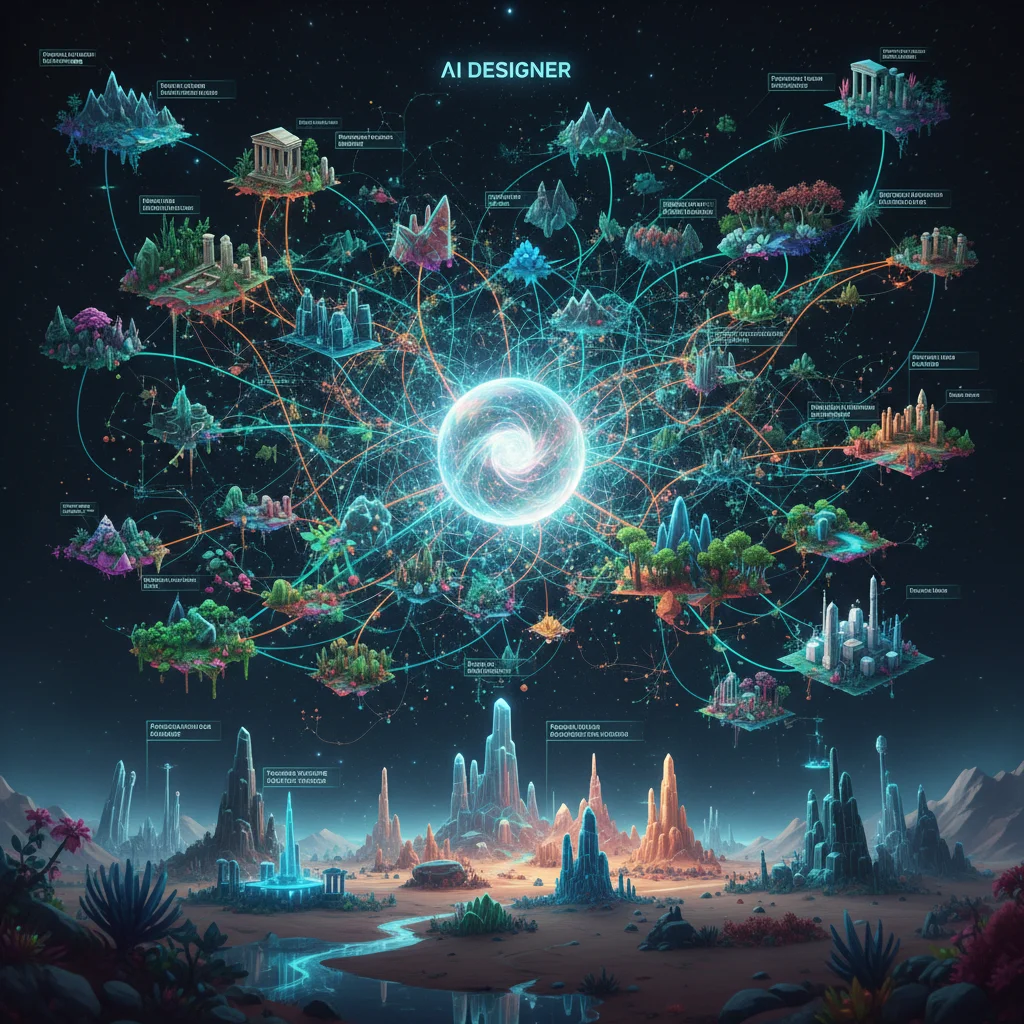
Furthermore, intelligent NPCs can enhance narrative possibilities. Instead of rigid storylines, games can feature branching narratives that evolve based on NPC decisions and player interactions. This creates a more organic and unpredictable story, where every playthrough can feel unique. US game studios are exploring how AI can facilitate more complex NPC ecosystems, where characters interact with each other independently of the player, creating a sense of a world that exists and functions even when the player isn’t directly observing it. This level of autonomy for NPCs is set to transform how stories are told and experienced in games.
Flawless Gameplay: AI-Powered Testing and Optimisation
The third crucial AI game development trend is the application of AI in game testing and optimisation. Developing complex modern games involves an enormous amount of testing to identify bugs, balance gameplay, and ensure performance across various platforms. This process is traditionally labour-intensive and prone to human error. AI is stepping in to automate and significantly improve these critical development stages, leading to more stable and polished game releases.
AI-driven testing agents can play through games tirelessly, identifying glitches, exploits, and performance bottlenecks that might be missed by human testers. These agents can be programmed to explore every nook and cranny of a game, perform repetitive actions to trigger rare bugs, and even learn to play the game effectively to test difficulty curves and balance. By simulating millions of play sessions, AI can provide invaluable data and insights, allowing developers to address issues much earlier in the development cycle, saving time and resources.
Beyond bug detection, AI is also proving invaluable in game balancing. Machine learning algorithms can analyse vast amounts of gameplay data to identify overpowered abilities, underutilised mechanics, or frustrating difficulty spikes. This data-driven approach allows developers to make informed adjustments, ensuring a fairer and more enjoyable experience for players. For instance, an AI could simulate thousands of battles in a strategy game, determining the optimal balance for units and abilities, or identify patterns in player frustration with a particular level design.
Moreover, AI is being used for performance optimisation. Algorithms can analyse game code and asset usage to identify inefficiencies and suggest improvements, leading to smoother frame rates and reduced loading times. This is particularly important for games released on multiple platforms with varying hardware capabilities. AI can help tailor optimisation strategies for each platform, ensuring a consistent and high-quality experience for all players. US studios are heavily investing in these AI tools to streamline their QA processes and deliver games that meet the highest standards of quality.
Tailored Experiences: Personalised Player Journeys with AI
The fourth, and perhaps most exciting, AI game development trend is the ability to create deeply personalised player experiences. As games become more complex and player bases more diverse, a one-size-fits-all approach is no longer sufficient. AI is enabling games to adapt to individual player preferences, playstyles, and even emotional states, offering a truly bespoke journey for every user.
AI algorithms can analyse player behaviour – from movement patterns and combat choices to dialogue options and exploration habits – to build a detailed profile of each individual. This profile can then be used to dynamically adjust various aspects of the game. For example, a game might increase or decrease difficulty in real-time based on a player’s performance, ensuring they are always challenged but never overwhelmed. It could also suggest side quests or activities that align with a player’s interests, whether they prefer combat, exploration, or social interaction.
Beyond gameplay adjustments, AI can also personalise the narrative. Imagine a story that subtly shifts its focus or introduces new characters based on your moral choices or the relationships you’ve cultivated. This level of dynamic storytelling makes players feel truly seen and heard by the game, fostering a deeper emotional connection to the experience. US studios are exploring how AI can generate adaptive dialogue, character arcs, and even entire plotlines that resonate specifically with an individual player’s journey.

The application of AI in user interface (UI) and user experience (UX) design is also gaining traction. AI can learn a player’s preferred control schemes, display layouts, and even visual aesthetics, then automatically adjust the game’s interface to match. This reduces friction and makes games more accessible and enjoyable for a wider audience. The ultimate goal is to create games that feel intuitively designed specifically for you, enhancing engagement and long-term retention. This focus on player-centric design, powered by AI, is a significant driver for innovation in US game development.
Challenges and Ethical Considerations in AI Game Development
While the promise of AI game development trends is immense, it’s crucial to acknowledge the challenges and ethical considerations that accompany this technological revolution. The complexity of implementing advanced AI requires significant technical expertise and computational resources, which can be a barrier for smaller studios. There’s also the risk of ‘over-automating’ creativity, potentially leading to games that feel soulless or lack the unique artistic vision that human developers bring.
Ethical concerns also loom large. As AI creates more realistic and adaptive NPCs, questions arise about their agency and the player’s responsibility towards them. The potential for AI to learn and exploit player vulnerabilities for engagement or monetisation purposes also needs careful consideration. Data privacy is another critical aspect; as AI collects more data on player behaviour to personalise experiences, studios must ensure transparent and secure handling of this sensitive information.
US studios are increasingly focusing on ‘human-in-the-loop’ AI development, where AI acts as a powerful assistant rather than a replacement for human creativity. This approach ensures that developers maintain artistic control and ethical oversight, using AI to augment their capabilities rather than diminish them. Striking this balance will be key to harnessing the full potential of AI without sacrificing the human element that makes games so compelling.
The development of robust AI governance frameworks and best practices within the gaming industry will also be vital. This includes establishing clear guidelines for AI behaviour, ensuring fairness in algorithms, and prioritising player well-being. As AI becomes more sophisticated, these ethical discussions will become increasingly important in shaping the future of AI game development trends.
The Future is Now: Embracing AI in US Game Studios
By mid-2026, the AI game development trends discussed – advanced procedural content generation, intelligent NPCs, AI-powered testing and optimisation, and personalised player experiences – will be firmly established as standard practices within leading US game studios. These innovations are not just incremental improvements; they represent a fundamental shift in how games are conceived, created, and consumed. Studios that embrace these trends will be at the forefront of delivering the next generation of interactive entertainment, offering unparalleled immersion, replayability, and emotional depth.
The journey towards an AI-augmented future in gaming is not without its complexities. It demands continuous learning, adaptation, and a commitment to ethical development. However, the potential rewards – more efficient development cycles, richer game worlds, and deeply engaging player experiences – are too significant to ignore. As AI continues to evolve, its role in game development will only expand, pushing the boundaries of what is possible and ushering in a golden age for the gaming industry.
US game studios, with their history of innovation and technological leadership, are uniquely positioned to lead this charge. By strategically integrating AI into their workflows and design philosophies, they can continue to captivate global audiences and set new benchmarks for creativity and technical excellence. The future of gaming is intelligent, adaptive, and personal, and AI is the key to unlocking its full potential.
From democratising content creation to crafting narratives that resonate on a deeply personal level, AI is reshaping the very fabric of game design. Developers are becoming less bogged down by repetitive tasks and more empowered to unleash their creative visions, supported by intelligent systems that handle the heavy lifting. This synergy between human ingenuity and artificial intelligence promises a future where games are not just played, but truly lived.
The competitive edge in the coming years will undoubtedly belong to those studios that master the art of integrating AI seamlessly and ethically into their pipelines. This means investing not just in the technology itself, but also in the talent and understanding required to wield it effectively. The transformative power of these AI game development trends is undeniable, and their full impact is only just beginning to unfold.