Gaming Accessibility 2026: Innovations for Inclusive Play

The landscape of video games has always been one of evolution, pushing the boundaries of technology and storytelling. However, for a significant portion of the global population, the joy of gaming has been historically hampered by barriers related to physical, cognitive, or sensory disabilities. Fast forward to 2026, and we are witnessing a remarkable transformation. Gaming accessibility is no longer an afterthought but a fundamental pillar of game design and development. This shift isn’t just about compliance; it’s about unlocking new markets, fostering creativity, and truly embodying the spirit of play for everyone. As we look ahead, four key innovations stand out, promising to make gaming more inclusive than ever before.
The journey towards truly inclusive gaming has been a long and arduous one, marked by the tireless efforts of advocates, developers, and, most importantly, players themselves. For decades, many games were designed with an ‘average’ player in mind, inadvertently excluding millions. Simple actions like pressing multiple buttons simultaneously, distinguishing subtle visual cues, or reacting quickly to on-screen prompts could become insurmountable obstacles for individuals with various disabilities. The conversation began to shift in the late 2010s and early 2020s, with a growing recognition that accessibility wasn’t just a niche concern but a vital aspect of ethical and successful game development.
Developers started to incorporate basic accessibility features, such as remappable controls, colourblind modes, and adjustable text sizes. While these were positive steps, they often felt like add-ons rather than integral parts of the game’s core design. The real breakthrough came with the understanding that accessibility needed to be considered from the very inception of a game, woven into its fabric rather than patched on at the end. This paradigm shift has led to a surge in innovative solutions, driven by advancements in artificial intelligence, hardware design, and a deeper empathy within the gaming community.
By 2026, the cumulative effect of these developments is palpable. The industry is embracing a future where ‘everyone can play’ is not just a slogan but a tangible reality. This article will delve into four specific innovations that are at the forefront of this revolution, demonstrating how they are breaking down barriers and opening up the magical worlds of video games to a broader, more diverse audience than ever imagined. These are not just incremental improvements; they are transformative changes that redefine what it means to be a gamer in the 21st century.
1. AI-Powered Dynamic Difficulty and Adaptive Gameplay
One of the most significant hurdles for many players with disabilities is the fixed difficulty often found in traditional games. A game designed for average reaction times or cognitive processing speeds can be utterly inaccessible for someone with motor impairments, cognitive differences, or slower processing. In 2026, Artificial Intelligence (AI) is at the forefront of revolutionising this aspect through dynamic difficulty adjustment and adaptive gameplay systems, making Gaming Accessibility Innovations a reality for all.
The Evolution of Dynamic Difficulty
Historically, dynamic difficulty was a crude system, often simply buffing or debuffing enemies based on player performance. The new generation of AI-powered systems goes far beyond this. These advanced algorithms observe a player’s interaction patterns, not just their success rate. They analyse input speed, accuracy, decision-making processes, and even emotional responses (where biometric data is available and consented to). This allows the AI to build a nuanced profile of the player’s unique abilities and challenges.
Personalised Gameplay Experiences
With this detailed profile, the AI can dynamically adjust various game parameters in real-time. This isn’t just about making enemies weaker. It can involve:
- Pacing Adjustments: Slowing down combat sequences, extending puzzle timers, or reducing the frequency of quick-time events.
- Input Simplification: Mapping complex multi-button combos to single presses, or providing alternative input methods for specific actions.
- Cognitive Load Management: Reducing the number of simultaneous objectives, providing clearer visual or auditory cues, or offering guided solutions for complex puzzles.
- Environmental Adaptation: Modifying environmental hazards, increasing visibility in dark areas, or highlighting interactive elements more prominently.
- Narrative Branching: In some narrative-driven games, the AI can even subtly alter story branches to accommodate a player’s preferred pace or interaction style, ensuring they can experience the full narrative without hitting insurmountable skill walls.
This level of personalisation ensures that each player experiences the game at a level that is challenging yet achievable, removing the frustration that often comes with inaccessible difficulty curves. It transforms the game from a rigid set of rules into a flexible, responsive world that adapts to the player, rather than forcing the player to adapt to it. This is a monumental step forward for Gaming Accessibility Innovations.
2. Advanced Modular and Haptic Feedback Controllers
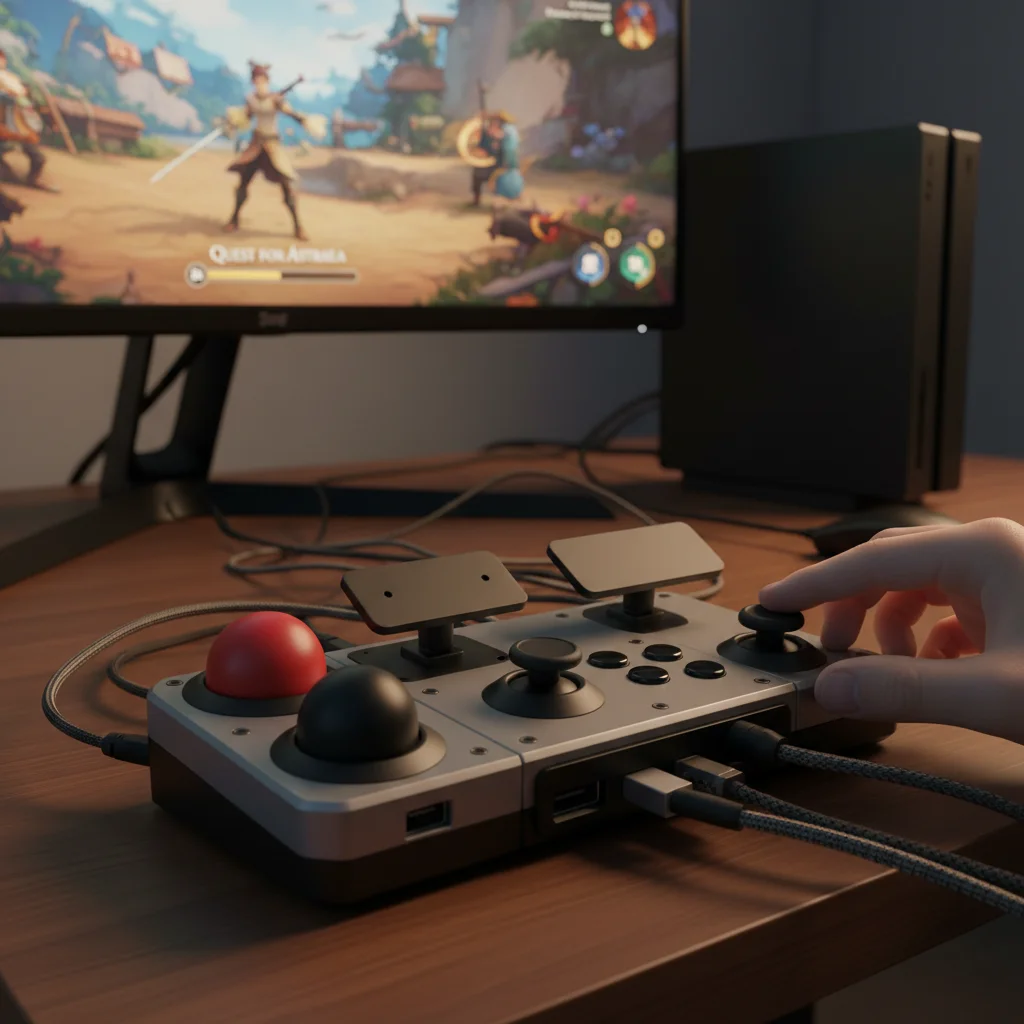
Physical input remains a primary interaction method for video games, and for many, traditional controllers present significant barriers. By 2026, the evolution of adaptive controllers has moved beyond bespoke, expensive solutions to a more standardised, modular, and haptic-rich ecosystem. These Gaming Accessibility Innovations are fundamentally changing how players interact with games.
The Rise of Modular Design
The concept of a ‘one-size-fits-all’ controller is obsolete. Modern adaptive controllers are built on a modular design principle, allowing players to customise every aspect of their input device. This includes:
- Swappable Components: Joysticks of varying sizes and resistance, buttons with different tactile feedback and activation forces, and even customisable trigger lengths.
- Configurable Layouts: Magnetic or clip-on systems allow players to arrange buttons, sticks, and pads in configurations that best suit their range of motion, grip strength, or preferred hand.
- Multi-Input Integration: Seamless integration with eye-tracking devices, sip-and-puff controls, foot pedals, and voice commands, allowing players to mix and match input methods for optimal control.
- 3D-Printable Customisation: Open-source schematics and readily available 3D printing services enable players or support organisations to create highly personalised grips, button caps, and mounts, tailoring the controller to individual anatomical needs.
Revolutionary Haptic Feedback
Beyond physical input, haptic feedback has become a crucial element of accessibility. While basic rumble features have been around for years, 2026 sees the widespread adoption of high-fidelity haptics that provide nuanced, directional, and contextual feedback. This is particularly beneficial for:
- Visually Impaired Players: Haptic cues can replace or augment visual information, indicating enemy proximity, direction of attacks, environmental hazards, or the location of interactive objects. A subtle vibration in the left side of the controller might signify an enemy approaching from that direction, while a strong, specific pulse could indicate a hidden item nearby.
- Hearing Impaired Players: Critical audio cues, such as footsteps, dialogue prompts, or environmental sounds, can be translated into distinct haptic patterns, ensuring players don’t miss vital information.
- Players with Cognitive Differences: Haptic feedback can provide clear, unambiguous feedback for actions, reinforcing successful inputs and guiding players through complex sequences without relying solely on visual or auditory processing.
The combination of modular design and advanced haptics ensures that the physical act of playing a game is as comfortable, intuitive, and informative as possible for every individual. This is a profound step in Gaming Accessibility Innovations.
3. AI-Driven Audio Description and Visual-to-Audio Translation
For players with visual impairments, the richness of modern game worlds can be largely inaccessible. While screen readers have existed, their integration into complex, dynamic game environments has been challenging. In 2026, AI is bridging this gap with sophisticated audio description and visual-to-audio translation systems, marking a significant stride in Gaming Accessibility Innovations.
Contextual Audio Description
Gone are the days of generic, pre-recorded audio descriptions. AI-powered systems now provide real-time, context-aware audio descriptions of the game world. This includes:
- Dynamic Environment Narration: As a player moves through a game world, the AI narrates key environmental features, describing landscapes, buildings, and interactive elements. For instance, ‘You are entering a dense forest, tall oak trees surround you, a faint path leads north.’
- Character and Object Identification: The AI can identify characters, enemies, and objects within the player’s vicinity, providing their names, states (e.g., ‘enemy is hostile,’ ‘NPC is talking’), and relevant attributes.
- Event-Based Narration: Crucial in-game events, such as boss entrances, puzzle activations, or critical story moments, are described audibly, ensuring visually impaired players are fully immersed in the unfolding narrative and action.
- Customisable Verbosity: Players can adjust the level of detail in the audio descriptions, from concise summaries to highly detailed accounts, catering to individual preferences and cognitive load.
Visual-to-Audio Translation for Gameplay Cues
Beyond narration, AI is performing real-time visual-to-audio translation for critical gameplay cues:
- Threat Indicators: Visual cues like an enemy’s attack wind-up, a projectile’s trajectory, or an environmental hazard (e.g., a laser grid) are translated into distinct, spatialised audio alerts. A rising pitch might indicate an incoming attack, while a pulsating sound could warn of an approaching trap.
- Interactive Element Prompts: ‘Press X to open door’ visual prompts are not just read aloud but often accompanied by a unique audio signature, helping players quickly identify interactive points.
- Navigation Assistance: AI can generate auditory pathways or ‘beacons’ that guide players towards objectives, crucial items, or exits, using spatial audio to indicate direction and distance.
- Facial Expression and Body Language Interpretation: In dialogue-heavy games, advanced AI can even interpret the facial expressions and body language of non-player characters (NPCs) and translate these into subtle auditory cues or descriptive narration, adding a layer of social context that would otherwise be missed.
These systems leverage sophisticated object recognition, natural language processing, and spatial audio technologies to create an auditory experience that is as rich and informative as the visual one, truly opening up game worlds for visually impaired players. This is a monumental leap in Gaming Accessibility Innovations.
4. Brain-Computer Interfaces (BCIs) and Gaze-Tracking for Enhanced Control
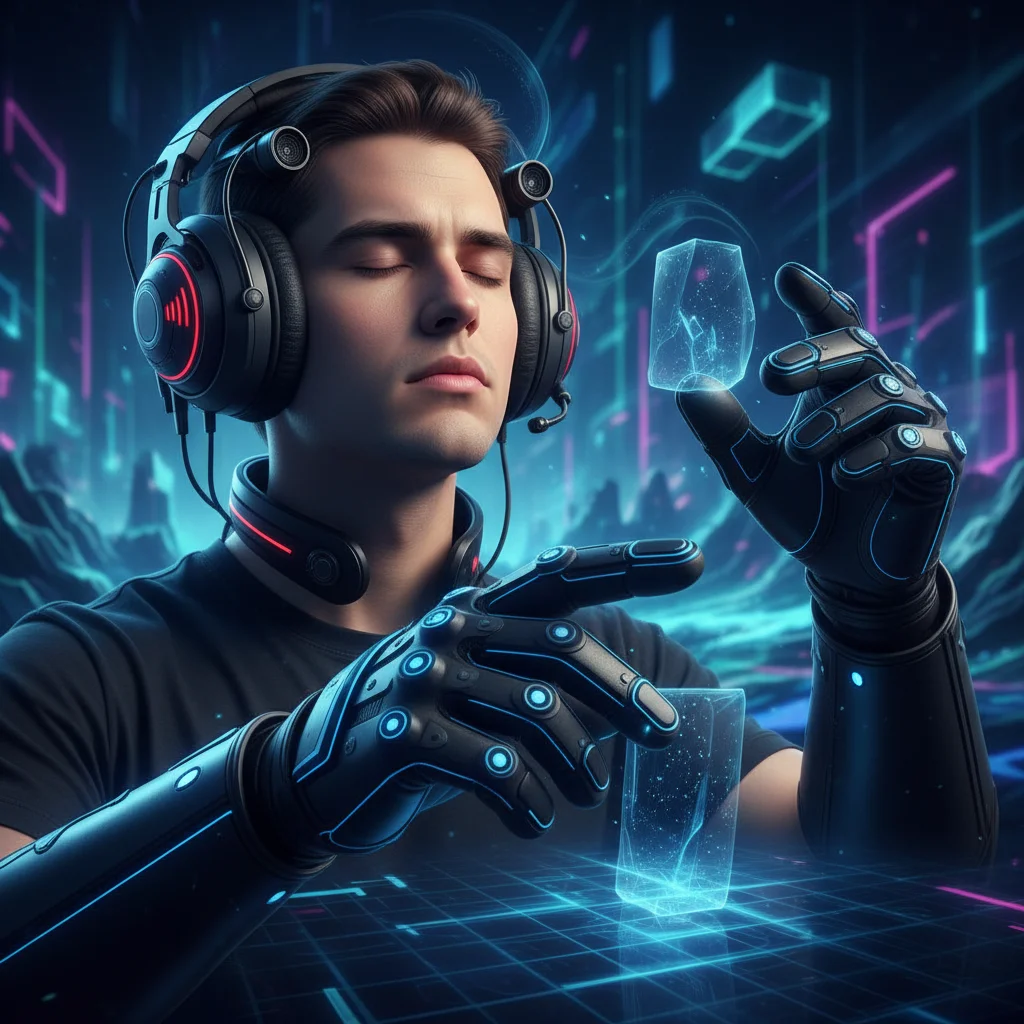
Perhaps the most futuristic and transformative of the Gaming Accessibility Innovations emerging by 2026 are the advancements in Brain-Computer Interfaces (BCIs) and highly refined gaze-tracking technologies. These innovations offer unprecedented levels of control for players with severe motor impairments, allowing them to engage with games using only their thoughts or eye movements.
Non-Invasive BCIs for Gaming
While invasive BCIs have shown promise in medical applications, non-invasive BCIs (e.g., EEG-based headsets) are becoming increasingly sophisticated and practical for gaming. By 2026, these devices can:
- Basic Command Input: Players can issue basic commands like ‘move forward,’ ‘select item,’ or ‘fire weapon’ by concentrating on specific thought patterns, which the BCI translates into in-game actions.
- Menu Navigation: Navigating complex menus and inventory screens can be done through focused thought, significantly reducing the need for physical input devices.
- Emotional State Detection: Beyond direct commands, some BCIs can detect emotional states like frustration or excitement, which can feed into the AI-powered dynamic difficulty systems mentioned earlier, further personalising the experience.
- Training and Calibration: Modern BCIs feature intuitive calibration processes, often guided by AI, that adapt to the unique neural patterns of each individual, making them more reliable and easier to use than previous generations.
The learning curve for BCIs is still present, but the potential for truly hands-free, thought-driven gameplay is immense, offering a level of agency previously impossible for many players.
Precision Gaze-Tracking
Gaze-tracking technology has also matured significantly. While previously used for simple cursor control, the 2026 iteration offers:
- High-Precision Aiming and Interaction: Players can accurately aim weapons, interact with specific environmental objects, and navigate complex interfaces simply by looking. Advanced algorithms compensate for involuntary eye movements, ensuring smooth and precise control.
- Contextual Eye-Based Commands: Beyond simple gaze, specific eye movements (e.g., a quick double-blink, a sustained stare, or a glance at a particular screen region) can be assigned to different actions, allowing for a broader range of commands without the need for physical input.
- Dynamic UI Adaptation: Game UIs can dynamically adapt to gaze patterns, highlighting interactive elements where the player is looking, or automatically bringing up relevant information panels.
- Integration with Other Inputs: Gaze-tracking can be seamlessly combined with voice commands, limited physical inputs, or BCIs to create a hybrid control scheme that maximises a player’s remaining abilities.
Together, BCIs and gaze-tracking represent the pinnacle of assistive technology in gaming, offering profound independence and immersive experiences for those with the most severe physical limitations. These are truly game-changing Gaming Accessibility Innovations.
The Broader Impact: Beyond Individual Players
The widespread adoption of these Gaming Accessibility Innovations in 2026 has far-reaching implications that extend beyond individual players with disabilities. It is fostering a more inclusive and innovative gaming ecosystem for everyone.
Driving Innovation for All
Many accessibility features, once developed for a specific disability, often find broader applications that benefit all players. For example:
- Customisable Controls: While crucial for motor impairments, the ability to remap any button or adjust sensitivity benefits all players seeking a more comfortable or efficient control scheme.
- Clearer UI/UX: Features like enhanced visual cues or simplified cognitive load, initially designed for cognitive differences, lead to better, less cluttered, and more intuitive user interfaces for everyone.
- Advanced Haptics: While vital for sensory impairments, high-fidelity haptics enhance immersion and feedback for all players, making games feel more responsive and engaging.
- AI-Powered Adaptability: Dynamic difficulty, while a game-changer for accessibility, also allows games to cater to players of varying skill levels, from casual newcomers to seasoned veterans, without requiring manual difficulty selection.
This ‘curb-cut effect’ demonstrates that designing for the margins often improves the experience for the mainstream, proving that Gaming Accessibility Innovations are beneficial for the entire gaming community.
Shaping Game Development Paradigms
The emphasis on accessibility is also fundamentally changing how games are developed. ‘Inclusive design’ is becoming a core principle from the very first concept stage. This means:
- Early Integration: Accessibility considerations are no longer relegated to the end of the development cycle but are built into game engines, design documents, and testing protocols from the outset.
- Diverse Development Teams: Studios are increasingly hiring accessibility specialists and consultants, including gamers with disabilities, to provide authentic insights and ensure features are genuinely effective.
- Standardisation Efforts: Industry bodies and console manufacturers are working towards more unified accessibility standards and guidelines, making it easier for developers to implement features consistently across platforms.
Expanding the Gaming Market
From a business perspective, embracing accessibility makes clear economic sense. By removing barriers, game developers are tapping into a vast, underserved market of players with disabilities and their allies. This expansion leads to increased sales, broader community engagement, and a more vibrant, diverse player base. The return on investment for Gaming Accessibility Innovations is not just social but also financial.
Challenges and the Road Ahead
While the progress by 2026 is phenomenal, challenges remain. The cost of implementing advanced accessibility features can still be a barrier for smaller independent studios. The rapid pace of technological change means continuous adaptation and updates are necessary. Furthermore, ensuring that accessibility features are truly effective and not just token gestures requires ongoing research, user testing, and a deep, empathetic understanding of diverse player needs.
The ethical implications of technologies like BCIs also require careful consideration, particularly regarding data privacy and user consent. As these technologies become more prevalent, robust frameworks will be needed to ensure responsible development and deployment.
Conclusion: A More Inclusive Gaming Future
The year 2026 marks a pivotal moment in the history of video games, defined by groundbreaking Gaming Accessibility Innovations. AI-powered dynamic difficulty, advanced modular and haptic controllers, AI-driven audio description, and sophisticated BCIs and gaze-tracking technologies are collectively transforming the gaming landscape. They are dismantling barriers, fostering true inclusivity, and ensuring that the joy, challenge, and camaraderie of video games are available to everyone, regardless of their physical, cognitive, or sensory abilities.
This isn’t just about making games ‘playable’ for more people; it’s about creating deeply engaging, personalised, and empowering experiences that celebrate the diversity of the human spirit. As we move further into this accessible future, the gaming world will undoubtedly become richer, more creative, and more connected than ever before. The innovations of 2026 are not merely features; they are a testament to a growing understanding that the greatest games are those that welcome all players to the adventure.