Nintendo Switch 2 Rumours: What US Gamers Can Expect from Potential Hardware Upgrades in 2026
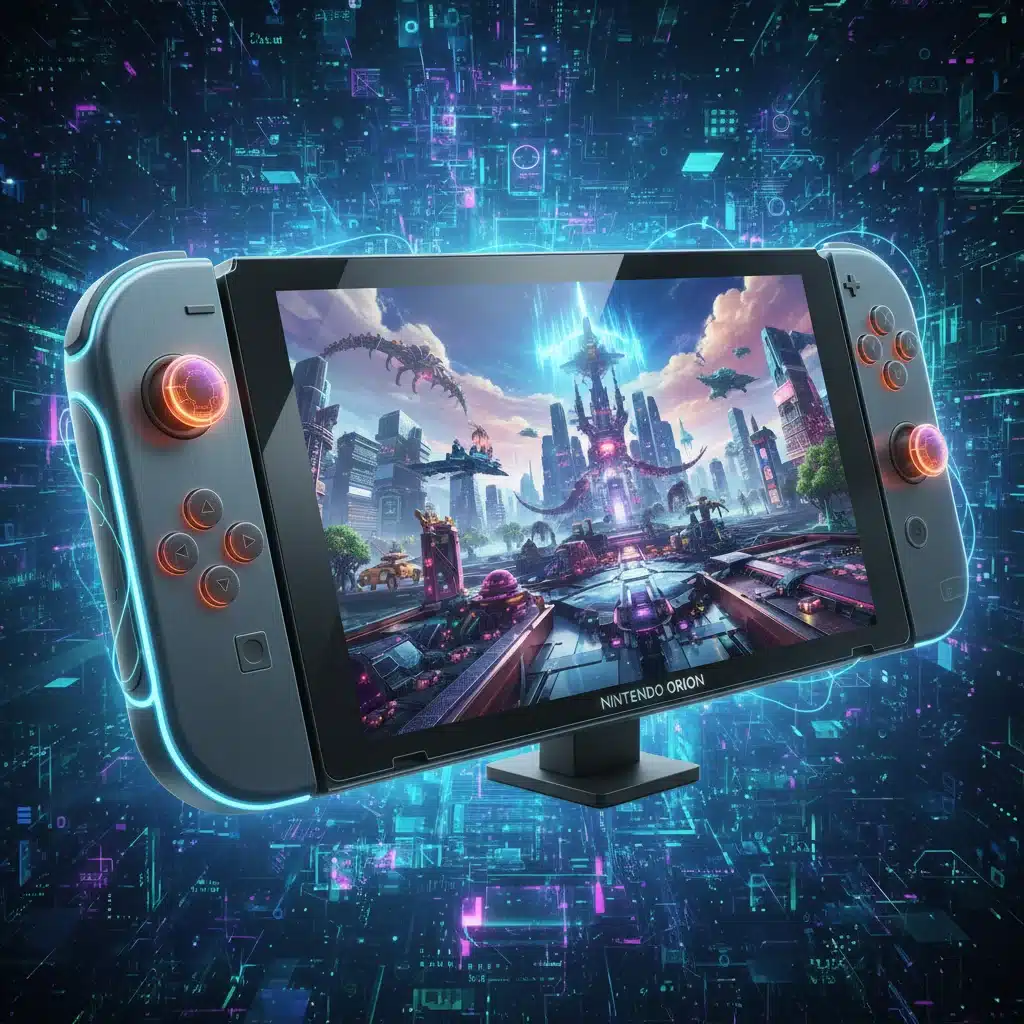
Nintendo Switch 2 Rumours: What US Gamers Can Expect from Potential Hardware Upgrades in 2026
The gaming world is abuzz with speculation, whispers, and outright fervent discussions surrounding the inevitable successor to Nintendo’s incredibly successful hybrid console. The Nintendo Switch 2, or whatever official moniker it eventually receives, is arguably the most anticipated piece of gaming hardware on the horizon. For US gamers, the prospect of a new Nintendo console brings with it a mix of excitement for innovation and curiosity about how it will stack up against the competition. While Nintendo remains tight-lipped, the rumour mill is churning out a steady stream of potential features, release windows, and hardware upgrades that could define the next generation of handheld and home console gaming. This comprehensive article delves into the most credible rumours, dissecting what these mean for performance, gameplay, and the overall experience for gamers across the United States, with a particular focus on a potential 2026 launch.
The original Nintendo Switch, launched in 2017, revolutionised how many people play games, offering unparalleled versatility with its ability to transition seamlessly between a home console and a portable device. Its success was undeniable, but as technology marches forward, so too do the expectations of consumers. Modern gamers, especially those accustomed to the graphical fidelity and processing power of PlayStation 5 and Xbox Series X, are eager to see how Nintendo will bridge the performance gap while retaining its unique identity. The conversation around the Nintendo Switch 2 isn’t just about raw power; it’s about how that power will be leveraged to create new, innovative experiences that only Nintendo can deliver. We will explore everything from potential CPU and GPU enhancements to screen technology, battery life, and backward compatibility, offering a detailed look at what US gamers might be playing in a few years’ time.
The Current Landscape: Why the Nintendo Switch 2 is Needed
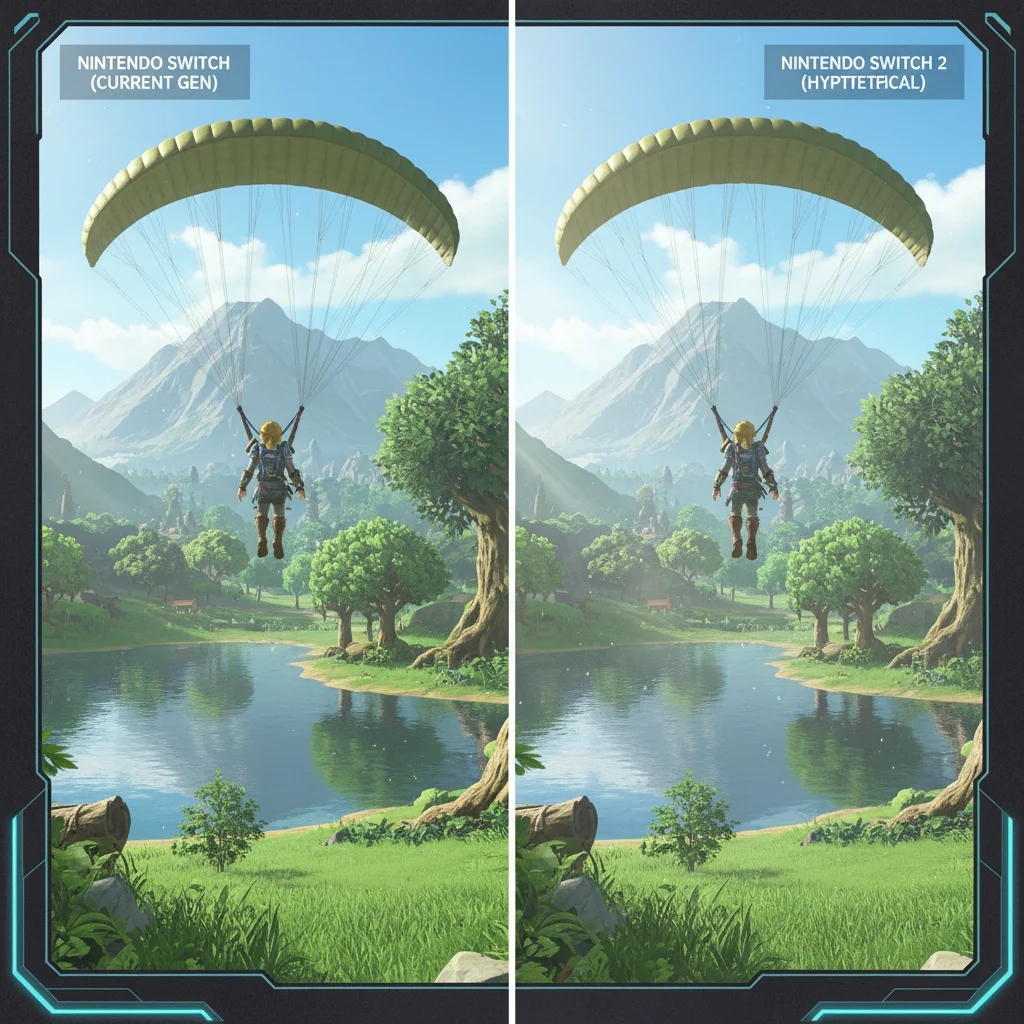
Despite its continued commercial success, the original Nintendo Switch is showing its age. Released over six years ago, its hardware specifications, while innovative for its time, are now significantly behind current-generation consoles. Games like The Legend of Zelda: Tears of the Kingdom push the existing hardware to its absolute limits, often resulting in dynamic resolution scaling, occasional frame rate drops, and visual compromises. While Nintendo’s first-party titles are masterpieces of optimisation, third-party developers often struggle to port their latest games to the Switch without substantial graphical downgrades or performance sacrifices. This creates a growing disparity between the experiences offered on Switch and those on other platforms, a gap that the Nintendo Switch 2 is expected to address.
For US gamers, this disparity is particularly noticeable. Many own multiple consoles, enjoying the latest AAA titles on their powerful home systems and turning to the Switch for Nintendo exclusives or indie games. However, the desire to play cross-platform titles on the go, without significant compromises, is strong. A more powerful Nintendo Switch 2 would not only enhance Nintendo’s own first-party offerings but also open the door to a wider array of high-fidelity third-party ports, making the Switch a more viable primary gaming platform for a broader audience. The competitive landscape demands an upgrade, not just to keep pace, but to allow Nintendo to continue innovating without being held back by technical limitations.
Anticipated Hardware Upgrades: Powering the Next Generation
The core of any new console generation lies in its hardware advancements. For the Nintendo Switch 2, the rumours point towards a significant leap in processing power, primarily driven by a custom Nvidia chip. While specific details are scarce, the consensus suggests an evolution of Nvidia’s Tegra line, potentially incorporating Ampere or Ada Lovelace architecture, similar to their current desktop GPUs, but scaled for mobile power consumption.
CPU and GPU Enhancements
One of the most persistent rumours suggests the Nintendo Switch 2 will feature a custom Nvidia Tegra T239 chip. This rumoured SoC (System on a Chip) is expected to bring substantial improvements to both the CPU and GPU. The CPU could see an upgrade to ARM Cortex-A78AE cores, offering a significant boost in raw processing power compared to the original Switch’s Cortex-A57 cores. This would allow for more complex game worlds, improved AI, and faster loading times.
The GPU, on the other hand, is where the most dramatic improvements are anticipated. Leveraging Nvidia’s modern architecture, the Nintendo Switch 2 could feature dedicated RT (Ray Tracing) cores and Tensor Cores. Ray tracing would enable more realistic lighting, reflections, and shadows, bringing a new level of visual fidelity to Nintendo games. Tensor Cores would facilitate DLSS (Deep Learning Super Sampling), Nvidia’s AI-powered upscaling technology. DLSS is a game-changer for portable consoles, as it allows games to render at a lower internal resolution and then intelligently upscale to a higher resolution, providing sharper images with less computational cost. This means better graphics and smoother frame rates, even in demanding titles, which is crucial for a hybrid console.
For US gamers, this translates directly into more visually stunning games, with crisper textures, dynamic lighting, and environments that feel more alive. The ability to run games at higher resolutions, potentially even 1080p in handheld mode and 4K when docked (with DLSS assistance), would be a monumental upgrade, bringing the Nintendo Switch 2 closer to the visual standards set by its competitors.
RAM and Storage
The original Switch shipped with 4GB of LPDDR4 RAM, which was adequate for its time but is now a bottleneck. Rumours suggest the Nintendo Switch 2 could come with 8GB or even 12GB of LPDDR5 RAM. LPDDR5 offers not only more capacity but also significantly faster bandwidth, which is critical for feeding data to a more powerful GPU. More RAM means developers have more headroom for larger textures, more complex scenes, and more demanding background processes, leading to a smoother overall experience.
Storage is another area ripe for improvement. The base model of the original Switch only offered 32GB of internal storage, quickly filled by modern games. The OLED model bumped this to 64GB, but even that is often insufficient. The Nintendo Switch 2 is widely expected to feature a minimum of 64GB of faster UFS (Universal Flash Storage) internal storage, with some speculation hinting at 128GB or even 256GB options. Faster storage would reduce loading times significantly, a common complaint with the current Switch. The continued use of game cartridges (likely a new, larger capacity format) and microSD card expansion is also anticipated, offering flexibility for gamers to manage their digital libraries.
Display Technology: A Visual Leap for the Nintendo Switch 2
The screen is paramount for a portable console, and the Nintendo Switch 2 is expected to deliver a substantial upgrade. While the original Switch featured an LCD, and the OLED model brought a vibrant, contrast-rich display, the next iteration could push boundaries further.
OLED and Refresh Rates
It’s highly probable that the Nintendo Switch 2 will continue with an OLED display, given its popularity and the benefits it offers in terms of colour accuracy, contrast, and power efficiency. The screen size might remain similar to the 7-inch OLED model, offering a good balance between portability and immersive gameplay. The resolution, however, is a key area of improvement. While 720p was acceptable for the original Switch, many hope for a 1080p OLED panel in handheld mode for the Nintendo Switch 2, delivering crisper visuals.
Another exciting possibility is a higher refresh rate. While 60Hz is standard, a 90Hz or even 120Hz display could be a game-changer for certain titles, offering incredibly smooth motion. While it might not be a standard for all games (due to battery considerations), offering it as an option for less graphically intensive titles or for future proofing would be a welcome addition for US gamers who appreciate fluid gameplay.
Controller Enhancements and Ergonomics
The Joy-Cons are iconic but also a source of frustration for some due to drift issues and ergonomics. The Nintendo Switch 2 is likely to feature redesigned controllers, addressing these concerns.
Improved Joy-Cons and Haptics
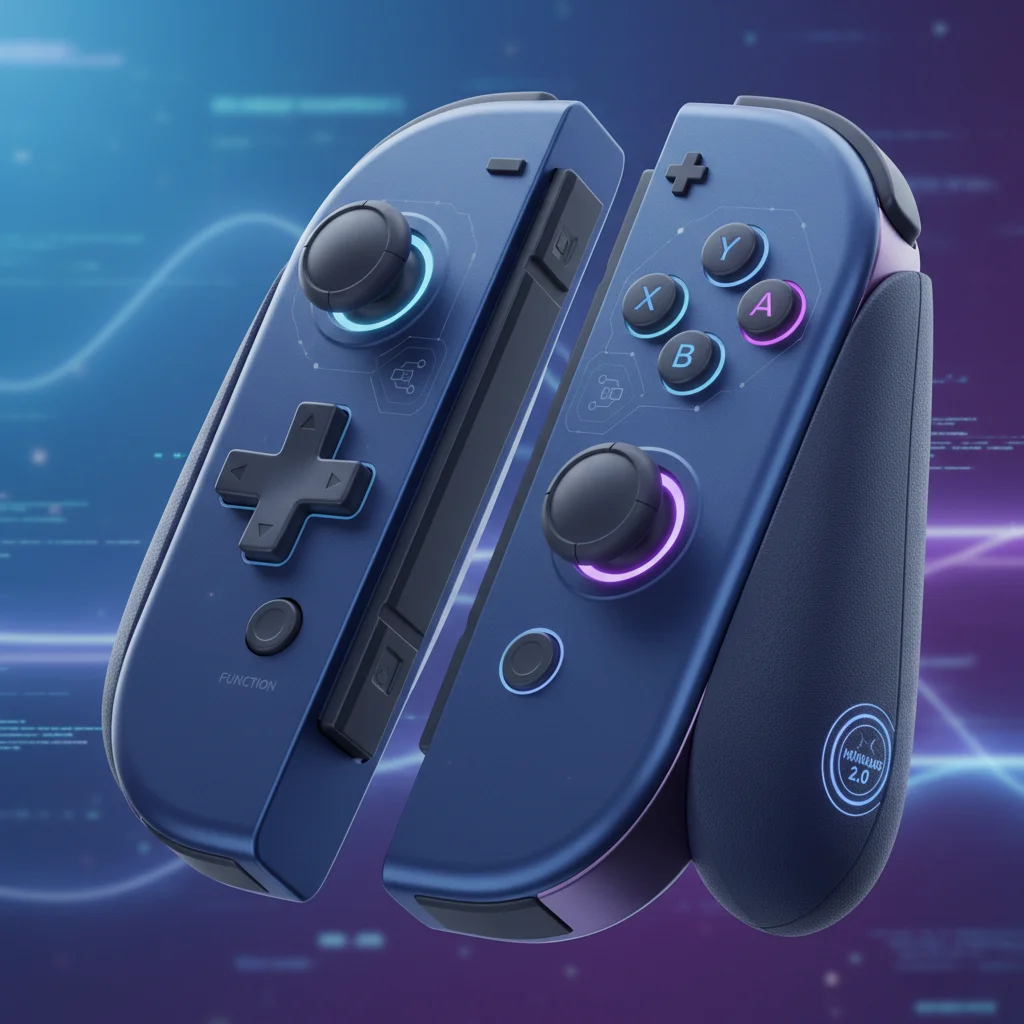
Expect the new Joy-Cons for the Nintendo Switch 2 to feature improved analogue sticks, hopefully mitigating the dreaded ‘Joy-Con drift’ through more robust components or a different sensor technology. Ergonomics could also see an overhaul, with a more comfortable grip, especially for extended play sessions. Nintendo is known for its innovative input methods, so new features like advanced haptic feedback (similar to PlayStation’s DualSense) or even pressure-sensitive buttons are not out of the question, offering new ways for developers to immerse players.
Another significant rumour revolves around how the Joy-Cons attach. Some speculation suggests a magnetic attachment system rather than the rail system, potentially making them easier to connect and disconnect while also improving durability. This would be a subtle but impactful quality-of-life improvement for the Nintendo Switch 2.
Backward Compatibility and the Nintendo Ecosystem
Backward compatibility is a crucial feature for many gamers, allowing them to carry their existing game libraries over to new hardware. Given Nintendo’s history and the massive success of the original Switch’s game library, it’s almost a certainty that the Nintendo Switch 2 will offer some form of backward compatibility.
Digital and Physical Game Support
It’s highly probable that digital purchases from the eShop will transfer seamlessly to the Nintendo Switch 2. For physical games, the situation is a bit more nuanced. If the new console uses a similar cartridge format, physical backward compatibility could be straightforward. However, if the cartridges are different (e.g., larger capacity), an adapter or a digital entitlement program might be necessary. Nintendo has a strong incentive to support its existing player base, so expect a solution that allows US gamers to continue enjoying their beloved Switch titles on the new hardware, potentially with enhanced performance or faster loading times.
The existing Nintendo ecosystem, including Nintendo Switch Online and user profiles, is also expected to carry over. This ensures a smooth transition for players and maintains continuity within the Nintendo gaming community.
Release Date Speculation: Why 2026 Makes Sense
While rumours have floated around for a 2024 or 2025 release, increasing evidence and analyst predictions point towards a 2026 launch for the Nintendo Switch 2. Several factors contribute to this timeline.
Market Strategy and Production Cycles
Nintendo is known for its deliberate and often unconventional release strategies. Launching a new console too soon could cut short the lifecycle of the incredibly profitable original Switch, especially the OLED model. A 2026 release allows Nintendo to maximise sales of its current hardware, clear out existing inventory, and give developers ample time to create a robust launch lineup for the Nintendo Switch 2. Furthermore, global component shortages and supply chain issues, while improving, still pose challenges. A later launch date provides more stability for production and ensures a smoother rollout globally, including for US gamers.
The lead time for developing complex hardware and compelling first-party software is significant. A 2026 launch would give Nintendo’s internal studios and key third-party partners sufficient time to harness the new console’s power and deliver truly next-generation experiences. This strategic timing aligns with Nintendo’s history of ensuring a strong software library accompanies new hardware.
Potential Impact on US Gamers and the Market
The launch of the Nintendo Switch 2 will undoubtedly have a profound impact on the US gaming market. It will reignite excitement, attract new players, and potentially shift dynamics within the console wars.
Competition and Innovation
A more powerful Nintendo Switch 2 will allow Nintendo to compete more directly with Sony and Microsoft in terms of graphical fidelity, at least in its docked mode. However, Nintendo’s strength has always been its unique approach to gameplay and innovation. The Nintendo Switch 2 is expected to build upon this, offering new ways to play that leverage its hybrid nature and potential new controller features. For US gamers, this means a wider variety of gaming experiences, from visually stunning AAA titles to innovative Nintendo exclusives that push boundaries.
The console’s success will also depend on its price point. Nintendo has historically aimed for accessibility, and finding the right balance between powerful hardware and an attractive price will be key to widespread adoption in the US market. The potential for a strong launch lineup, including new entries in beloved franchises like Mario, Zelda, and Pokémon, will be crucial in driving initial sales.
What to Expect from Nintendo’s First-Party Lineup
While specific game announcements are still years away, we can make educated guesses about the types of games that will launch with or soon after the Nintendo Switch 2.
New IPs and Established Franchises
Nintendo will undoubtedly leverage its iconic franchises to showcase the power of the Nintendo Switch 2. Expect a new 3D Mario adventure, potentially a new Mario Kart title that takes advantage of enhanced graphics and online capabilities, and perhaps a new take on a beloved IP. The increased processing power will allow for more expansive open worlds, more detailed character models, and more sophisticated physics, elevating these experiences to new heights.
Beyond established franchises, Nintendo is also known for introducing innovative new IPs with its hardware launches. The Nintendo Switch 2 could be the platform for a completely new concept that once again redefines gaming, much like the original Switch did with its hybrid nature. For US gamers, this means fresh experiences alongside familiar favourites, all benefiting from the console’s enhanced capabilities.
The Hype is Real: The Future of Nintendo Gaming
The anticipation for the Nintendo Switch 2 is palpable, and for good reason. Nintendo has a track record of delivering revolutionary gaming experiences, and its next console is poised to continue that legacy. While the specifics remain shrouded in secrecy, the rumours paint a compelling picture of a console that significantly boosts performance, refines the hybrid experience, and introduces new ways to interact with games.
For US gamers, the prospect of a Nintendo Switch 2 in 2026 means a future filled with more vibrant worlds, smoother gameplay, and potentially groundbreaking innovations that only Nintendo can bring to the table. As we await official announcements, the speculation provides an exciting glimpse into what could be the next major chapter in Nintendo’s storied history. Keep an eye on the news, as more concrete details are sure to emerge as we get closer to what promises to be a monumental launch for the gaming industry.