PlayStation 2026 Console Sales: PS6 Outperform PS5 by 15%?
PlayStation’s 2026 Console Sales Forecast: Will the PS6 Outperform its Predecessor by 15%?
The gaming world is perpetually abuzz with speculation, and few topics generate as much fervent discussion as the future of console gaming. As we inch closer to the mid-2020s, attention is inevitably turning towards what Sony has in store for its next-generation console. The PlayStation 5 (PS5) has enjoyed considerable success since its launch, navigating supply chain challenges to establish a strong foothold in the market. However, the looming question for industry analysts, investors, and eager gamers alike is: will the PlayStation 6 (PS6), when it eventually arrives, manage to not just replicate but significantly surpass the PS5’s performance? Specifically, can we expect the PlayStation 2026 Sales to see the PS6 outsell its predecessor by a remarkable 15%?
This ambitious forecast isn’t pulled from thin air. It represents a confluence of anticipated technological leaps, evolving market dynamics, and Sony’s historical trajectory in the console wars. To understand the feasibility of such a projection, we must delve deep into various factors that influence console sales, from hardware innovation and exclusive game titles to pricing strategies and the broader economic landscape.
The Current Landscape: PlayStation 5’s Performance and Legacy
Before we project into the future, it’s crucial to acknowledge the present and past. The PlayStation 5, launched in late 2020, arrived amidst unprecedented global challenges. Despite these hurdles, it quickly became one of Sony’s fastest-selling consoles. Its success can be attributed to several key factors:
- Powerful Hardware: The PS5 introduced significant upgrades, including a custom SSD for lightning-fast loading times, powerful CPU and GPU for stunning visuals and ray tracing, and the innovative DualSense controller, offering haptic feedback and adaptive triggers that transformed gameplay immersion.
- Exclusive Titles: Sony continued its tradition of strong first-party exclusives, with titles like Marvel’s Spider-Man: Miles Morales, God of War Ragnarök, and Horizon Forbidden West driving console sales and demonstrating the PS5’s capabilities.
- Backward Compatibility: The ability to play a vast library of PS4 games provided a seamless transition for many users, encouraging early adoption.
- Brand Loyalty: PlayStation has cultivated a massive, loyal fanbase over decades, which provides a strong foundation for new console launches.
However, the PS5’s journey hasn’t been without its challenges. Persistent supply chain issues, exacerbated by the global chip shortage, meant that for much of its early life, the console was difficult to acquire. This scarcity, while frustrating for consumers, also created an aura of high demand and desirability. As supply stabilised, sales figures soared, demonstrating the underlying market appetite for Sony’s latest offering.
The PS5 has set a high bar. A 15% increase in sales for the PS6 would mean outpacing an already successful console, requiring a combination of significant advancements and strategic brilliance. Understanding the PS5’s strengths and weaknesses provides a vital baseline for our PlayStation 2026 Sales analysis.
Anticipated Technological Leaps: What Will the PS6 Bring?
The core of any new console generation lies in its technological advancements. While concrete details about the PS6 are non-existent, we can make educated guesses based on current tech trends and the typical generational improvements seen in console history.
Processing Power & Graphics
Expect a substantial leap in both CPU and GPU performance. The PS5’s AMD Zen 2 CPU and RDNA 2 GPU were impressive, but by 2026-2027 (the likely launch window for a PS6), AMD’s architectures will have evolved significantly. We could see:
- Zen 5 or Zen 6 CPU Architecture: Offering higher core counts and significantly improved instructions per cycle (IPC), leading to more complex game worlds and advanced AI.
- RDNA 4 or RDNA 5 GPU Architecture: Delivering exponentially more raw graphical horsepower, enabling native 4K gaming at higher frame rates (potentially 120fps across the board) and even pushing towards 8K resolutions in certain scenarios. Advanced ray tracing capabilities will likely become standard, offering hyper-realistic lighting, shadows, and reflections.
- AI Upscaling Technologies: Similar to NVIDIA’s DLSS or AMD’s FSR, Sony will likely implement or enhance its own proprietary AI upscaling solutions. This would allow games to render at lower resolutions and be intelligently upscaled to 4K or 8K with minimal visual degradation, boosting performance significantly.
Storage and Speed
The PS5’s custom SSD was a game-changer, virtually eliminating loading screens. The PS6 will undoubtedly build upon this, potentially featuring:
- Even Faster SSDs: While the current speeds are already phenomenal, advancements in NAND flash technology and controller designs could lead to even quicker data retrieval, further streamlining game asset streaming and enabling more expansive, detailed environments without hidden loading.
- Increased Storage Capacity: Game sizes continue to grow, so a larger internal SSD (e.g., 2TB or more as standard) would be a welcome and necessary upgrade.
Immersion and Peripherals
Sony has always pushed the boundaries of immersion, from the DualShock’s rumble to the DualSense’s haptics.
- Evolved Controller Technology: Expect further refinements to the DualSense, perhaps incorporating more sophisticated haptics, biometric sensors, or even small integrated screens.
- Virtual Reality Integration: With PS VR2 already on the market, the PS6 will likely have even deeper and more seamless integration with next-generation VR hardware, potentially even bundling a VR headset or making it a core part of the ecosystem.
- Enhanced Audio: Further development of 3D audio technologies, creating even more precise and immersive soundscapes.
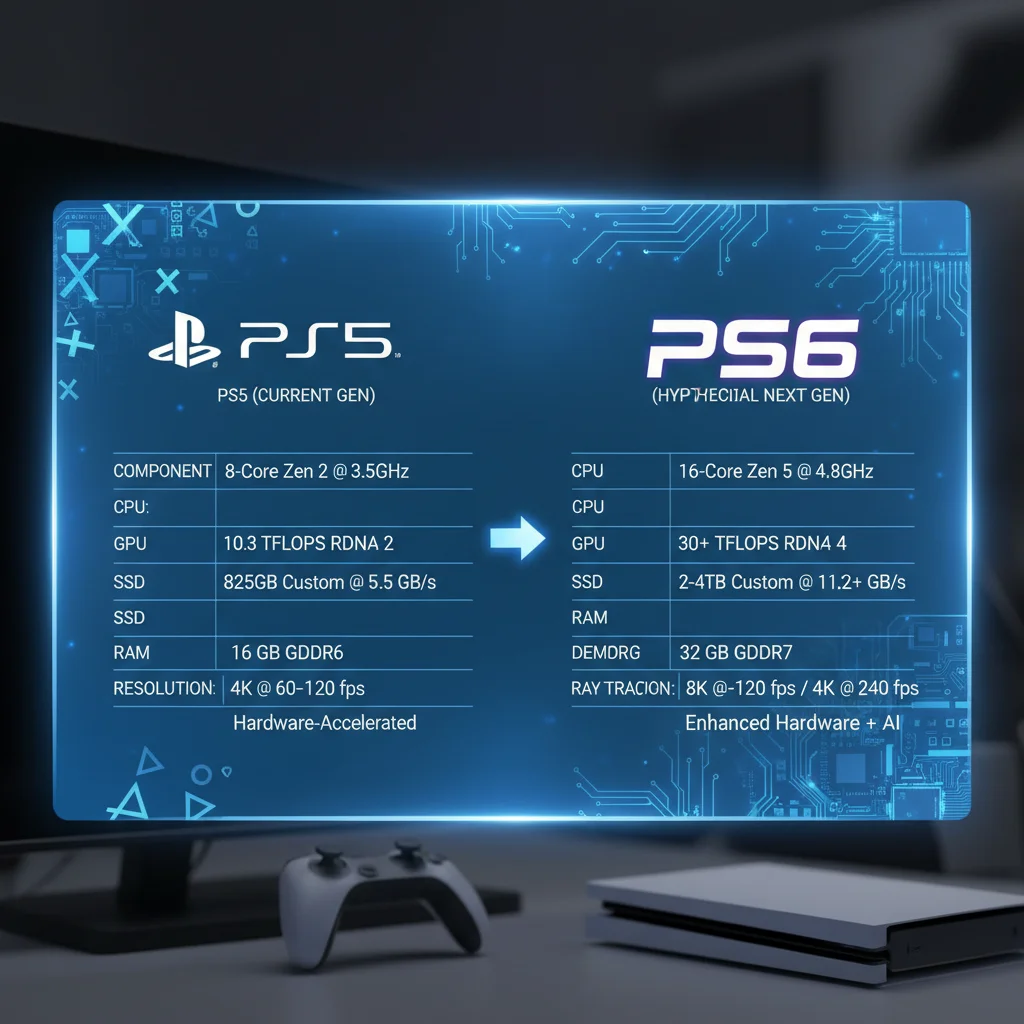
These technological leaps are not just about raw power; they are about enabling new gameplay experiences that are simply not possible on current hardware. This ‘wow’ factor will be crucial in convincing consumers to upgrade and will directly impact PlayStation 2026 Sales.
Market Dynamics and Competitive Landscape
No console exists in a vacuum. The success of the PS6 will also depend heavily on the broader market conditions and the strategies of its competitors.
The Evolving Gaming Market
- Cloud Gaming: While still nascent, cloud gaming services are growing. The PS6 might integrate more robust cloud capabilities, perhaps offering a hybrid model where some games can be streamed, reducing the need for massive downloads or even offering a disc-less option with enhanced streaming performance.
- Subscription Services: PlayStation Plus has evolved, and the PS6 era will likely see further emphasis on subscription models, offering a vast library of games for a recurring fee. This can drive engagement and retention, even if it doesn’t directly count as console sales, it fuels the ecosystem.
- Mobile Gaming’s Continued Dominance: Mobile continues to be the largest segment of the gaming market. While consoles cater to a different experience, Sony will need to ensure the PS6 offers a compelling reason for dedicated gamers to invest in a premium device.
Competition from Xbox and Nintendo
Microsoft’s Xbox division remains a formidable competitor. Their strategy has increasingly focused on Game Pass, cloud gaming, and acquiring major studios (like Activision Blizzard). The next Xbox console will undoubtedly be powerful, and its integration with Game Pass will continue to be a major selling point. Sony will need to counter this with an equally compelling value proposition.
Nintendo, with its unique hardware and family-friendly approach, typically occupies a different segment of the market. However, any major innovation from Nintendo could shift consumer attention. The PS6 will need to stand out not just against its direct competitor, but also against the broader entertainment options available.
Economic Factors
Global economic stability plays a significant role in consumer spending on discretionary items like gaming consoles. Inflation, interest rates, and disposable income will all influence how many units Sony can sell. A strong global economy in 2026 would be highly beneficial for achieving the 15% sales increase.
Pricing Strategy and Value Proposition
The price point of a new console is often the most critical factor in its initial sales momentum. The PS5 launched at $499 for the disc version and $399 for the Digital Edition, a price point that was generally well-received given the hardware on offer.
For the PS6 to achieve a 15% sales increase, Sony will need to strike a delicate balance:
- Affordable Innovation: Offering cutting-edge technology at a price that consumers perceive as excellent value. Significant price hikes could deter adoption.
- Bundle Deals: Strategic bundles with popular games, accessories (like a new PS VR headset), or subscription services could sweeten the deal and drive sales.
- Tiered Offerings: Similar to the PS5’s disc and digital editions, the PS6 might offer different tiers, perhaps with varying storage capacities or even slight performance differences, to cater to different budgets.
The perceived value will be paramount. If the PS6 offers such a significant leap in experience that it justifies its price, then the 15% target for PlayStation 2026 Sales becomes much more attainable.
The Power of Exclusive Games and Content
Hardware is the engine, but games are the fuel. Sony’s strategy of investing heavily in first-party studios and exclusive titles has been a cornerstone of PlayStation’s success. For the PS6 to truly excel, this strategy must continue and evolve.
- Must-Have Launch Titles: The PS6 will need a strong lineup of exclusive games at launch that showcase its unique capabilities and provide compelling reasons to buy the console immediately. New IPs alongside established franchises will be key.
- Long-Term Content Pipeline: A consistent stream of high-quality, exclusive content throughout the console’s lifecycle will maintain momentum and keep players engaged. This includes both traditional AAA titles and innovative indie games.
- Synergy with PlayStation Studios: Continued collaboration and creative freedom for studios like Naughty Dog, Insomniac Games, Santa Monica Studio, and Guerrilla Games will be vital in producing games that define the PS6 generation.
- Cross-Media Content: With Sony’s expansion into film and TV adaptations of its game IPs, expect further synergy. Exclusive content or early access to these adaptations could be bundled with the PS6 or its services, creating a broader entertainment ecosystem.
Ultimately, people buy consoles to play games. If the PS6 offers an unparalleled gaming library that cannot be experienced elsewhere, then achieving a 15% sales increase will be well within reach.
Marketing and Consumer Hype
Even the most technologically advanced console with a fantastic game lineup needs effective marketing to reach its full potential. Sony’s marketing campaigns for previous PlayStations have been iconic, and the PS6 will require a similar, if not more aggressive, approach.
- Early Teasers and Reveals: Building anticipation through cryptic teasers, developer interviews, and carefully choreographed reveal events will be crucial.
- Showcasing Innovation: Clearly communicating the unique selling points of the PS6 – whether it’s revolutionary graphics, groundbreaking controller features, or never-before-seen gameplay mechanics – will be paramount.
- Influencer and Community Engagement: Leveraging the power of streamers, content creators, and the broader gaming community to generate organic hype and demonstrate the console’s capabilities in real-world scenarios.
- Targeted Advertising: Reaching different demographics through tailored advertising campaigns, from hardcore gamers to casual players and families.
The narrative around the PS6 will be as important as the hardware itself. If Sony can successfully position the console as the definitive next-generation gaming experience, it will significantly boost its PlayStation 2026 Sales prospects.
Challenges and Potential Roadblocks
Achieving a 15% sales increase is an ambitious goal, and several factors could hinder its realisation:
- Economic Downturns: A significant global recession could severely impact consumer spending on non-essential items, regardless of how innovative the PS6 is.
- Supply Chain Issues: While lessons were learned from the PS5 launch, future global events or unforeseen production challenges could still lead to supply shortages, limiting sales.
- Competition’s Innovation: If Microsoft or even a new entrant introduces a truly disruptive technology or strategy, it could divert significant market share.
- Technological Stagnation: While unlikely, if the PS6 doesn’t offer a sufficiently compelling leap over the PS5, or if the ‘next-gen’ experience feels incremental, consumer enthusiasm might wane.
- Pricing Missteps: Overpricing the console could severely dampen demand, especially in a competitive market.
- Fatigue with Console Cycles: Some analysts suggest a growing fatigue with traditional console upgrade cycles, with more players opting for PC gaming or cloud services. Sony will need to prove the relevance of dedicated hardware.
Sony will need to meticulously plan and execute its strategy to navigate these potential pitfalls and ensure the PS6 not only meets but exceeds expectations.
Forecasting the 15% Growth: A Detailed Look
To quantify the 15% growth, let’s consider hypothetical PS5 sales figures. If the PS5 sold, for example, 50 million units globally by the time the PS6 launches and the PS6 aims for a 15% increase over that initial lifecycle, it would need to sell around 57.5 million units within a comparable timeframe (e.g., its first 3-4 years). This is a substantial number and requires a perfect storm of positive factors.
Factors Supporting the 15% Growth:
- Post-Pandemic Economic Recovery: Assuming global economies stabilise and grow, consumers will have more disposable income.
- Pent-Up Demand: The PS5’s early scarcity might have left some potential buyers waiting for the next generation, especially if they weren’t desperate to upgrade immediately.
- Technological Breakthroughs: Genuine ‘game-changing’ features in the PS6 could create unprecedented demand.
- Stronger Exclusive Lineup: If Sony continues to acquire and develop top-tier studios, the PS6’s game library could be irresistible.
- Expanded Market Reach: Aggressive expansion into new territories or demographics could broaden the customer base.
Factors Hindering the 15% Growth:
- Market Saturation: A highly successful PS5 might mean a large existing user base that is less inclined to upgrade quickly.
- Increased Competition: More aggressive strategies from Xbox or the rise of new gaming platforms.
- High Price Point: If the cost of the PS6 is significantly higher due to advanced components, it could dampen initial sales.
- Shift to Subscription/Cloud Gaming: If these models become dominant, console ownership might become less of a priority for some.
The 15% figure is ambitious but not impossible. It hinges on Sony delivering a truly next-generation experience that clearly differentiates itself from the PS5 and its competitors, coupled with favourable market conditions.
Conclusion: The Road Ahead for PlayStation
The question of whether the PS6 will outperform the PS5 by 15% in PlayStation 2026 Sales is multifaceted. It’s a projection built on the bedrock of Sony’s historical success, the relentless pace of technological innovation, and a careful analysis of the dynamic gaming market. While the PS5 has set a high benchmark, the potential for the PS6 to surpass it is certainly there, provided Sony continues its tradition of delivering groundbreaking hardware, compelling exclusive content, and shrewd pricing strategies.
The next few years will be crucial for Sony as it lays the groundwork for its next console. From securing component supplies to fostering creative talent within its studios and crafting a resonant marketing message, every decision will contribute to the PS6’s ultimate fate. If they can harness the power of next-gen technology to create truly transformative gaming experiences, navigate the competitive landscape effectively, and present an irresistible value proposition, then the 15% sales increase might just be an achievable reality, further solidifying PlayStation’s dominance in the console market.
The gaming community eagerly awaits what promises to be another exciting chapter in the PlayStation saga. Only time will tell if the PS6 can not only meet but exceed the lofty expectations set for its performance in 2026 and beyond.
