US Mobile Gaming Market 2026: Trends, Growth & Forecasts

Beyond the Console: Analysing the 2026 US Mobile Gaming Market Landscape
The digital realm of entertainment continues its relentless expansion, with mobile gaming standing at the forefront of this revolution. As we cast our gaze towards 2026, the US mobile gaming market is poised for unprecedented transformation and growth, driven by technological advancements, evolving consumer behaviour, and innovative monetisation strategies. This comprehensive analysis delves deep into the anticipated landscape, dissecting the forces that will shape the industry and providing insights for developers, investors, and enthusiasts alike.
Mobile gaming has long shed its ‘casual’ label, evolving into a sophisticated ecosystem that rivals, and in many aspects surpasses, traditional console and PC gaming in terms of revenue, player base, and cultural impact. The accessibility of smartphones, coupled with increasingly powerful hardware and ubiquitous internet connectivity, has democratised gaming, bringing it to billions worldwide. The United States, a pivotal market, plays a crucial role in this global narrative, often setting trends and pioneering new approaches that reverberate across the industry.
Understanding the intricacies of the US mobile gaming market in 2026 requires a multifaceted approach, considering everything from demographic shifts and technological innovations to regulatory changes and the ever-present competition for player attention. This article aims to provide a granular view, offering a roadmap to navigate the opportunities and challenges that lie ahead.
The Current Trajectory: A Foundation for Future Growth
Before projecting into 2026, it’s essential to acknowledge the robust foundation upon which the US mobile gaming market is built. Recent years have witnessed consistent double-digit growth, fuelled by a combination of factors. The COVID-19 pandemic, while devastating in many respects, inadvertently accelerated mobile gaming adoption as people sought entertainment and connection during lockdowns. This surge in engagement has largely persisted, demonstrating the sticky nature of mobile gaming habits.
The market is characterised by a diverse portfolio of genres, from hyper-casual titles that offer quick bursts of entertainment to complex RPGs and strategy games that demand significant time investment. This breadth ensures that there is a mobile game for every preference, catering to a vast and varied audience. Furthermore, the continuous improvement in mobile device capabilities – faster processors, better graphics, and larger screens – has enabled developers to create more immersive and graphically rich experiences, blurring the lines between mobile and console gaming.
Monetisation strategies have also become increasingly sophisticated. While in-app purchases (IAPs) remain a dominant revenue stream, subscriptions, battle passes, and rewarded ads have carved out significant niches. The free-to-play model, perfected in the mobile space, continues to lower the barrier to entry, allowing millions to sample games before committing financially. This dynamic interplay of content, technology, and monetisation sets the stage for the innovations we expect to see by 2026.
Key Drivers Shaping the US Mobile Gaming Market in 2026
Several powerful forces will converge to define the US mobile gaming market in the coming years. Understanding these drivers is crucial for anyone looking to capitalise on the sector’s potential.
1. Technological Advancements: 5G, AI, and Cloud Gaming
The widespread rollout of 5G networks across the US is perhaps the most significant technological catalyst. 5G promises ultra-low latency, higher bandwidth, and greater reliability, which will unlock new possibilities for mobile gaming. Imagine console-quality graphics streamed seamlessly to your phone, or real-time multiplayer experiences without a hint of lag. This will particularly benefit cloud gaming services, allowing players to access high-end games without needing powerful local hardware, thereby expanding the potential audience for graphically intensive titles.
Artificial Intelligence (AI) will also play an increasingly vital role. From enhancing game design and development processes to personalising player experiences, AI’s applications are vast. AI-driven NPCs (Non-Player Characters) could offer more realistic interactions, while AI algorithms could optimise game difficulty, recommend content, and even detect and prevent cheating. Furthermore, AI could streamline asset creation and testing, making development cycles more efficient.
Beyond cloud gaming, advancements in augmented reality (AR) and virtual reality (VR) on mobile devices will continue to mature. While full VR adoption on mobile remains nascent, AR has already proven its potential with games like Pokémon GO. By 2026, we can expect more sophisticated AR experiences that seamlessly blend digital content with the real world, offering novel gameplay mechanics and immersive interactions that define the next generation of the US mobile gaming market.
2. Evolving Consumer Behaviour and Demographics
The demographic profile of mobile gamers is continually expanding. No longer confined to a specific age group or gender, mobile gaming appeals to a vast cross-section of the population. By 2026, we anticipate an even greater diversification, with older demographics increasingly embracing mobile games for cognitive stimulation and social connection. This broad appeal necessitates a wider range of game genres and themes, moving beyond traditional action or puzzle games.
The demand for social interaction within games is also on the rise. Multiplayer functionalities, in-game chat, and integrated social media features will become standard, fostering communities around popular titles. The line between gaming and social networking will further blur, with games becoming platforms for communication and shared experiences. This trend is particularly relevant for the US mobile gaming market, where social connectivity is a powerful driver of engagement and retention.
Furthermore, players are increasingly seeking deeper, more meaningful experiences. While hyper-casual games will retain their appeal, there’s a growing appetite for narrative-driven games, competitive esports titles, and games that offer creative expression. Developers who can tap into these evolving desires will find significant success.
3. Monetisation Innovation and Ethical Considerations
The landscape of monetisation in the US mobile gaming market is dynamic. While IAPs remain central, there’s a discernible shift towards more player-friendly and transparent models. Subscription services, offering access to a library of games or premium features, are gaining traction, providing predictable revenue for developers and value for players. Battle passes, which reward consistent engagement, have also proven highly effective.
However, ethical considerations around monetisation, particularly concerning loot boxes and predatory practices, will continue to be scrutinised. By 2026, we might see increased regulatory oversight or industry self-regulation to ensure fair and transparent monetisation. Developers who prioritise player well-being and offer clear value propositions will build stronger, more loyal communities. The emergence of blockchain technology and NFTs within gaming also presents a new, albeit controversial, avenue for monetisation, potentially allowing players to truly own in-game assets. Its impact on the broader US mobile gaming market by 2026 remains to be fully seen, but it’s an area of significant experimentation.
4. Cross-Platform Play and IP Integration
The boundaries between gaming platforms are becoming increasingly porous. Cross-platform play, allowing players on mobile, PC, and console to compete or cooperate, is a powerful trend that will only intensify. This expands the player base for individual titles and fosters a more unified gaming community. Major publishers are already investing heavily in this area, recognising the value of an interconnected ecosystem.
Moreover, the integration of established Intellectual Properties (IPs) from other media – movies, TV shows, comics – into mobile games will continue to be a significant draw. These titles benefit from pre-existing fan bases and brand recognition, reducing marketing overhead and accelerating adoption. The quality of these adaptations will be paramount; players expect more than just a reskinned experience. Successful IP integration will be a key differentiator in the competitive US mobile gaming market.
Challenges and Opportunities in the 2026 US Mobile Gaming Market
While the outlook is overwhelmingly positive, the US mobile gaming market is not without its challenges. However, these challenges often present unique opportunities for innovation and differentiation.
1. Player Acquisition and Retention
With thousands of new games released annually, standing out in a crowded market is a perpetual challenge. User acquisition costs can be substantial, making effective marketing and discoverability crucial. By 2026, we expect to see more sophisticated AI-driven marketing tools and a greater emphasis on organic growth through community building and influencer partnerships.
Retention is equally critical. Players have a wealth of choices, and if a game doesn’t consistently engage them, they will move on. Live operations (LiveOps) will become even more central, with developers continuously updating content, hosting events, and responding to player feedback. Personalised experiences, enabled by data analytics and AI, will be vital in keeping players invested in the long term within the US mobile gaming market.
2. Data Privacy and Security
As data collection becomes more pervasive, concerns around player privacy and data security will intensify. Regulatory frameworks like GDPR and CCPA are setting precedents, and by 2026, we might see even stricter data protection laws in the US. Developers must prioritise transparent data practices and robust security measures to build trust with their player base. Breaches can be catastrophic for a game’s reputation and player numbers.
3. Competition and Consolidation
The US mobile gaming market is characterised by intense competition. Large publishers with deep pockets continue to acquire smaller studios, leading to market consolidation. This can stifle innovation from independent developers, but it also creates opportunities for niche titles and highly creative small teams that can capture specific audiences. The challenge for smaller studios will be finding unique selling propositions and leveraging agile development methodologies to compete effectively.

Emerging Trends and Niche Markets
Beyond the overarching drivers, several emerging trends and niche markets are set to gain prominence in the US mobile gaming market by 2026.
1. Hyper-Social Gaming Experiences
While social features are already common, ‘hyper-social’ games that deeply integrate communication, collaboration, and shared creation will grow. Think beyond simple multiplayer to games where players collaboratively build worlds, solve complex puzzles as a community, or even co-create narrative experiences. The success of platforms like Roblox and Minecraft on mobile hints at this potential, and more sophisticated iterations are expected.
2. Health and Wellness Gaming
Games designed to improve cognitive function, promote physical activity, or reduce stress will see increased adoption. The convergence of gaming with health and wellness apps offers a significant opportunity, particularly as populations age and seek engaging ways to maintain well-being. These games often leverage AR for activity tracking or gamified mindfulness exercises, contributing a unique segment to the US mobile gaming market.
3. Indie Game Renaissance
Despite consolidation, the indie game scene on mobile continues to thrive. With accessible development tools and platforms, independent developers can bring innovative and experimental titles to market. By 2026, we might see a stronger emphasis on curated indie storefronts or subscription services that specifically highlight these unique experiences, offering an alternative to the blockbuster titles.
4. Esports on Mobile
Mobile esports has already gained significant traction globally, and the US is catching up rapidly. Competitive mobile games with dedicated esports leagues, professional players, and substantial prize pools will become a more prominent feature of the US mobile gaming market. The accessibility of mobile devices means a larger potential player base for competitive gaming, fostering a new generation of esports enthusiasts and professionals.
The Economic Impact and Future Outlook
The economic footprint of the US mobile gaming market is immense and continues to expand. It encompasses not just game developers and publishers, but also hardware manufacturers, advertising platforms, payment providers, and a burgeoning ecosystem of content creators and streamers. By 2026, this economic impact will be even more pronounced, contributing significantly to the digital economy and job creation.
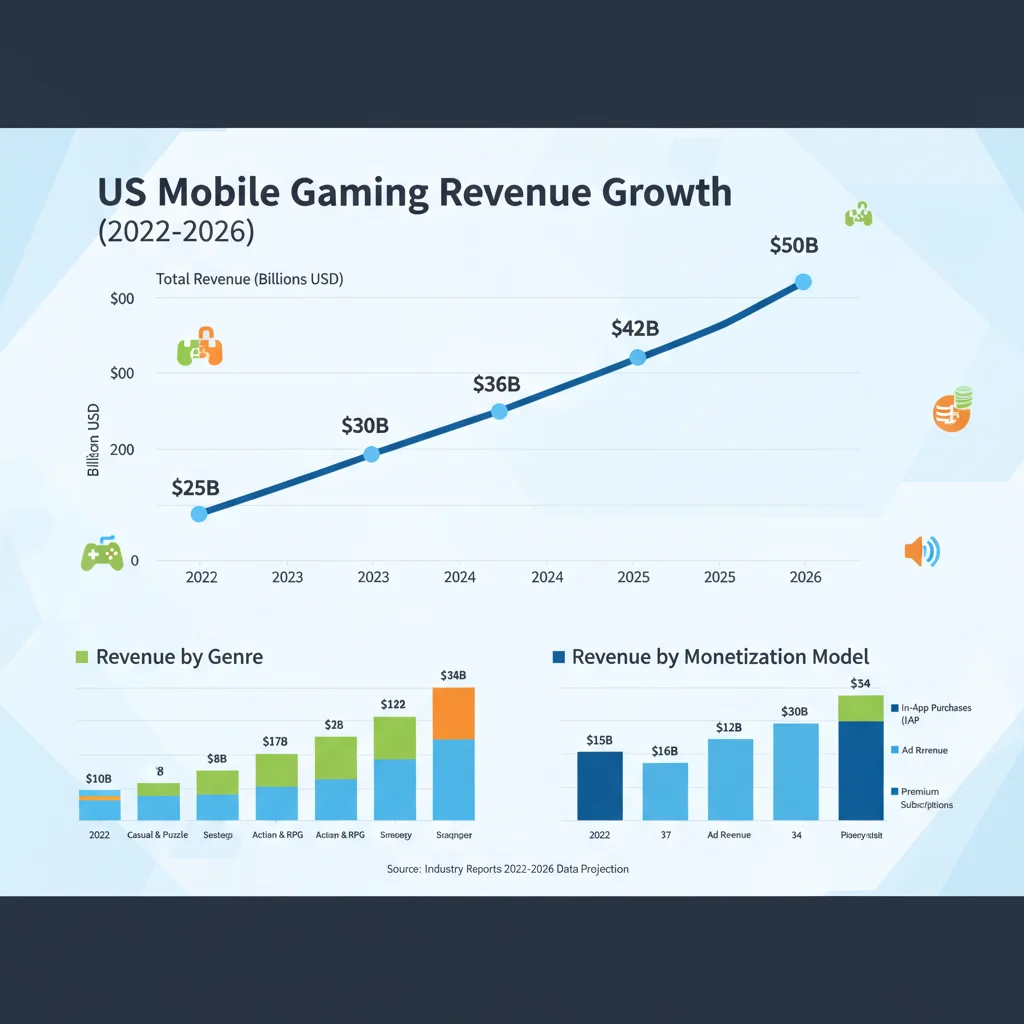
Forecasts suggest continued robust revenue growth, potentially pushing the market valuation into the tens of billions of dollars. This growth will be driven by increased player spending, expansion into new demographics, and the introduction of novel monetisation models. Investment in the sector will remain strong, with venture capital and private equity firms eager to back promising studios and innovative technologies.
However, sustainability will be a key theme. Developers will need to balance aggressive growth strategies with ethical considerations and long-term player engagement. The industry’s ability to adapt to technological shifts, regulatory changes, and evolving player expectations will determine its sustained success. The US mobile gaming market is not just about entertainment; it’s a vibrant, complex industry that reflects broader societal and technological trends.
Conclusion: A Dynamic Future for US Mobile Gaming
The US mobile gaming market in 2026 is envisioned as a dynamic, innovative, and highly competitive landscape. Driven by technological breakthroughs like 5G and AI, alongside shifts in consumer preferences towards more social and immersive experiences, the market is set for significant expansion. While challenges such as player acquisition and data privacy remain, they also present opportunities for developers to innovate and build trust.
For those involved in the mobile gaming ecosystem – from indie developers to multinational publishers, from hardware manufacturers to marketing agencies – understanding these trends is not merely beneficial; it is essential for survival and prosperity. The future of gaming is undeniably mobile, and the United States will continue to be a crucial proving ground for the industry’s most exciting advancements. As we approach 2026, the only certainty is that the mobile gaming world will continue to surprise, delight, and redefine our understanding of digital entertainment.