US Gaming M&A: H1 2026 Trends & Future Outlook
The United States gaming industry continues to be a dynamic and fiercely competitive landscape, attracting significant investment and fostering an environment ripe for strategic consolidation. As we reflect on the first half of 2026, the sector has once again demonstrated its resilience and growth potential, with a series of noteworthy mergers and acquisitions (M&A) shaping its future trajectory. Understanding these gaming M&A trends is crucial for investors, developers, and industry enthusiasts alike, as they provide a clear indication of where the market is heading.
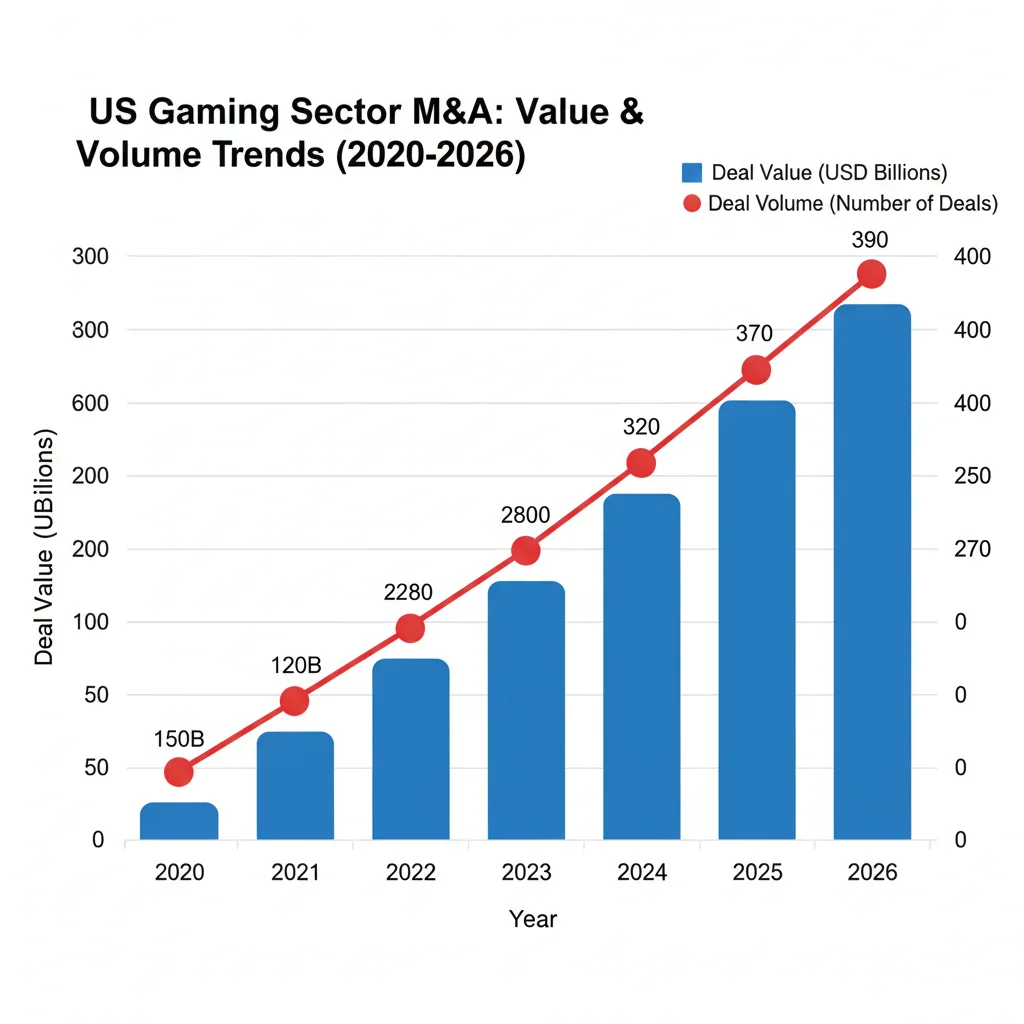
The past few years have seen an unprecedented surge in M&A activity across various sectors, and gaming is no exception. Driven by technological advancements, evolving consumer behaviour, and the increasing convergence of entertainment forms, companies are constantly seeking to expand their intellectual property portfolios, diversify their revenue streams, and capture larger market shares. The first six months of 2026 have only intensified this trend, revealing several key themes and strategic plays that are set to redefine the competitive landscape for years to come.
This comprehensive analysis will delve into the major gaming M&A trends observed in H1 2026, examining the motivations behind these deals, the impact on the market, and what these developments portend for the future of the US gaming industry. From colossal multi-billion-dollar takeovers to smaller, yet strategically significant, acquisitions of indie studios and technology providers, the M&A scene has been anything but dull.
Understanding the Drivers Behind US Gaming M&A in H1 2026
The robust M&A activity in the US gaming sector during the first half of 2026 isn’t a random occurrence; it’s a direct response to several powerful underlying forces. These drivers are multifaceted, encompassing technological shifts, market maturation, and strategic imperatives. To truly grasp the significance of recent gaming M&A trends, it’s essential to dissect these foundational elements.
Technological Innovation as a Catalyst
One of the primary catalysts for M&A has been the relentless pace of technological innovation. The continued evolution of virtual reality (VR), augmented reality (AR), and mixed reality (MR) platforms has opened up new avenues for immersive gaming experiences. Companies are acquiring studios and tech firms specialising in these areas to gain a competitive edge and integrate cutting-edge capabilities into their existing ecosystems. Similarly, advancements in cloud gaming technology have made high-fidelity gaming accessible to a broader audience, prompting strategic investments in cloud infrastructure and streaming expertise.
Furthermore, the rise of artificial intelligence (AI) and machine learning (ML) in game development – from procedural content generation to intelligent NPCs and personalised player experiences – has made AI-focused startups highly attractive targets. Companies are looking to acquire talent and intellectual property that can leverage AI to enhance gameplay, streamline development, and create more engaging content. This pursuit of technological superiority is a recurring theme in the gaming M&A trends of H1 2026.
Expanding Intellectual Property Portfolios
In an increasingly crowded market, owning strong intellectual property (IP) is paramount. Established publishers and platform holders are constantly on the lookout for popular game franchises, beloved characters, and successful studios that can bolster their content libraries. The acquisition of proven IP not only provides immediate revenue streams but also reduces the risk associated with developing new titles from scratch. This strategy is particularly evident in the mobile gaming space, where acquiring successful games with existing user bases can provide a significant boost to a company’s market share and overall valuation.
The first half of 2026 saw several instances where companies acquired studios primarily for their acclaimed game series or unique creative talent. This focus on IP acquisition is a long-term strategy aimed at securing future growth and ensuring a steady pipeline of engaging content for diverse player demographics. It’s a clear indication that content remains king in the gaming world, and companies are willing to pay a premium to secure it.
Diversification and New Market Penetration
Another significant driver of gaming M&A trends is the desire for diversification. Companies are looking beyond their traditional strongholds to explore new genres, platforms, and geographical markets. For instance, a console-focused publisher might acquire a successful mobile game developer to tap into the lucrative mobile market, or a Western company might acquire a studio with a strong presence in Asian markets to expand its global reach.
Esports continues to grow exponentially, and many traditional gaming companies are investing in or acquiring esports organisations, tournament organisers, and streaming platforms to capitalise on this burgeoning segment. Similarly, the convergence of gaming with other forms of entertainment, such as film, television, and music, has led to cross-sector acquisitions aimed at creating synergistic opportunities and expanding brand reach. This strategic diversification helps companies mitigate risks and unlock new growth vectors.
Consolidation and Market Share Dominance
Finally, the drive for consolidation and market share dominance remains a powerful force. Larger players are acquiring smaller competitors to eliminate rivals, consolidate market power, and achieve economies of scale. This can lead to increased pricing power, greater negotiating leverage with platform holders and distributors, and a stronger competitive position overall. The pursuit of becoming a dominant force in specific gaming niches or across the entire industry is a constant motivator for significant M&A activities.
These foundational drivers collectively explain the fervent M&A environment witnessed in the US gaming industry during H1 2026. Each acquisition, whether large or small, is typically influenced by one or more of these strategic considerations, shaping a rapidly evolving market landscape.
Key US Gaming M&A Deals in H1 2026: A Closer Look
The first half of 2026 was marked by a series of high-profile and strategically significant acquisitions that sent ripples throughout the US gaming industry. These deals not only highlight the prevailing gaming M&A trends but also offer insights into the future direction of the sector. While specific company names and exact figures are often confidential until official announcements, the types of transactions and the rationale behind them are illustrative.
Major Publisher Expansions
Several of the industry’s titans continued their expansion strategies through substantial acquisitions. One notable trend was the acquisition of mid-sized publishing houses that boasted a strong portfolio of niche-genre games. These acquisitions allowed larger entities to quickly gain a foothold in new market segments without the lengthy development cycles associated with building new franchises from scratch. For example, a major console publisher reportedly acquired a PC-centric strategy game publisher, aiming to leverage its expertise and fan base to expand into the burgeoning PC gaming market more effectively.
Another significant type of deal involved the acquisition of studios renowned for their technical prowess, particularly in areas like advanced graphics engines, network infrastructure, or AI-driven game design tools. These were not just about IP; they were about integrating superior technology that could benefit the acquirer’s entire development pipeline, leading to more efficient production and higher quality games across their portfolio. Such moves underscore the importance of technological advantage in the current competitive environment, a key aspect of modern gaming M&A trends.
Mobile Gaming Dominance Continues
Mobile gaming remained a hotbed of M&A activity. The sheer size and profitability of the mobile market mean that companies are constantly seeking to acquire successful mobile titles and development teams. In H1 2026, we saw multiple instances of established mobile gaming giants acquiring smaller, yet highly successful, studios known for specific genre expertise, such as hyper-casual, puzzle, or RPG mobile games. These acquisitions were often driven by the desire to quickly add proven revenue generators and expand their user base without the high marketing costs associated with launching new IPs.
Furthermore, there was a noticeable trend of cross-platform companies acquiring mobile developers to create synergistic experiences. Imagine a beloved console franchise getting a high-quality mobile companion game developed by an newly acquired mobile studio – this is the kind of strategic thinking that drove many of the mobile-focused gaming M&A trends in the first half of the year. The goal is often to create a more expansive and interconnected ecosystem for players across different devices.
Emergence of Web3 and Metaverse-Related Acquisitions
While still in its nascent stages, the Web3 and metaverse space saw increased interest from traditional gaming companies. Several smaller acquisitions were reported involving blockchain gaming startups, NFT platform developers, and companies building tools for persistent virtual worlds. These deals, though perhaps not as large in monetary value as some of the publisher expansions, were strategically significant. They represent a forward-looking investment by established players to explore and potentially dominate the next frontier of digital entertainment.
The rationale here is often about future-proofing. Companies are keen to understand and integrate blockchain technology, decentralised ownership, and interoperable virtual experiences before these concepts become mainstream. These early investments in Web3 and metaverse capabilities are a strong indicator of where a portion of future gaming M&A trends are likely to lead.
Esports and Content Creation Acquisitions
The esports sector continued to mature, leading to more targeted acquisitions. Beyond just teams, companies acquired esports analytics firms, media rights holders, and content creation platforms that focus on gaming. This reflects a broader understanding that the value in esports extends beyond competitive play to the entire ecosystem of viewership, fan engagement, and data analysis. Acquiring these entities allows companies to control more aspects of the esports value chain and generate diverse revenue streams.
In summary, the key deals of H1 2026 paint a picture of a gaming industry that is consolidating, diversifying, and strategically investing in future technologies and content. These transactions are not just financial events; they are strategic manoeuvres designed to secure long-term growth and competitive advantage in a rapidly evolving market.
Impact of H1 2026 M&A on the Gaming Ecosystem
The wave of mergers and acquisitions witnessed in the US gaming sector during the first half of 2026 has had, and will continue to have, profound implications across the entire gaming ecosystem. From developers and publishers to players and investors, the strategic shifts resulting from these gaming M&A trends are reshaping the industry’s structure, innovation pace, and competitive dynamics.
Consolidation and Market Structure
Perhaps the most immediate impact is the increasing consolidation of market power. As larger entities acquire smaller ones, the number of independent players shrinks, leading to a more concentrated market. This can have dual effects: on one hand, it can lead to greater financial stability for acquired studios, providing them with resources and distribution channels they might not have had independently. On the other hand, it can reduce competition, potentially leading to fewer innovative risks being taken by the dominant players, or even higher prices for consumers in the long run.
The landscape is evolving into one dominated by a few major conglomerates that control vast portfolios of IP and development talent. This shift means that smaller, independent studios face increased pressure to either innovate exceptionally well to remain competitive or become attractive acquisition targets themselves. The strategic implications for market entry and growth for new companies are significantly altered by these ongoing gaming M&A trends.
Impact on Game Development and Innovation
For game developers, M&A can bring both opportunities and challenges. Acquired studios often benefit from enhanced funding, access to advanced technologies, and broader marketing reach provided by their new parent companies. This can enable them to undertake more ambitious projects, refine their existing franchises, and reach a global audience more effectively. Collaboration across studios within a larger entity can also foster knowledge sharing and accelerate technological advancements.
However, there’s also the potential for creative friction. Integrating different corporate cultures, development philosophies, and management styles can be complex. There’s a risk that the unique identity and creative freedom of an acquired studio might be diluted or lost within a larger corporate structure. The challenge for acquiring companies is to integrate effectively while preserving the innovative spirit that made the acquired studio attractive in the first place. How these integrations are managed will significantly influence the pace and direction of innovation in the coming years, a critical aspect of future gaming M&A trends.
Player Experience and Content Availability
Players are directly affected by M&A through changes in content availability and ecosystem exclusivity. When popular IPs are acquired, they often become exclusive to certain platforms or subscription services owned by the acquiring company. This can be a boon for players on those platforms, offering a richer content library, but it can also fragment the market and force players to choose between ecosystems or subscribe to multiple services.
On the positive side, increased investment post-acquisition can lead to higher production values, more frequent updates, and better post-launch support for games. However, if consolidation leads to less competition, there’s a potential risk of reduced innovation or a focus on more commercially safe titles, which might not cater to all player preferences. The long-term effects on content diversity and player choice are key considerations when assessing the impact of current gaming M&A trends.
Investment Landscape and Valuation
From an investment perspective, the continued M&A activity signals a healthy and attractive market. High valuations and strategic acquisitions can create significant returns for shareholders of acquired companies. It also encourages further investment into the gaming sector, as venture capitalists and private equity firms see clear exit strategies and growth potential. This influx of capital can fuel further innovation and expansion across the industry.
However, it also means that valuations for desirable assets can become inflated, making it harder for new entrants or smaller players to compete. The focus on strategic assets, whether IP, technology, or talent, means that companies with strong foundations in these areas will continue to command premium prices. The investment landscape in gaming is becoming increasingly sophisticated, driven by these overarching gaming M&A trends.
In essence, the M&A activities of H1 2026 are not isolated events but rather interconnected threads weaving a new tapestry for the US gaming industry. Their collective impact will shape how games are made, distributed, and consumed for the foreseeable future.
Emerging Gaming M&A Trends and Future Predictions for H2 2026 and Beyond
Looking beyond the first half of 2026, the trajectory of gaming M&A trends in the US suggests a continuation of current patterns, alongside the emergence of new strategic focuses. The industry is in a perpetual state of evolution, and anticipating these shifts is key for all stakeholders. Here, we delve into what the remainder of 2026 and subsequent years might hold for mergers and acquisitions in the US gaming sector.
Increased Focus on Cross-Platform and Interoperability
One of the most significant emerging trends is the push towards true cross-platform experiences and interoperability. As players increasingly engage with games across consoles, PC, and mobile, companies will seek to acquire technologies and studios that can seamlessly bridge these different ecosystems. This means acquiring developers skilled in multi-platform development tools, cloud-based infrastructure that supports universal access, and even backend services that facilitate unified player accounts and progression.
The concept of a ‘gaming metaverse’ – where assets and identities can move between different virtual worlds – will drive acquisitions of companies building foundational technologies for such an environment. Expect more deals involving companies developing universal SDKs, digital identity solutions, and cross-game asset management platforms. This trend is about creating a more cohesive and accessible gaming experience, a crucial aspect of future gaming M&A trends.
The Maturation of Web3 Gaming and Metaverse Acquisitions
While H1 2026 saw initial forays into Web3 and metaverse acquisitions, the second half and beyond are likely to witness a maturation of this trend. As blockchain technology becomes more stable and user-friendly, and as regulatory frameworks become clearer, larger traditional gaming companies will likely make more substantial investments in established Web3 gaming projects. This could involve acquiring entire blockchain game studios, investing in decentralised autonomous organisations (DAOs) within gaming, or purchasing significant stakes in metaverse platforms.
The focus will shift from experimental acquisitions to acquiring companies that have demonstrable user bases, successful token economies, or proven technological solutions for integrating NFTs and play-to-earn mechanics in a sustainable way. The key will be finding projects that can genuinely enhance player ownership and engagement without alienating traditional gamers. This will be a defining characteristic of advanced gaming M&A trends.
AI and Advanced Analytics as Core Acquisition Targets
The role of Artificial Intelligence in gaming is only set to expand. Future M&A will increasingly target companies specialising in AI for game design, player behaviour analytics, live operations, and content personalisation. Acquiring AI expertise will allow companies to develop more adaptive games, optimise monetisation strategies, and predict player churn with greater accuracy. This isn’t just about integrating AI into individual games but building AI capabilities that can serve an entire portfolio of titles.
Furthermore, data analytics firms that can provide deep insights into market trends, player demographics, and competitive landscapes will become highly valuable. Companies will seek to acquire these capabilities to make more informed strategic decisions, including future M&A targets. The ability to leverage big data and AI for strategic advantage will be a consistent theme in upcoming gaming M&A trends.
The Continued Rise of Subscription Models and Cloud Gaming
Subscription services and cloud gaming platforms are fundamentally changing how games are consumed. Companies will continue to acquire studios and technologies that can bolster their subscription offerings and cloud infrastructure. This could mean acquiring exclusive content for their services, or companies with expertise in streaming optimisation, low-latency game delivery, and scalable server architectures.
The goal is to create compelling ecosystems that attract and retain subscribers, ensuring a steady recurring revenue stream. Expect to see more consolidation around these platforms as companies vie for dominance in the ‘Netflix of gaming’ space. This strategic imperative will continue to fuel specific gaming M&A trends focused on service-based models.
Geographic Expansion and Emerging Markets
While the US market is mature, there’s still significant potential in international expansion. Companies will continue to pursue acquisitions that provide access to rapidly growing gaming markets in Asia, Latin America, and Africa. This often involves acquiring local studios with a deep understanding of regional cultural nuances, distribution networks, and player preferences. These acquisitions are not just about market entry but about cultural integration and building a truly global presence.
In conclusion, the future of US gaming M&A is one of strategic foresight, technological integration, and a relentless pursuit of new growth avenues. The trends observed in H1 2026 are merely a prelude to a more complex and dynamic M&A landscape, driven by innovation, market consolidation, and the ever-evolving demands of a global player base.
Challenges and Opportunities in the Evolving Gaming M&A Landscape
While the US gaming M&A market in H1 2026 demonstrated robust activity and strategic intent, it is not without its challenges and inherent opportunities. Understanding these dynamics is crucial for any entity navigating this complex environment, from potential acquirers and targets to investors and industry observers. The ongoing evolution of gaming M&A trends is shaped by these very factors.
Navigating Regulatory Scrutiny
One of the most significant challenges facing large-scale M&A in the gaming sector is increasing regulatory scrutiny. Governments and antitrust bodies worldwide are paying closer attention to major consolidations, particularly those that could lead to reduced competition or create monopolies. This was evident in several high-profile attempts at acquisitions in recent years that faced extended reviews or outright blocking.
For future deals, particularly those involving industry giants, navigating complex regulatory landscapes across multiple jurisdictions will be paramount. Companies will need to demonstrate that their acquisitions foster innovation and benefit consumers, rather than stifling competition. This regulatory environment adds layers of complexity, cost, and uncertainty to even the most strategically sound M&A initiatives, directly impacting the pace and scale of gaming M&A trends.
Integration Challenges and Cultural Clashes
The success of any acquisition hinges on effective integration. This is particularly challenging in the creative and talent-driven gaming industry. Merging different corporate cultures, development pipelines, and technological stacks can lead to significant friction, employee turnover, and ultimately, a failure to realise the intended synergies. The ‘people’ aspect of M&A is often underestimated, yet it can make or break a deal.
Acquiring companies must invest heavily in post-merger integration strategies that prioritise talent retention, cultural compatibility, and clear communication. A failure to do so can lead to a loss of key personnel, disillusionment within the acquired team, and a decline in creative output. Addressing these integration challenges effectively presents a significant opportunity to unlock the full value of an acquisition, influencing the long-term success of gaming M&A trends.
Valuation and Overpayment Risks
The intense competition for desirable assets in the gaming sector can lead to inflated valuations and the risk of overpayment. With so many companies vying for successful studios, popular IP, or cutting-edge technology, bidding wars can drive prices beyond what might be considered reasonable. Overpaying for an acquisition can strain the balance sheet of the acquiring company and make it difficult to achieve a positive return on investment.
Opportunities lie in meticulous due diligence and a clear understanding of the target’s true value, including its intangible assets like brand reputation and creative talent. Companies that can identify undervalued assets or strategic synergies that others overlook will be at an advantage. Striking the right balance between strategic imperative and financial prudence is a constant challenge in the current gaming M&A trends environment.
The Opportunity for Niche Market Growth
Despite the trend towards consolidation, there remains significant opportunity for growth in niche markets. Indie studios and developers focusing on underserved genres, innovative gameplay mechanics, or unique artistic styles can still thrive and attract attention. These smaller, agile companies often become attractive targets for larger entities looking to diversify their portfolios or tap into new creative wells.
The opportunity here for smaller players is to continue innovating and building strong communities around their games. For larger companies, the opportunity is to identify these rising stars early and integrate them in a way that preserves their creative spark while providing them with the resources to scale. This dynamic interplay between large and small is a continuous source of both challenges and opportunities within gaming M&A trends.
Leveraging Emerging Technologies
As discussed, technologies like AI, VR/AR, and blockchain are still evolving, presenting both risks and immense opportunities. Companies that can effectively identify, acquire, and integrate nascent technologies with high potential will gain a significant competitive advantage. This requires a forward-thinking approach, a willingness to invest in unproven areas, and the ability to pivot rapidly as technology matures.
The challenge is distinguishing between hype and genuine innovation, and investing wisely in technologies that will have a lasting impact. The opportunity lies in being at the forefront of technological adoption, shaping the future of gaming experiences through strategic M&A. This forward-looking investment in technology will continue to be a defining characteristic of future gaming M&A trends.
In essence, the M&A landscape in US gaming is a double-edged sword, presenting both formidable obstacles and lucrative pathways for growth. Success will hinge on strategic vision, operational excellence, and an acute awareness of both market dynamics and emerging technological frontiers.
Conclusion: The Future is Consolidated and Innovative
The first half of 2026 has unequivocally demonstrated that the US gaming industry remains a hotbed of M&A activity, driven by a confluence of technological advancement, strategic expansion, and the relentless pursuit of market dominance. The gaming M&A trends observed – from major publisher expansions and mobile gaming consolidation to nascent investments in Web3 and AI – paint a clear picture of an industry in rapid transformation.
Looking ahead, we can anticipate a continued emphasis on cross-platform interoperability, deeper integration of artificial intelligence across all facets of game development and operations, and a more mature approach to Web3 and metaverse-related acquisitions. The strategic imperative for companies will be to build robust, interconnected ecosystems that can capture and retain players across diverse platforms and experiences.
However, this future is not without its complexities. Navigating increased regulatory scrutiny, successfully integrating diverse corporate cultures, and making sound valuation decisions will be critical challenges for acquirers. Opportunities, however, abound for innovative niche players and for companies adept at leveraging emerging technologies to create truly next-generation gaming experiences.
The US gaming market is consolidating, yes, but it is also innovating at an unprecedented pace. The M&A activities of H1 2026 are not just financial transactions; they are strategic declarations that will shape the competitive landscape, content offerings, and technological capabilities of the industry for years to come. For anyone involved in or passionate about gaming, these evolving gaming M&A trends are essential to watch, as they are truly defining the future of digital entertainment.