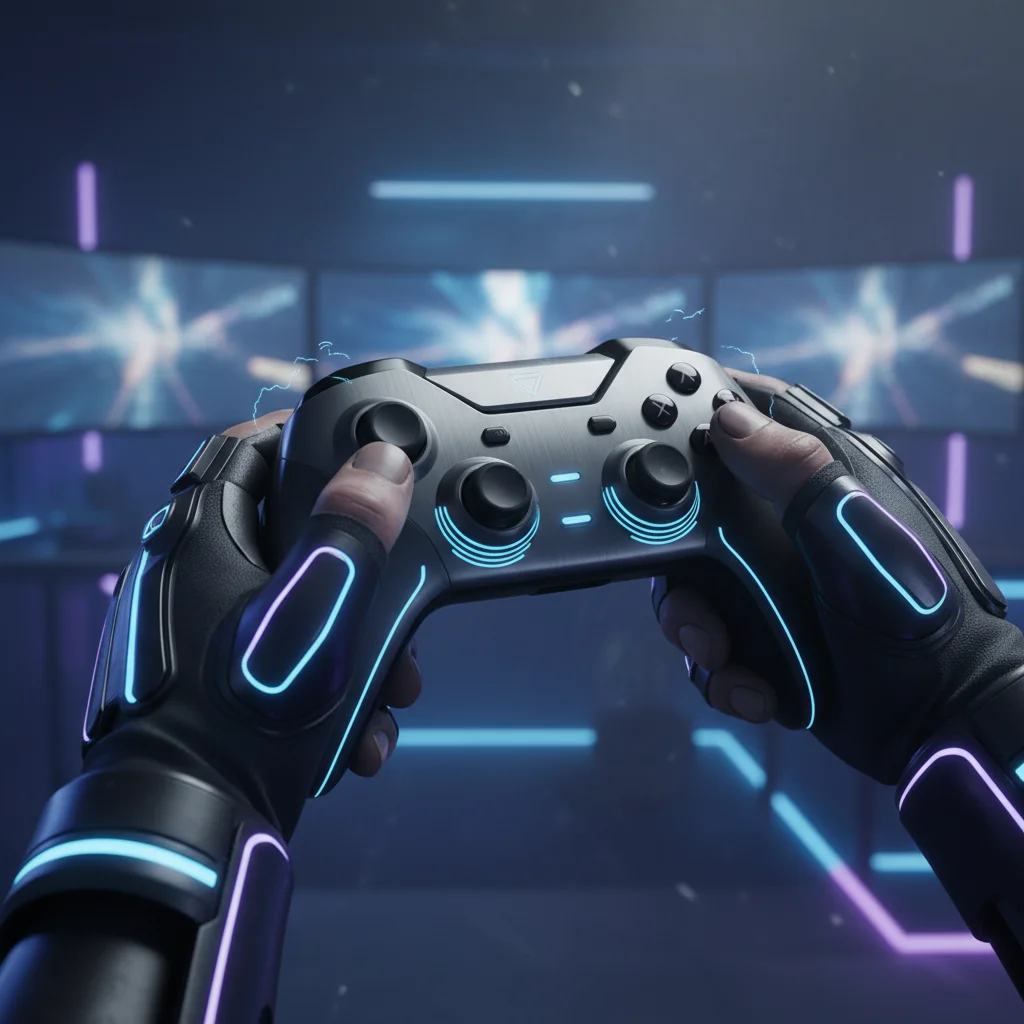
The Rise of Haptic Feedback Technology: Enhancing Immersion in 2026 with 2 New Controller Features
In the rapidly evolving landscape of interactive entertainment, the quest for ultimate immersion remains a driving force. Gamers and developers alike constantly seek new ways to bridge the gap between the virtual and physical worlds, transforming mere visual and auditory stimuli into truly tangible experiences. Enter Haptic Feedback Immersion, a technology poised to redefine how we interact with digital environments. By 2026, we anticipate a monumental leap in this field, with the introduction of two groundbreaking controller features that will fundamentally alter the gaming paradigm.
For years, haptic feedback has been a subtle, almost background element in gaming – think of the rumble in your controller when you take damage or fire a weapon. While effective, these early iterations barely scratched the surface of what’s possible. The future, however, promises a much richer, more nuanced, and deeply integrated sensory experience. This isn’t just about feeling a vibration; it’s about feeling the texture of a digital surface, the resistance of a virtual mechanism, or the subtle impact of environmental elements. The technological advancements in tiny, precise actuators, sophisticated software algorithms, and intelligent material science are converging to create a new era of sensory interaction.
This article will delve into the exciting trajectory of haptic feedback, exploring its current state, the challenges it faces, and the incredible innovations expected to emerge by 2026. We’ll specifically highlight two revolutionary controller features that are set to elevate Haptic Feedback Immersion to unprecedented levels, making your gaming sessions more visceral, realistic, and unforgettable.
Understanding the Foundation: What is Haptic Feedback?
At its core, haptic feedback is the technology that simulates the sense of touch through vibrations, forces, or motions. It’s a sensory input that allows users to feel digital information. In gaming, this has traditionally manifested as rudimentary vibrations in controllers, providing basic cues for events like explosions or collisions. However, modern haptics goes far beyond simple rumbling. It encompasses a spectrum of tactile sensations, including textures, pressures, temperatures, and even the feeling of resistance.
The science behind advanced haptics involves complex actuators – tiny motors or piezoelectric elements that can rapidly deform or vibrate to create specific tactile patterns. These are controlled by sophisticated algorithms that translate in-game events into precise physical sensations. The goal is to provide a level of fidelity that tricks the brain into believing these sensations are real, thereby enhancing the overall immersion.
The Evolution of Haptics in Gaming
- Early Days (1990s-2000s): The Nintendo 64’s Rumble Pak was a pioneer, offering basic vibration feedback. This was followed by similar functionalities in PlayStation’s DualShock controllers, becoming a standard feature across consoles.
- Mid-Era (2010s): More advanced linear resonant actuators (LRAs) and eccentric rotating mass (ERM) motors allowed for slightly more varied vibrations, but still largely limited to on/off states or simple intensity changes. Mobile phones also began incorporating haptics for notifications and keyboard clicks.
- Current State (Early 2020s): Modern controllers like the PlayStation 5’s DualSense have taken significant steps forward. Its ‘Adaptive Triggers’ and ‘Haptic Feedback’ motors offer more precise, nuanced sensations, simulating things like the tension of a bowstring or the feeling of walking on different surfaces. This represents a significant leap towards true Haptic Feedback Immersion.
Despite these advancements, there’s still a vast untapped potential. Current haptics, while impressive, often still feel like distinct vibrations rather than an integrated part of the physical world. The next generation of technology aims to blur this line entirely, making the haptic experience indistinguishable from real-world tactile sensations.
The Demand for Deeper Immersion
Why is there such a strong push for enhanced Haptic Feedback Immersion? The answer lies in the fundamental human desire for realism and engagement. As graphics become hyper-realistic and audio becomes cinematic, the sense of touch remains the missing piece of the puzzle for truly believing in a virtual world. Without tactile feedback, even the most visually stunning environments can feel detached and ethereal.
Consider the impact on various gaming genres:
- Action/Adventure: Imagine feeling the crunch of snow underfoot, the impact of a sword clash, or the subtle vibrations of a distant explosion through your hands.
- Racing Sims: The texture of different road surfaces, the subtle slip of tires, or the force of a collision could be conveyed with unprecedented fidelity.
- Virtual Reality (VR): This is perhaps where haptics has the most transformative potential. In VR, the visual and auditory senses are already heavily engaged. Adding realistic touch feedback can make virtual objects feel truly present, enhancing presence and reducing motion sickness for some users.
- Simulation Games: Operating complex machinery or interacting with intricate environments could be made far more intuitive and realistic with precise haptic cues.
The goal is to move beyond simply alerting the player to an event, and instead, to allow them to feel the world. This deeper sensory connection can significantly increase emotional engagement, cognitive presence, and overall enjoyment, making the virtual experience profoundly more impactful.
The Road to 2026: Overcoming Current Limitations
Achieving truly transformative Haptic Feedback Immersion by 2026 requires overcoming several technical hurdles. Current limitations include:
- Fidelity and Resolution: Existing actuators often lack the precision to simulate a wide range of textures or subtle forces. Creating distinct sensations for different materials (wood, metal, fabric) requires much higher resolution haptic devices.
- Power Consumption: Powerful haptic actuators can drain battery life quickly, a significant concern for wireless controllers.
- Size and Weight: Integrating numerous advanced haptic elements without making controllers bulky or heavy is a design challenge.
- Cost: Cutting-edge haptic technology can be expensive, potentially driving up the cost of peripherals.
- Developer Integration: Game developers need robust and intuitive tools to effectively design and implement complex haptic experiences into their games.
However, ongoing research and development in materials science, miniaturization, and energy efficiency are rapidly addressing these issues. By 2026, we expect to see significant breakthroughs that make these advanced haptic features not only feasible but also commercially viable for mainstream gaming.
Revolutionary Feature 1: Dynamic Surface Texture Replication
The first groundbreaking feature set to redefine Haptic Feedback Immersion by 2026 is Dynamic Surface Texture Replication. Imagine walking through a virtual forest and not just seeing trees, but feeling the rough bark of an oak, the smooth surface of a polished stone, or the gritty texture of a dirt path under your character’s feet – all through your controller.
How it Works
This technology will utilise an array of microscopic, rapidly oscillating transducers embedded within the controller’s grip surfaces and possibly even the thumbsticks. These transducers, far more numerous and precise than current haptic motors, can generate incredibly fine-grained vibrational patterns. By dynamically adjusting the frequency, amplitude, and phase of these vibrations across the surface, the controller can simulate the sensation of different textures.
For example, to simulate rough bark, specific transducers might oscillate irregularly at a low frequency. For smooth metal, a high-frequency, uniform vibration might be used. The system will be intelligent enough to interpret in-game surface data (e.g., from physics engines or texture maps) and translate it into a corresponding haptic pattern in real-time. This isn’t just a pre-programmed vibration; it’s a dynamic, adaptive response to the virtual environment.
Impact on Immersion
- Enhanced Realism: Players will gain a deeper, more convincing sense of presence within virtual environments. The world will feel more ‘there’.
- Environmental Awareness: Subtly feeling the ground beneath your character can provide crucial information, like traversing slippery ice versus solid rock.
- Object Interaction: Picking up virtual objects will feel more substantial and unique based on their simulated material properties. Imagine feeling the cold, smooth glass of a potion bottle or the coarse fabric of a medieval cloak.
- Accessibility: For visually impaired gamers, this feature could provide an entirely new layer of environmental information.
The key innovation here is the ability to render a continuous, varied spectrum of tactile sensations, moving beyond simple ‘on/off’ or ‘strong/weak’ vibrations to a rich tapestry of textural feedback. This will make virtual worlds feel incredibly more tangible and believable, amplifying Haptic Feedback Immersion significantly.
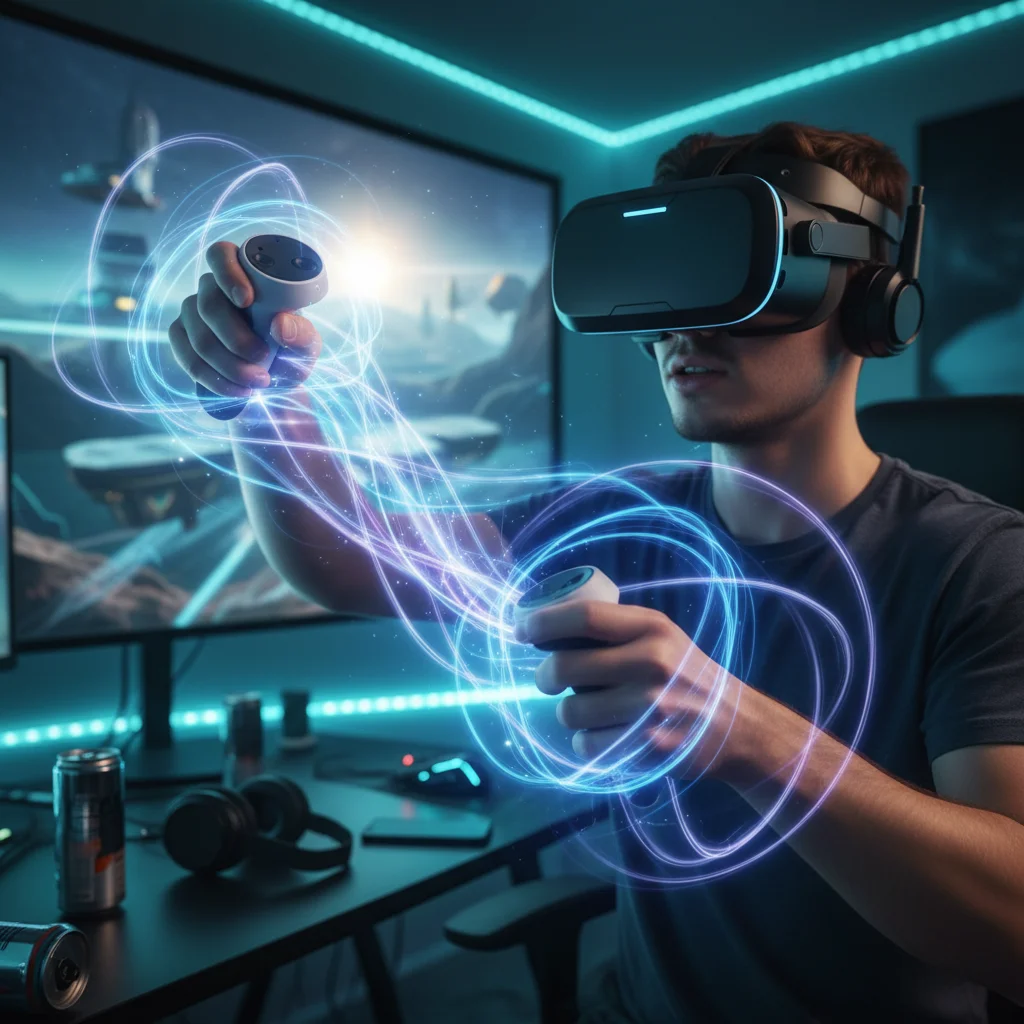
Revolutionary Feature 2: Force-Sensitive Shape-Shifting Grips
The second game-changing feature expected by 2026 is Force-Sensitive Shape-Shifting Grips. This goes beyond just feeling textures; it’s about the controller dynamically altering its physical form and resistance to mimic in-game interactions. Think of it as a deformable interface that responds to your actions and the virtual world.
How it Works
These grips would incorporate advanced micro-fluidic systems or electroactive polymers that can rapidly change their rigidity and even subtly alter their shape. When you, for instance, squeeze a virtual object, the controller grips would subtly stiffen, providing realistic resistance proportional to the virtual object’s hardness. If you were virtually holding a soft, squishy item, the grips might feel slightly more yielding.
Beyond simple resistance, these grips could also simulate dynamic forces. Imagine drawing a bowstring in a game: the grips would gradually increase in stiffness and tension as you pull back, mirroring the real-world effort. When the arrow is released, the sudden relaxation of tension would provide a visceral sense of the action. Similarly, the recoil of a powerful firearm could be simulated not just with vibration, but with a momentary, sudden expansion and contraction of the grip, pushing back against your hand.
Impact on Immersion
- Unprecedented Realism in Interaction: Handling virtual tools, weapons, or objects will feel incredibly authentic, adding a new dimension to gameplay mechanics.
- Enhanced Physicality: Actions like climbing, grappling, or even just pushing a button in the game will have a physical consequence in your hands, deepening the physical connection to the game world.
- Improved Feedback for Actions: The force and resistance provided by the grips will offer immediate, intuitive feedback on the success or failure of in-game actions, such as successfully grappling an enemy or failing to open a jammed door.
- Reduced Motion Sickness in VR: By providing a stronger physical anchor to virtual objects and interactions, this feature could potentially mitigate motion sickness for some VR users.
This feature takes Haptic Feedback Immersion from passive sensation to active physical interaction, making the controller an extension of the virtual world rather than just an input device. The interplay between your physical input and the controller’s dynamic response creates a feedback loop that dramatically enhances realism.
The Synergy of Features: A Holistic Haptic Experience
While Dynamic Surface Texture Replication and Force-Sensitive Shape-Shifting Grips are powerful on their own, their true potential lies in their synergistic application. Imagine a scenario in a survival horror game:
You’re creeping through a dark, derelict building. Your controller vibrates with the subtle, gritty texture of the crumbling concrete floor (Dynamic Surface Texture Replication). You reach out to push open a heavy, rusty metal door. As your virtual hand grips the cold, rough metal (Texture Replication), your controller grips subtly stiffen and resist your push (Shape-Shifting Grips), conveying the door’s weight and age. Suddenly, a monstrous creature lunges from the shadows! You instinctively squeeze your controller, and the grips momentarily tighten with the adrenaline, then pulse with the creature’s impact as it hits the door, sending a shuddering wave of vibration and resistance through your hands.
This level of integrated sensory feedback moves beyond simple gaming and into a realm of truly believable, interactive experiences. It’s not just about what you see and hear, but what you feel as an active participant in the virtual narrative. This holistic approach to Haptic Feedback Immersion will be a hallmark of gaming in 2026 and beyond.
Challenges and the Path Forward
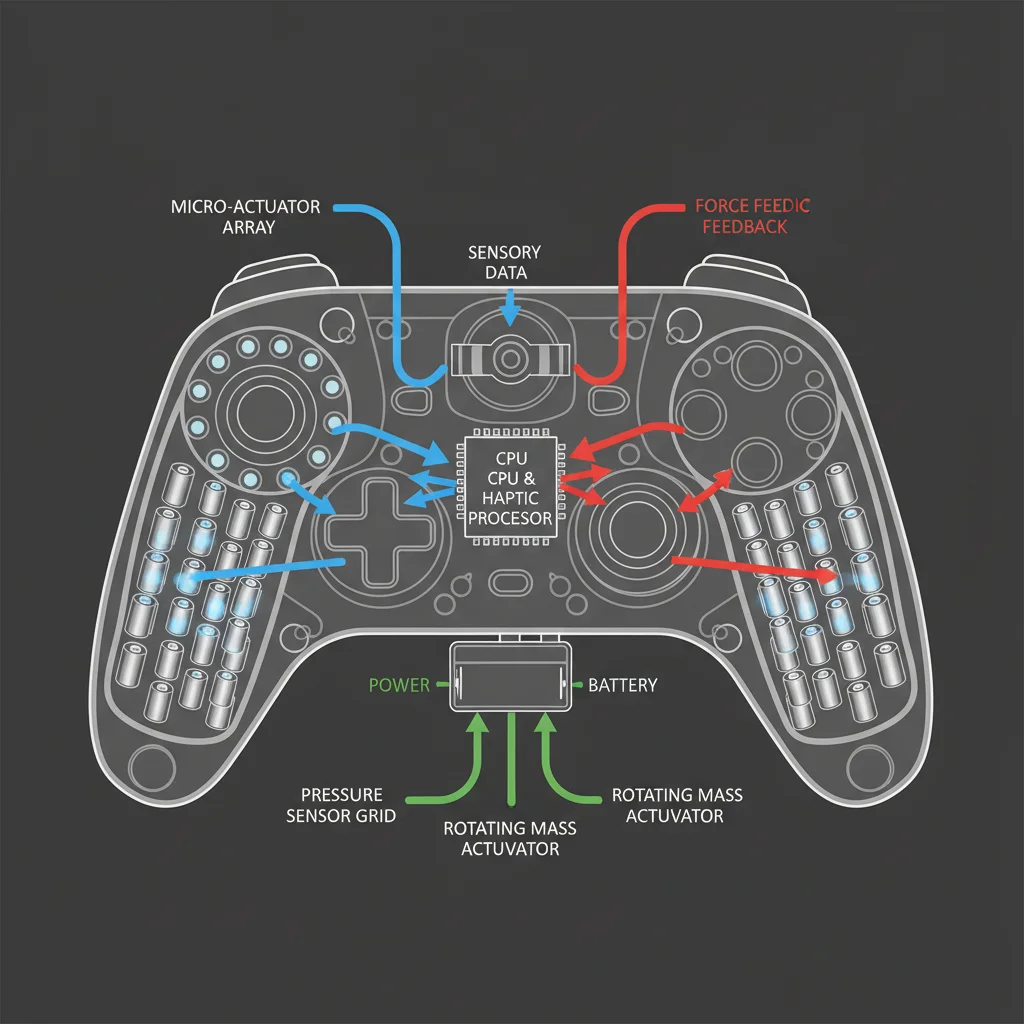
While the future of Haptic Feedback Immersion is bright, several challenges remain. The development of robust, energy-efficient micro-actuators capable of delivering precise and varied tactile sensations is paramount. Miniaturization will be key to integrating these complex systems into ergonomic and lightweight controllers. Furthermore, the cost of these advanced components will need to decrease to ensure widespread adoption.
Beyond hardware, software development tools will play a critical role. Game developers will require sophisticated APIs and intuitive design environments to effectively incorporate these complex haptic effects into their titles. Standardisation across platforms could also accelerate adoption, allowing for more consistent player experiences.
Ethical considerations also arise. As immersion deepens, the line between reality and virtuality blurs. Developers and platform manufacturers will need to consider the psychological impact of such realistic feedback, particularly in intense or disturbing virtual scenarios. Responsible design will be crucial to ensure a positive and healthy user experience.
The Role of AI and Machine Learning
Artificial Intelligence (AI) and Machine Learning (ML) are expected to play a crucial role in the advancement of Haptic Feedback Immersion. AI algorithms can analyse in-game physics, environmental data, and player actions in real-time to generate highly contextual and nuanced haptic responses. Instead of developers manually scripting every single haptic effect, AI could dynamically generate appropriate tactile feedback based on the situation, leading to more organic and realistic sensations.
- Real-time Haptic Generation: ML models could be trained on vast datasets of real-world tactile sensations, allowing them to predict and generate appropriate haptic patterns for any in-game interaction or surface.
- Personalised Feedback: AI could learn player preferences and adapt haptic responses to suit individual sensitivities, enhancing comfort and enjoyment.
- Optimizing Power Consumption: ML algorithms could also be used to optimise the power usage of haptic actuators, ensuring maximum effect with minimal battery drain.
The integration of AI will not only simplify the development process but also unlock a new level of adaptive and intelligent Haptic Feedback Immersion that feels truly responsive to the player’s unique experience.
Beyond Gaming: The Wider Applications of Advanced Haptics
The advancements in haptic feedback technology driven by the gaming industry will undoubtedly spill over into other sectors, demonstrating its broad utility. The pursuit of enhanced Haptic Feedback Immersion is not just for entertainment; it has profound implications for various fields:
- Medical Training and Surgery: Surgeons could practice complex procedures on haptically-enabled simulators, feeling the resistance of tissue, the pressure of instruments, and the texture of organs, leading to more realistic and effective training.
- Remote Robotics and Telepresence: Operators controlling robots in dangerous or distant environments could receive tactile feedback, allowing them to ‘feel’ the robot’s interactions with its surroundings, greatly enhancing control and precision.
- Education: Learning about complex physical concepts, such as material properties or mechanical forces, could be made more intuitive and engaging through haptic simulations.
- Product Design and Engineering: Designers could ‘feel’ virtual prototypes of products, evaluating textures, ergonomics, and material properties before physical production, streamlining the design process.
- Accessibility: Haptic interfaces can provide crucial non-visual feedback for visually impaired individuals, aiding navigation, object identification, and interaction with digital devices.
- Automotive Industry: Haptic feedback could be integrated into vehicle controls, providing tactile warnings for lane departures, collision avoidance, or even simulating road conditions for enhanced driver awareness.
The innovations in gaming, particularly the push for more realistic and nuanced tactile experiences, are acting as a powerful catalyst for the entire haptics industry. As the technology matures and becomes more affordable, its integration into these diverse applications will become increasingly common, touching nearly every aspect of our lives.
Conclusion: The Tactile Revolution of 2026
By 2026, the gaming landscape will be irrevocably transformed by the advent of highly sophisticated Haptic Feedback Immersion. The introduction of Dynamic Surface Texture Replication and Force-Sensitive Shape-Shifting Grips will not merely enhance existing gameplay; they will create entirely new possibilities for interaction, storytelling, and emotional engagement. Games will no longer be just something we see and hear, but something we truly feel and physically interact with on an unprecedented level.
This tactile revolution promises to make virtual worlds more believable, more engaging, and ultimately, more memorable. As developers harness these powerful new tools, we can look forward to a future where the line between the digital and the physical continues to blur, offering experiences that are not just played, but profoundly felt. The future of gaming is not just visual; it’s visceral, and 2026 is poised to be a pivotal year in this exciting journey towards ultimate immersion.