US Gaming Subscription Models: 2026 Retention & Revenue

US Gaming Subscription Models: A 2026 Deep Dive into Player Retention and Revenue Streams
The gaming industry is perpetually in flux, a dynamic landscape shaped by technological innovation, evolving player expectations, and shrewd business strategies. Among the most transformative forces of the past decade, and undoubtedly into the foreseeable future, are gaming subscription US models. As we peer into 2026, these models are no longer a nascent trend but a deeply ingrained pillar of the American gaming experience, fundamentally altering how players access content and how publishers generate revenue and, crucially, foster long-term player loyalty.
The shift from a purely transactional, ‘buy-to-own’ model to a subscription-based paradigm has been nothing short of revolutionary. What began with early attempts like Xbox Live Gold and PlayStation Plus, primarily offering online multiplayer access and a handful of free games, has blossomed into a diverse ecosystem encompassing vast game libraries, cloud streaming services, exclusive content, and tiered membership benefits. This evolution isn’t merely about convenience; it’s a calculated move to secure consistent revenue streams, reduce piracy, and, perhaps most importantly, cultivate an engaged and retained player base.
In this comprehensive exploration, we will dissect the current state and projected trajectory of gaming subscription US models by 2026. We’ll examine the key drivers behind their success, the innovative strategies employed for player retention, the diversification of revenue streams they enable, and the challenges and opportunities that lie ahead for both consumers and industry stakeholders. From the titans of the console world to the burgeoning mobile and PC subscription services, the impact is undeniable and far-reaching.
The Evolution of Gaming Subscription US: From Niche to Mainstream
The journey of gaming subscription US services has been marked by significant milestones. Initially, these services primarily served as gateways to online multiplayer, a necessity for competitive gaming. However, the introduction of curated game libraries, epitomized by Xbox Game Pass, marked a pivotal moment. Game Pass, often dubbed the ‘Netflix of gaming,’ demonstrated the immense potential of offering a rotating catalog of titles for a flat monthly fee, attracting millions of subscribers with its value proposition.
By 2026, the landscape is considerably more crowded and sophisticated. Major players like Sony, Microsoft, and Nintendo have refined their offerings, often tiering them to cater to different segments of their audience. PC gaming has seen a surge in services like PC Game Pass, EA Play, and Ubisoft+, while mobile gaming, albeit with different monetization mechanics, is also seeing a rise in premium subscriptions that remove ads, unlock content, or offer exclusive perks. Cloud gaming, once a nascent technology, has matured significantly, with services like Xbox Cloud Gaming, GeForce NOW, and PlayStation Plus Premium allowing players to stream high-fidelity games across multiple devices, further enhancing accessibility and convenience.
This widespread adoption is driven by several factors. For players, subscriptions offer unparalleled access to a vast array of games without the upfront cost of individual purchases, encouraging experimentation and discovery. For publishers, they represent a stable, recurring revenue stream, reducing reliance on individual game sales and providing a predictable financial foundation for future development. The synergistic relationship forged between these entities is at the heart of the gaming subscription US boom.
Player Retention Strategies: The Holy Grail of Subscription Success
In the subscription economy, acquisition is only half the battle; retention is the ultimate prize. For gaming subscription US providers, keeping players engaged month after month is paramount. By 2026, the strategies employed to achieve this have become increasingly sophisticated, leveraging data analytics, community building, and continuous content delivery.
Continuous Content Refresh and Curation
The most fundamental retention strategy is a constant influx of fresh, high-quality content. Services must regularly add new games, including day-one releases from major studios and exciting indie titles, to maintain subscriber interest. The curation of these libraries is also crucial; understanding subscriber preferences and offering a diverse selection that appeals to different tastes is key. Exclusive content, such as subscriber-only demos, beta access, or unique in-game items, further incentivizes continued membership.
Community Building and Social Features
Gaming is inherently social, and successful subscription models leverage this. Integrated social features, easy party formation, cross-platform play, and dedicated community forums foster a sense of belonging. Events, tournaments, and subscriber-exclusive content drops that encourage collaborative play are powerful retention tools. When players feel connected to a community, they are far more likely to remain subscribed.
Personalization and Recommendation Engines
Advanced AI-driven recommendation engines are becoming standard. By analyzing a player’s gaming habits, preferences, and playtime, subscription services can offer highly personalized suggestions, ensuring players always have something new and engaging to try. This reduces decision fatigue and keeps players within the ecosystem.
Value-Added Benefits Beyond Games
Many gaming subscription US services now offer perks beyond just access to games. These can include discounts on digital storefronts, in-game currency bonuses, cloud storage for game saves, early access to new features, or even non-gaming benefits like movie streaming trials or music subscriptions. These added values enhance the overall perceived worth of the subscription, making it harder for players to cancel.
Seamless Cross-Platform Experience
The modern gamer doesn’t stick to a single device. Successful subscription models provide a seamless experience across PCs, consoles, mobile devices, and even smart TVs. Cloud gaming plays a significant role here, allowing players to pick up where they left off, regardless of the device they are using. This flexibility is a major convenience factor that boosts retention.
Diverse Revenue Streams: Beyond the Monthly Fee
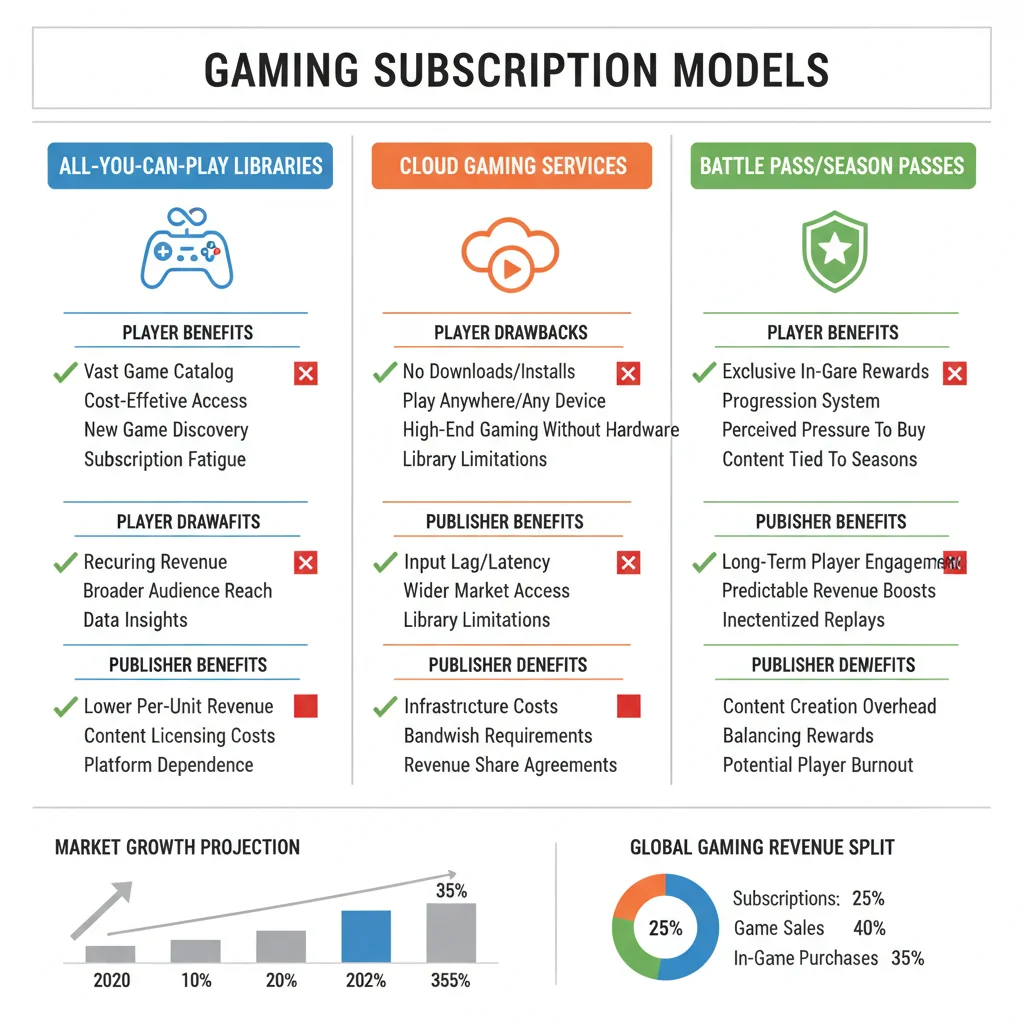
While the recurring monthly or annual fee is the bedrock of gaming subscription US revenue, astute publishers are diversifying their income streams within this model. By 2026, several complementary monetization strategies have matured, creating a robust financial ecosystem.
Tiered Subscriptions
Offering multiple subscription tiers is a common and highly effective strategy. A basic tier might provide core game access, while premium tiers could include cloud streaming, exclusive content, larger game libraries, or even early access to new releases. This allows publishers to cater to different budget levels and feature demands, maximizing revenue per user.
In-Game Purchases and Microtransactions
Even within a subscription model, in-game purchases (microtransactions) remain a significant revenue driver. Cosmetics, battle passes, expansions not included in the base subscription, and convenience items can all contribute. The key is to integrate these in a way that feels additive rather than exploitative, enhancing the player experience without creating a ‘pay-to-win’ scenario that alienates subscribers.
Advertising and Partnerships (Subtle Integration)
While less prevalent in premium gaming subscriptions, subtle, non-intrusive advertising or brand partnerships could emerge as a minor revenue stream, particularly in free-to-play titles offered within a subscription. This would require careful implementation to avoid detracting from the premium experience subscribers expect.
Data Monetization (Ethical Considerations)
The vast amounts of data generated by subscriber activity – playtime, game preferences, engagement patterns – are invaluable. While direct data selling raises ethical concerns, anonymized and aggregated data can inform game development, marketing strategies, and even partnerships, indirectly contributing to revenue by optimizing service offerings and reducing churn.
Merchandise and E-commerce Integration
Leveraging the passionate fan bases cultivated by subscription services, some publishers are integrating e-commerce directly into their platforms. Offering exclusive merchandise, digital art books, or soundtracks related to popular games within their libraries can provide an additional revenue stream and deepen brand loyalty.
Challenges and Opportunities in the 2026 Landscape
The rapid growth of gaming subscription US models also brings a unique set of challenges and opportunities that will define their trajectory by 2026.
Content Overload and Discovery
As libraries swell, content overload becomes a genuine concern. Players can feel overwhelmed by choice, making game discovery a critical challenge. Services that excel at intelligent curation, strong recommendation engines, and intuitive interfaces will have a distinct advantage in helping players find their next favorite game.
Subscription Fatigue
The broader ‘subscription economy’ extends beyond gaming to streaming, music, and software. Consumers are increasingly facing ‘subscription fatigue,’ where the cumulative cost of multiple services becomes prohibitive. Gaming subscriptions must continuously justify their value proposition against competing entertainment options and other gaming services.
Developer Relations and Fair Compensation
For developers, the economics of subscription models can be complex. While they offer a stable platform for exposure and consistent payouts, concerns about fair compensation, particularly for smaller studios, persist. Transparent and equitable revenue-sharing models are crucial for fostering a healthy developer ecosystem within subscriptions.
Technological Infrastructure and Cloud Gaming Stability
The reliance on cloud gaming for many premium tiers demands robust and low-latency infrastructure. Ensuring a stable, high-quality streaming experience across diverse internet connections and geographical locations in the US is a continuous technical challenge that impacts subscriber satisfaction and retention.
The Rise of Hybrid Models
By 2026, entirely pure subscription models are likely to be less common. Instead, we’ll see more hybrid approaches, where a base subscription provides access to a core library, but new, highly anticipated titles might still be available for individual purchase or as part of a premium add-on. This offers flexibility to both publishers and consumers.

The Impact on Game Development and Industry Structure
The proliferation of gaming subscription US models has profoundly influenced game development and the broader industry structure. Publishers are increasingly looking for games that fit well within a subscription catalog – titles with long-tail engagement potential, strong multiplayer components, or experiences that encourage repeated play.
Emphasis on Evergreen Content and Live Service Games
Games that can be continuously updated with new content, events, and features – often referred to as live service games – are highly coveted for subscription services. They provide ongoing reasons for players to return, directly contributing to retention. This has led to a greater focus on developing games with robust post-launch roadmaps.
Increased Risk-Taking for Developers
For independent developers, getting a game onto a major subscription service can provide a significant financial safety net and unparalleled exposure. This can encourage more creative risk-taking, as the pressure to achieve blockbuster sales figures on day one is somewhat alleviated. Subscription services are becoming vital incubators for innovative indie titles.
Shifting Marketing and Distribution Strategies
Marketing for games within a subscription service differs from traditional retail. The emphasis shifts from driving individual unit sales to promoting the overall value of the subscription and highlighting new additions to the library. Distribution becomes less about physical storefronts and more about digital storefronts and cloud delivery.
Consolidation and Competition
The subscription landscape has spurred significant consolidation in the industry, as companies vie for exclusive content and larger market shares. This competition, while intense, ultimately benefits consumers through competitive pricing and expansive game offerings. However, it also raises questions about monopolistic tendencies and the potential for reduced choice if too few players dominate the market.
Looking Ahead: The Future of Gaming Subscription US
By 2026, the future of gaming subscription US models appears robust and continually evolving. We can anticipate several key trends shaping the next phase of their development:
- Deeper Integration with AI: AI will not only power more sophisticated recommendation engines but also contribute to dynamic content generation within games, offering personalized experiences that keep subscribers engaged.
- Cross-Media Synergy: Expect to see more seamless integration between gaming subscriptions and other forms of entertainment. Bundles with streaming services, music platforms, or even interactive narratives that bridge games and television shows could become more common.
- Hyper-Personalization at Scale: Beyond game recommendations, subscriptions will offer highly tailored experiences, from customizable interfaces and avatars to adaptive difficulty settings and narrative choices influenced by individual player data.
- Sustainability Focus: As environmental concerns grow, subscription services might increasingly highlight their sustainable practices, particularly regarding cloud infrastructure and energy consumption, appealing to an eco-conscious player base.
- Emergence of Niche Subscriptions: While large, general-purpose subscriptions will dominate, there’s room for smaller, niche services catering to specific genres (e.g., retro gaming, narrative-driven indies, competitive esports training platforms) that offer highly curated experiences for dedicated fan bases.
- Enhanced Accessibility Features: A greater emphasis will be placed on making games accessible to all players, regardless of physical ability. Subscription services will lead the charge in promoting and integrating advanced accessibility options.
The journey of gaming subscription US models from a supplementary service to a central pillar of the gaming experience is a testament to their inherent value proposition. They have democratized access to a vast catalog of games, fostered vibrant communities, and provided a stable economic foundation for developers and publishers alike. While challenges such as content discovery and subscription fatigue will persist, the innovative spirit of the industry ensures that these models will continue to adapt, offering increasingly compelling experiences and solidifying their place in the hearts and homes of American gamers well beyond 2026.
The focus on player retention through continuous innovation, diverse content offerings, and community engagement will remain paramount. Simultaneously, the exploration of varied revenue streams beyond the basic subscription fee will ensure long-term financial viability. The landscape of gaming in the US is undeniably shaped by these powerful subscription paradigms, and their influence is only set to deepen in the years to come.