PC Gaming Hardware Trends 2026: GPU Releases Reshaping US Market

PC Gaming Hardware Trends 2026: GPU Releases Reshaping US Market
The world of PC gaming is in a constant state of flux, driven by relentless innovation and an ever-growing demand for more immersive, realistic, and high-performance experiences. As we look towards 2026, the landscape of PC Gaming Hardware Trends is poised for a monumental shift, largely spearheaded by the next generation of Graphics Processing Unit (GPU) releases. These technological marvels are not merely incremental upgrades; they are fundamental reimaginations of what’s possible, fundamentally reshaping the US market for enthusiasts and casual players alike.
For years, GPUs have been the beating heart of any serious gaming rig, dictating frame rates, visual fidelity, and the overall smoothness of gameplay. In 2026, the stakes are higher than ever. With advancements in artificial intelligence, ray tracing, and virtual reality becoming more commonplace, the demands placed on graphics hardware are escalating exponentially. This article delves deep into the anticipated PC Gaming Hardware Trends for 2026, exploring how the impending wave of GPU releases will influence market dynamics, pricing strategies, and ultimately, the gaming experiences of millions across the United States.
The Dawn of Next-Gen GPUs: A Paradigm Shift in Performance
The year 2026 is anticipated to be a landmark year for GPU technology. Major players like NVIDIA, AMD, and potentially Intel are expected to unveil architectures that push the boundaries of computational power, efficiency, and graphical rendering. These new GPUs are not just about raw numbers; they represent a holistic approach to enhancing the gaming experience.
One of the most significant PC Gaming Hardware Trends we expect to see is a substantial leap in ray tracing capabilities. While current-generation cards offer impressive ray tracing, the next iteration will likely make it a standard feature, enabling hyper-realistic lighting, shadows, and reflections in every game. This will not only make games look better but also contribute to a more profound sense of immersion, blurring the lines between virtual and reality.
Furthermore, AI-driven upscaling technologies, such as NVIDIA’s DLSS and AMD’s FSR, will reach new levels of sophistication. These technologies will be more deeply integrated into GPU architectures, allowing games to run at higher frame rates and resolutions without a noticeable drop in visual quality. This is a critical development for maintaining high performance as game fidelity continues to increase. The efficiency gains from these AI advancements will also play a crucial role in managing power consumption and heat generation, which are perennial challenges in high-performance computing.
Another area of immense focus for these next-gen GPUs will be their ability to handle increasingly complex physics simulations and environmental interactions. Games are becoming more dynamic, with destructible environments and realistic material properties. The new GPUs will provide the processing power necessary to render these intricate details in real-time, offering gamers unprecedented levels of interaction and realism. This evolution is vital for genres like open-world adventures and simulation games, where the environment plays a central role in the player’s experience. The computational demands for such intricate simulations require dedicated hardware acceleration, which these new GPUs are designed to provide, marking a significant step forward in PC Gaming Hardware Trends.
Beyond raw graphical output, the integration of dedicated AI cores within these GPUs will unlock new possibilities for game developers. Imagine NPCs with more sophisticated decision-making, dynamic story generation based on player actions, or even real-time content creation within games. These advancements move beyond mere visual enhancements and delve into the core mechanics of game design, promising a truly revolutionary gaming experience. The synergy between AI and graphics processing will be a defining characteristic of the 2026 PC Gaming Hardware Trends.
Reshaping the US Market: Accessibility and Affordability
The impact of these new GPU releases extends far beyond technical specifications; they will fundamentally reshape the US PC gaming market. Historically, new GPU generations often come with a significant price tag, making them inaccessible to a large segment of the gaming community. However, 2026 might see a shift in this dynamic.
With increased competition, particularly from Intel’s continued efforts to establish itself in the discrete GPU market, there’s a strong possibility of more aggressive pricing strategies. This could lead to a broader range of high-performance cards available at various price points, making cutting-edge gaming more accessible. This is a crucial PC Gaming Hardware Trend that could democratize access to high-fidelity gaming.
The mid-range market, in particular, stands to benefit immensely. As flagship technologies trickle down to more affordable cards, gamers who previously couldn’t justify the cost of top-tier GPUs will find themselves with powerful options capable of running the latest titles at respectable settings. This expansion of the accessible high-performance segment will likely drive overall market growth and attract new enthusiasts to PC gaming.
Furthermore, the supply chain issues that plagued the market in previous years are expected to stabilize by 2026. This stability will contribute to more consistent pricing and availability, reducing the scalping and inflated prices that have frustrated consumers. A predictable and healthy market environment is beneficial for both consumers and manufacturers, fostering innovation and sustainable growth in PC Gaming Hardware Trends.
The secondhand market will also experience a significant ripple effect. As new GPUs become available, many gamers will upgrade, leading to an influx of previous-generation cards into the used market. This will provide even more affordable options for budget-conscious gamers, further expanding the reach of PC gaming. The overall effect will be a more vibrant and diverse market, catering to a wider spectrum of financial capabilities, making high-quality gaming achievable for more people. This natural market evolution is a key aspect of the evolving PC Gaming Hardware Trends.
The Enthusiast’s Delight: Unprecedented Immersion and Competitive Edge
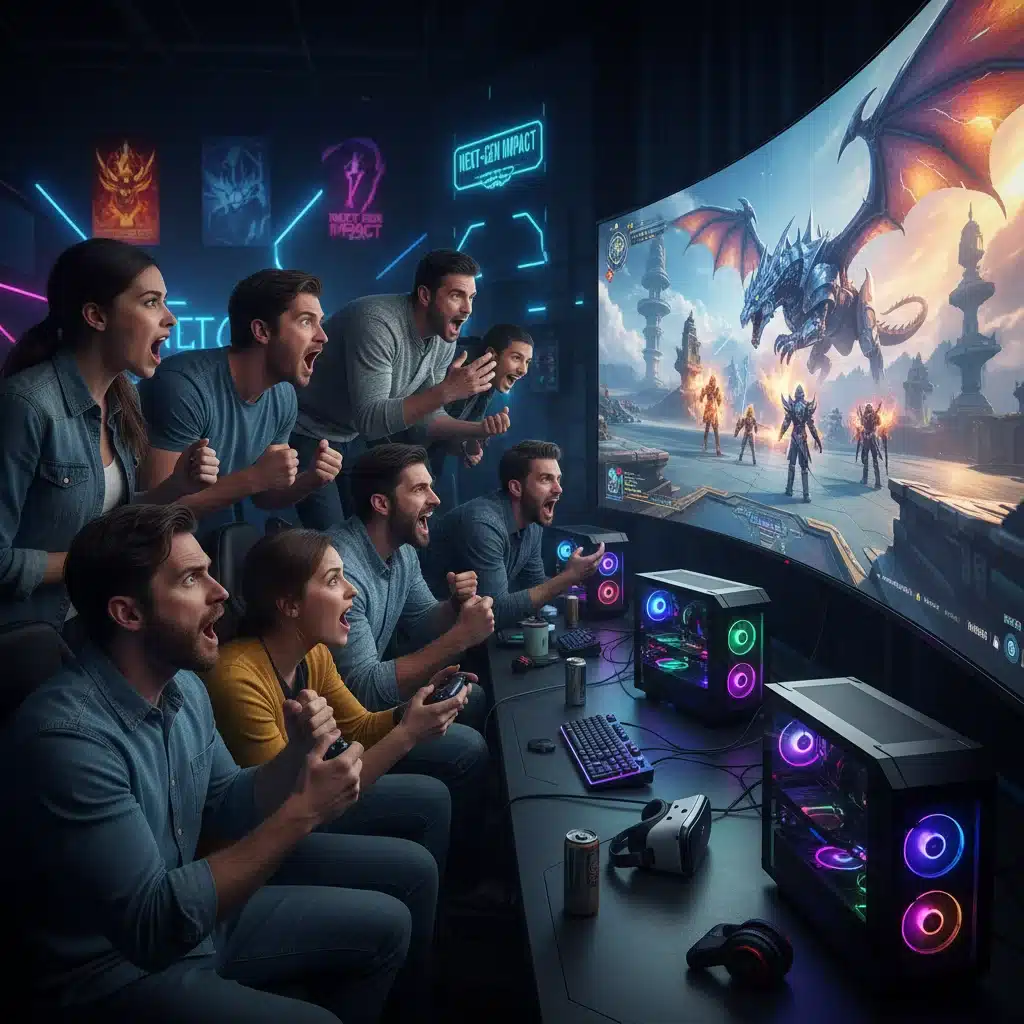
For the dedicated PC gaming enthusiast, 2026 promises an unparalleled era of immersion and competitive advantage. The new GPUs will unlock visual fidelity and performance levels that were previously unimaginable, transforming how games are experienced.
High refresh rate monitors, which have become a staple for competitive gamers, will be fully utilized by these next-gen cards. Expect consistent frame rates well above 144Hz, even at 4K resolutions, in demanding titles. This buttery-smooth gameplay reduces input lag and provides a significant edge in fast-paced competitive games, where every millisecond counts. The synergy between powerful GPUs and high-refresh-rate displays is a cornerstone of current and future PC Gaming Hardware Trends.
Virtual Reality (VR) and Augmented Reality (AR) gaming will also see a massive boost. The increased processing power will allow for higher resolution VR headsets, wider fields of view, and more complex virtual environments, reducing motion sickness and enhancing the sense of presence. As VR technology matures, these powerful GPUs will be essential for delivering truly convincing and comfortable VR experiences, potentially bringing mainstream adoption closer than ever before. This is a critical area where PC Gaming Hardware Trends are pushing boundaries.
Beyond raw performance, the enhanced realism facilitated by advanced ray tracing and AI upscaling will create gaming worlds that are virtually indistinguishable from reality. This level of immersion will redefine single-player narratives and open-world exploration, allowing players to lose themselves completely in digital realms. Imagine exploring a meticulously rendered fantasy world where every leaf, every ripple in the water, and every ray of sunlight behaves with photorealistic accuracy. This is the promise of 2026’s PC Gaming Hardware Trends.
Esports professionals will also benefit from these advancements. Lower latency, higher frame rates, and more stable performance translate directly into a competitive advantage. The ability to react faster and see more clearly in high-stakes situations can be the difference between victory and defeat. Game developers will also be able to create more complex and visually rich competitive environments without compromising performance, adding new layers of strategy and engagement to esports titles. The competitive landscape will undoubtedly be influenced by these evolving PC Gaming Hardware Trends.
Beyond GPUs: Complementary Hardware Innovations
While GPUs are undoubtedly the stars of the show, the broader ecosystem of PC Gaming Hardware Trends will also see significant evolution to complement these powerful graphics cards. These synergistic advancements are crucial for unlocking the full potential of next-gen GPUs.
Faster Processors (CPUs)
CPUs will continue to evolve, offering more cores, higher clock speeds, and improved single-threaded performance. This is essential to prevent CPU bottlenecks, ensuring that the GPU can operate at its full potential. Advances in processor architecture and manufacturing processes will lead to more efficient and powerful CPUs, perfectly paired with the new GPUs. Multi-core optimization in games will also become more prevalent, leveraging the increased core counts of modern processors. This parallel development in CPUs is a vital component of the overall PC Gaming Hardware Trends.
Next-Gen Storage: NVMe SSDs and Beyond
The advent of PCIe Gen 5 and potentially Gen 6 NVMe SSDs will dramatically reduce loading times and enable new game design paradigms. DirectStorage technology, which allows GPUs to access storage directly, bypassing the CPU, will become a standard feature, further accelerating asset loading and reducing stuttering. This means larger, more detailed game worlds can stream in seamlessly, eliminating loading screens and enhancing immersion. The speed of data access is just as important as processing power for a fluid gaming experience, making storage advancements a key PC Gaming Hardware Trend.
Advanced Cooling Solutions
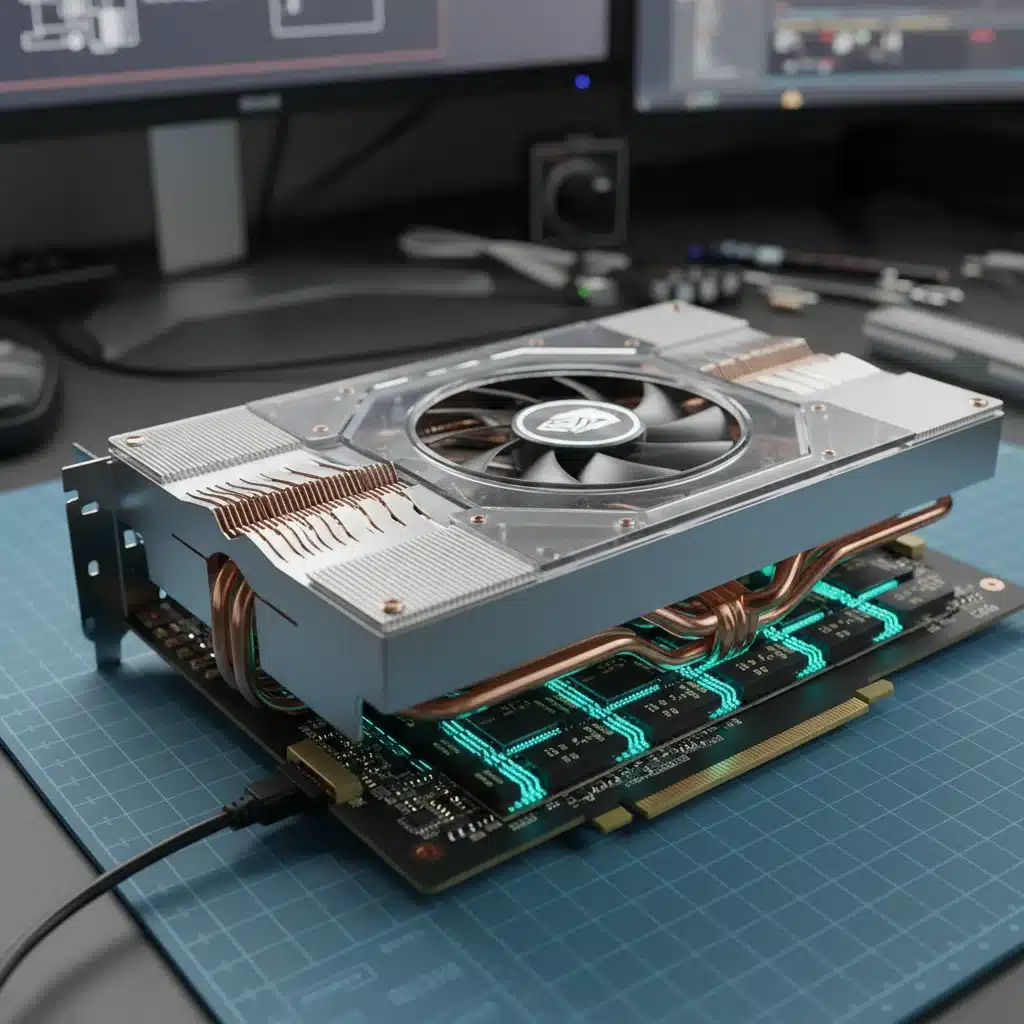
With increased performance comes increased heat. Expect to see further advancements in cooling technology, including more efficient air coolers, larger all-in-one (AIO) liquid coolers, and custom water-cooling loops becoming more accessible. Innovations in thermal paste and heat pipe designs will also contribute to keeping these powerful components running optimally, ensuring stability and longevity. Effective cooling is paramount for sustained high performance, and its evolution is integral to PC Gaming Hardware Trends.
Power Supply Units (PSUs)
The power demands of next-gen GPUs will necessitate higher wattage PSUs with improved efficiency ratings. The ATX 3.0 standard, with its focus on transient power delivery, will become the norm, ensuring stable power to even the most power-hungry components. Consumers will need to pay close attention to their PSU choice to ensure compatibility and reliability with new hardware. The often-overlooked PSU is a foundational element supporting the cutting-edge PC Gaming Hardware Trends.
High-Resolution, High-Refresh Rate Displays
Monitors will continue their evolution, offering higher resolutions (8K gaming becoming more viable), higher refresh rates (240Hz+ at 4K), and improved panel technologies like OLED and Mini-LED becoming more mainstream and affordable. Variable Refresh Rate (VRR) technologies like G-Sync and FreeSync will be standard, providing tear-free and stutter-free gameplay. The display is the window to the game, and its advancements are intrinsically linked to the overall PC Gaming Hardware Trends.
Challenges and Considerations for the US Market
While the future looks bright, several challenges and considerations will influence the adoption and impact of these PC Gaming Hardware Trends in the US market.
Pricing and Economic Factors
Despite potential increased competition, the cost of cutting-edge technology will remain a factor. Economic conditions, inflation, and disposable income levels will dictate how quickly and widely these new GPUs are adopted. Manufacturers will need to balance innovation with pricing strategies that appeal to a broad consumer base.
Power Consumption and Environmental Concerns
As GPUs become more powerful, their power consumption naturally increases. This raises concerns about electricity bills for consumers and the environmental impact of increased energy demand. Manufacturers will be under pressure to improve power efficiency, and we may see more emphasis on eco-friendly gaming setups. This is a growing concern that will shape future PC Gaming Hardware Trends.
Software Optimization and Game Development
The full potential of new hardware can only be realized with proper software optimization. Game developers will need to adapt their engines and workflows to fully leverage the capabilities of these next-gen GPUs, including advanced ray tracing, AI features, and direct storage access. A disconnect between hardware capabilities and software optimization could hinder widespread adoption and impact the perceived value of new GPUs. Collaboration between hardware manufacturers and game studios is crucial for these PC Gaming Hardware Trends to flourish.
Infrastructure and Connectivity
While not directly hardware, the quality of internet infrastructure in the US plays a role, especially for cloud gaming and large game downloads. As games become larger and more complex, fast and reliable internet access becomes increasingly important for the overall gaming experience. The ability to quickly download massive game updates or stream high-fidelity content is a silent but critical enabler of PC Gaming Hardware Trends.
Conclusion: A Transformative Era for PC Gaming
The PC Gaming Hardware Trends for 2026 paint a picture of a transformative era. The next wave of GPU releases is set to redefine performance benchmarks, push the boundaries of visual realism, and fundamentally reshape the US market for gaming enthusiasts. From more accessible high-performance options to unprecedented levels of immersion and competitive advantage, the future of PC gaming is incredibly exciting.
As these technologies mature, we can expect a more vibrant, diverse, and accessible PC gaming ecosystem. The synergy between powerful GPUs, advanced CPUs, lightning-fast storage, and high-fidelity displays will create gaming experiences that are more engaging, realistic, and exhilarating than ever before. While challenges remain, the relentless pace of innovation ensures that the journey towards 2026 will be one of significant progress and groundbreaking advancements for all who cherish the art and science of PC gaming.
Embrace the future, for the next chapter in PC gaming is about to be written, driven by the incredible power and potential of these upcoming hardware innovations. The landscape of PC Gaming Hardware Trends is not just evolving; it’s undergoing a revolution.