US Gaming Demographics 2026: Impact on Game Design

Understanding the US Gaming Community: Demographic Shifts and Their Impact on Game Design in 2026
The gaming industry has long been a dynamic and ever-evolving landscape, constantly adapting to technological advancements, cultural shifts, and, crucially, the changing profile of its players. As we look ahead to 2026, the United States gaming community is poised for significant demographic transformations that will undoubtedly reshape how games are conceived, developed, and marketed. Understanding these US gaming demographics is not just an academic exercise; it’s a strategic imperative for developers, publishers, and investors aiming to thrive in an increasingly competitive market.
For decades, the stereotypical gamer was often depicted as a young male, primarily interested in action-packed, competitive titles. While this segment remains a vital part of the market, it no longer represents the full picture. The boundaries of who plays games have expanded dramatically, encompassing a much broader spectrum of ages, genders, ethnicities, and socio-economic backgrounds. This article will delve deep into the projected US gaming demographics for 2026, exploring the key shifts, their underlying causes, and the profound implications they hold for game design.
The Evolving Face of the American Gamer: Key Demographic Shifts by 2026
By 2026, several critical demographic shifts will be evident within the US gaming community, moving beyond the traditional archetypes. These changes are driven by a confluence of factors, including increased accessibility to gaming platforms, the normalisation of gaming as a mainstream entertainment form, and generational shifts in technology adoption.
Age is Just a Number: The Rise of Older Gamers
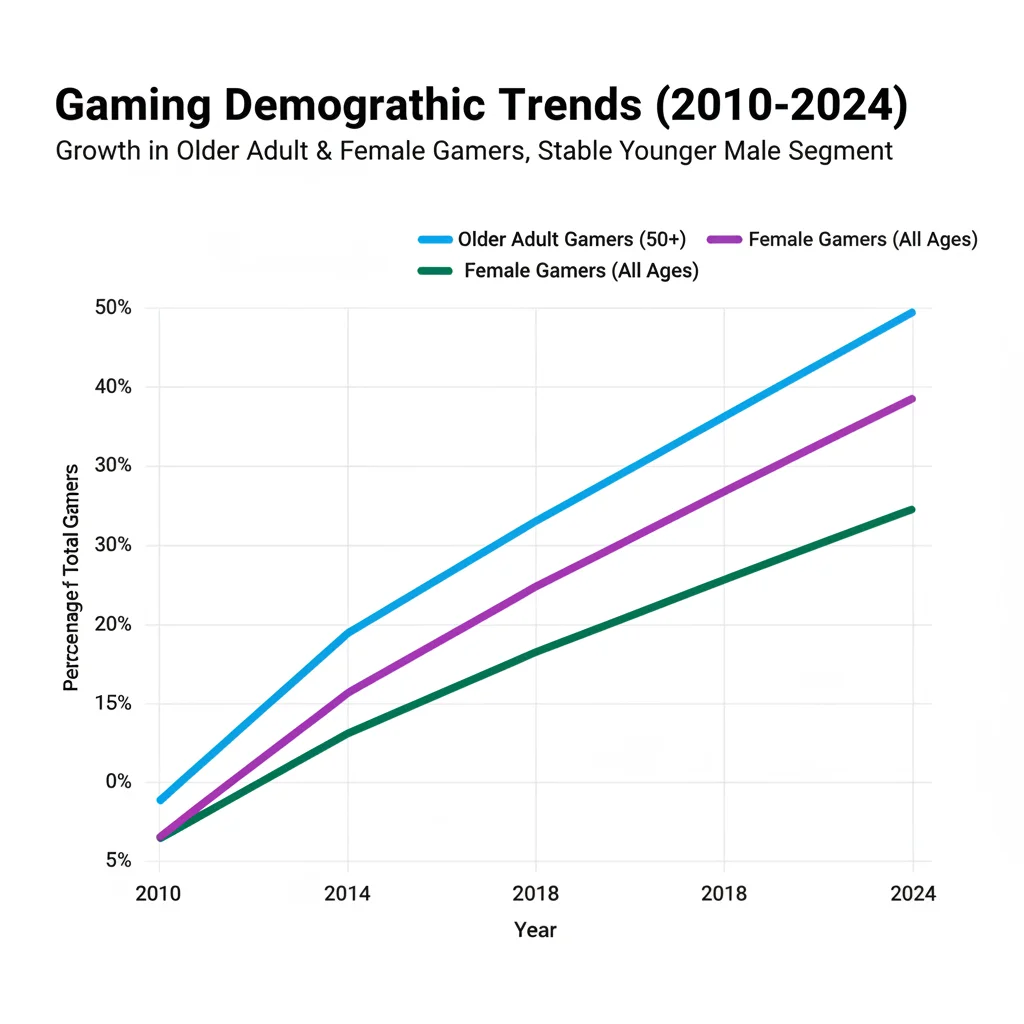
One of the most striking trends in US gaming demographics is the continued growth of older adult gamers. The generation that grew up with the advent of home consoles and PCs is now entering their 40s, 50s, 60s, and beyond, and they are not abandoning their controllers. Instead, they are embracing gaming as a form of entertainment, social connection, and cognitive stimulation. We expect to see a significant portion of the 50+ age bracket actively engaged in gaming by 2026, particularly in genres like puzzle games, casual mobile titles, strategy games, and even some RPGs.
This demographic often has more disposable income and leisure time, making them a valuable, yet often underserved, market segment. Their preferences differ from younger players; they may prioritise comfort, clear interfaces, compelling narratives, and less emphasis on fast-paced competitive action. Game designers must consider larger text, simpler controls, and themes that resonate with life experiences beyond adolescence.
Gender Parity on the Horizon: More Women Gamers
While the perception of gaming as a male-dominated hobby persists, the reality has been shifting for years. By 2026, the gender gap in US gaming demographics is projected to narrow further, potentially reaching near parity in terms of overall participation. Women have increasingly embraced mobile gaming, casual games, and narrative-driven experiences, but their presence is also growing in traditionally male-dominated genres like RPGs, action-adventure, and even competitive esports.
This shift demands a more inclusive approach to character design, storytelling, and game mechanics. Developers must move beyond tokenism and actively create worlds and characters that resonate with a female audience, offering diverse perspectives and avoiding outdated tropes. The rise of female streamers and content creators further solidifies this trend, inspiring more women to engage with the gaming community.
Cultural Diversity and Representation
The US population is increasingly diverse, and its gaming community reflects this rich tapestry of cultures and backgrounds. By 2026, a deeper understanding of the preferences and sensitivities of various ethnic and cultural groups will be paramount. This goes beyond superficial representation; it involves incorporating diverse narratives, cultural references, and character customisation options that allow players to see themselves authentically within the games they play.
Developers who genuinely embrace cultural diversity in their design processes will not only expand their market reach but also create more meaningful and globally resonant experiences. This includes hiring diverse development teams who can bring authentic perspectives to the creative process.
Socio-Economic Factors and Accessibility
The accessibility of gaming, particularly through free-to-play mobile titles and more affordable entry-level consoles, has broadened its appeal across various socio-economic strata. This means that by 2026, game designers must consider a wider range of financial capabilities and access to technology. While premium AAA titles will always have a market, there will be a growing demand for high-quality, accessible experiences that don’t require significant upfront investment or top-tier hardware.
Cloud gaming services are also playing a crucial role in democratising access, allowing players with less powerful hardware to enjoy graphically intensive games. This trend will continue to shape how games are distributed and monetised, impacting the overall US gaming demographics.
Impact on Game Design: Tailoring Experiences for a Broader Audience
The shifts in US gaming demographics directly translate into new challenges and opportunities for game designers. The ‘one-size-fits-all’ approach is increasingly obsolete. Instead, successful game design in 2026 will be characterised by adaptability, inclusivity, and a deep understanding of diverse player motivations.
Narrative and Storytelling: Beyond the Hero’s Journey
With a more diverse player base, the demand for varied and nuanced narratives will intensify. Players are looking for stories that explore complex themes, offer multiple perspectives, and feature protagonists who represent a wider range of identities and experiences. Linear, simplistic narratives may still appeal to some, but there will be a growing appetite for branching storylines, player-driven choices, and characters with depth beyond traditional archetypes.
This includes moving beyond strictly combat-focused narratives to incorporate elements of exploration, puzzle-solving, social interaction, and emotional depth. Games that can tell compelling stories with diverse casts and relatable themes will capture the imagination of the evolving US gaming demographics.
Accessibility and Inclusivity in Gameplay Mechanics
Accessibility is no longer a niche concern; it’s a fundamental aspect of good game design. As the gaming community ages and diversifies, designers must consider players with varying physical, cognitive, and sensory abilities. This means implementing features such as:
- Customisable Controls: Allowing players to remap buttons, adjust sensitivity, and choose between different input methods.
- Adjustable Difficulty: Offering a range of difficulty settings, including options for players who primarily want to experience the story without combat challenges.
- Visual and Auditory Aids: Options for colour blindness, larger text, subtitle customisation, visual cues for sound effects, and adjustable audio levels for different elements.
- Cognitive Accessibility: Clear UI/UX, intuitive tutorials, and options to reduce cognitive load for players who prefer a less demanding experience.
Designing for inclusivity from the outset ensures that games are enjoyable for the widest possible audience, reflecting the broad US gaming demographics of 2026.
Genre Evolution and Hybridisation
The traditional boundaries between game genres are blurring. By 2026, we will see even more hybrid genres emerging, catering to the diverse tastes of the US gaming demographics. For example, RPGs incorporating life simulation elements, strategy games with strong narrative components, or action games with robust crafting and social features. This cross-pollination allows developers to appeal to broader segments of players who might not exclusively identify with a single genre.
Casual games and ‘cozy games’ will continue their ascent, particularly appealing to older demographics and those seeking relaxation and low-stress entertainment. However, even these genres will benefit from deeper mechanics and engaging progression systems to retain players.
Social Features and Community Building
Gaming is increasingly a social activity, and this will only intensify by 2026. The evolving US gaming demographics, particularly older players and women, often value social connection and cooperation over pure competition. This necessitates robust in-game social features, easy-to-use communication tools, and opportunities for cooperative gameplay.
Developers should focus on creating positive and welcoming online communities, implementing effective moderation tools to combat toxicity, and fostering environments where players feel safe and respected. The rise of cross-platform play further facilitates social connection, allowing friends to play together regardless of their chosen hardware.
Technological Advances Supporting Demographic Shifts
Several technological advancements are not only enabling these demographic shifts but also providing the tools for game designers to respond effectively.
Mobile Gaming Dominance and Evolution
Mobile gaming’s accessibility and ubiquity have been key drivers in expanding the US gaming demographics. By 2026, mobile gaming will continue to be a dominant force, but with increased sophistication. We’ll see more console-quality experiences on mobile devices, leveraging advancements in chip technology and cloud streaming. This means mobile games can cater to a wider array of player preferences, from casual puzzles to complex RPGs, further blurring the lines between platforms.
Cloud Gaming and Device Agnosticism
Cloud gaming services like Xbox Cloud Gaming, GeForce NOW, and PlayStation Plus Premium are making high-fidelity gaming accessible to more people, regardless of their device’s processing power. This democratisation of access will allow a broader segment of the US gaming demographics to enjoy a wider variety of titles, removing hardware as a significant barrier to entry. Designers can assume a more consistent performance baseline, focusing on creative experiences rather than optimising for a multitude of low-spec machines.
Virtual Reality (VR) and Augmented Reality (AR) Mainstream Adoption
While still nascent, VR and AR are poised for more widespread adoption by 2026, especially as hardware becomes more affordable and comfortable. These technologies offer immersive experiences that can appeal to new segments of the US gaming demographics, particularly those seeking novel forms of entertainment or unique social interactions. VR can offer unparalleled immersion for narrative-driven games, while AR can integrate gaming into everyday life, appealing to casual players.
Designers exploring VR/AR must consider comfort, motion sickness, and intuitive interfaces to ensure these experiences are accessible to a broad audience, including older players who might be new to immersive tech.
AI in Game Development and Personalisation
Artificial intelligence will play an increasingly significant role in game development by 2026. AI can be used to generate more dynamic and responsive game worlds, create more realistic non-player characters (NPCs), and even personalise content based on individual player preferences and learning styles. This level of personalisation can be crucial in catering to the diverse needs and desires of the evolving US gaming demographics, ensuring that each player feels uniquely engaged.
AI-driven analytics can also help developers understand player behaviour on a deeper level, identifying pain points and areas for improvement that cater to specific demographic segments.
Challenges and Opportunities for Developers
Navigating these demographic shifts presents both significant challenges and immense opportunities for game developers.
Marketing and Communication Strategies
The traditional marketing playbook for games needs an overhaul. Advertising campaigns must reflect the diversity of the US gaming demographics, showcasing a wide range of players and experiences. This means moving beyond hyper-masculine, action-oriented marketing to embrace more inclusive and relatable messaging. Targeting specific demographic segments with tailored content will be crucial, whether through social media, influencer partnerships, or traditional advertising channels.
Monetisation Models and Player Value
With a broader demographic, monetisation strategies must also diversify. While younger players might be more inclined towards battle passes and cosmetic microtransactions, older players might prefer one-time purchases, subscriptions, or expansions that offer substantial new content. Understanding what different demographic segments value and how they prefer to spend their money will be key to sustainable revenue generation.
Talent and Team Diversity
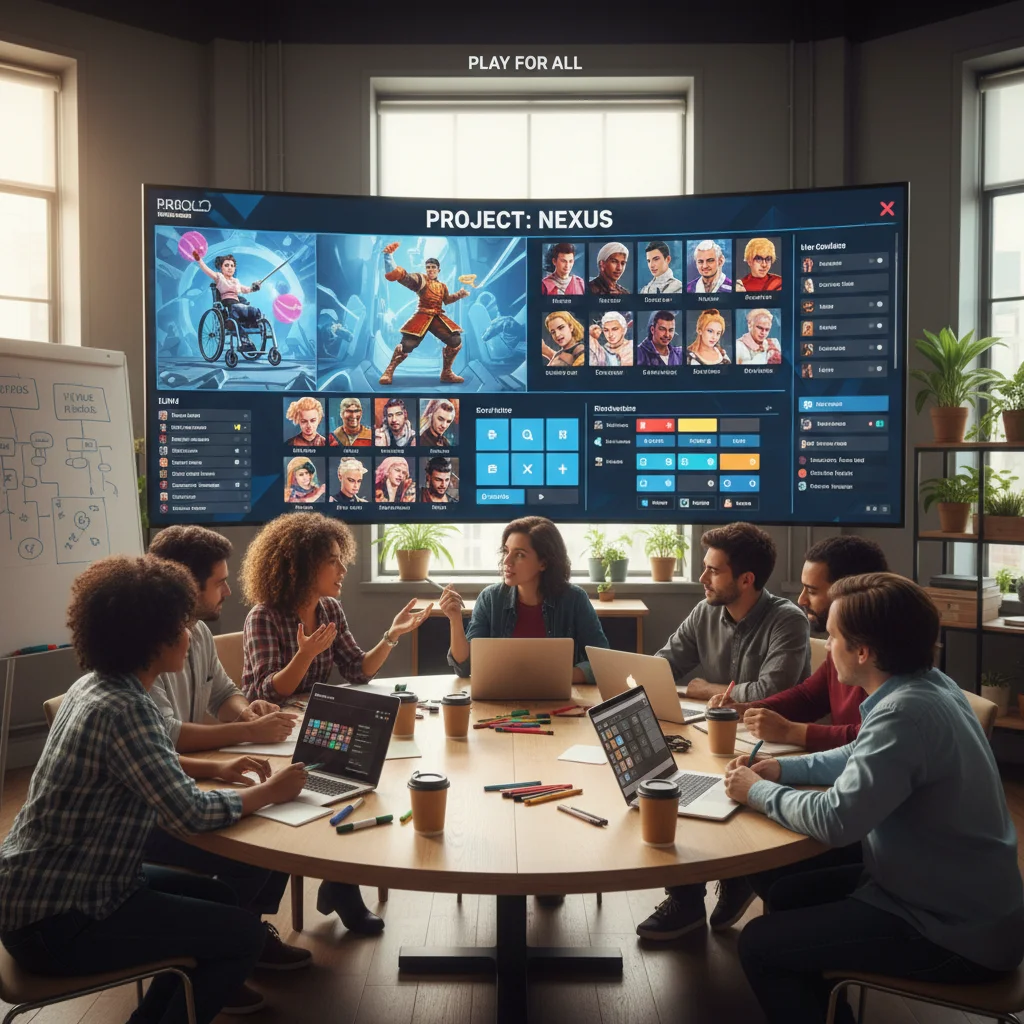
To create games that resonate with diverse US gaming demographics, development teams themselves must be diverse. Teams composed of individuals from varied backgrounds, genders, ages, and ethnicities are better equipped to understand and incorporate a wide range of perspectives into their designs. Fostering an inclusive work environment will be critical for attracting and retaining this talent, leading to more authentic and universally appealing games.
Longevity and Live Service Games
The concept of ‘games as a service’ (GaaS) will continue to evolve, with a focus on retaining diverse player bases over long periods. This means continuous content updates, community engagement, and responsiveness to player feedback. For older players, consistent, high-quality updates and a sense of community can be powerful retention tools. For younger players, fresh content and competitive events remain important. Balancing these needs across the varied US gaming demographics will be a complex but rewarding endeavour.
Future Outlook: Gaming’s Place in 2026 Society
By 2026, gaming will be even more deeply integrated into the fabric of American society. It will be viewed not just as a pastime for a specific niche, but as a legitimate form of art, entertainment, education, and social connection for people of all ages and backgrounds. The shifts in US gaming demographics will solidify this perception, challenging outdated stereotypes and fostering a more inclusive and welcoming environment.
Esports will continue to grow, attracting global audiences and offering new career paths, but it will also broaden its appeal beyond hardcore competitive titles to include more accessible, community-focused games. Educational games and ‘gamified’ learning experiences will become more sophisticated, leveraging the engagement power of interactive entertainment to deliver knowledge and skills across all age groups.
The industry’s responsibility will also grow. Ethical considerations around monetisation, data privacy, mental well-being, and combating online toxicity will be paramount. Developers and platforms that prioritise player welfare and foster positive gaming environments will earn trust and loyalty from the increasingly diverse US gaming demographics.
Conclusion
The US gaming community in 2026 will be a rich, complex, and incredibly diverse ecosystem. The ongoing demographic shifts – particularly the rise of older gamers, the increasing participation of women, and growing cultural diversity – demand a fundamental re-evaluation of game design principles. Developers who embrace inclusivity, prioritise accessibility, and craft narratives and experiences that resonate with a broad spectrum of players will be the ones who succeed.
Understanding the evolving US gaming demographics is not just about capturing market share; it’s about creating more meaningful, enriching, and universally appealing interactive experiences that truly reflect the world we live in. As the gaming landscape continues to transform, adaptability and a player-centric approach will be the hallmarks of innovation and success in the years to come.