Next-Gen SSDs: Cutting Game Load Times by 30% in 2026 – An Insider Report
The Future is Fast: How Next-Gen SSDs are Reducing Game Load Times by 30% in 2026
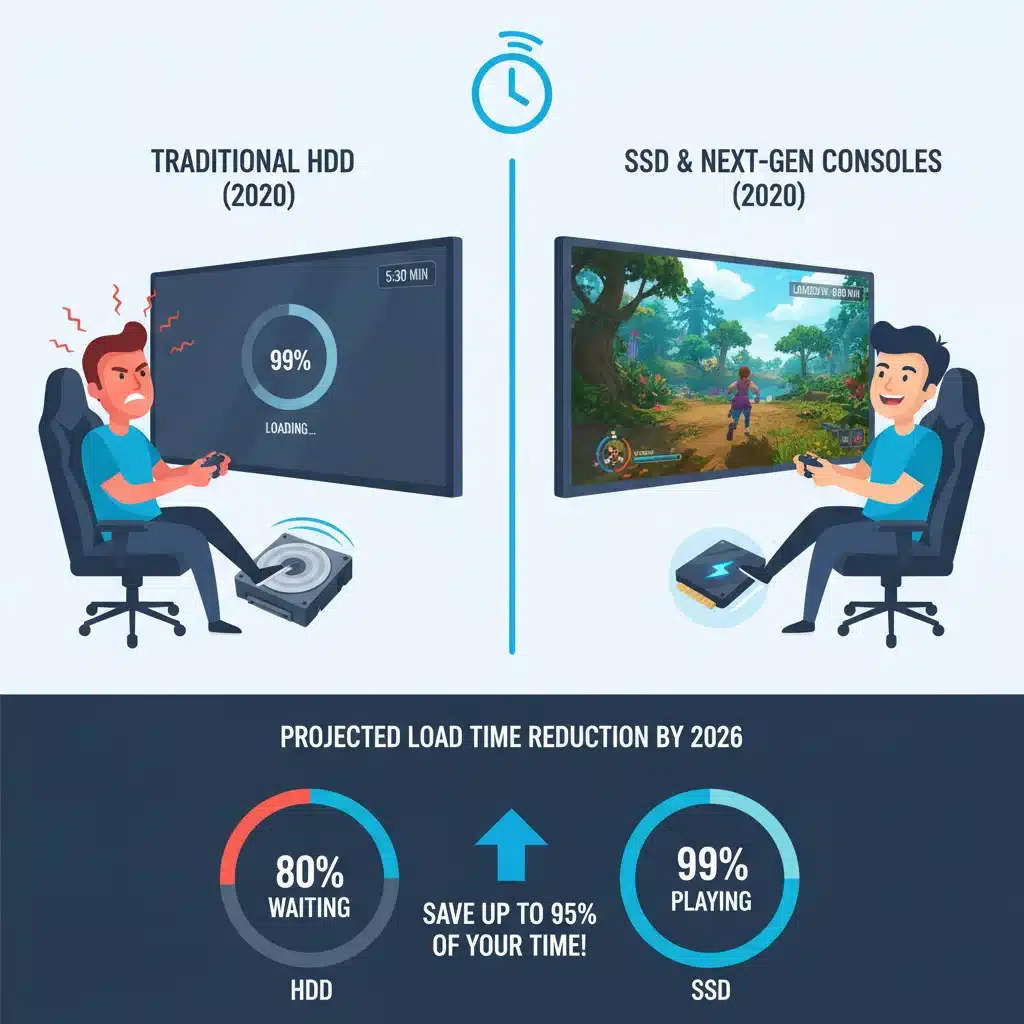
The gaming world is constantly evolving, pushing the boundaries of graphical fidelity, immersive storytelling, and interactive experiences. Yet, one persistent bottleneck has plagued gamers for decades: load times. That agonizing wait between launching a game, transitioning between levels, or respawning after a heroic (or not-so-heroic) death has always been a source of frustration. However, an insider report indicates a seismic shift on the horizon. By 2026, we are poised to witness a significant reduction in game load times, with next-gen SSDs leading the charge, promising an average decrease of 30%. This isn’t just an incremental improvement; it’s a fundamental transformation of the gaming experience, powered by advancements in storage technology and console architecture.
This comprehensive report delves into the technological marvels behind this impending revolution, exploring how next-gen SSD gaming is not merely a buzzword but a tangible reality that will redefine how we interact with our favourite virtual worlds. We’ll examine the underlying principles, the specific hardware innovations, and the profound impact these changes will have on both developers and players. Prepare to say goodbye to lengthy loading screens and hello to seamless, uninterrupted gameplay.
The Evolution of Storage: From HDDs to Hyper-Speed SSDs
To truly appreciate the magnitude of the 30% reduction in game load times, it’s essential to understand the journey of storage technology. For years, Hard Disk Drives (HDDs) were the standard. These mechanical marvels, with their spinning platters and read/write heads, were adequate for their time but inherently limited by physical constraints. Accessing data meant waiting for the platter to rotate and the head to move to the correct sector – a process measured in milliseconds, which, when compounded by gigabytes of game data, quickly added up to minutes.
The advent of Solid State Drives (SSDs) marked the first major leap. By replacing mechanical parts with flash memory, SSDs offered significantly faster data access, lower latency, and increased durability. Early SATA SSDs provided a noticeable improvement, but the real game-changer for gaming began with NVMe (Non-Volatile Memory Express) SSDs, which connect directly to the motherboard via the PCIe (Peripheral Component Interconnect Express) bus. This direct connection bypasses the SATA interface’s bottlenecks, allowing for exponentially higher bandwidth and dramatically faster speeds.
The current generation of consoles, PlayStation 5 and Xbox Series X/S, were pioneers in integrating custom NVMe SSD solutions, demonstrating the profound impact on game loading. These consoles showcased how a holistic approach, combining high-speed storage with optimised software, could virtually eliminate loading screens in many scenarios. However, 2026 promises to push these boundaries even further with the widespread adoption of even more advanced next-gen SSD gaming technologies.
Key Technologies Driving the 30% Load Time Reduction
The projected 30% reduction in game load times by 2026 isn’t a single technological breakthrough but rather a confluence of several innovations working in concert. These advancements span hardware, software, and development practices, all contributing to a more efficient data pipeline.
PCIe Gen 5 and Beyond: Unlocking Unprecedented Bandwidth
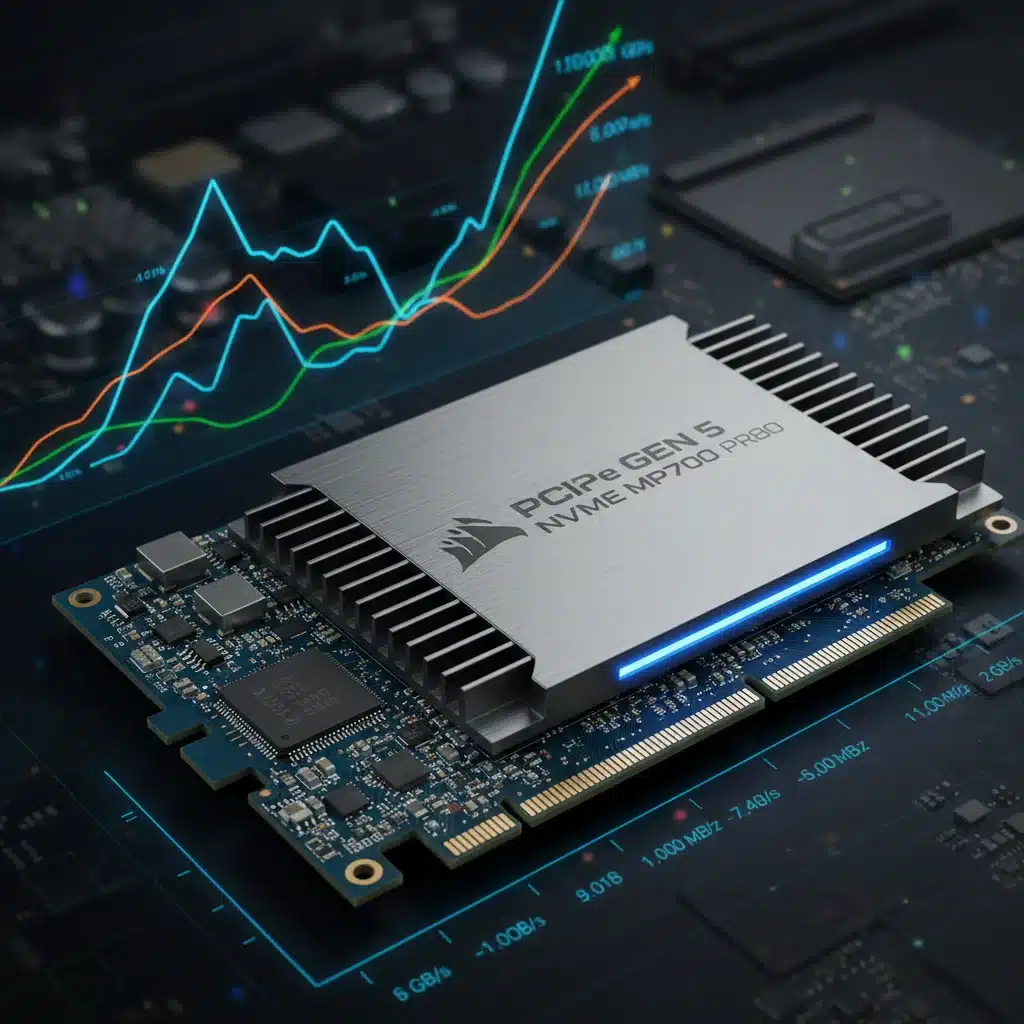
At the heart of the next wave of SSD performance is the continued evolution of the PCIe standard. While current-gen consoles primarily utilise custom PCIe Gen 4 solutions, the PC market is already embracing PCIe Gen 5, with Gen 6 on the horizon. Each generation doubles the bandwidth of its predecessor, meaning data can be transferred at astonishing speeds. PCIe Gen 5 SSDs can achieve sequential read speeds of up to 14 GB/s, a significant leap from Gen 4’s 7 GB/s and Gen 3’s 3.5 GB/s. This raw speed is crucial for loading massive open-world game assets, high-resolution textures, and complex character models almost instantaneously.
The increased bandwidth of PCIe Gen 5 and future iterations allows game engines to stream assets more efficiently, reducing the need for elaborate loading screens designed to mask data fetching. Instead of pre-loading entire levels, games can pull necessary assets as players move through the environment, creating a far more seamless experience. This is a cornerstone of the next-gen SSD gaming paradigm.
DirectStorage API: Bypassing CPU Bottlenecks
While fast SSDs are essential, their full potential can be hampered by CPU bottlenecks. Traditionally, game data read from storage has to pass through the CPU, which then decompresses and prepares it for the GPU. This process can become a significant bottleneck, especially with the colossal amounts of data streamed from modern SSDs. Enter DirectStorage, an API (Application Programming Interface) developed by Microsoft, initially for Xbox Series X/S and now available for Windows PCs.
DirectStorage allows game data to be sent directly from the NVMe SSD to the GPU, bypassing the CPU altogether. This significantly reduces CPU overhead, frees up CPU cycles for other tasks, and accelerates data decompression. By offloading these tasks to the GPU, which is highly efficient at parallel processing, DirectStorage ensures that the incredible speeds of PCIe Gen 5 SSDs are fully utilized. This technology is a critical enabler for the projected 30% load time reduction, as it optimizes the entire data pipeline from storage to rendering.
Advanced Compression Techniques: More Data, Less Space
Beyond raw transfer speeds, sophisticated compression and decompression algorithms play a vital role. Modern game engines are increasingly employing advanced techniques like Oodle Kraken and Oodle Texture to shrink file sizes without compromising visual quality. When combined with DirectStorage, these compressed assets can be rapidly transferred from the SSD and decompressed directly on the GPU, further accelerating load times.
The efficiency of these compression methods means that developers can pack more detailed assets into games while keeping the overall footprint manageable. More importantly, the speed at which these compressed assets can be read and decompressed contributes directly to the seamless loading experience that defines next-gen SSD gaming.
Optimised Game Engines and Development Practices
Hardware and APIs are only half the story. Game developers are continuously optimising their engines and workflows to leverage these new storage capabilities. This includes:
- Asset Streaming: Moving away from monolithic loading screens to dynamic, background streaming of assets as needed.
- Intelligent Data Prioritisation: Loading critical assets first (e.g., player character, immediate environment) and then fetching less critical elements (e.g., distant textures, background NPCs) in the background.
- Reducing Redundancy: More efficient asset management to minimise duplicate data across different parts of a game.
- Engine-Level Integration: Deep integration of DirectStorage and other low-level APIs directly into game engines like Unreal Engine 5 and Unity to maximise performance.
These developer-side optimisations are crucial for translating raw hardware power into tangible benefits for the player. The collaboration between hardware manufacturers, OS developers, and game studios is what truly brings the promise of reduced load times to fruition.
The Impact on Gaming: Beyond Just Faster Loading
A 30% reduction in game load times is more than just a convenience; it fundamentally alters the gaming experience in several profound ways. This shift will benefit players, developers, and the industry as a whole.
For Players: Seamless Immersion and Quality of Life
- Uninterrupted Immersion: The most immediate benefit is a more seamless and immersive experience. Long loading screens break immersion, pulling players out of the game world. With drastically reduced waits, players can stay focused on the narrative, action, and exploration.
- Faster Respawns: In competitive multiplayer games or challenging single-player titles, quick respawns mean less downtime and more time in the action, reducing frustration and maintaining flow.
- Expedited Game Launches: Getting into the action quicker from the moment you click ‘play’ is a significant quality-of-life improvement.
- Enhanced Open Worlds: Developers can create even larger, more detailed open worlds without fear of hitting storage bottlenecks, as assets can be streamed in real-time.
- Seamless Transitions: Moving between different areas, fast-travelling, or entering new zones will feel instantaneous, blurring the lines between distinct game segments.
The shift towards next-gen SSD gaming means that the friction points in the gaming experience are systematically being eroded, allowing players to spend more time playing and less time waiting.
For Developers: Unleashing Creativity and Innovation
- Larger, More Detailed Worlds: With the ability to stream assets at unprecedented speeds, developers are no longer as constrained by memory limits or load times when designing expansive, highly detailed environments. This opens the door to more ambitious and visually stunning games.
- Dynamic Asset Loading: Games can dynamically load and unload assets based on player proximity and interaction, leading to more efficient memory usage and the potential for greater environmental complexity.
- Reduced Development Time on Optimisation: While optimisation will always be crucial, less time might be spent on creative workarounds to mask loading, allowing developers to focus more on core gameplay and innovation.
- New Gameplay Mechanics: The elimination of loading screens could enable entirely new gameplay mechanics that rely on instantaneous transitions or rapid asset swapping, previously impossible with slower storage.
- Enhanced AI and Physics: With CPU cycles freed up by DirectStorage, developers can allocate more processing power to complex AI behaviours, advanced physics simulations, and richer environmental interactions, further enhancing realism and gameplay depth.
This technological leap provides a powerful toolkit for developers, enabling them to push the boundaries of what’s possible in interactive entertainment. The creative freedom offered by next-gen SSD gaming is immense.
The 2026 Landscape: What to Expect
By 2026, the adoption of these technologies will be widespread across the gaming ecosystem. Here’s what we can anticipate:
PC Gaming: Mainstream PCIe Gen 5 and DirectStorage
On the PC front, PCIe Gen 5 NVMe SSDs will be standard in high-end gaming builds, with prices becoming more accessible for mainstream users. DirectStorage will be a common feature in most new AAA titles, significantly impacting load times across the board. Gamers building or upgrading their PCs will find that opting for a Gen 5 SSD is a critical component for a truly next-gen experience. The combination of powerful GPUs, multi-core CPUs, and hyper-fast storage will create an unprecedented level of performance and responsiveness.
Console Gaming: Evolution of Custom Architectures
While the current generation of consoles already leverages custom SSDs, future iterations or mid-cycle refreshes (e.g., PS5 Pro, Xbox Series X refresh) will likely incorporate even faster, more efficient custom storage solutions, potentially leveraging aspects of PCIe Gen 5 or further optimising their existing architectures. The tight integration between hardware and software on consoles means they are particularly adept at squeezing every ounce of performance from their SSDs. The 30% reduction will be a baseline expectation for new console titles.
Cloud Gaming: Reduced Latency and Enhanced Streaming
Even cloud gaming services will indirectly benefit. While cloud gaming relies on network latency, the servers hosting these games will be equipped with the fastest possible storage. Faster load times on the server side mean quicker game launches for players and more responsive transitions within games, contributing to a smoother overall streaming experience. As cloud gaming strives to minimize all forms of latency, the efficiency of next-gen SSD gaming becomes an invaluable asset.
Challenges and Considerations
While the future of gaming storage looks incredibly bright, there are still challenges to address:
- Cost: PCIe Gen 5 SSDs are currently more expensive than their Gen 4 counterparts. While prices are expected to drop, widespread adoption will depend on affordability.
- Heat Management: Higher speeds often generate more heat. Effective cooling solutions for these ultra-fast SSDs will be crucial, especially in compact console designs or high-performance PC builds.
- Developer Adoption: While major engines support DirectStorage, not all developers will immediately implement it. Education and resources will be important to ensure widespread integration.
- Legacy Hardware: Older systems without PCIe Gen 5 or DirectStorage support will continue to experience longer load times, creating a potential performance gap.
Despite these hurdles, the industry’s trajectory clearly points towards overcoming them, driven by consumer demand for faster, more immersive gaming experiences.
Conclusion: The Dawn of Near-Instant Gaming
The insider report highlighting a 30% reduction in game load times by 2026 is not just an optimistic projection; it’s a testament to the relentless innovation in storage technology and game development. The synergy of PCIe Gen 5 SSDs, DirectStorage API, advanced compression techniques, and optimised game engines is paving the way for a future where the wait between game segments becomes a relic of the past.
This revolution in next-gen SSD gaming promises to deliver a gaming experience that is more fluid, more immersive, and ultimately, more enjoyable. As we move closer to 2026, gamers can look forward to spending less time staring at progress bars and more time exploring vast virtual worlds, engaging in epic battles, and living out their digital fantasies without interruption. The future of gaming is fast, and it’s being built on the bedrock of hyper-speed solid-state drives.
What are your thoughts on this impending revolution? Are you ready for near-instant game loading? Share your comments below!