Esports Tournaments 2026: The Biggest Prize Pools and Pro Gaming Impact
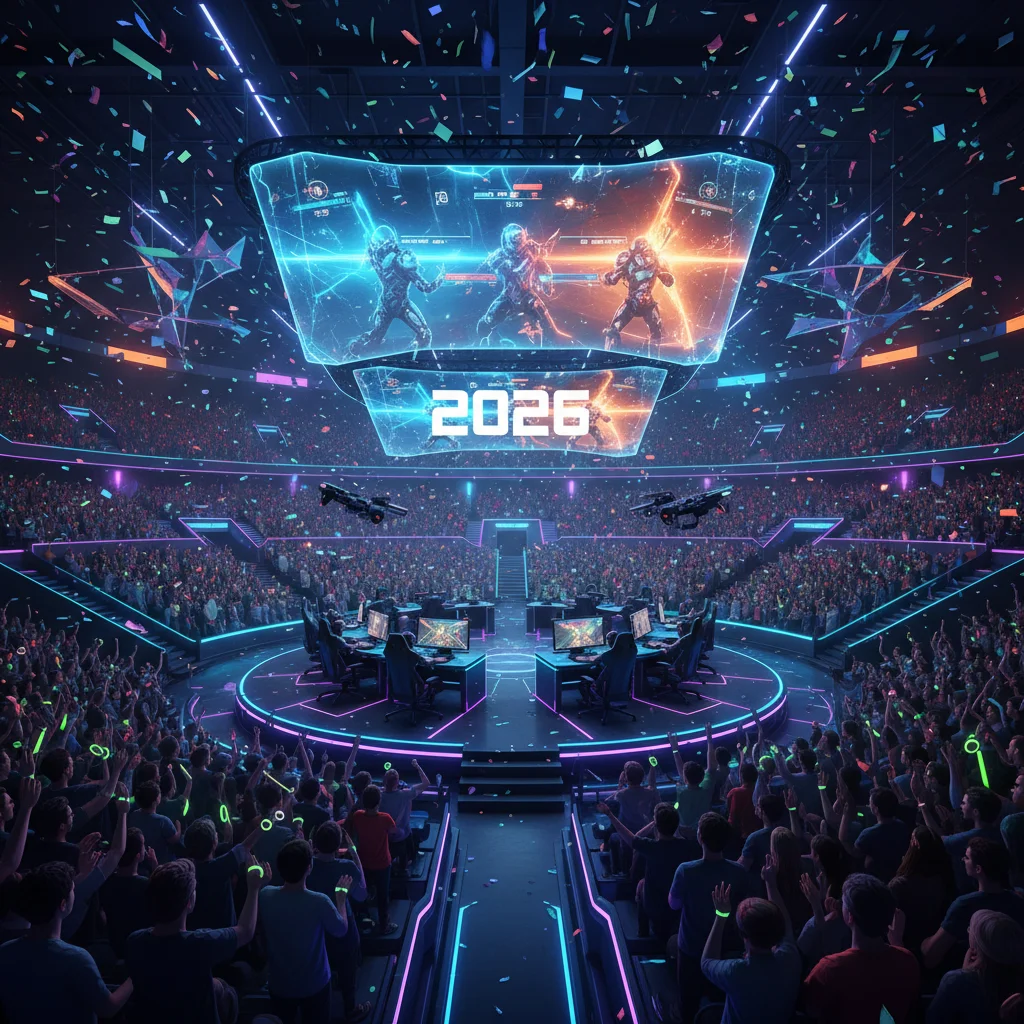
The world of esports is a dynamic, ever-evolving landscape, constantly pushing boundaries in terms of viewership, technological innovation, and, perhaps most notably, prize pools. As we look ahead to 2026, the trajectory of competitive gaming suggests an unprecedented surge in both scale and spectacle. The esports tournaments 2026 are poised to redefine what it means to be a professional gamer, offering life-changing sums of money and global recognition.
This article delves into the seven biggest esports tournaments expected in 2026, examining their projected prize pools, the games they feature, and the profound impact they will have on the professional gaming ecosystem. We’re talking about events where prize pools don’t just reach millions, but comfortably exceed $50 million, cementing esports’ status as a legitimate global sporting phenomenon.
The growth of esports has been nothing short of phenomenal. What began as niche competitions among enthusiasts has blossomed into a multi-billion-dollar industry, attracting massive investments from traditional sports organizations, media conglomerates, and tech giants. The professionalization of esports has led to dedicated training facilities, coaching staff, and rigorous schedules for players, mirroring those of traditional athletes. The stakes are higher than ever, and the rewards are commensurately grand.
Understanding the significance of these mega-tournaments requires more than just looking at the prize money. It involves appreciating the cultural impact, the technological advancements they drive, and the career paths they forge for countless aspiring gamers worldwide. Each of these events is a culmination of months, sometimes years, of dedication, strategy, and relentless practice.
The Unprecedented Scale of Esports Tournaments 2026
By 2026, the esports industry is projected to have matured even further, with established circuits and new titles potentially breaking into the mainstream. The esports tournaments 2026 will not only showcase the pinnacle of competitive skill but also serve as massive entertainment spectacles, drawing millions of online viewers and filling colossal arenas. The production quality, broadcast technology, and fan engagement strategies will be at an all-time high, making these events must-watch experiences.
The financial incentives are a major draw. Prize pools exceeding $50 million are not just numbers; they represent the dreams and aspirations of thousands of professional players. For many, winning such a tournament means financial security, global fame, and the opportunity to leave an indelible mark on esports history. These large sums also attract top talent, fostering an intensely competitive environment where only the best of the best can hope to succeed.
Factors Driving the Growth of Prize Pools
Several factors contribute to the escalating prize pools in esports:
- Increased Sponsorship and Partnerships: Major brands from various industries are recognizing the immense marketing potential of esports, investing heavily in sponsorships, advertising, and partnerships with teams and tournaments.
- Growing Viewership: The global esports audience continues to expand, translating into higher broadcast rights fees and increased advertising revenue, which can be reinvested into prize pools.
- Publisher Investment: Game developers and publishers like Valve, Riot Games, and Epic Games are heavily invested in their respective esports scenes, often contributing directly to prize pools to maintain the health and competitiveness of their games.
- Crowdfunding: Community-driven crowdfunding, often through in-game purchases, has become a significant source of prize pool funding for several major tournaments, notably Valve’s Dota 2 International.
- Technological Advancements: Improved streaming platforms, virtual reality, and augmented reality technologies are enhancing the viewer experience, further attracting investment and engagement.
The Top 7 Esports Tournaments of 2026: A Deep Dive
While specific dates and exact prize pools for 2026 are speculative, based on historical trends, current industry growth, and publisher commitments, we can confidently predict which tournaments will dominate the landscape. These are the titans of competitive gaming, where legends are made and fortunes are won.
1. The International (Dota 2)
The International, Valve’s annual Dota 2 championship, consistently sets records for the largest prize pools in esports history. Fueled significantly by its Battle Pass crowdfunding model, where a percentage of in-game purchases directly contributes to the prize pool, The International has repeatedly surpassed its own benchmarks. By 2026, it is highly probable that The International will remain a frontrunner, potentially pushing its prize pool well beyond the $50 million mark, perhaps even approaching $60-70 million.
The prestige associated with winning The International is unparalleled in Dota 2. Teams spend an entire year competing in the Dota Pro Circuit to qualify for this event, and the Aegis of Champions is the most coveted trophy in the game. The sheer scale of the event, its global reach, and the passionate fanbase ensure its continued dominance among esports tournaments 2026.
2. League of Legends World Championship (Worlds)
Riot Games’ League of Legends World Championship, commonly known as Worlds, is another colossal event that captures the attention of millions worldwide. While its prize pool traditionally comes more from Riot’s direct investment rather than crowdfunding (though in-game cosmetic sales contribute), the sheer viewership and cultural impact of Worlds are immense. By 2026, with League of Legends still a dominant force in gaming, Worlds is expected to maintain its status as one of the most prestigious and highly-watched esports events. Its prize pool, while perhaps not reaching The International’s crowdfunding highs, will undoubtedly be in the tens of millions, easily surpassing $20-30 million, and potentially higher with continued global expansion and deeper partnerships.
Worlds is not just a tournament; it’s a global phenomenon that transcends gaming. Its opening ceremonies are spectacles of music and technology, and the competition itself is a testament to strategic depth and mechanical skill.
3. Fortnite World Cup
Epic Games’ Fortnite World Cup made an explosive debut with a massive prize pool, showcasing the potential of battle royale games in the esports arena. After a hiatus and shifts in competitive structure, it’s highly anticipated that a revamped or a new iteration of the Fortnite World Cup will return with full force by 2026. Given Fortnite’s continued cultural relevance and Epic Games’ financial backing, a prize pool exceeding $40-50 million for a major global championship is entirely within the realm of possibility. The game’s accessibility and massive player base ensure a broad audience and significant interest in its competitive scene.
The Fortnite World Cup represents a different facet of esports – one that combines individual skill with chaotic, large-scale team dynamics. Its return in 2026 would undoubtedly be a landmark event for the battle royale genre and the broader esports landscape.
4. CS:GO Major Championships (or Counter-Strike 2 Major)
Counter-Strike has been a pillar of competitive esports for decades. With the recent transition to Counter-Strike 2, Valve is poised to continue its legacy of Major Championships – the pinnacle of CS:GO/CS2 competitive play. While individual Major prize pools typically hover around $1-2 million, the cumulative nature of the circuit, combined with potential increases due to CS2’s launch and growth, suggests a significant overall investment in the scene. More importantly, the prestige and viewership of a CS:GO/CS2 Major are immense. By 2026, we could see a single Major pushing closer to the $5 million mark, and potentially a grand circuit finale that aggregates a much larger sum, making the overall CS2 competitive ecosystem’s rewards easily comparable to the other top-tier games in terms of player earnings and total prize money distributed across multiple Majors.
The strategic depth, precise gunplay, and intense team coordination in CS2 make it a thrilling spectator sport, attracting a dedicated global fanbase. The Majors are not just tournaments; they are cultural touchstones for the FPS community.
5. Valorant Champions Tour (VCT) Finals
Riot Games’ tactical shooter, Valorant, has rapidly ascended to become one of the most popular esports titles since its release. The Valorant Champions Tour (VCT) culminates in the annual Valorant Champions event, which serves as the game’s world championship. With Riot’s strong commitment to esports and the game’s continued growth, the VCT Finals in 2026 are expected to feature a substantial prize pool, likely in the range of $5-10 million, with the potential for further expansion as the global circuit matures and attracts more partners. The franchised league system implemented by Riot also ensures stability and significant investment in the participating teams and players.
Valorant has successfully blended elements of traditional tactical shooters with hero abilities, creating a fresh and engaging competitive experience that resonates with both players and viewers.
6. Call of Duty League (CDL) Championship
Activision Blizzard’s Call of Duty League (CDL) operates on a franchised model, similar to traditional sports leagues, with city-based teams and a structured season culminating in a grand Championship event. While individual prize pools for regular season events are smaller, the CDL Championship offers a significant sum, typically in the multi-million-dollar range. By 2026, with the league having several more years to solidify its structure and fan base, the CDL Championship prize pool could very well reach $5-10 million, establishing it as a premier event in the console esports landscape. The consistent annual release of new Call of Duty titles also keeps the game fresh and engaging for its competitive scene.
The CDL brings the fast-paced, high-octane action of Call of Duty to a professional stage, with rivalries and storylines developing throughout the season, culminating in a dramatic championship showdown.

7. PUBG Global Championship (PGC) / PUBG Mobile Global Championship (PMGC)
PlayerUnknown’s Battlegrounds (PUBG) and its mobile counterpart, PUBG Mobile, continue to be massive titles globally, particularly in Asia. The PUBG Global Championship (PGC) for the PC version and the PUBG Mobile Global Championship (PMGC) for mobile are the pinnacle events for these games. With significant investment from Krafton (PUBG’s developer) and Tencent (PUBG Mobile’s publisher), these championships consistently offer multi-million dollar prize pools. By 2026, it’s reasonable to expect these events to continue their growth, with combined prize pools for their respective world championships potentially exceeding $10-20 million, especially for the mobile version which boasts an enormous player base.
The battle royale format of PUBG offers unique competitive challenges, requiring both strategic planning and quick reflexes, making for intense and unpredictable matches.
The Impact of $50 Million+ Prize Pools on Pro Gaming
The sheer scale of these prize pools going into esports tournaments 2026 has a transformative effect on the entire professional gaming ecosystem. It’s not just about the winners; it’s about legitimizing a career path, attracting more talent, and professionalizing the sport further.
Attracting Top Talent and Investment
When the potential earnings from esports rival, or even surpass, those in traditional sports, it naturally attracts a higher caliber of talent. Young, aspiring gamers see a viable and lucrative career path, leading to increased dedication and competition at all levels. This, in turn, drives up the quality of play, making the tournaments even more exciting and attracting further investment from organizations looking to field championship-winning teams.
Furthermore, the promise of such large prize pools encourages more non-endemic brands to enter the esports space. This brings in fresh capital, innovative marketing strategies, and broader mainstream recognition, further solidifying esports’ position in the global entertainment industry.
Professionalization of Player Careers
With greater financial stability comes enhanced professionalization. Players are no longer just hobbyists; they are athletes with structured training regimes, nutrition plans, mental health support, and dedicated coaching staff. Organizations can afford to invest more in player development, ensuring longevity in careers that are often physically and mentally demanding. The large prize pools also contribute to higher player salaries, better benefits, and more secure contracts, allowing players to focus solely on their performance without external financial pressures.
The stakes are incredibly high, pushing players to continuously innovate strategies, refine their mechanics, and maintain peak performance throughout grueling competitive seasons. The pressure to perform under the bright lights of these mega-events is immense, requiring mental fortitude akin to traditional athletes.
Global Reach and Mainstream Recognition
Tournaments with prize pools exceeding $50 million are impossible to ignore. They garner significant media attention, not just within gaming circles but also from mainstream news outlets. This exposure introduces esports to new audiences, breaking down barriers and misconceptions about competitive gaming. The global nature of these tournaments, with teams and players from every continent, fosters international competition and camaraderie, further enhancing esports’ appeal as a truly global sport.
The large prize pools also mean more elaborate production values, higher quality broadcasts, and engaging content creation around the events, making them more attractive to a wider audience. This creates a virtuous cycle: more viewers mean more sponsors, which means larger prize pools, and so on.
Technological Innovation and Game Development
The pursuit of competitive excellence in these high-stakes tournaments often drives technological innovation. Game developers are pushed to create more balanced, fair, and engaging competitive environments. This includes advancements in anti-cheat technology, server infrastructure, spectator tools, and in-game features that enhance the competitive experience. The feedback from professional players and teams is invaluable in shaping the future development of these games, ensuring they remain compelling competitive titles for years to come.
Moreover, the success of these major tournaments can inspire new game developers to create titles specifically designed for competitive play, further enriching the esports ecosystem and offering new opportunities for aspiring pros.
Challenges and Considerations for Esports in 2026
While the future looks incredibly bright for esports tournaments 2026, there are always challenges and considerations that the industry must address to maintain sustainable growth.
Player Burnout and Well-being
The intense competitive schedule, coupled with the pressure of multi-million dollar prize pools, can take a toll on players’ mental and physical health. Ensuring player well-being, providing adequate breaks, and offering mental health support will be crucial for the longevity of professional careers in esports.
Maintaining Game Popularity and Longevity
The esports landscape is highly dependent on the popularity of specific game titles. While games like Dota 2 and League of Legends have demonstrated remarkable longevity, new games are constantly emerging. Publishers and tournament organizers must continually innovate and adapt to keep their games fresh and engaging for both players and viewers to ensure their tournaments remain relevant and attractive.
Fair Play and Integrity
With such high stakes, the integrity of competition is paramount. Robust anti-cheat measures, strict rules against doping (performance-enhancing drugs), match-fixing, and other forms of unfair play are essential to maintain credibility and trust in the esports ecosystem. The industry must continue to invest in sophisticated systems and enforcement mechanisms to ensure fair play.
Global Infrastructure and Accessibility
As esports continues its global expansion, ensuring equitable access to high-quality internet infrastructure, competitive latency, and localized support for players and viewers in all regions will be vital. Bridging the digital divide and making esports accessible to a broader global audience will be a key challenge and opportunity.

The Future is Now: What to Expect from Esports Tournaments 2026
The esports tournaments 2026 are set to be more than just competitions; they will be cultural landmarks, technological showcases, and economic powerhouses. The projected prize pools exceeding $50 million are a clear indicator of the industry’s maturation and its undeniable impact on the global entertainment and sports landscape.
For fans, 2026 promises unparalleled spectacles of skill, strategy, and drama. For players, it offers the chance to achieve dreams, secure financial futures, and etch their names into esports history. For the industry, it signifies continued growth, innovation, and mainstream acceptance.
As we approach 2026, keep an eye on these major tournaments. They are not just games; they are the future of competition, entertainment, and a testament to the incredible potential of human skill in the digital age. The evolution of esports is happening at an accelerated pace, and the events of 2026 will undoubtedly mark another significant chapter in this exciting journey.
Prepare for bigger stages, louder crowds, more intense rivalries, and, of course, even more staggering prize money. The age of mega-esports is upon us, and 2026 is shaping up to be a monumental year for professional gaming.