Wireless Gaming Peripherals: The 7 Best Low-Latency Options for Competitive Play in 2026
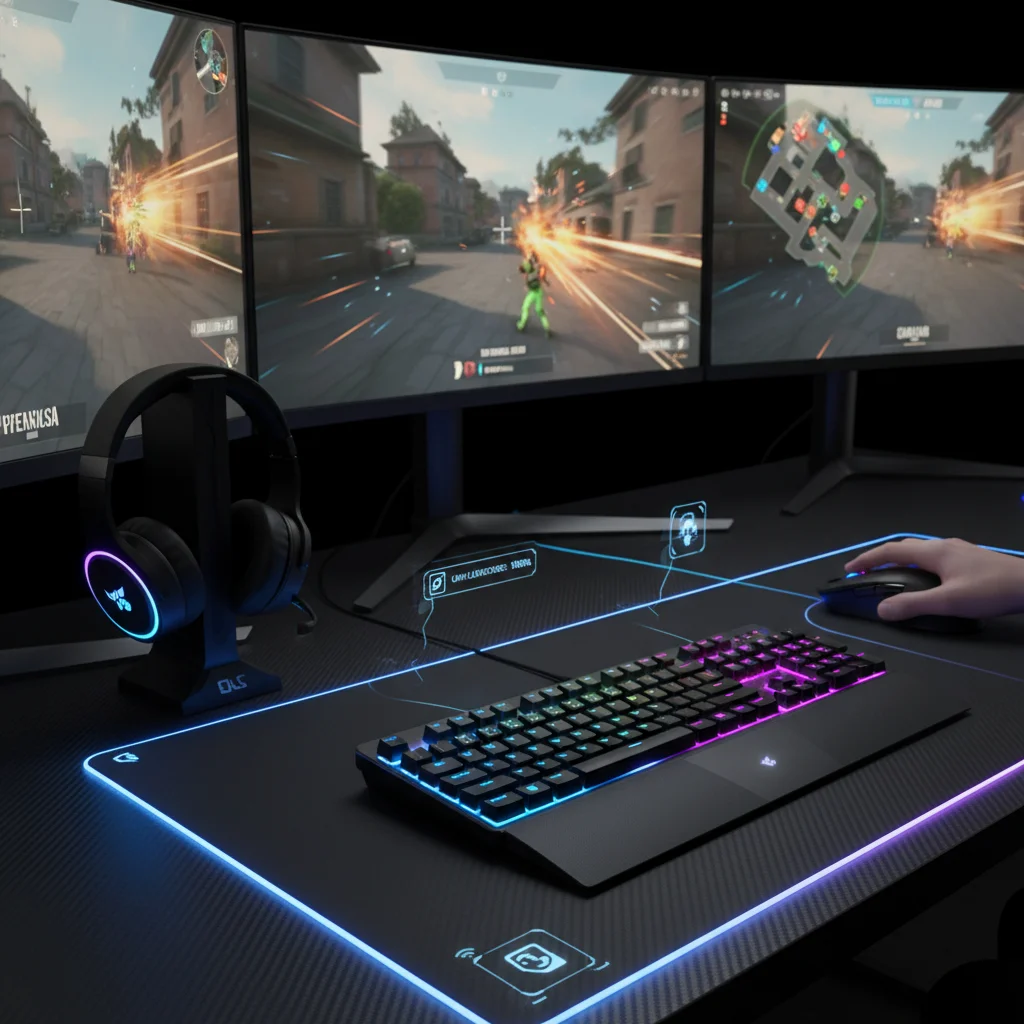
In the fiercely competitive world of esports and high-stakes online gaming, every millisecond counts. The days of dismissing wireless peripherals due to perceived input lag are long gone. Thanks to relentless innovation in wireless technology, particularly in 2.4 GHz and advanced Bluetooth protocols, low-latency wireless gaming is not just a dream but a tangible reality, often outperforming wired counterparts in terms of responsiveness and reliability. As we navigate through 2026, the market is brimming with cutting-edge devices designed to give competitive players an undeniable edge. This comprehensive guide will delve into the seven best low-latency wireless gaming peripherals that are setting the standard for performance, precision, and reliability.
For years, competitive gamers swore by wired connections, fearing that wireless technology introduced unacceptable delays. However, technological advancements have drastically reduced, and in some cases eliminated, this performance gap. Modern wireless peripherals utilise proprietary technologies, highly optimised signal transmission, and superior power management to deliver a seamless, lag-free experience. This shift means that the freedom of movement and clutter-free desk space offered by wireless setups no longer come at the cost of competitive advantage. In fact, for many, the enhanced ergonomics and lack of cable drag actively improve their gameplay.
This article aims to provide an in-depth look at the top contenders in the low-latency wireless gaming arena. We’ll cover everything from ultra-responsive mice that track your every flick with pinpoint accuracy, to keyboards that register keystrokes with unprecedented speed, and headsets that deliver crystal-clear audio without a hint of delay. Our selection criteria focus on several key aspects: actual measured latency, sensor performance, build quality, battery life, and overall user experience in competitive scenarios. Whether you’re a professional esports athlete or a dedicated enthusiast striving for peak performance, upgrading to these peripherals could be the game-changer you need.
The Evolution of Low-Latency Wireless Gaming Technology
The journey from unreliable, laggy wireless devices to the high-performance peripherals we see today has been remarkable. Early wireless technologies, often relying on standard Bluetooth, suffered from significant latency, interference issues, and inconsistent connections. This made them unsuitable for competitive gaming where reaction times are paramount. However, manufacturers quickly realised the potential of wireless freedom and began investing heavily in research and development.
2.4 GHz Wireless: The Gold Standard for Gaming
The breakthrough came with the widespread adoption of 2.4 GHz wireless technology, often paired with proprietary dongles. Unlike standard Bluetooth, these dedicated connections are optimised for speed and stability. Companies like Logitech, Razer, and SteelSeries developed their own ultra-low-latency wireless protocols (e.g., Logitech LIGHTSPEED, Razer HyperSpeed Wireless, SteelSeries Quantum 2.0 Wireless) that significantly reduced input lag to levels indistinguishable from, or even superior to, wired connections. These protocols often employ adaptive frequency hopping and robust error correction to maintain a clean signal even in crowded wireless environments, making them ideal for low-latency wireless gaming.
Advanced Bluetooth and Hybrid Connectivity
While 2.4 GHz remains dominant for dedicated gaming, advancements in Bluetooth technology have also made it a viable option for some peripherals, especially for mobile gaming or as a secondary connection. Bluetooth LE (Low Energy) and other proprietary Bluetooth implementations have improved latency and power efficiency. Many modern gaming peripherals now offer hybrid connectivity, allowing users to switch between 2.4 GHz for critical gaming and Bluetooth for general use or connecting to multiple devices. This versatility adds significant value without compromising the core low-latency wireless gaming experience.
Power Management and Battery Life
Another crucial area of improvement has been battery life. Early wireless devices were notorious for draining batteries quickly, leading to interruptions during critical gaming moments. Today’s peripherals boast impressive battery longevity, with many mice and keyboards offering hundreds of hours of use on a single charge, and headsets providing dozens. This is achieved through more efficient chipsets, intelligent power-saving modes, and improved battery technologies. Fast charging capabilities and the option to play while charging further enhance the practicality of these devices for competitive use.
Criteria for Selecting the Best Low-Latency Wireless Gaming Peripherals
To identify the crème de la crème of low-latency wireless gaming peripherals, we considered several critical factors:
- Actual Latency: This is paramount. We looked for devices with measured input lag in the single-digit millisecond range, ideally below 5ms for mice and keyboards, and minimal audio delay for headsets.
- Wireless Protocol: Preference was given to proprietary 2.4 GHz solutions known for their stability and speed.
- Sensor Performance (Mice): DPI range, IPS (Inches Per Second), acceleration, and lift-off distance are crucial for tracking accuracy. High-end optical sensors are a must.
- Switch Type (Keyboards): Mechanical switches with fast actuation points are preferred.
- Audio Quality and Microphone (Headsets): Immersive sound and clear communication are vital for team play.
- Battery Life: Sufficient battery life for extended gaming sessions is non-negotiable.
- Ergonomics and Build Quality: Comfort during long sessions and durable construction are important for competitive players.
- Software and Customisation: Robust software for customising settings, macros, and RGB lighting.
The 7 Best Low-Latency Wireless Gaming Peripherals for Competitive Play in 2026
1. Logitech G Pro X Superlight 2 (Wireless Gaming Mouse)
The original G Pro X Superlight set a benchmark, and its successor, the Superlight 2, elevates low-latency wireless gaming to new heights. Weighing an astonishingly light 60 grams, it combines the HERO 2 sensor with LIGHTSPEED wireless technology to deliver unparalleled precision and responsiveness. The optical-mechanical switches ensure crisp, fast clicks with zero debounce delay. Its minimalist design focuses purely on performance, making it a favourite among esports professionals. With an improved battery life and USB-C charging, it’s a complete package for those who demand the absolute best.
2. Razer DeathAdder V3 Pro (Wireless Gaming Mouse)
Razer’s iconic DeathAdder line continues to evolve, with the V3 Pro representing the pinnacle of ergonomic design combined with cutting-edge wireless performance. Equipped with Razer’s Focus Pro 30K Optical Sensor and HyperSpeed Wireless, the DeathAdder V3 Pro boasts incredible tracking accuracy and sub-1ms latency. Its refined shape is incredibly comfortable for various grip styles, and the Gen-3 Optical Mouse Switches provide a durable, ultra-fast click experience. It’s a slightly heavier option than the Superlight 2 but offers a more substantial feel without compromising on speed, making it an excellent choice for low-latency wireless gaming.
3. SteelSeries Aerox 9 Wireless (Wireless Gaming Mouse)
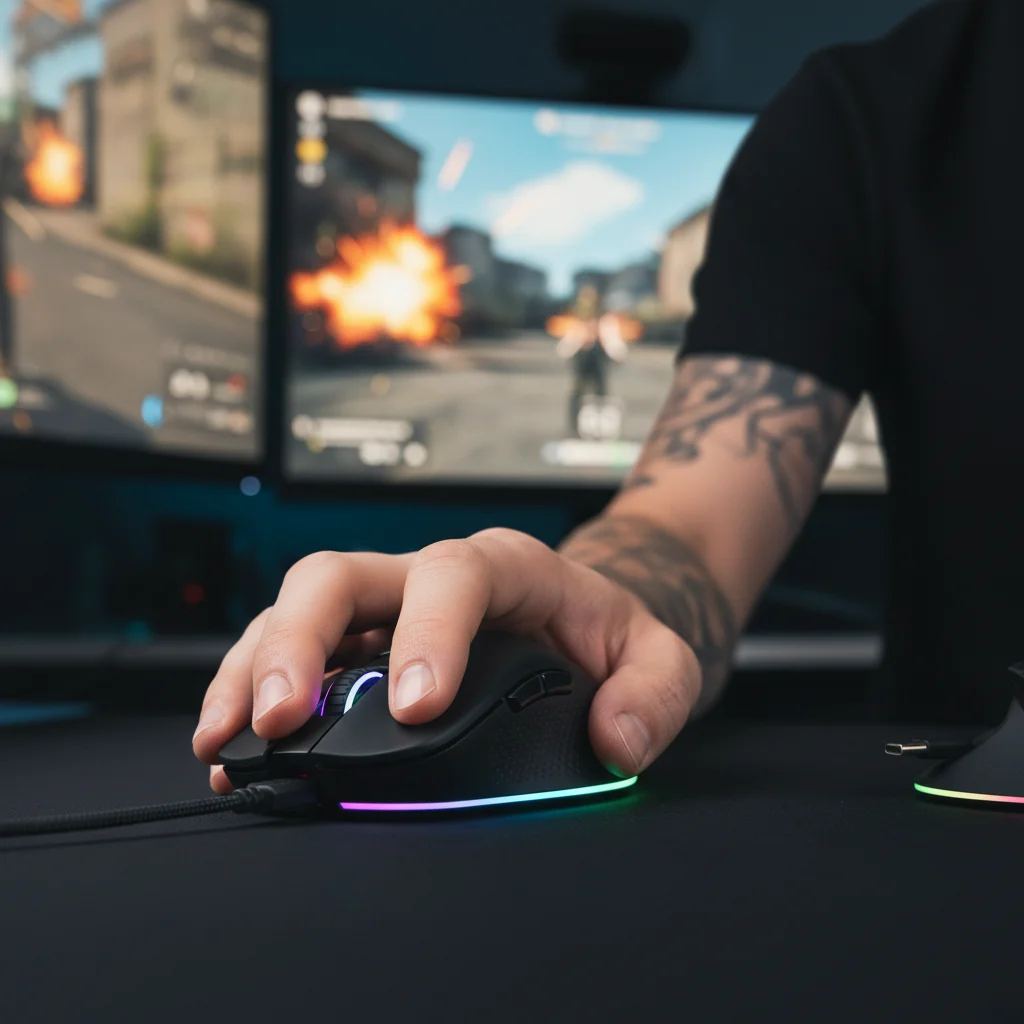
For MMO and MOBA players, the SteelSeries Aerox 9 Wireless is a game-changer. Despite featuring 12 programmable side buttons, it maintains an incredibly lightweight design thanks to its perforated shell. Utilising SteelSeries’ Quantum 2.0 Wireless technology, it ensures hyper-fast and stable connections. The TrueMove Air sensor provides pixel-perfect tracking, and its IP52 water and dust resistance adds to its durability. This mouse proves that feature-rich doesn’t have to mean heavy or slow, offering exceptional low-latency wireless gaming for complex button layouts.
4. Corsair K70 RGB PRO MINI WIRELESS (Wireless Gaming Keyboard)
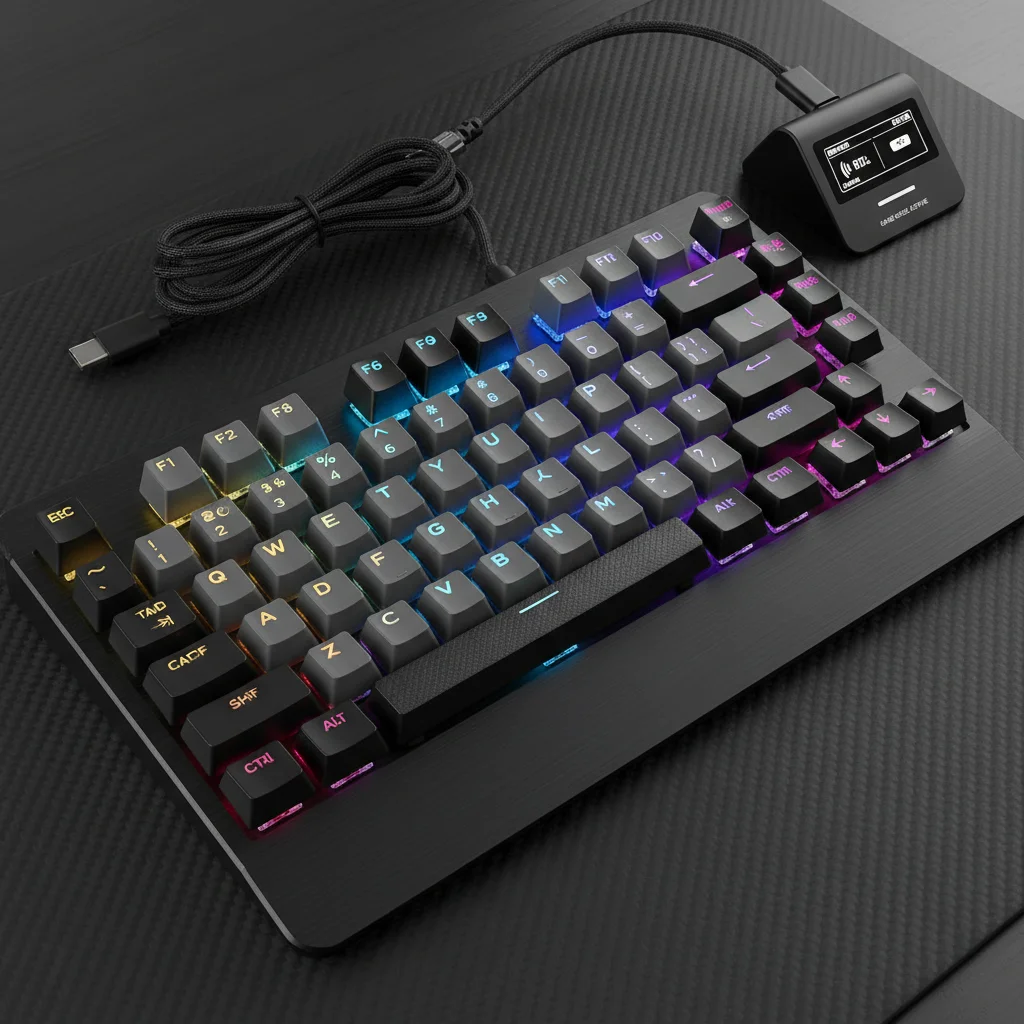
Corsair brings its renowned K70 series into the wireless domain with the K70 RGB PRO MINI WIRELESS. This 60% form factor keyboard is a powerhouse, featuring CORSAIR AXON Hyper-Processing Technology for up to 8,000Hz polling rate, ensuring virtually instantaneous input. It supports both SLIPSTREAM WIRELESS and Bluetooth connectivity, offering flexibility for different setups. Hot-swappable CHERRY MX mechanical switches allow for customisation, and its robust aluminium frame guarantees durability. For competitive players who value compact design and extreme responsiveness, this keyboard is a top pick for low-latency wireless gaming.
5. Logitech G915 TKL Lightspeed (Wireless Gaming Keyboard)
The Logitech G915 TKL Lightspeed remains a dominant force in the wireless mechanical keyboard market. Its ultra-thin design, coupled with low-profile GL mechanical switches (available in tactile, clicky, and linear variants), provides a unique and highly responsive typing and gaming experience. LIGHTSPEED wireless ensures an incredibly fast 1ms report rate, making it indistinguishable from a wired keyboard. The dedicated media controls and stunning RGB lighting add to its premium feel. For those seeking a tenkeyless layout with uncompromising low-latency wireless gaming performance, the G915 TKL is an excellent investment.
6. SteelSeries Arctis Nova Pro Wireless (Wireless Gaming Headset)
When it comes to audio, the SteelSeries Arctis Nova Pro Wireless stands out. This headset offers a dual wireless system (2.4 GHz and Bluetooth) allowing simultaneous connections, meaning you can game on your PC and take a call on your phone without interruption. Its high-fidelity audio drivers deliver incredibly detailed soundscapes, crucial for pinpointing enemy locations. The active noise cancellation and retractable ClearCast Gen 2 microphone ensure crystal-clear communication and immersive gaming. With its comfortable design and impressive battery life, it provides an unparalleled audio experience for low-latency wireless gaming.
7. Audeze Maxwell (Wireless Gaming Headset)
Audeze, renowned for its planar magnetic headphones, has brought its expertise to the gaming world with the Maxwell. These headphones feature large 90mm planar magnetic drivers, delivering an incredibly rich, detailed, and spatial audio experience that few gaming headsets can match. The ultra-low-latency wireless connection ensures that every sound cue is heard precisely when it happens. With a broadcast-quality microphone and an astounding 80+ hours of battery life, the Maxwell is a premium choice for competitive gamers and audiophiles alike, offering a superior audio dimension to their low-latency wireless gaming setup.
Optimising Your Low-Latency Wireless Gaming Setup
Even with the best peripherals, a few tips can help you maximise your low-latency wireless gaming experience:
- Dongle Placement: Always place your 2.4 GHz wireless dongle as close as possible to your peripheral, ideally using a USB extender to bring it onto your desk. This minimises signal interference and ensures the strongest connection.
- Minimise Interference: Keep other wireless devices (routers, cordless phones, microwaves) away from your gaming setup if possible, especially if they operate on the 2.4 GHz band.
- Keep Drivers Updated: Regularly update your peripheral drivers and firmware. Manufacturers often release updates that improve performance, stability, and battery life.
- Charge Regularly: While modern peripherals have excellent battery life, getting into a routine of charging them after long sessions ensures they’re always ready for action.
- Test Polling Rates: Experiment with different polling rates in your peripheral software. Higher polling rates theoretically mean lower latency, but can also consume more CPU resources. Find the balance that works best for your system.
The Future of Low-Latency Wireless Gaming
The trajectory of wireless gaming peripherals points towards even greater sophistication. We can expect further reductions in latency, perhaps even pushing into sub-1ms territory consistently across all device types. Battery technology will continue to advance, leading to longer usage times and faster charging. The integration of AI for adaptive signal management and personalised performance tuning is also on the horizon.
Furthermore, the convergence of wireless standards could simplify connectivity, allowing for seamless transitions between devices without the need for multiple dongles. Haptic feedback in mice and keyboards, more advanced sensor technologies, and even lighter materials will continue to push the boundaries of what’s possible in low-latency wireless gaming. Virtual reality and augmented reality gaming will also drive demand for even more precise and responsive wireless input, spurring further innovation.
Conclusion
The landscape of competitive gaming has been irrevocably transformed by the advent of truly low-latency wireless peripherals. The seven options highlighted in this guide – from the featherlight Logitech G Pro X Superlight 2 mouse to the audiophile-grade Audeze Maxwell headset – represent the pinnacle of current technology. They offer the freedom of wireless without sacrificing a single iota of performance, making them indispensable tools for any serious gamer. By investing in these top-tier devices and optimising your setup, you can ensure that your hardware is never the bottleneck to your personal best. Embrace the future of low-latency wireless gaming and elevate your play to a professional standard. The era of wires dictating competitive advantage is truly over, replaced by a new generation of wireless freedom and unparalleled responsiveness.