Advanced Cooling Solutions for Gaming Rigs: Achieve 10°C Cooler Builds by 2026
The pursuit of peak performance in gaming has always been a relentless race, and at its heart lies a critical challenge: managing heat. As components become more powerful, faster, and more energy-dense, the amount of thermal energy they generate escalates. For avid gamers and PC enthusiasts, maintaining optimal temperatures isn’t just about preventing damage; it’s about unlocking stable, sustained performance, avoiding thermal throttling, and extending the lifespan of their valuable hardware. By 2026, the demand for superior Gaming PC Cooling solutions will reach new heights, with an ambitious goal: reducing gaming rig temperatures by a significant 10 degrees Celsius.
This article delves into the innovative technologies, methodologies, and design philosophies that are poised to redefine thermal management in gaming PCs. We will explore how advancements in traditional air cooling, sophisticated liquid cooling, and emerging exotic cooling techniques, combined with intelligent system design, will converge to meet this ambitious target. The focus is on providing a comprehensive outlook on what gamers can expect in the coming years to keep their high-performance machines running cool, quiet, and at their absolute best.
The Escalating Heat Challenge in Modern Gaming Rigs
Gaming hardware has undergone a monumental transformation. Today’s CPUs and GPUs are not just processors; they are complex, multi-core, parallel processing behemoths capable of rendering photorealistic graphics and executing millions of calculations per second. This power, however, comes at a cost: heat. Modern flagship CPUs can draw upwards of 250W, and top-tier GPUs can easily exceed 400W under heavy load. This concentrated heat generation within a relatively confined space creates a microclimate that, if not managed effectively, can quickly lead to performance degradation.
Thermal throttling, where components automatically reduce their clock speed to prevent overheating, is the bane of any serious gamer. It translates directly into lower frame rates, stuttering gameplay, and an overall inconsistent experience. Moreover, prolonged exposure to high temperatures accelerates component degradation, shortening the lifespan of expensive hardware. The challenge isn’t just to dissipate heat, but to do so efficiently, quietly, and within the aesthetic and space constraints of modern PC cases. This is where advanced Gaming PC Cooling solutions become indispensable.
Evolution of Air Cooling: Smarter, Quieter, More Efficient
For decades, air cooling has been the backbone of PC thermal management, and it’s far from obsolete. By 2026, air cooling will have evolved significantly, moving beyond brute force to embrace intelligent design and advanced materials. The goal remains the same: transfer heat from the component to a heatsink and then dissipate it into the surrounding air using fans. However, the methods are becoming far more refined.
Advanced Heatsink Designs and Materials
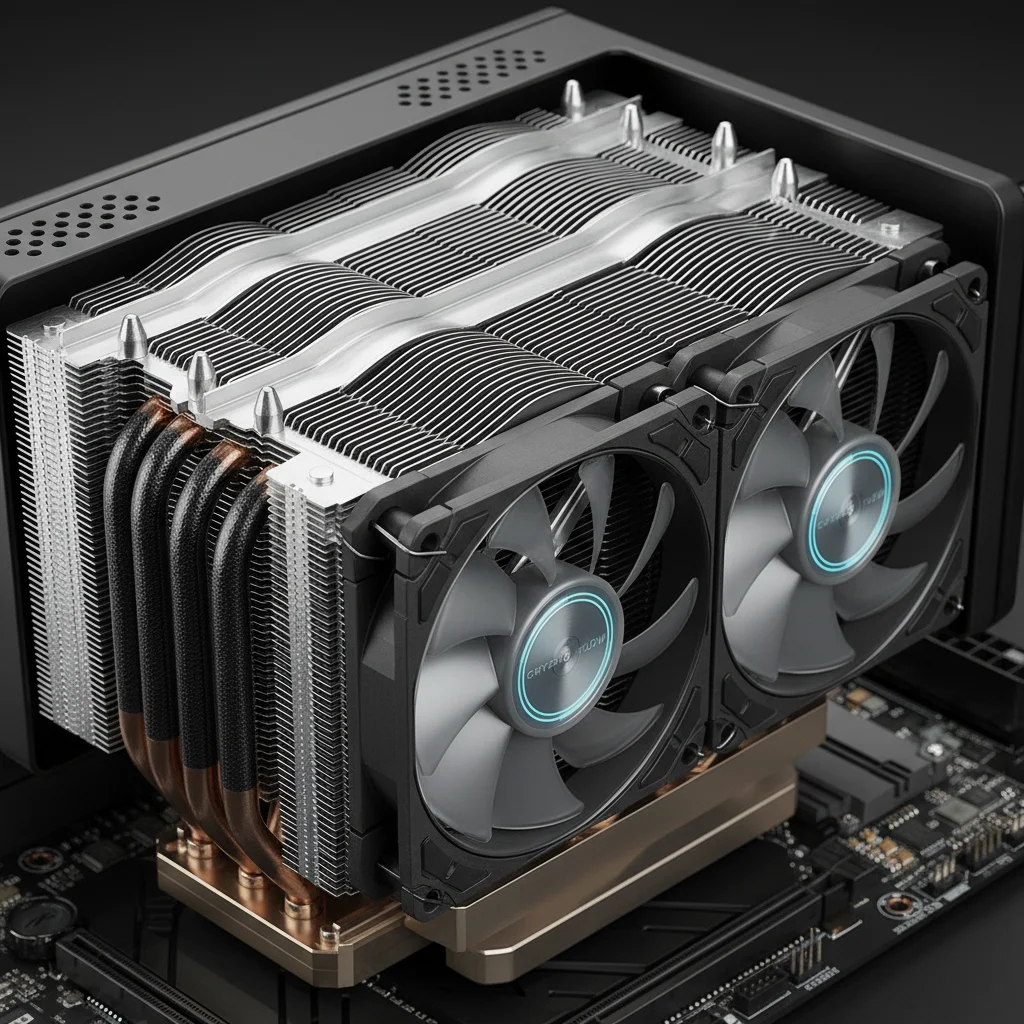
Expect to see heatsinks with even more intricate fin arrays, designed for increased surface area and optimized airflow. Technologies like vapor chambers, traditionally found in high-end GPUs, will become more commonplace in CPU air coolers, offering superior heat spreading from the CPU die to the heat pipes. Materials science will also play a crucial role. While copper and aluminium remain dominant, expect to see hybrid designs incorporating exotic alloys or even graphene-infused coatings to enhance thermal conductivity and radiative properties.
Fan Technology Breakthroughs
Fans are the workhorses of air cooling, and their evolution will focus on maximizing airflow and static pressure while minimizing noise. MagLev (magnetic levitation) bearings, already present in some premium fans, will become more widespread, offering unparalleled durability and quiet operation. Blade designs will be further refined using computational fluid dynamics (CFD) to create profiles that move more air with less turbulence and noise. Smart fan controllers, integrated directly into motherboards or dedicated hubs, will leverage AI and machine learning to predict thermal loads and adjust fan curves dynamically, ensuring optimal cooling without unnecessary noise.
Optimized Case Airflow and Pressure
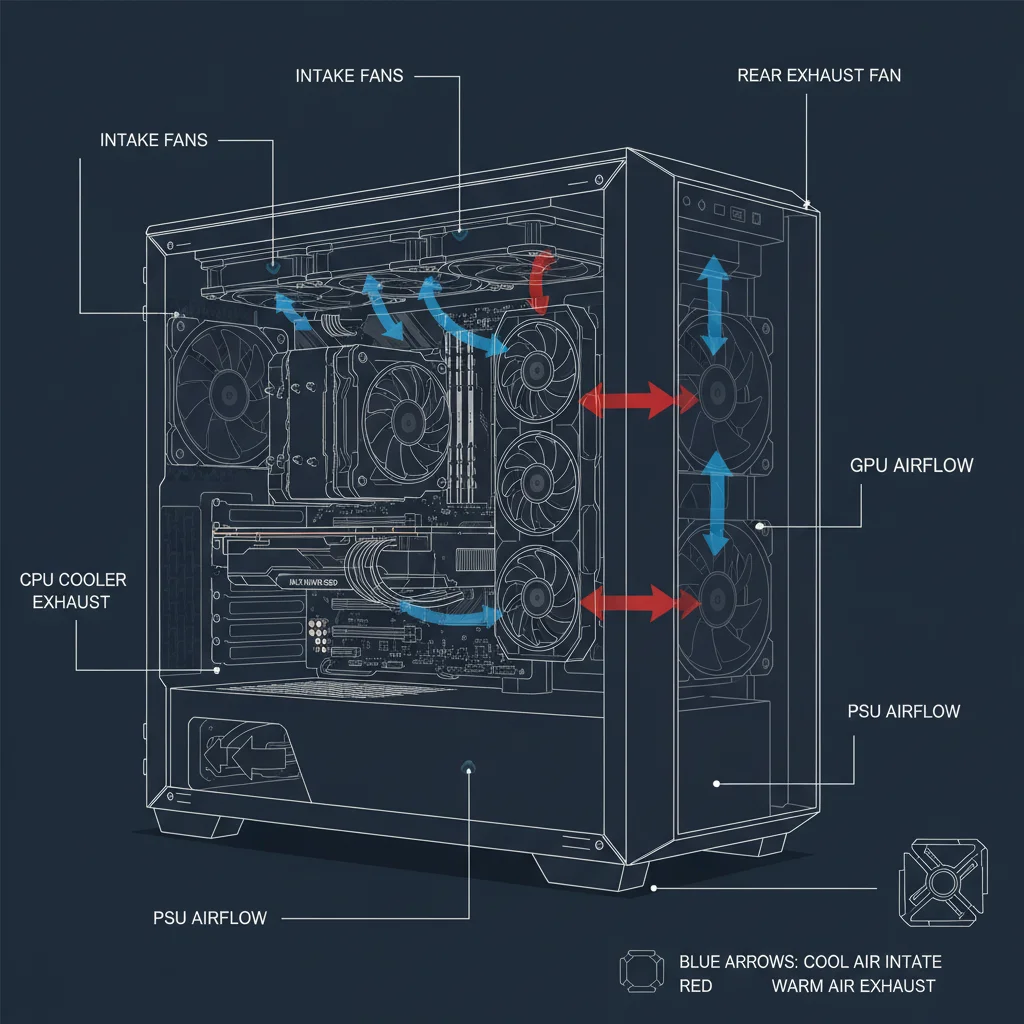
Case design is paramount for effective air cooling. By 2026, PC cases will be engineered with even greater precision to facilitate optimal airflow. This means more strategically placed vents, dust filters with minimal impedance, and internal layouts that reduce obstructions. Positive pressure configurations (more intake than exhaust) will be refined to prevent dust ingress while ensuring a steady supply of cool air to critical components. Chassis manufacturers will collaborate more closely with cooler manufacturers to create synergistic designs that maximize the efficiency of both air coolers and case fans, leading to superior overall Gaming PC Cooling performance.
The Rise of Next-Generation Liquid Cooling
Liquid cooling, particularly All-in-One (AIO) closed-loop systems, has become a staple in high-performance gaming rigs. Its ability to move heat away from the source to a radiator, where it can be dissipated more effectively, makes it ideal for managing the intense thermal output of modern CPUs and GPUs. By 2026, liquid cooling will evolve in several key areas, becoming more efficient, reliable, and user-friendly.
Advanced AIO Designs and Larger Radiators
AIO coolers will feature larger, thicker radiators with higher fin density, capable of dissipating more heat. Pump designs will see improvements in efficiency and longevity, with quieter operation becoming a standard. The move towards larger CPU sockets and more powerful GPUs will necessitate more robust cold plates, potentially incorporating micro-fin designs or even integrated vapor chambers for improved heat transfer from the component to the liquid. Flexible, low-evaporation tubing will also become standard, ensuring long-term reliability.
Custom Loop Innovation
For enthusiasts, custom liquid cooling loops offer the ultimate in thermal performance and aesthetic customization. By 2026, we’ll see easier-to-install components, more standardized fittings, and potentially even modular block designs that simplify maintenance and upgrades. New coolant formulations will offer improved thermal properties and anti-corrosion additives, extending the life of the loop. Integrated sensors for flow rate, temperature, and coolant level will become more sophisticated, providing real-time data and allowing for proactive maintenance.
Direct-to-Die Cooling and Micro-Channel Technology
One of the most significant advancements in liquid cooling will be the proliferation of direct-to-die cooling solutions. Instead of a cold plate sitting atop an integrated heat spreader (IHS), these solutions will make direct contact with the CPU or GPU die itself, bypassing the thermal resistance of the IHS and thermal interface material (TIM). This could involve specialized liquid metal interfaces or even integrated micro-channel cooling structures directly within the chip packaging, offering unprecedented heat dissipation capabilities. This level of precision cooling is critical for achieving the target 10-degree Celsius reduction in Gaming PC Cooling.
Exotic and Emerging Cooling Technologies
Beyond traditional air and liquid cooling, several exotic and emerging technologies hold promise for the future of Gaming PC Cooling. While some are still in their nascent stages, their potential impact on thermal management is significant.
Phase Change Cooling for Consumer Rigs
Phase change cooling, which uses a refrigerant to absorb heat as it evaporates and then releases it as it condenses, has long been a staple in industrial applications. While complex and expensive, miniaturized and more consumer-friendly phase change systems could emerge by 2026. These systems offer extremely low temperatures, potentially even below ambient, providing a significant performance boost for extreme overclocking and critical applications, though power consumption and noise remain challenges.
Thermoelectric (Peltier) Coolers
Peltier coolers, or thermoelectric coolers (TECs), use the Peltier effect to create a temperature difference by applying voltage across two dissimilar materials. While they can achieve impressive cooling, they are also inefficient, generating their own heat on the hot side. However, advancements in TEC efficiency and integration into hybrid cooling solutions (e.g., a small TEC embedded in a liquid cooling block) could make them viable for targeted spot cooling of critical components, offering a few extra degrees of cooling where it matters most for Gaming PC Cooling.
Graphene and Nanomaterial Integration
Graphene, with its exceptional thermal conductivity, is already being explored for TIMs and heatsink coatings. By 2026, we could see more widespread integration of graphene and other nanomaterials into various cooling components. This could include graphene-enhanced heat pipes, radiator fins, or even directly within PCB layers to improve heat spreading and dissipation, allowing for thinner, more efficient cooling solutions.
Holistic System Design and Software Optimization
Achieving a 10-degree Celsius reduction in gaming rig temperatures by 2026 isn’t just about individual components; it’s about a holistic approach to system design, intelligent software management, and user awareness.
Smart Chassis and Component Placement
Future PC cases will integrate more sensors and active ventilation systems. This could include automated vents that open or close based on thermal load, or even adaptive fan mounts that adjust position for optimal airflow. Component placement will be even more critical, with motherboards and GPUs designed to minimize hot spots and facilitate clear airflow pathways. Modular internal designs will allow users to customize their build for specific cooling needs, whether it’s an air-cooled powerhouse or a complex liquid-cooled masterpiece. The concept of “thermal zones” within a PC case will become more pronounced, with dedicated cooling solutions for each zone.
AI-Driven Thermal Management Software
Software will play an increasingly vital role in Gaming PC Cooling. AI and machine learning algorithms will analyze thermal data in real-time, predict thermal spikes during gaming sessions, and dynamically adjust fan speeds, pump speeds, and even CPU/GPU clock speeds to maintain optimal temperatures without sacrificing performance. This predictive cooling will be far more efficient than reactive cooling, preventing thermal throttling before it even occurs. Furthermore, these AI systems could learn user habits and game profiles to create personalized cooling strategies.
Power Delivery and Efficiency
Reducing heat generation at the source is the most effective form of cooling. Future CPUs and GPUs will continue to improve their power efficiency, generating less waste heat for the same performance. Power supply units (PSUs) will also become more efficient, with less energy wasted as heat. Motherboard voltage regulator modules (VRMs) will feature more robust cooling solutions, as these components often generate significant heat that can impact overall system temperatures. Optimal power delivery ensures that components are not working harder than necessary, which directly contributes to lower thermal output.
Environmental Factors and User Practices
While hardware and software innovations are crucial, user practices and environmental factors also contribute significantly to a PC’s thermal performance. Maintaining a clean system, free of dust, is paramount. By 2026, cases with easier-to-clean dust filters and more accessible interiors will become standard. Furthermore, the ambient room temperature plays a direct role. Users will be encouraged to ensure their gaming spaces are well-ventilated and kept at reasonable temperatures to aid the PC’s internal cooling systems. Educating users on optimal fan configurations and maintenance routines will be an ongoing effort to maximize the effectiveness of advanced Gaming PC Cooling solutions.
The 10-Degree Celsius Target: A Feasible Goal?
Achieving a 10-degree Celsius reduction in gaming rig temperatures by 2026 is an ambitious but entirely feasible goal. It won’t be a single breakthrough technology but rather a cumulative effect of numerous incremental improvements across the entire cooling ecosystem:
- 50% from improved component efficiency: More efficient CPUs, GPUs, and VRMs will inherently generate less heat.
- 30% from advanced cooling hardware: Superior heatsink designs, next-gen fans, more powerful AIOs, and custom loop innovations.
- 10% from optimized case design and airflow: Smarter chassis layouts and better ventilation.
- 10% from AI-driven software and user practices: Predictive thermal management and diligent maintenance.
This synergistic approach will ensure that every watt of power is used as efficiently as possible, and any generated heat is dissipated with maximum effectiveness. The focus will be on creating systems that are not only powerful but also thermally resilient, allowing gamers to push their hardware to its limits without fear of overheating.
Conclusion: A Cooler Future for Gaming Rigs
The future of Gaming PC Cooling is bright, promising a significant leap forward in thermal management. By 2026, the combination of advanced air cooling, sophisticated liquid cooling, emerging exotic technologies, and intelligent system design will make it entirely possible to reduce gaming rig temperatures by a substantial 10 degrees Celsius. This will translate into more stable performance, higher boost clocks, extended component lifespan, and an overall more enjoyable and immersive gaming experience. As the industry continues to innovate, gamers can look forward to builds that are not only powerful and visually stunning but also remarkably cool, quiet, and reliable, truly unlocking the full potential of their high-performance hardware.