NVMe Gen 5 vs. Gen 4 SSDs: The Ultimate Gaming Performance Showdown in 2026
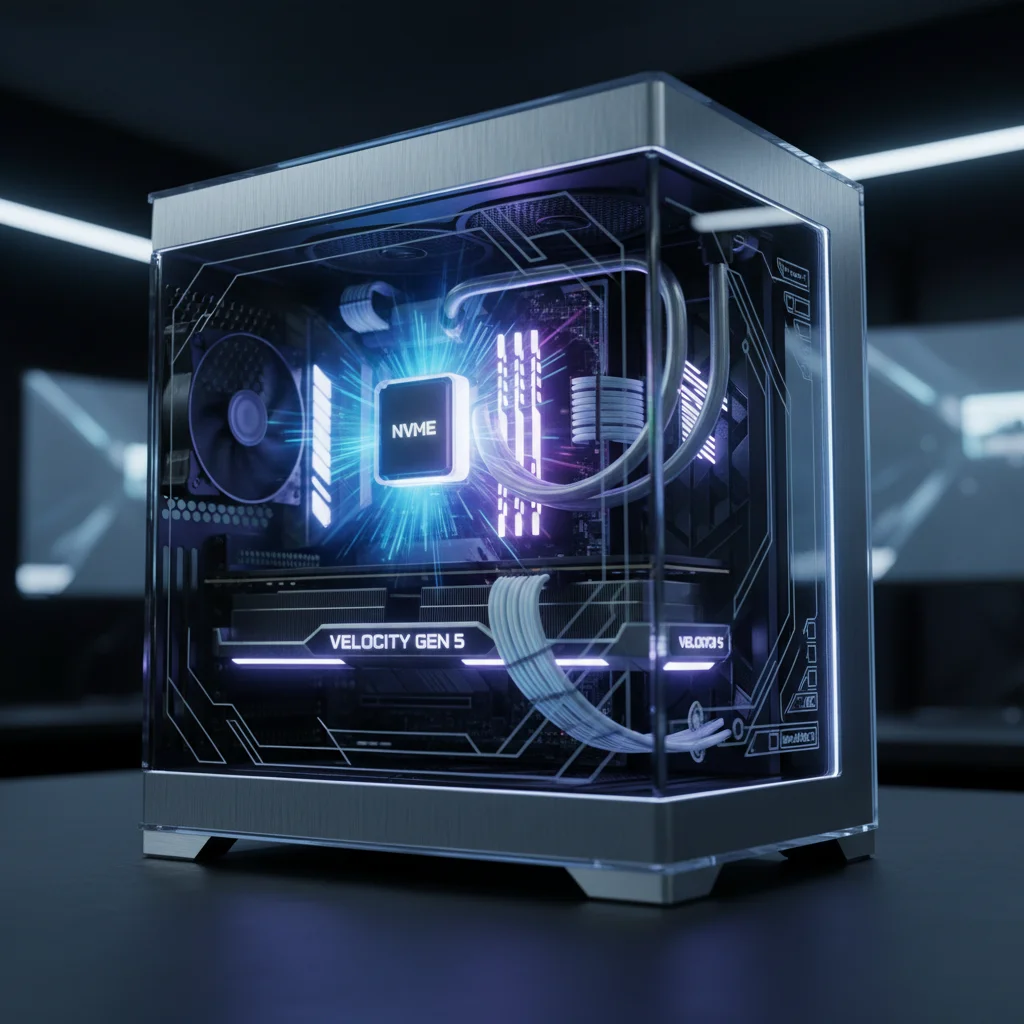
The landscape of PC gaming is in constant evolution, with every component vying for the title of ‘most crucial’ in delivering an uncompromised experience. In 2026, as games become increasingly complex and data-intensive, the storage solution you choose plays a more pivotal role than ever before. For enthusiasts and competitive players alike, the debate often boils down to a single, critical question: what is the best storage for peak gaming performance? The answer, increasingly, points towards Non-Volatile Memory Express (NVMe) Solid State Drives (SSDs).
However, simply opting for an NVMe SSD isn’t enough anymore. The technology itself has seen rapid advancements, leading to the current generation divide: NVMe Gen 4 and the cutting-edge NVMe Gen 5. While Gen 4 has become the standard for high-end gaming rigs over the past few years, Gen 5 promises astronomical speeds that were once unimaginable. But does this translate directly into a tangible advantage for gaming? Is the upgrade to NVMe Gen 5 Gaming truly worth the investment in 2026, or does Gen 4 still offer sufficient horsepower for the most demanding titles?
This comprehensive article delves deep into the heart of this technological rivalry. We will dissect the architectural differences, benchmark the performance metrics, and critically evaluate the real-world impact of both NVMe Gen 4 and Gen 5 SSDs on gaming. From load times and texture streaming to overall system responsiveness, we’ll explore every facet to help you make an informed decision for your gaming setup. Prepare to uncover the nuances of these storage titans and determine which one reigns supreme for the ultimate gaming experience in 2026.
Understanding the NVMe Evolution: From Gen 4 to Gen 5
Before we dive into the comparative analysis, it’s essential to grasp the fundamental differences and advancements that distinguish NVMe Gen 5 from its predecessor, Gen 4. Both generations leverage the PCIe (Peripheral Component Interconnect Express) interface, but they do so with varying bandwidth capabilities, which directly impacts their potential for speed.
PCIe Bandwidth: The Core of the Speed Difference
The primary differentiator between NVMe Gen 4 and Gen 5 lies in the underlying PCIe standard they utilise. PCIe is the high-speed serial computer expansion bus standard that connects components like GPUs, network cards, and, crucially, NVMe SSDs to the motherboard. Each generation of PCIe doubles the bandwidth of the previous one.
- PCIe Gen 4: This standard offers a theoretical bandwidth of approximately 16 GT/s (gigatransfers per second) per lane, which translates to roughly 2 GB/s per lane. Most high-performance NVMe Gen 4 SSDs use four PCIe lanes (x4), providing a total theoretical bandwidth of around 8 GB/s. This has enabled sequential read speeds of up to 7,500 MB/s and write speeds up to 7,000 MB/s, which were groundbreaking at their introduction.
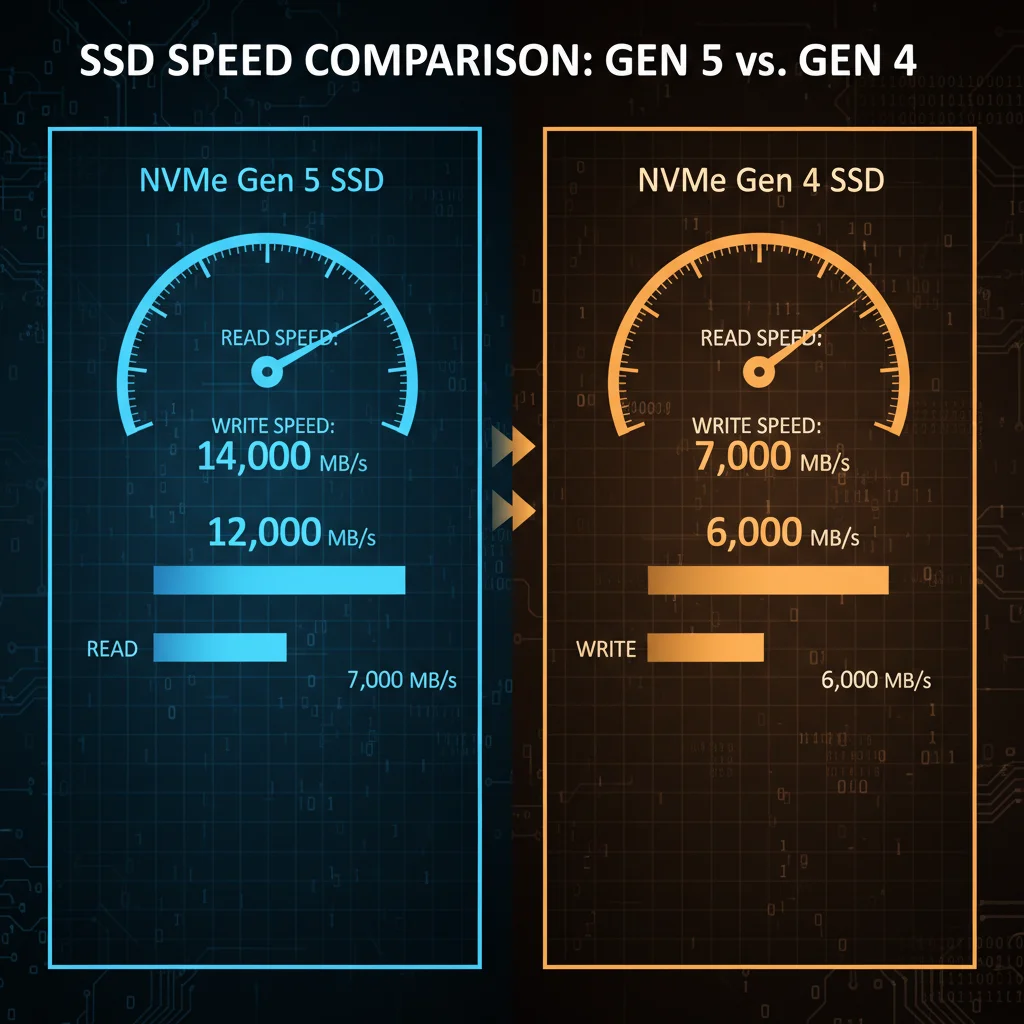
- PCIe Gen 5: Taking a monumental leap forward, PCIe Gen 5 doubles the bandwidth again. It boasts a theoretical bandwidth of 32 GT/s per lane, meaning an x4 Gen 5 NVMe SSD can achieve a staggering theoretical bandwidth of approximately 16 GB/s. This translates into potential sequential read speeds soaring past 12,000 MB/s and write speeds exceeding 10,000 MB/s. Some early Gen 5 drives are already reaching 14,000 MB/s read and 12,000 MB/s write, with further optimisations expected to push these numbers even higher.
This exponential increase in bandwidth is not merely a number on a spec sheet; it represents a fundamental shift in how quickly data can be accessed and processed by the system. For NVMe Gen 5 Gaming, this raw speed promises to unlock new possibilities.
Controller and NAND Flash Advancements
Beyond the PCIe interface, the internal components of NVMe Gen 5 SSDs have also undergone significant upgrades. The SSD controller, often considered the ‘brain’ of the drive, is specifically designed to handle the increased data throughput of PCIe Gen 5. These controllers feature more powerful processors, larger DRAM caches, and more sophisticated error correction algorithms to maintain stability and performance at extreme speeds.
NAND flash memory, the actual storage medium, has also evolved. While both Gen 4 and Gen 5 SSDs primarily use 3D TLC (Triple-Level Cell) or QLC (Quad-Level Cell) NAND, Gen 5 drives often incorporate newer, higher-density, and faster NAND chips. These advancements allow for quicker data access within the NAND memory itself, complementing the faster interface.
Thermal Management: A Growing Concern
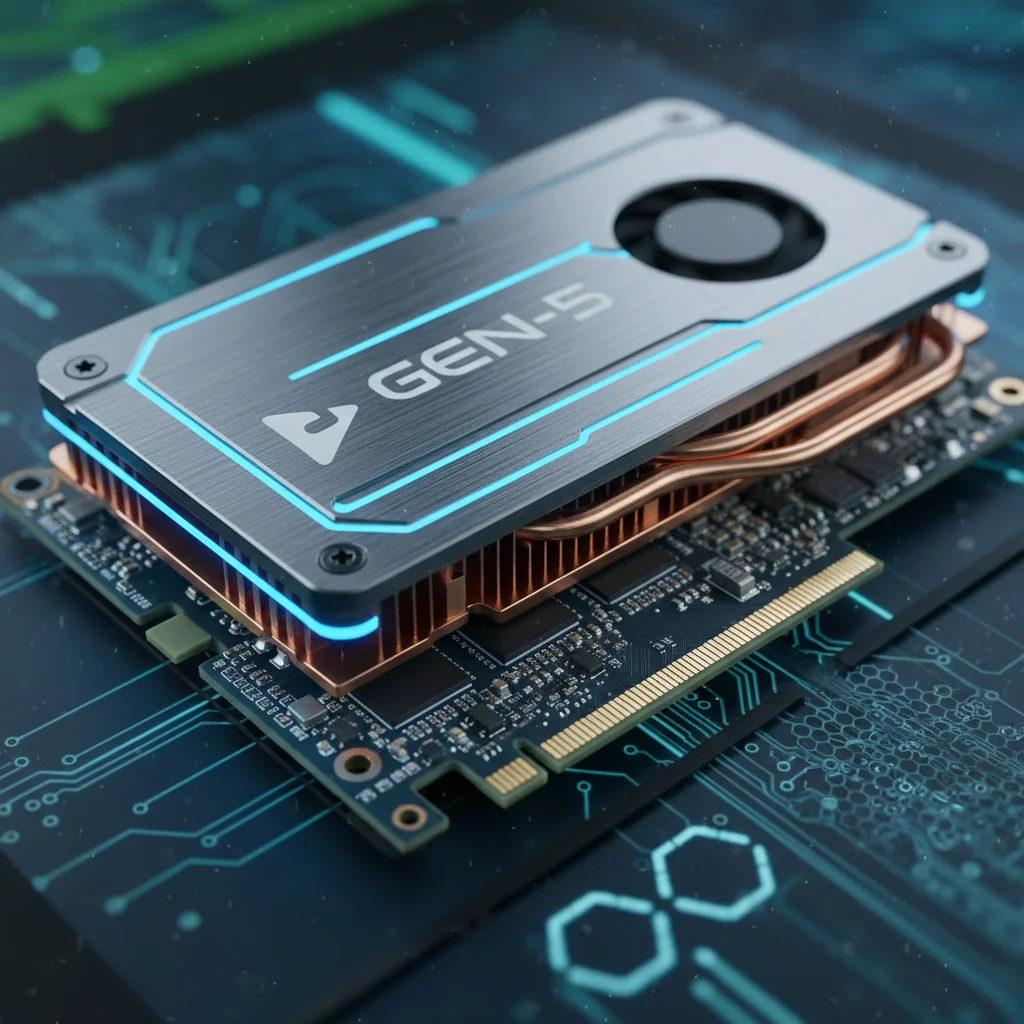
With great speed comes great heat. The increased power consumption and data transfer rates of NVMe Gen 5 SSDs generate significantly more heat than their Gen 4 counterparts. This has made advanced thermal management a critical design consideration. Most high-performance NVMe Gen 5 drives come equipped with substantial heatsinks, and some even require active cooling solutions (small fans) to prevent thermal throttling, where the drive reduces its performance to prevent overheating. This is a factor that Gen 4 SSDs, while benefiting from heatsinks, rarely required to the same extent.
Key Performance Metrics: Benchmarking Gen 5 vs. Gen 4
To truly understand the advantage of NVMe Gen 5 Gaming, we must look beyond theoretical maximums and delve into real-world performance metrics. While sequential read/write speeds grab headlines, other factors like random read/write performance, latency, and IOPS (Input/Output Operations Per Second) are equally, if not more, important for gaming.
Sequential Read/Write Speeds
As discussed, this is where Gen 5 shines brightest. Sequential speeds refer to reading or writing large, contiguous blocks of data – operations common in tasks like copying large files, loading large game assets, or video editing. For gaming, this primarily impacts initial game load times and loading screens between levels.
- NVMe Gen 4: Typically offers sequential reads of 5,000-7,500 MB/s and writes of 4,500-7,000 MB/s.
- NVMe Gen 5: Delivers sequential reads of 10,000-14,000 MB/s and writes of 9,000-12,000 MB/s, effectively doubling Gen 4 performance.
While impressive, the direct impact of these extreme sequential speeds on moment-to-moment gameplay is often less pronounced than one might expect, as modern games rarely load data in perfectly sequential blocks.
Random Read/Write Performance (IOPS)
This is arguably the most critical metric for gaming. Random performance measures how quickly an SSD can access small, scattered pieces of data from various locations on the drive. Games frequently access numerous small files for textures, audio, character models, and game logic simultaneously. Higher random IOPS and lower latency translate directly to smoother texture streaming, faster asset loading, and overall more responsive gameplay.
- NVMe Gen 4: High-end Gen 4 drives typically achieve around 800,000 to 1,000,000 IOPS for both random reads and writes.
- NVMe Gen 5: Early Gen 5 drives are already pushing past 1,300,000 to 1,500,000 IOPS for random reads and writes, representing a significant generational leap.
This substantial increase in random performance is where NVMe Gen 5 Gaming begins to show its true potential for a more fluid and immediate gaming experience.
Latency
Latency is the delay between when a request for data is made and when that data actually begins to be retrieved. Lower latency means faster response times. NVMe technology inherently offers much lower latency than older SATA SSDs or HDDs. Gen 5 further refines this, albeit with smaller gains compared to the raw bandwidth increase.
- NVMe Gen 4: Typical latency in the 20-30 microsecond range.
- NVMe Gen 5: Can reduce latency further, often dropping into the 10-20 microsecond range, especially under heavy loads.
While seemingly small, these microsecond differences can add up in complex gaming scenarios, contributing to a snappier feel.
Real-World Gaming Impact: Does Gen 5 Change the Game?
The benchmarks are clear: NVMe Gen 5 SSDs are undeniably faster than Gen 4. But how does this raw speed translate into a tangible, noticeable difference for gamers in 2026? This is where the discussion becomes more nuanced, as the benefits often depend on the game, the game engine, and even the rest of your system components.
Game Load Times
This is the most obvious area where faster SSDs show their mettle. Initial loading of games, loading new levels, fast-travel points, or respawn screens can all see improvements. With Gen 5, these times can be shaved down further, sometimes by a few seconds, compared to Gen 4. For competitive gamers, even a second saved can be crucial.
However, diminishing returns are a factor. Moving from an HDD to a SATA SSD was revolutionary. Moving from a SATA SSD to an NVMe Gen 3 was a significant leap. Gen 4 brought further cuts, but the jump from Gen 4 to NVMe Gen 5 Gaming for load times, while present, might not always feel as dramatic as previous generational shifts, especially if the game engine isn’t fully optimized to leverage such extreme speeds.
Texture Streaming and Asset Loading
Modern games often employ sophisticated texture streaming techniques to ensure high-resolution assets are loaded on demand, preventing hitches and maintaining visual fidelity. This is where high random read performance and low latency are critical. Games like Cyberpunk 2077, Starfield, and future titles built on engines like Unreal Engine 5 (which heavily utilises technologies like Nanite and Lumen, demanding rapid asset streaming) can already push Gen 4 SSDs. Gen 5’s superior random IOPS can lead to:
- Reduced Pop-in: Less noticeable pop-in of high-resolution textures and objects as you move through game worlds.
- Smoother Transitions: More seamless transitions between different areas or visual states without micro-stutters.
- Faster Level Generation: In procedurally generated worlds or games with dynamic environments, assets can be loaded and rendered more quickly.
This is where NVMe Gen 5 Gaming truly begins to differentiate itself, offering a more consistently smooth and visually rich experience, especially as game engines continue to evolve to exploit these speeds.
DirectStorage and Future Game Development
Perhaps the most compelling argument for NVMe Gen 5 Gaming comes from the advent of Microsoft’s DirectStorage API. This technology, first introduced with Xbox Series X/S and now available for PC, allows the GPU to directly access game assets from the SSD, bypassing the CPU. This significantly reduces CPU overhead and I/O bottlenecking, leading to faster loading and more efficient asset streaming.
While DirectStorage can benefit Gen 4 SSDs, it is specifically designed to scale with faster storage. The enormous bandwidth and IOPS of Gen 5 drives are perfectly suited to maximise DirectStorage’s potential. As more games are developed with DirectStorage in mind, Gen 5 SSDs will likely become the benchmark for achieving the intended performance and visual fidelity, especially in 2026 and beyond.
General System Responsiveness
Beyond gaming, a faster SSD contributes to a snappier overall system. Operating system boot times, application loading, and file transfers will all see improvements with Gen 5. While not directly a ‘gaming’ benefit, a more responsive system enhances the entire PC experience.
The Ecosystem: Motherboard, CPU, and Cooling Requirements
Upgrading to an NVMe Gen 5 SSD isn’t just about buying the drive; it requires a compatible ecosystem. In 2026, most high-end and even mid-range motherboards will support Gen 5, but it’s crucial to verify compatibility.
Motherboard Compatibility
To utilise an NVMe Gen 5 SSD, your motherboard must have a PCIe Gen 5 M.2 slot. These slots are typically found on motherboards supporting Intel’s 12th generation (Z690 chipset) and newer, or AMD’s AM5 platform (X670/B650 chipsets) and newer. If your motherboard only has Gen 4 M.2 slots, a Gen 5 SSD will still work, but it will operate at Gen 4 speeds, negating its primary advantage.
CPU Support
The CPU also plays a role as it provides the PCIe lanes. Modern CPUs from Intel (12th Gen Core i Series and newer) and AMD (Ryzen 7000 Series and newer) offer PCIe Gen 5 support. Ensure your CPU directly supports PCIe Gen 5 to unlock the full bandwidth.
Cooling Solutions
As mentioned, thermal management is paramount for NVMe Gen 5 SSDs. Many motherboards with Gen 5 M.2 slots come with robust integrated heatsinks. However, some high-performance Gen 5 drives might require even more substantial passive heatsinks or even active cooling (small fans) to prevent thermal throttling, particularly under sustained heavy workloads like large file transfers or intense gaming sessions. Factor in the need for effective cooling when considering a Gen 5 upgrade.
Cost-Benefit Analysis: Is NVMe Gen 5 Worth It in 2026?
By 2026, NVMe Gen 5 SSDs are becoming more mainstream, but they still carry a price premium over Gen 4 drives. The question then becomes: does the performance uplift justify the additional cost for the average gamer?
Price vs. Performance
Historically, early adoption of new technology comes at a higher price. While Gen 5 SSDs have seen price reductions since their initial launch, they remain more expensive per gigabyte than their Gen 4 counterparts. For example, a 2TB NVMe Gen 5 drive might still cost 20-40% more than a comparable 2TB Gen 4 drive.
For most games today, the difference in loading times between a high-end Gen 4 and a Gen 5 SSD might only be a few seconds. Whether these few seconds are worth the extra cost is subjective. However, for games explicitly designed to leverage DirectStorage and future engines, the graphical and responsiveness benefits of Gen 5 could become more pronounced and thus more justifiable.
Future-Proofing Your Rig
One of the strongest arguments for investing in NVMe Gen 5 Gaming in 2026 is future-proofing. As game development progresses and engines continue to demand faster storage, Gen 5 will increasingly become the standard. By opting for Gen 5 now, you are ensuring your system is ready for the most demanding titles that will emerge in the latter half of the decade, potentially delaying the need for another storage upgrade.
Target Audience for Gen 5
Who benefits most from NVMe Gen 5 in 2026?
- Enthusiast Gamers: Those who always want the absolute best performance, regardless of cost, and are building or upgrading a high-end system.
- Competitive Gamers: Where every fraction of a second in loading or asset streaming can make a difference in critical moments.
- Content Creators/Streamers: Professionals who also game and benefit from the extreme speeds for video editing, large file transfers, and rapid application loading.
- Early Adopters: Individuals who enjoy being at the forefront of technology and want to experience the latest advancements.
When Gen 4 is Still Sufficient
For many gamers, especially those on a tighter budget or those who play less demanding titles, an NVMe Gen 4 SSD remains an excellent choice in 2026. It offers:
- Exceptional Performance: Gen 4 drives are still incredibly fast and provide a massive upgrade over SATA SSDs or HDDs.
- Better Value: Lower cost per gigabyte allows for larger storage capacities for the same budget.
- Widespread Compatibility: Many existing motherboards already support Gen 4, making it an easier upgrade path for older systems.
If you’re not building a brand-new, top-tier system or your primary focus isn’t on the absolute bleeding edge of gaming technology, Gen 4 will continue to serve you exceptionally well for years to come.
The Verdict: NVMe Gen 5 Gaming in 2026
As we stand in 2026, the choice between NVMe Gen 4 and Gen 5 for gaming is more intricate than a simple speed comparison. Both technologies offer phenomenal performance that far outstrips traditional storage solutions, but their respective advantages cater to different needs and budgets.
NVMe Gen 4 SSDs continue to be the workhorse of high-performance gaming. They offer an incredible balance of speed, capacity, and value, making them an ideal choice for the vast majority of gamers. For current-generation games and even many upcoming titles, a good Gen 4 drive provides more than enough bandwidth and IOPS to deliver a smooth, responsive, and enjoyable experience. The price point makes it easier to acquire larger capacities, which is increasingly important with ballooning game sizes.
However, for those who demand the absolute pinnacle of performance and are building a future-proofed, top-tier gaming machine, NVMe Gen 5 SSDs are the undeniable champion. Their astronomical sequential and random read/write speeds, combined with lower latency, position them as the ideal storage solution for games explicitly designed to leverage technologies like DirectStorage. As game engines evolve and developers push the boundaries of real-time asset streaming and complex world generation, Gen 5 will increasingly become the standard required to experience games as they are truly intended.
The immediate, palpable difference in load times from Gen 4 to Gen 5 might be marginal in many existing titles. However, the long-term benefits, especially in games developed with DirectStorage and next-generation engines in mind, point towards Gen 5 as the superior choice for a truly uncompromised NVMe Gen 5 Gaming experience. Consider your budget, your motherboard and CPU compatibility, and your desire for future-proofing. If you have the means and the supporting hardware, Gen 5 offers the fastest, most responsive storage experience available in 2026, setting you up for the next wave of gaming innovation.
Final Recommendation:
- For the Enthusiast/Future-Proofing: Go with NVMe Gen 5, ensuring you have a compatible motherboard, CPU, and adequate cooling.
- For the Value-Conscious High-Performance Gamer: NVMe Gen 4 still offers exceptional performance and better bang for your buck, allowing for larger storage capacities.
Ultimately, both technologies represent incredible advancements in storage. Your choice will depend on where you strike the balance between cutting-edge performance, cost, and your vision for your gaming rig in the years to come.