US Consumer Gaming Trends: Data & Strategic Planning Insights

Understanding the Latest US Consumer Gaming Trends: Data from the Past 6 Months for Strategic Planning
The United States gaming market remains a powerhouse, consistently evolving and presenting new opportunities and challenges for developers, publishers, and ancillary service providers. To navigate this dynamic landscape effectively, a keen understanding of the latest US Gaming Trends is not just beneficial, but absolutely critical. This comprehensive analysis dives deep into consumer behaviour, preferences, and spending patterns observed over the past six months, providing invaluable data for strategic planning and decision-making.
In an industry characterised by rapid technological advancements, shifting demographics, and innovative business models, staying abreast of the most recent data is paramount. Our exploration of US Gaming Trends will cover everything from platform dominance and genre popularity to emerging engagement models and the growing influence of social and competitive gaming. Whether you are a game developer looking to tailor your next title, a marketing professional aiming to reach the right audience, or an investor seeking to identify lucrative segments, the insights presented here will serve as a foundational resource. We aim to equip you with the knowledge needed to not only react to market changes but to proactively shape your strategies for future success.
The Shifting Sands of Platform Preferences in US Gaming Trends
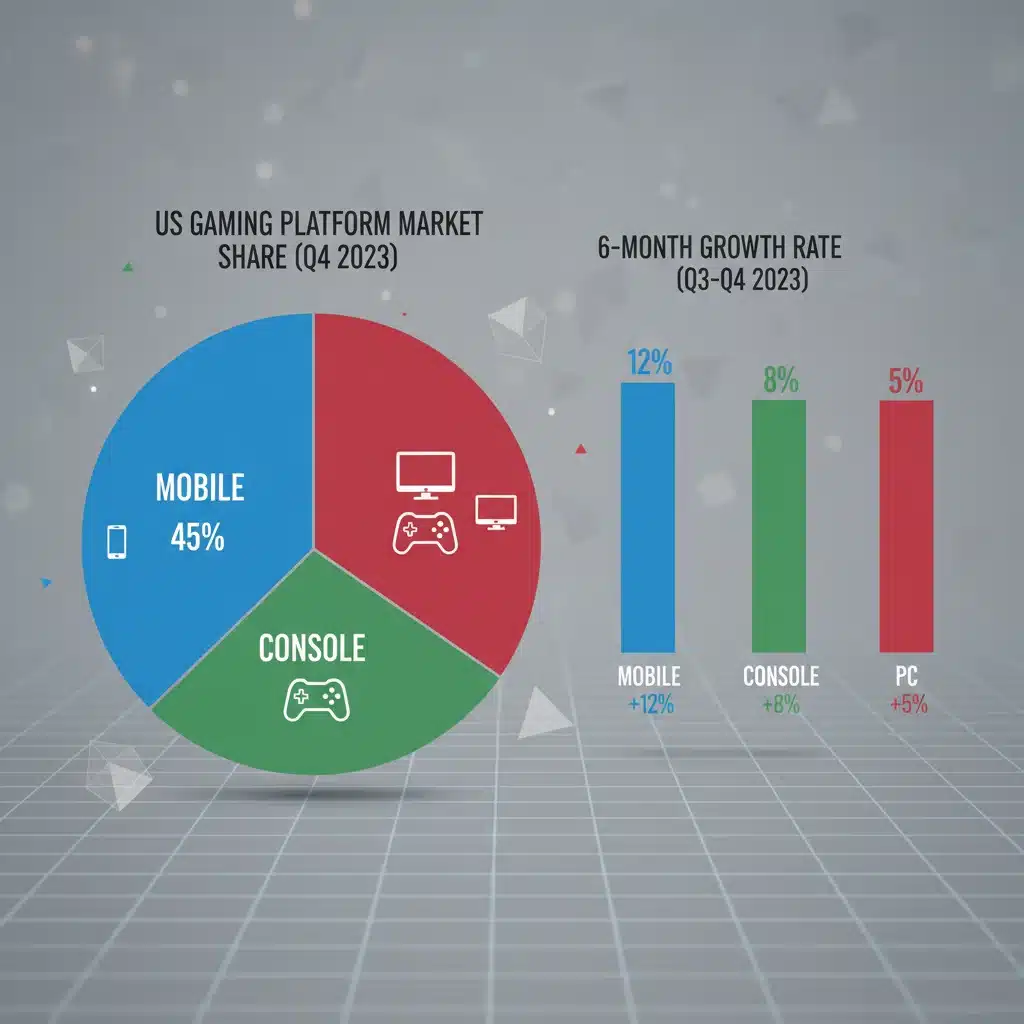
One of the most significant aspects of understanding US Gaming Trends is observing the ongoing evolution of platform preferences. The last six months have shown a nuanced shift, with continued strong performance from traditional console and PC gaming, alongside an undeniable surge in mobile gaming engagement. While consoles like PlayStation, Xbox, and Nintendo Switch maintain their loyal user bases, particularly for AAA titles and exclusive experiences, PC gaming continues to be the preferred platform for hardcore gamers and esports enthusiasts, offering unparalleled graphical fidelity and customisation.
However, the narrative is increasingly dominated by mobile gaming. Data from the past half-year indicates that mobile gaming not only accounts for the largest share of the gaming audience but also a substantial portion of overall gaming revenue in the US. This isn’t just about casual puzzle games; the rise of sophisticated mobile titles, often incorporating elements of popular PC and console genres, has broadened its appeal. Furthermore, the accessibility and convenience of mobile platforms mean that gaming is no longer confined to dedicated setups but is integrated into daily routines, influencing overall US Gaming Trends significantly. Cloud gaming services, while still nascent, are also beginning to carve out a niche, promising a future where platform boundaries blur even further, allowing for high-fidelity gaming on a wider array of devices.
The strategic implication here is clear: multi-platform development and cross-play capabilities are no longer optional but essential for maximising reach and engagement. Developers must consider optimising experiences across different input methods and screen sizes, ensuring seamless transitions for players who might jump from a console to a mobile device within the same gaming session. This adaptability is key to capturing the diverse US gaming audience.
Genre Popularity and Content Consumption: What’s Captivating US Gamers?
Understanding which game genres are currently resonating with US consumers is vital for content creators and marketers. The past six months have highlighted several key areas of sustained and emerging interest within US Gaming Trends. Action-adventure, role-playing games (RPGs), and first-person shooters (FPS) continue to dominate sales charts and player engagement metrics, often driven by blockbuster releases and long-standing franchises. These genres benefit from high production values, engaging narratives, and robust multiplayer components that foster strong communities.
Beyond these stalwarts, simulation games, particularly those focusing on life simulation, city-building, and management, have seen a notable increase in popularity. This surge can be attributed to their ability to offer creative outlets, stress relief, and a sense of accomplishment, appealing to a broad demographic beyond traditional ‘gamers.’ Indie titles, often pushing boundaries with unique mechanics and storytelling, also continue to capture significant attention, proving that innovation can thrive even without massive marketing budgets. The rise of ‘cozy games’ – titles that prioritise relaxation and gentle engagement over intense challenge – is another interesting sub-trend reflecting a desire for diverse gaming experiences.
Furthermore, the consumption of gaming content extends far beyond just playing games. Live streaming on platforms like Twitch and YouTube Gaming, along with esports viewership, remains incredibly popular. US consumers are not just playing; they are watching others play, learning strategies, engaging with communities, and experiencing competitive events. This ecosystem of content creation and consumption is an integral part of modern US Gaming Trends, influencing purchasing decisions and fostering brand loyalty. Developers should consider how their games can integrate with or be promoted through these content platforms to maximise visibility and engagement.
Monetisation Models and Consumer Spending Habits
The way US consumers spend money on games is a critical aspect of US Gaming Trends. While full-price game purchases remain a significant revenue driver, especially for highly anticipated AAA releases, free-to-play (F2P) models, coupled with in-game purchases (microtransactions, battle passes, cosmetics), continue to dominate the overall market, particularly in the mobile and live-service segments. Data from the last six months shows a consistent willingness among players to spend on customisation, progression boosters, and new content within their favourite F2P titles.
Subscription services, such as Xbox Game Pass, PlayStation Plus, and Nintendo Switch Online, are also growing in influence. These services offer a vast library of games for a monthly fee, providing excellent value for money and encouraging players to try titles they might not have otherwise purchased. This model creates a steady revenue stream for platform holders and a predictable audience for included games. Understanding the balance between these monetisation strategies is crucial for developers. A poorly implemented microtransaction system can lead to player backlash, while a well-executed one can significantly extend a game’s lifecycle and profitability.
Another important consideration in US Gaming Trends is the impact of seasonal sales and major gaming events. Black Friday, holiday sales, and platform-specific promotions significantly influence purchasing behaviour, often leading to spikes in game sales and subscriptions. Strategic timing of releases and promotional campaigns around these periods can yield substantial returns. Additionally, the rise of crowdfunding and early access models allows players to invest directly in games they believe in, fostering a deeper connection and sense of ownership, which can translate into long-term support and spending.
Demographics and Psychographics: Who are the US Gamers?
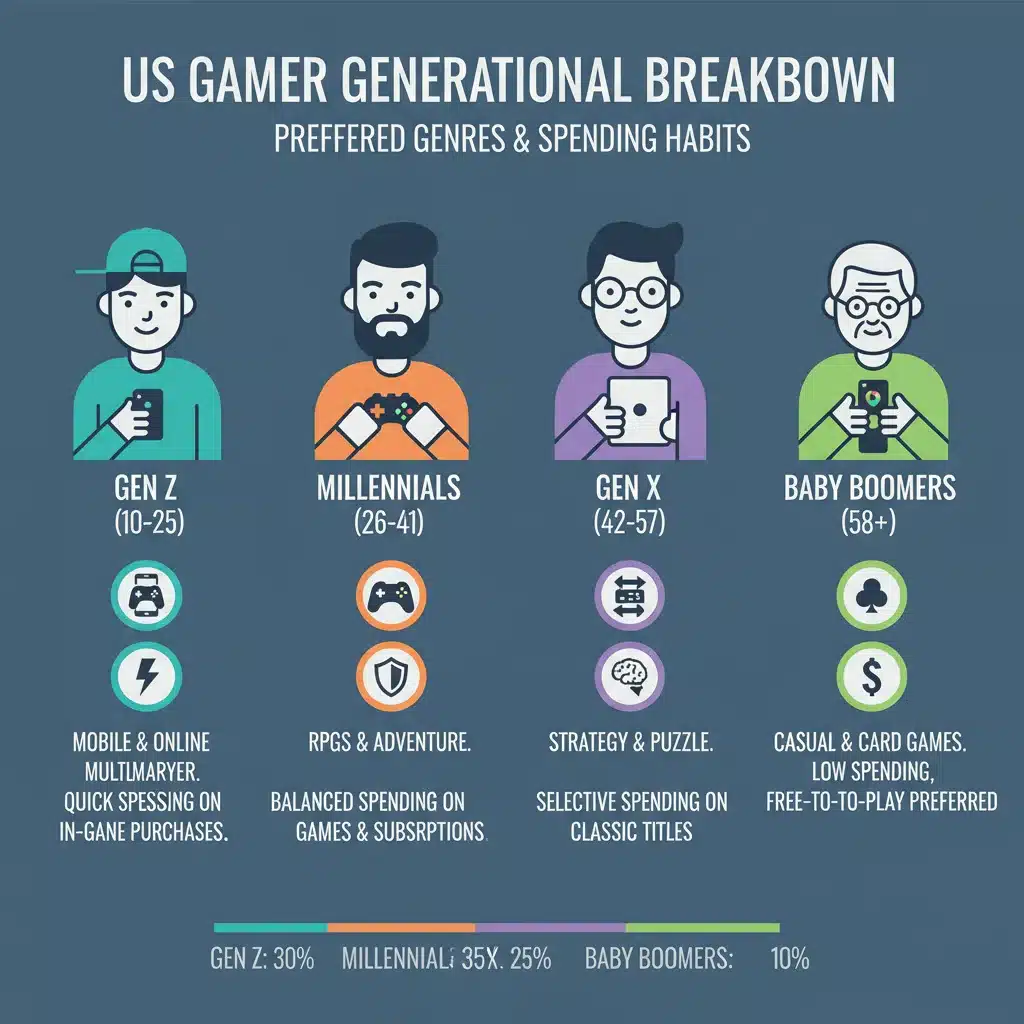
Dispelling the myth of the ‘typical gamer’ is essential when analysing US Gaming Trends. The US gaming audience is incredibly diverse, spanning all age groups, genders, and socioeconomic backgrounds. While younger demographics (Gen Z and Millennials) are often at the forefront of adopting new technologies and trends, older generations (Gen X and Baby Boomers) represent a significant and growing segment, particularly in mobile and casual gaming.
Recent data indicates a near 50/50 split between male and female gamers, challenging outdated stereotypes and highlighting the broad appeal of interactive entertainment. Each demographic group exhibits distinct preferences. For example, younger players might be more drawn to competitive multiplayer games, esports, and social gaming experiences, while older players might prefer puzzle games, narrative-driven single-player experiences, or simulations that offer relaxation and mental engagement. Understanding these psychographics – the attitudes, interests, and motivations of different player segments – is key to developing and marketing games effectively.
Beyond age and gender, geographical location within the US can also influence US Gaming Trends, with certain regions showing higher engagement with specific genres or platforms due to cultural factors, internet infrastructure or local communities. Socioeconomic factors also play a role, influencing spending power and access to high-end gaming hardware. Tailoring marketing messages and game features to resonate with these diverse segments is paramount for achieving widespread success. This level of granular understanding allows for more precise targeting and more impactful engagement strategies.
The Rise of Social and Community Gaming
Gaming is inherently social, and this aspect has only intensified over the past six months, becoming a cornerstone of modern US Gaming Trends. Multiplayer games, whether cooperative or competitive, continue to drive engagement and foster strong communities. Platforms like Discord, Reddit, and various in-game social features serve as hubs where players connect, strategise, and form lasting relationships. The desire for social interaction through gaming has been particularly pronounced, with many using games as a primary means of connecting with friends and family, especially in an increasingly digital world.
Beyond direct multiplayer, the concept of ‘community’ extends to content creation and consumption. Streamers and YouTubers often cultivate large, dedicated communities around specific games or their personalities, influencing trends and purchasing decisions. The interactive nature of live streams, where viewers can chat directly with creators and other viewers, creates a powerful sense of belonging. Esports, too, plays a crucial role, transforming gaming into a spectator sport with professional leagues, tournaments, and dedicated fan bases. The communal experience of watching and supporting favourite teams and players contributes significantly to the overall engagement in US Gaming Trends.
For developers, fostering strong in-game communities and supporting content creators is no longer a luxury but a necessity. Implementing robust social features, enabling easy content sharing, and actively engaging with player feedback through community managers can significantly extend a game’s lifespan and cultivate a loyal player base. Games that successfully integrate social elements often see higher retention rates and organic growth, as players become advocates for the titles they love.
Technological Innovations Driving Future US Gaming Trends
Technological innovation is the lifeblood of the gaming industry, and the past six months have seen continued advancements that are shaping future US Gaming Trends. Virtual Reality (VR) and Augmented Reality (AR) continue to mature, with new hardware releases and increasingly immersive experiences. While still niche compared to traditional gaming, the potential for VR/AR to revolutionise how we interact with games and digital environments is immense. As hardware becomes more accessible and content libraries expand, these technologies are poised for greater mainstream adoption.
Artificial Intelligence (AI) is another transformative force. Beyond improving non-player character (NPC) behaviour, AI is increasingly being used in game development for procedural content generation, personalised player experiences, and even anti-cheat systems. The ability of AI to adapt to player styles and create dynamic worlds offers exciting possibilities for future game design. Similarly, advancements in graphics rendering, real-time ray tracing, and haptic feedback are pushing the boundaries of realism and immersion, making games more visually stunning and tactile than ever before.
The ongoing development of cloud gaming infrastructure is also a critical factor. Services like Google Stadia (though now defunct in its original form), Xbox Cloud Gaming, and NVIDIA GeForce NOW demonstrate the potential for high-end gaming without the need for expensive local hardware. As internet speeds improve and latency decreases, cloud gaming could democratise access to graphically intensive titles, significantly impacting US Gaming Trends by broadening the addressable market and changing how games are distributed and consumed. These technological shifts demand continuous monitoring and adaptation from industry stakeholders.
Challenges and Opportunities in the US Gaming Market
While the US gaming market presents immense opportunities, it also comes with its share of challenges. Market saturation, intense competition, and the ever-increasing cost of game development are significant hurdles. Standing out in a crowded market requires not only innovation but also effective marketing and a deep understanding of player needs. Furthermore, player retention remains a constant battle, with new titles constantly vying for attention. Developers must focus on creating engaging live-service content, fostering community, and providing continuous updates to keep players invested.
Data privacy and security are also growing concerns. With increasing online connectivity and personal data collection, players are more aware of their digital footprint. Companies must prioritise robust security measures and transparent data practices to build and maintain player trust. Additionally, issues around toxicity in online communities and the need for inclusive game design are important considerations that impact player experience and brand reputation.
However, these challenges also present opportunities. The demand for diverse content and inclusive narratives is higher than ever, encouraging developers to explore new themes and perspectives. The growth of independent game development, supported by platforms and communities, allows for greater creative freedom and niche market penetration. Moreover, the increasing integration of gaming with other forms of entertainment, such as film, television, and music, opens up new avenues for cross-media collaboration and brand expansion. Strategic planning that addresses these challenges while capitalising on opportunities will be key to long-term success in the evolving landscape of US Gaming Trends.
Conclusion: Strategic Implications of Current US Gaming Trends
The past six months have provided a clear snapshot of a vibrant, diverse, and rapidly evolving US gaming market. From the continued dominance of mobile gaming and the enduring appeal of consoles and PCs, to the nuanced preferences across different demographics and the critical role of social interaction and technological innovation, the US Gaming Trends paint a complex but exciting picture.
For anyone involved in the gaming industry, the strategic implications are profound. Developers must embrace multi-platform strategies, focus on compelling content that resonates with specific genre preferences, and carefully consider monetisation models that align with player expectations. Marketers need to understand the diverse psychographics of the US audience, tailoring messages and channels to reach specific segments effectively. Investors should look for companies that demonstrate adaptability, innovation, and a strong understanding of community engagement.
The future of gaming in the US is bright, characterised by continuous growth and innovation. By diligently monitoring these trends, adapting strategies, and prioritising player experience, stakeholders can not only navigate the current landscape but also shape the next wave of interactive entertainment. Staying informed about US Gaming Trends is not just about reacting to the market; it’s about anticipating its direction and positioning for sustained success.