The Top 5 Gaming Monitor Upgrades for 2026: Achieving 144Hz and Beyond
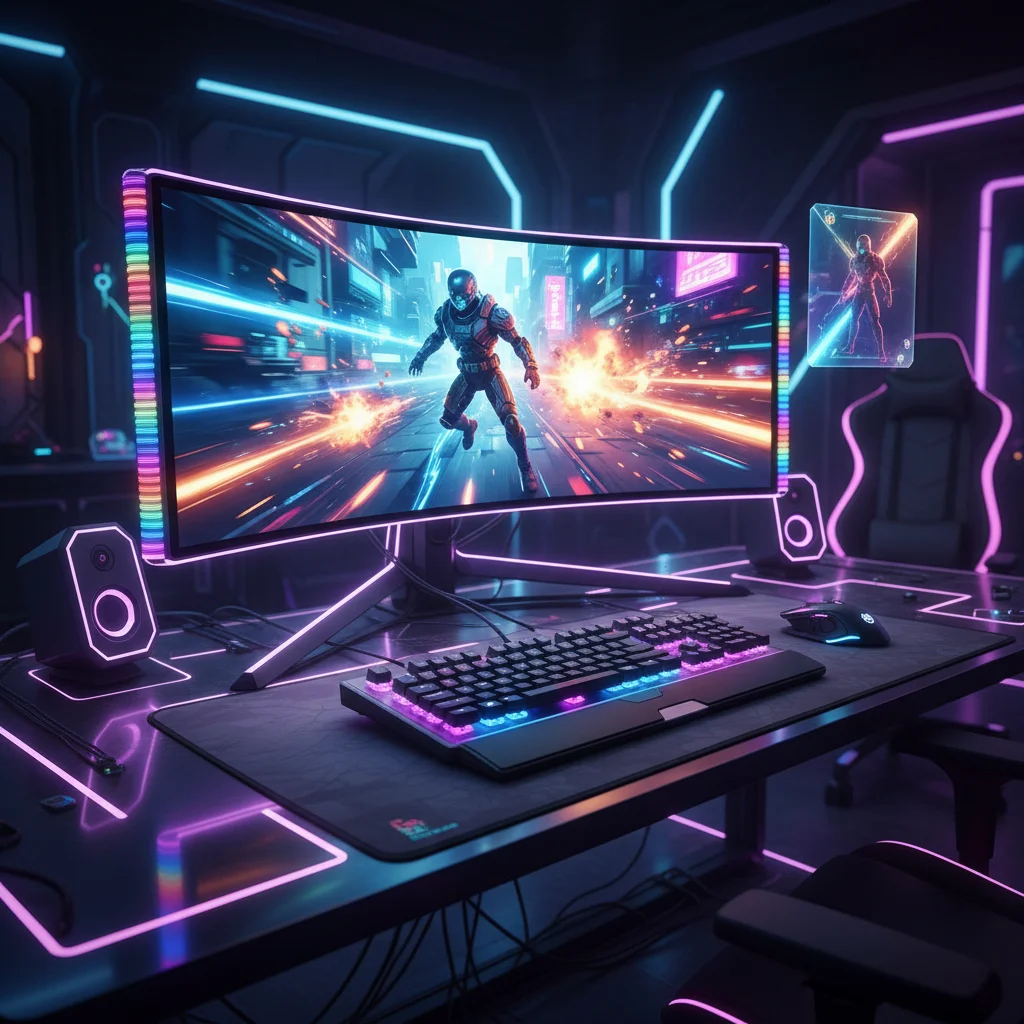
In the rapidly evolving world of PC gaming, the difference between victory and defeat, or between immersive escapism and jarring frustration, often boils down to the quality of your visual experience. As we hurtle towards 2026, the demands on gaming hardware, especially monitors, are escalating. Gone are the days when a standard 60Hz display sufficed. Today, and increasingly so in the near future, gamers are seeking unparalleled fluidity, breathtaking clarity, and colours that pop off the screen. This comprehensive guide will delve into the top 5 gaming monitor upgrades you should consider for 2026, focusing on achieving 144Hz and beyond, alongside other crucial features that will define the next generation of gaming displays.
Upgrading your gaming monitor isn’t just about getting a new gadget; it’s about fundamentally transforming your gaming experience. A high-quality monitor can reduce input lag, eliminate screen tearing, and render visuals with such precision that you’ll notice details previously invisible. For competitive gamers, a higher refresh rate and faster response time can literally be the edge that decides a match. For casual players, it means deeper immersion into richly detailed virtual worlds. Let’s explore the essential factors and top recommendations for gaming monitor upgrades in 2026.
Understanding the Core of Gaming Monitor Upgrades: Why 144Hz is Just the Beginning
Before we dive into specific recommendations for gaming monitor upgrades, it’s crucial to understand the fundamental technologies that power these advancements. The term ‘144Hz’ has become a benchmark in gaming, signifying a refresh rate that displays 144 frames per second, offering significantly smoother motion than standard 60Hz displays. However, 2026 will see this benchmark as a minimum for serious gamers, with many displays pushing 240Hz, 360Hz, and even higher.
Refresh Rate (Hz): This is perhaps the most critical specification for gaming. It measures how many times per second the display refreshes its image. A higher refresh rate means smoother motion, less motion blur, and a more responsive feel. For competitive gaming, especially in fast-paced genres like FPS, the difference between 60Hz and 144Hz is night and day. Moving beyond 144Hz to 240Hz or 360Hz offers diminishing returns for most, but for esports professionals, every millisecond counts.
Response Time (ms): This refers to the time it takes for a pixel to change from one colour to another. Lower response times (1ms GTG – Grey-to-Grey – is the gold standard) reduce ghosting and smearing, ensuring sharp images even during rapid movement. Paired with a high refresh rate, a low response time creates an incredibly fluid visual experience.
Resolution: While refresh rate and response time dictate fluidity, resolution determines image clarity and detail. Common resolutions include 1080p (Full HD), 1440p (QHD), and 2160p (4K UHD). As GPU technology advances, driving higher resolutions at high refresh rates becomes increasingly feasible. For 2026, 1440p at 144Hz+ is an excellent sweet spot, offering a significant visual upgrade over 1080p without the extreme hardware demands of 4K, though 4K at high refresh rates is becoming more attainable.
Panel Technology: The type of panel used significantly impacts colour accuracy, viewing angles, and response times. The main types are:
- TN (Twisted Nematic): Fastest response times, but poorer colour reproduction and viewing angles. Less common for high-end gaming monitor upgrades in 2026.
- IPS (In-Plane Switching): Excellent colour accuracy and wide viewing angles, with response times that have significantly improved, making them a popular choice for gaming.
- VA (Vertical Alignment): Offers superior contrast ratios and deeper blacks than IPS, but historically had slower response times. Modern VA panels have largely overcome this limitation.
- OLED (Organic Light Emitting Diode): The pinnacle of display technology, offering infinite contrast, perfect blacks, and instantaneous response times. OLED gaming monitor upgrades are becoming more common and affordable, though still premium.
Adaptive Sync (G-Sync/FreeSync): These technologies synchronize the monitor’s refresh rate with the GPU’s frame rate, eliminating screen tearing and stuttering. NVIDIA G-Sync and AMD FreeSync are proprietary standards, but many monitors support both, often through VESA Adaptive Sync.
Top 5 Gaming Monitor Upgrades for 2026: The Future is Fluid and Vibrant
1. The 1440p 240Hz+ IPS Powerhouse: The New Sweet Spot for Competitive Gaming
For many gamers, particularly those involved in competitive esports, the 1440p resolution combined with a 240Hz or even 360Hz IPS panel will be the ultimate gaming monitor upgrade in 2026. This configuration strikes a near-perfect balance between visual fidelity and raw performance. The 1440p resolution provides a noticeable jump in clarity over 1080p, making game worlds look sharper and more detailed without being as demanding on your GPU as 4K.
The 240Hz+ refresh rate ensures buttery-smooth gameplay, giving you a competitive edge in fast-paced titles where every millisecond counts. IPS panels, known for their excellent colour reproduction and wide viewing angles, have evolved to offer response times as low as 1ms GTG, effectively eliminating ghosting. These monitors are often equipped with advanced HDR capabilities, bringing vibrant colours and deeper contrast to your games.
Key Features to Look For:
- Resolution: 2560×1440 (QHD)
- Refresh Rate: 240Hz to 360Hz
- Panel Type: Fast IPS
- Response Time: 1ms GTG
- Adaptive Sync: NVIDIA G-Sync Compatible or AMD FreeSync Premium Pro
- HDR: VESA DisplayHDR 600 or higher for impactful visuals
- Connectivity: HDMI 2.1, DisplayPort 1.4
This category represents the ideal upgrade for gamers who want the best of both worlds: stunning visuals and uncompromised performance. It’s a significant leap for gaming monitor upgrades, offering a future-proof experience for years to come.
2. The 4K 144Hz+ Mini-LED/OLED Revolution: Unparalleled Immersion
If your primary goal is an uncompromised, visually stunning, and deeply immersive gaming experience, and you have a top-tier GPU to drive it, then a 4K monitor with a 144Hz or higher refresh rate, leveraging Mini-LED or OLED technology, is the ultimate gaming monitor upgrade for 2026. These displays redefine visual quality.
Mini-LED technology uses thousands of tiny LEDs for backlighting, allowing for incredibly precise local dimming zones. This results in phenomenal contrast ratios, deep blacks, and dazzling HDR highlights that rival OLED, but often with higher peak brightness. OLED, on the other hand, offers pixel-perfect black levels and infinite contrast because each pixel emits its own light and can be individually turned off. This leads to an unparalleled visual experience, especially in dark scenes.
While 4K at 144Hz+ demands significant graphical horsepower, the visual payoff is immense. Games look unbelievably sharp and detailed, and coupled with the superior contrast and colour of Mini-LED or OLED, the immersion is total. These are not just gaming monitors; they are visual masterpieces.
Key Features to Look For:
- Resolution: 3840×2160 (4K UHD)
- Refresh Rate: 144Hz to 240Hz
- Panel Type: Mini-LED VA/IPS or QD-OLED/WOLED
- Response Time: 1ms GTG (Mini-LED), Sub-1ms (OLED)
- Adaptive Sync: G-Sync Ultimate or FreeSync Premium Pro
- HDR: VESA DisplayHDR 1000+ (Mini-LED), True Black 400/500 (OLED)
- Connectivity: HDMI 2.1 (essential for 4K 120Hz+ on consoles and PCs), DisplayPort 1.4/2.0
These gaming monitor upgrades are at the bleeding edge of display technology, offering a glimpse into the future of gaming visuals. They are an investment, but one that delivers an unmatched sensory experience.
3. The Ultrawide 1440p 144Hz+ VA/IPS Specialist: Panoramic Gaming Adventures
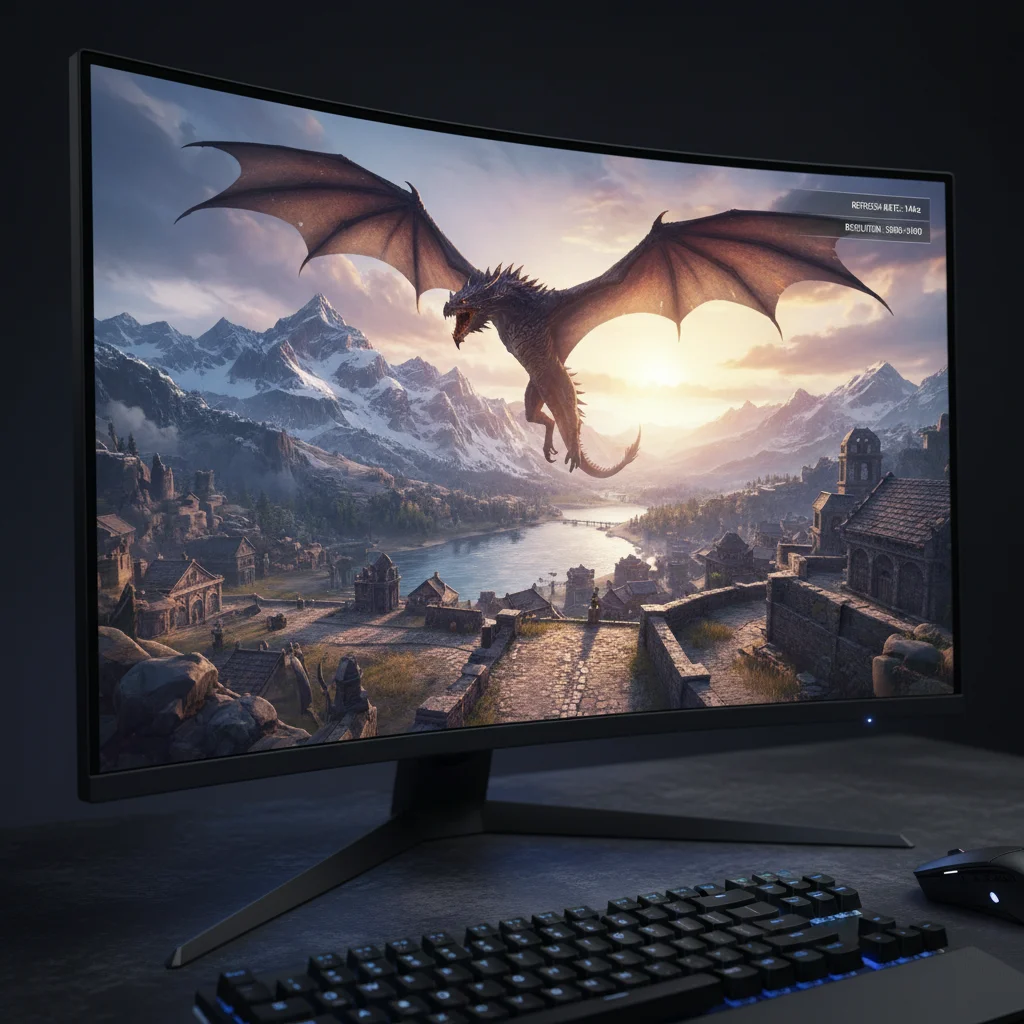
For gamers who crave a wider field of view and a more cinematic experience, an ultrawide monitor is a compelling gaming monitor upgrade. In 2026, the sweet spot for ultrawides will be 34-inch or 38-inch displays with a 3440×1440 resolution and a refresh rate of 144Hz or higher. These monitors offer significantly more horizontal screen real estate than traditional 16:9 displays, pulling you deeper into game worlds.
The extra width is particularly beneficial for strategy games, RPGs, and simulations, where a broader perspective can enhance tactical awareness and immersion. While some competitive FPS players might prefer traditional aspect ratios, a growing number appreciate the expanded vision an ultrawide offers. Modern ultrawide VA panels deliver excellent contrast and deep blacks, while IPS variants provide superior colour accuracy, both now boasting low response times.
Curvature is also a key feature in ultrawide monitors, typically ranging from 1800R to 1000R. A tighter curve (lower R number) helps to maintain consistent viewing angles across the expansive screen, enhancing immersion and reducing eye strain.
Key Features to Look For:
- Resolution: 3440×1440 (UWQHD) or 3840×1600 (WQXGA)
- Refresh Rate: 144Hz to 240Hz
- Panel Type: Fast VA or IPS
- Response Time: 1ms GTG
- Adaptive Sync: FreeSync Premium Pro or G-Sync Compatible
- Curvature: 1800R to 1000R
- HDR: VESA DisplayHDR 400 or higher
An ultrawide is more than just a monitor; it’s a gateway to panoramic gaming adventures. It’s one of the most impactful gaming monitor upgrades for those seeking a truly expansive and engaging visual experience.
4. The Budget-Conscious 1080p 144Hz+ IPS/VA Champion: Performance Without Breaking the Bank
Not every gaming monitor upgrade needs to cost a fortune. For gamers on a tighter budget, or those with mid-range GPUs, a 1080p monitor with a 144Hz or higher refresh rate remains an excellent and highly cost-effective choice in 2026. While 1080p might not offer the pixel density of 1440p or 4K, it’s significantly easier for GPUs to drive high frame rates, ensuring a consistently smooth experience.
Modern 1080p 144Hz+ monitors, often using IPS or VA panels, provide excellent colour reproduction, wide viewing angles, and rapid response times at a fraction of the cost of their higher-resolution counterparts. They are perfect for competitive gamers who prioritize frame rate above all else, especially in esports titles where visual clarity at 1080p is perfectly adequate.
This category is also ideal for those making their first significant gaming monitor upgrade from an older 60Hz display. The jump to 144Hz at 1080p is still one of the most impactful upgrades you can make, offering a dramatic improvement in responsiveness and fluidity without requiring a complete system overhaul.
Key Features to Look For:
- Resolution: 1920×1080 (FHD)
- Refresh Rate: 144Hz to 240Hz
- Panel Type: Fast IPS or VA
- Response Time: 1ms GTG
- Adaptive Sync: FreeSync Premium or G-Sync Compatible
- Size: 24-inch to 27-inch (maintains pixel density)
Don’t underestimate the power of a well-chosen 1080p high-refresh-rate monitor. It’s a smart and accessible gaming monitor upgrade that delivers substantial performance benefits for its price.
5. The Future-Proofed QD-OLED/WOLED Ultrawide: The Ultimate Immersive Experience
Combining the best of both worlds – the stunning visuals of OLED and the expansive field of view of ultrawide – QD-OLED or WOLED ultrawide monitors represent the pinnacle of gaming monitor upgrades for 2026. These displays offer an unparalleled immersive experience that few other monitors can match.
QD-OLED (Quantum Dot OLED) and WOLED (White OLED) technologies provide perfect blacks, infinite contrast, and vibrant colours that are simply breathtaking. When stretched across a curved ultrawide panel (e.g., 34-inch or 49-inch), the result is an incredibly deep and enveloping visual environment. The instantaneous response times of OLED panels mean zero ghosting and incredible motion clarity, even at high refresh rates like 175Hz or 240Hz.
While these monitors come at a premium, they offer a truly next-generation gaming experience. The rich colours, deep contrast, and panoramic view make them ideal for single-player narrative-driven games, flight simulators, racing games, and any title where immersion is paramount. They are not just monitors; they are windows into virtual worlds, making them one of the most exciting gaming monitor upgrades available.
Key Features to Look For:
- Resolution: 3440×1440 (UWQHD) or 5120×1440 (DQHD – for 49-inch super ultrawides)
- Refresh Rate: 175Hz to 240Hz
- Panel Type: QD-OLED or WOLED
- Response Time: Sub-1ms
- Adaptive Sync: G-Sync Ultimate or FreeSync Premium Pro
- HDR: True Black 400/500
- Curvature: 1800R to 800R
- Connectivity: HDMI 2.1, DisplayPort 1.4
If you’re looking for the ultimate no-compromise gaming monitor upgrade that combines peak visual quality with an expansive, immersive format, then a QD-OLED/WOLED ultrawide is the way to go. It truly is the future of gaming displays.
Key Considerations Before Making Your Gaming Monitor Upgrade
Choosing the right gaming monitor upgrade isn’t just about picking the highest numbers. Several factors need to be carefully considered to ensure you make the best choice for your specific needs and setup.
GPU Compatibility and Performance
Your graphics card is the engine that drives your monitor. There’s no point in investing in a 4K 240Hz monitor if your GPU can only push 60 frames per second at 1080p. Ensure your GPU is powerful enough to consistently hit high frame rates at your desired resolution and refresh rate. For example, to fully utilize a 1440p 144Hz monitor, you’ll need at least a mid-to-high-end GPU from the current generation. For 4K 144Hz+, you’re looking at top-tier GPUs.
Also, consider adaptive sync technologies. If you have an NVIDIA GPU, look for G-Sync Compatible or G-Sync Ultimate monitors. If you have an AMD GPU, FreeSync Premium or FreeSync Premium Pro will be your best bet. Many monitors now support VESA Adaptive Sync, which works with both, offering greater flexibility.
Budget
Gaming monitors range widely in price. Set a realistic budget and stick to it. While a top-of-the-line OLED might be tempting, a 1440p 144Hz IPS monitor might offer better value for your money and still provide a phenomenal experience. Remember that the monitor is a long-term investment, often outlasting several GPU upgrades, so it’s worth allocating a good portion of your budget to it.
Desk Space and Ergonomics
Consider the physical space available on your desk. An ultrawide or a large 32-inch 4K monitor requires significant room. Also, ensure the monitor has good ergonomic adjustments (height, tilt, swivel, pivot) to maintain a comfortable posture during long gaming sessions. VESA mount compatibility is also a plus if you plan to use a monitor arm.
Connectivity
Check the available ports on your GPU and the monitor. For high refresh rates and resolutions, DisplayPort 1.4 or HDMI 2.1 are essential. HDMI 2.1 is particularly important for 4K at 120Hz+ for both PCs and next-gen consoles. Ensure the cables you use are rated for the bandwidth required by your new monitor.
Intended Use
Are you a competitive esports player, a casual story-driven gamer, or a content creator who also games? Your primary use case should heavily influence your choice of gaming monitor upgrade. Competitive players will prioritize refresh rate and response time, while immersive gamers might lean towards higher resolution, HDR, and ultrawide formats. Content creators will also value colour accuracy.
The Future of Gaming Displays: Beyond 2026
While our focus is on gaming monitor upgrades for 2026, it’s worth briefly touching upon what lies beyond. We can expect even higher refresh rates (e.g., 500Hz+), further advancements in OLED technology (perhaps even more affordable large-format QD-OLEDs), and the proliferation of micro-LED technology. Bendable and rollable displays could also transition from concept to reality, offering unprecedented flexibility.
Resolution will continue to climb, with 8K gaming becoming more viable as GPUs grow exponentially more powerful. However, the law of diminishing returns applies, and for most, the sweet spot of 1440p to 4K at extremely high refresh rates will likely remain the gold standard for optimal balance between performance and visual fidelity.
Another area of innovation is haptic feedback displays, which could allow you to ‘feel’ textures or impacts directly through the screen. While still nascent, such technologies could add another layer of immersion to gaming in the distant future. For now, the focus remains on perfecting the visual and auditory experience.
Conclusion: Elevate Your Gaming Experience with the Right Monitor Upgrade
Choosing the right gaming monitor upgrade for 2026 is a pivotal decision that will profoundly impact your gaming experience for years to come. Whether you’re chasing the competitive edge with a 1440p 240Hz+ IPS display, immersing yourself in stunning 4K Mini-LED/OLED worlds, or embracing the panoramic vistas of an ultrawide, the options are more exciting and diverse than ever before.
Remember to align your choice with your GPU’s capabilities, your budget, and your specific gaming preferences. The jump to 144Hz and beyond, coupled with advancements in resolution, panel technology, and adaptive sync, offers a transformative experience. By carefully considering the top 5 gaming monitor upgrades outlined in this guide, you’ll be well-equipped to make an informed decision and elevate your gaming to new, exhilarating heights.
Invest wisely in your gaming monitor, and prepare to see your favourite virtual worlds in a whole new light – with unparalleled fluidity, clarity, and vibrancy. The future of gaming is bright, and with the right display, you’ll be at the forefront of it.