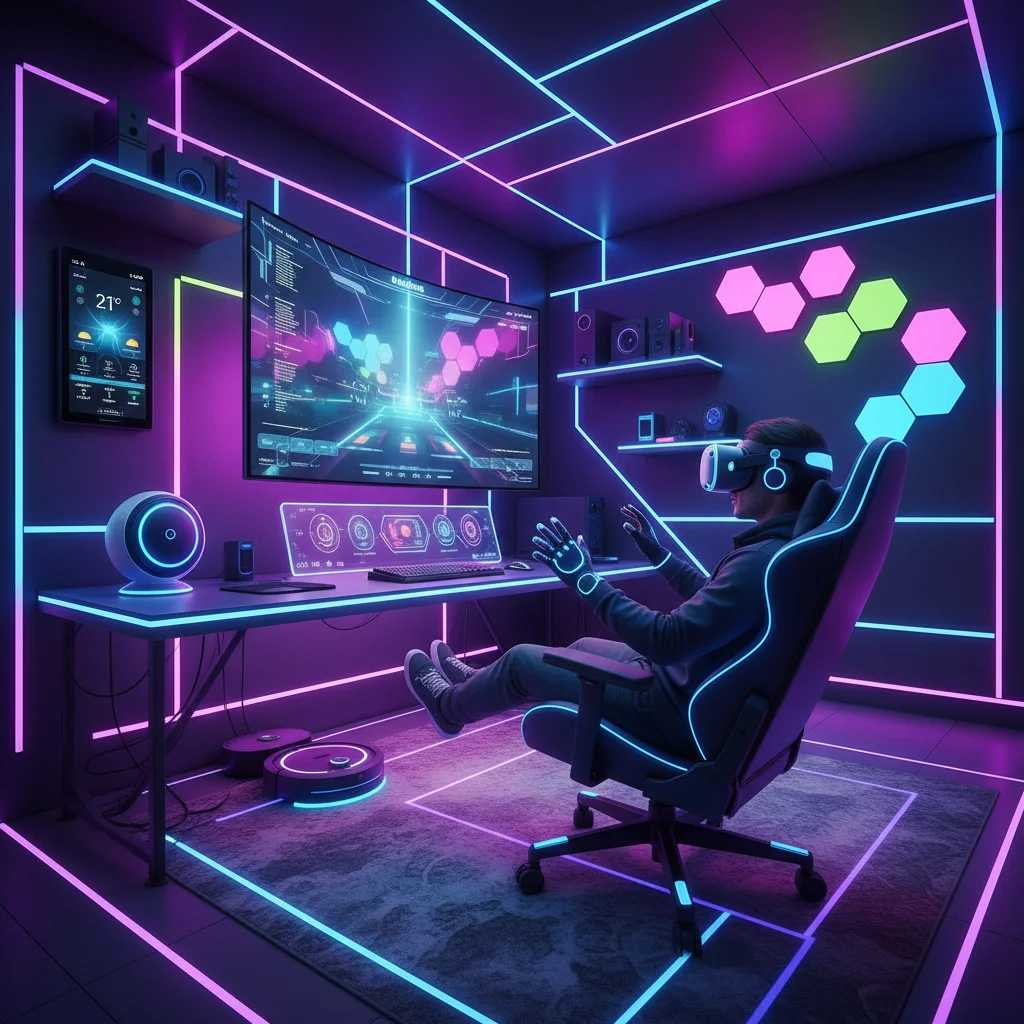
Smart Home Integration for Gamers: Automating Your Environment with 5 Key Devices in 2026
The world of gaming is constantly evolving, and with each passing year, the lines between reality and virtuality blur further. As we hurtle towards 2026, the concept of a dedicated gaming space is no longer just about a powerful PC or console and a comfortable chair. It’s about creating an immersive, responsive, and utterly seamless environment that anticipates your needs and enhances every moment of your gameplay. This is where smart home gaming truly shines, transforming your room into an extension of your digital world.
Imagine walking into your gaming sanctuary, and with a single voice command, or even better, automatically when you launch your favourite game, the lights dim to your preferred hue, the room temperature adjusts to optimal comfort, and your sound system comes alive, perfectly calibrated for an epic adventure. This isn’t science fiction; it’s the present and future of smart home gaming, and it’s more accessible than ever. This article will delve into how you can integrate smart home technology into your gaming setup, focusing on 5 key devices that will redefine your gaming experience by 2026.
The Evolution of the Gaming Environment: Beyond the Screen
For decades, gaming was primarily a visual and auditory experience confined to a screen and headphones. While these elements remain crucial, the modern gamer seeks a more holistic immersion. The physical environment plays a significant role in this. Factors like lighting, temperature, sound, and even the air quality can profoundly impact focus, comfort, and ultimately, performance. This is precisely why smart home gaming is gaining such traction. It allows you to meticulously control these environmental variables, creating a tailored space that responds to your every gaming whim.
The beauty of smart home technology lies in its interconnectedness. Devices communicate with each other, often through a central hub or a smart assistant, allowing for complex routines and automations. This means less time fiddling with settings and more time immersed in your game. By 2026, the integration will be even more sophisticated, with AI-powered systems learning your preferences and adjusting the environment proactively. Preparing for this future now will give you a significant edge in optimising your gaming sessions.
But where do you start? The sheer volume of smart home devices can be overwhelming. To simplify, we’ve identified five crucial categories of devices that offer the most significant impact on a gamer’s environment. These are the building blocks of an advanced smart home gaming setup that will truly elevate your play.
1. Intelligent Lighting Systems: Setting the Mood for Victory
Lighting is arguably one of the most impactful elements in creating an immersive gaming environment. Traditional room lights are often too harsh, too dim, or simply uninspiring. Intelligent lighting systems, however, offer unparalleled control over colour, brightness, and even dynamic effects, transforming your room into a vibrant extension of your game world. Imagine the subtle glow of a health bar reflected in your room’s ambient lighting, or a sudden flash of red when you take damage. This level of feedback enhances immersion and provides a unique sensory dimension to your gameplay.
Key Features for Gamers:
- RGB Colour Control: Access to millions of colours to match in-game aesthetics, character abilities, or team colours.
- Dynamic Lighting Effects: Synchronise lights with in-game events, music, or screen content for reactive illumination.
- Brightness and Colour Temperature Adjustment: Optimise lighting for different game genres, from bright, vibrant RPGs to dark, atmospheric horror titles.
- Scheduling and Presets: Create custom lighting scenes for specific games or times of day, activating them with a single command or automatically.
- Voice Control Integration: Seamlessly change lighting settings without interrupting gameplay.
Examples of Devices for Smart Home Gaming:
- Philips Hue: The gold standard for smart lighting, offering a vast ecosystem of bulbs, light strips, and lamps with excellent game integration.
- Nanoleaf Panels: Modular light panels that create stunning visual displays, often used for reactive lighting effects that synchronise with audio or screen content.
- Govee LED Strips: More affordable options that still offer extensive RGB control and app-based customisation, perfect for backlighting monitors or desks.
By 2026, intelligent lighting will be even more deeply integrated with gaming platforms, offering more sophisticated APIs for developers to create truly bespoke lighting experiences that respond to granular in-game events. Investing in a robust intelligent lighting system now is a foundational step in your smart home gaming journey.
2. Smart Thermostats and Climate Control: The Comfort Zone Advantage
There’s nothing worse than being pulled out of an intense gaming session by an uncomfortable room temperature. Too hot, and you’re sweating and distracted; too cold, and your hands might feel stiff. A smart thermostat is a game-changer for maintaining the perfect climate, ensuring you remain comfortable and focused for hours on end. These devices learn your preferences, can be controlled remotely, and, crucially for gamers, can be integrated into automated routines.
Key Features for Gamers:
- Precise Temperature Control: Maintain your ideal gaming temperature with accuracy.
- Scheduling and Geofencing: Have your room pre-cooled or heated before you even sit down, or automatically adjust when you leave.
- Integration with Smart Assistants: Adjust the temperature with a quick voice command without pausing your game.
- Energy Efficiency: Smart thermostats can help save on energy bills by optimising heating and cooling based on occupancy and schedules.
Examples of Devices for Smart Home Gaming:
- Nest Thermostat: Popular for its learning capabilities and sleek design, integrating well with other Google Home devices.
- Ecobee SmartThermostat: Offers remote sensors to detect occupancy and temperature in specific areas, ensuring your gaming spot is perfectly conditioned.
- Honeywell Home Smart Thermostats: A reliable option with various models offering different feature sets and integrations.
Imagine launching a graphically demanding game that makes your PC work harder and generate more heat. A smart thermostat could detect the increased ambient temperature and automatically kick in the air conditioning or fan to compensate, all without you lifting a finger. This level of environmental automation is a hallmark of truly advanced smart home gaming.
3. Smart Plugs and Power Strips: Intelligent Power Management
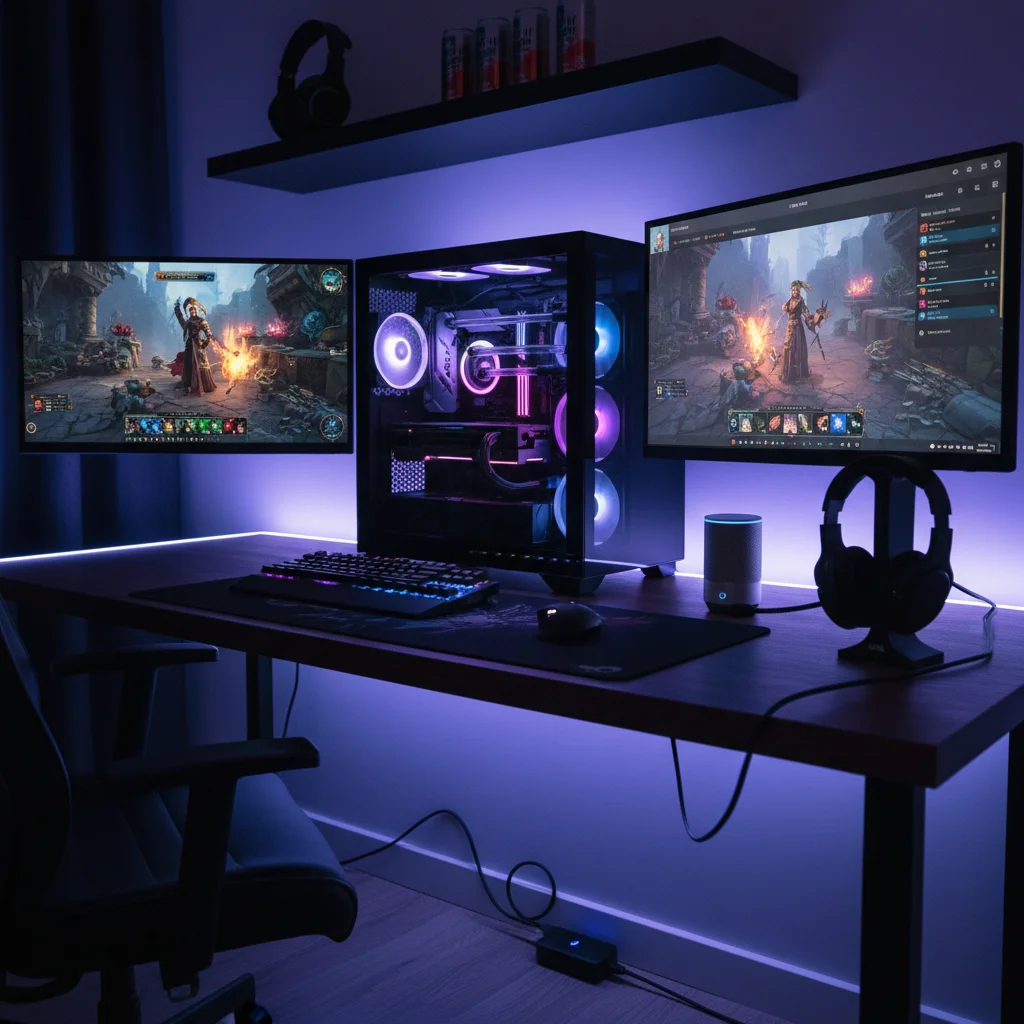
While often overlooked, smart plugs and power strips are incredibly versatile tools for any smart home gaming setup. They allow you to turn any ‘dumb’ device into a smart one, enabling remote control, scheduling, and automation. This is particularly useful for peripherals that don’t have built-in smart capabilities, or for managing power to your entire setup.
Key Features for Gamers:
- Remote Power Control: Turn off monitors, speakers, or external hard drives from your phone or with a voice command, even if you’re not in the room.
- Scheduling: Automate power cycling for routers or modems to improve network performance, or schedule charging for wireless peripherals.
- Energy Monitoring: Some smart plugs offer insights into power consumption, helping you identify energy-hungry devices.
- Integration into Routines: Power on your entire gaming setup (monitors, speakers, external lights) with a single command or trigger.
Examples of Devices for Smart Home Gaming:
- TP-Link Kasa Smart Plugs: Affordable, reliable, and easy to set up, offering good integration with major smart home ecosystems.
- Wyze Plugs: Another budget-friendly option with a strong feature set and app control.
- Meross Smart Power Strips: Offer multiple individually controllable outlets, perfect for managing several gaming peripherals from one point.
Beyond convenience, smart plugs contribute to energy efficiency by ensuring devices are truly off when not in use, eliminating phantom power drain. For gamers, this means a cleaner, more organised setup and the ability to power on or off complex systems with minimal effort, truly embodying the spirit of smart home gaming.
4. Voice Assistants (Smart Speakers/Displays): Your Gaming Co-Pilot
No smart home gaming setup is complete without a voice assistant. Devices like Amazon Echo (Alexa), Google Nest (Google Assistant), or Apple HomePod (Siri) act as the central command centre for your entire automated environment. They allow for hands-free control of all your integrated smart devices, meaning you never have to break your concentration during a critical moment in your game.
Key Features for Gamers:
- Hands-Free Control: Adjust lights, temperature, volume, or even launch applications using voice commands.
- Information on Demand: Quickly check game wikis, strategy guides, or answer quick questions without alt-tabbing.
- Smart Home Routines and Scenes: Create complex sequences of actions (e.g., ‘Game Mode’ which dims lights, sets temperature, and activates specific audio profiles) with a single voice command.
- Music and Audio Playback: Control background music or podcasts while gaming, separate from in-game audio.
- Timers and Alarms: Set quick timers for breaks, respawn times, or reminders.
Examples of Devices for Smart Home Gaming:
- Amazon Echo (various models): Excellent for general smart home control and integrating with a wide range of devices.
- Google Nest Hub/Speaker: Strong integration with Google services and a user-friendly interface, especially with smart displays.
- Apple HomePod: Best for those deeply embedded in the Apple ecosystem, offering high-quality audio and secure integration.
By 2026, voice assistants will likely feature even more sophisticated AI, capable of understanding nuanced commands and even predicting your needs based on your gaming habits. They will become indispensable partners in your smart home gaming experience, allowing for unparalleled control and convenience.
5. Smart Sensors (Motion, Door/Window, Ambient Light): Reactive Automation
While the previous devices offer direct control, smart sensors take smart home gaming to the next level by enabling truly reactive and intelligent automation. These small, unobtrusive devices detect changes in their environment and can trigger actions from other smart devices, creating a dynamic and responsive gaming space.
Key Features for Gamers:
- Motion Sensors: Automatically activate lights or play a specific sound when you enter your gaming room.
- Door/Window Sensors: Trigger an alert if a door or window is opened during a critical gaming moment, or pause ambient music.
- Ambient Light Sensors: Automatically adjust room lighting based on natural light levels, ensuring consistent visual comfort.
- Temperature/Humidity Sensors (often built into thermostats or dedicated devices): Provide granular data for precise climate control, or trigger alerts if conditions become suboptimal.
- Air Quality Sensors: Monitor CO2 levels or VOCs and can trigger air purifiers or ventilation systems, ensuring fresh air during long sessions.
Examples of Devices for Smart Home Gaming:
- Aqara Motion Sensor: Small, affordable, and highly reliable, offering good integration with various smart home hubs.
- Samsung SmartThings Multipurpose Sensor: Combines motion, temperature, and vibration sensing, offering great versatility.
- Eve Degree (for Apple HomeKit users): Monitors temperature and humidity with high accuracy.
Imagine a scenario where your motion sensor detects you sitting down at your desk, triggering your ‘Gaming Session Start’ routine: lights adjust, fans turn on, and your favourite gaming playlist gently fades in. Or, if you step away for a break, the system can automatically pause certain automations or set a ‘Away’ scene. This proactive automation is key to a truly hands-free and immersive smart home gaming experience.
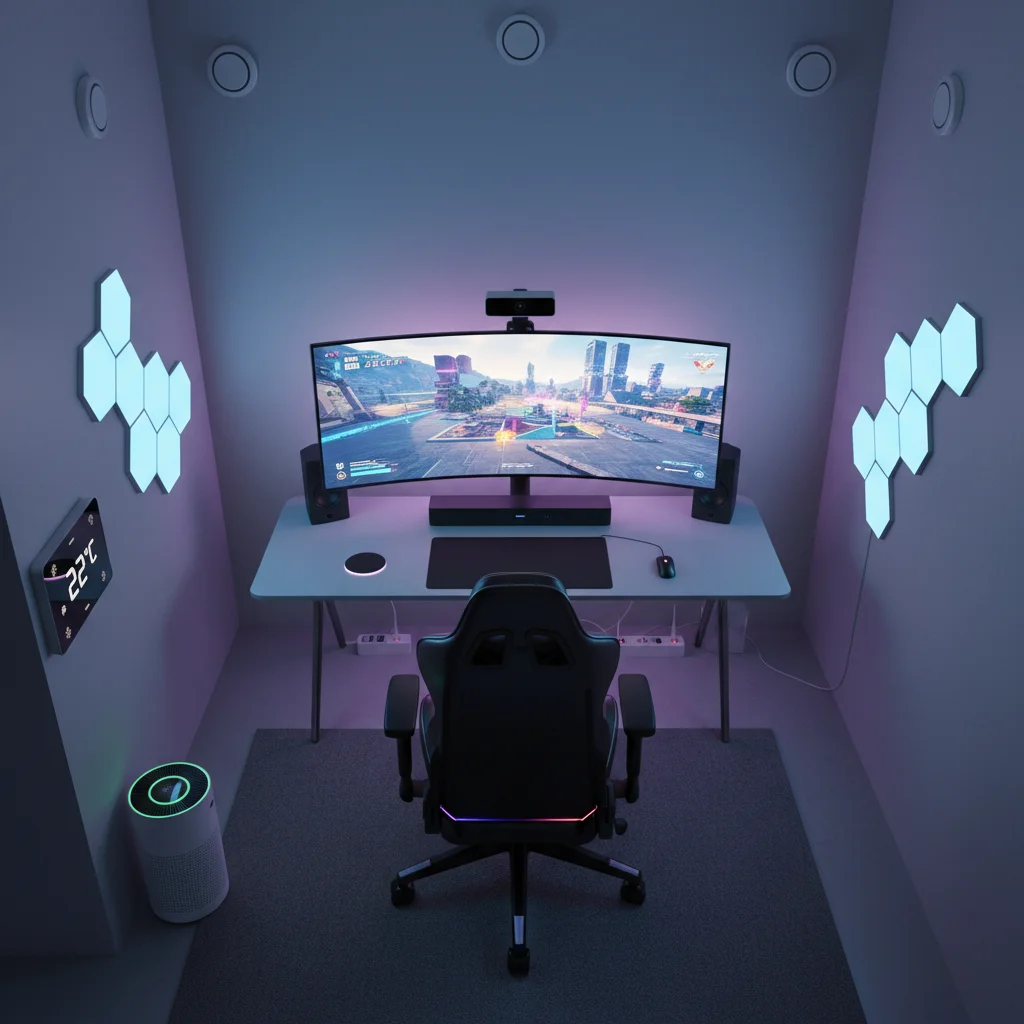
Building Your Integrated Smart Home Gaming Ecosystem
The true power of smart home gaming lies not just in individual devices, but in how they work together. Choosing a compatible ecosystem is crucial for seamless integration. Major players like Google Home, Amazon Alexa, and Apple HomeKit offer robust platforms that allow different brands of devices to communicate and perform complex automations.
Tips for Seamless Integration:
- Choose a Central Hub: A smart speaker or a dedicated smart home hub (like Samsung SmartThings or Hubitat) can act as the brain of your setup, coordinating all your devices.
- Prioritise Compatibility: When buying new devices, always check their compatibility with your chosen ecosystem. Look for ‘Works with Alexa,’ ‘Works with Google Assistant,’ or ‘HomeKit compatible’ labels.
- Create Routines and Scenes: This is where the magic happens. Define specific routines for different gaming scenarios. For example, a ‘Competitive Mode’ routine might set cool, bright lighting, lower the temperature, and disable notifications, while a ‘Relaxed RPG’ routine might opt for warm, dim lighting and ambient music.
- Start Small and Expand: You don’t need to buy everything at once. Start with intelligent lighting and a voice assistant, then gradually add smart plugs, thermostats, and sensors as your needs evolve.
- Consider Network Strength: A reliable Wi-Fi network is essential for a smooth smart home experience. Consider upgrading your router or adding mesh Wi-Fi if you have connection issues.
By 2026, the interoperability between different smart home platforms will likely improve even further, with industry standards making it easier to mix and match devices. However, planning your ecosystem now will save you headaches down the line and ensure your smart home gaming setup is future-proofed.
The Future of Smart Home Gaming: Beyond 2026
What does the horizon hold for smart home gaming beyond the devices we’ve discussed? We can anticipate even deeper integration with game telemetry. Imagine your smart home reacting not just to general in-game events, but to specific character actions, health levels, or even the emotional state of your character, perhaps through haptic feedback furniture or dynamic scents diffused into the room.
AI will play an increasingly prominent role, learning your gaming patterns and preferences to proactively optimise your environment without any explicit commands. This could mean predictive temperature adjustments based on your typical gaming schedule, or dynamic lighting that subtly shifts to reduce eye strain during extended sessions.
Virtual reality (VR) and augmented reality (AR) will also see enhanced integration. Your smart home will extend the virtual world into your physical space, perhaps by projecting elements onto your walls or creating haptic sensations that mimic in-game interactions. The goal is complete immersion, blurring the lines between the digital and the physical to an unprecedented degree.
Furthermore, energy efficiency and sustainability will become core tenets of smart home gaming. Devices will not only enhance your experience but also minimise their environmental footprint, automatically powering down unused equipment or optimising energy consumption based on grid availability.
Conclusion: Elevate Your Play with Smart Home Gaming
The journey to an automated, immersive gaming environment is an exciting one. By strategically integrating intelligent lighting, smart thermostats, smart plugs, voice assistants, and various sensors, you can transform your gaming space into a dynamic, responsive, and incredibly comfortable sanctuary. These 5 key devices form the backbone of a sophisticated smart home gaming setup that will undoubtedly enhance your performance, deepen your immersion, and streamline your entire gaming ritual by 2026.
Stop merely playing games; start living them. Embrace the future of gaming by building your ultimate smart home gaming ecosystem today. The convenience, the immersion, and the sheer ‘wow’ factor are well worth the investment. Get ready to experience your favourite titles in a whole new dimension, where your home is as much a part of the game as your console or PC.